To bleed a clutch hydraulic system, you’ll need a clutch bleeding kit, brake fluid (DOT 3 or DOT 4), and basic tools. The process involves opening the bleeder valve on the slave cylinder, pumping the clutch pedal to expel air bubbles, and maintaining proper fluid levels in the master cylinder reservoir throughout the procedure.
A spongy clutch pedal or difficulty shifting gears often indicates air in your hydraulic clutch system. Bleeding removes trapped air bubbles that compromise clutch performance and can lead to complete clutch failure if left untreated.
Tools & parts required
Proper preparation ensures a successful clutch bleeding procedure. Having the correct tools and parts prevents delays and contamination during the process.
Parts needed:
- Brake fluid (DOT 3 or DOT 4 specification)
- Replacement seals (if servicing cylinders)
- Clean containers for old fluid
Tools required:
- Clutch bleeding kit or clear plastic tubing
- Spanner set (typically 8mm or 10mm)
- Large syringe or vacuum pump
- Jack and axle stands
- Safety gloves and eye protection
Always ensure brake fluid matches your vehicle’s specification. DOT 3 and DOT 4 fluids can mix, but DOT 5 silicone fluid is incompatible with rubber seals in most systems.
Safety precautions
Brake fluid is highly corrosive and toxic. Work in a well-ventilated area away from ignition sources. Disconnect the battery negative terminal to prevent accidental starter engagement whilst working underneath the vehicle.
Wear protective gloves and safety glasses throughout the procedure. Keep a fire extinguisher nearby when working with hydraulic fluids. Never reuse old brake fluid, as it absorbs moisture and reduces system performance.
Step-by-step instructions
Step 1: Locate the bleeding points
Find the clutch master cylinder reservoir under the bonnet, typically mounted on the brake master cylinder or firewall. Locate the slave cylinder near the gearbox, which contains the bleeder valve – a small nipple with a dust cap.
Step 2: Prepare the system
Remove the master cylinder reservoir cap and check fluid level. Top up with fresh brake fluid to the maximum mark. Clean around the bleeder valve to prevent dirt contamination when opened.
Step 3: Attach bleeding equipment
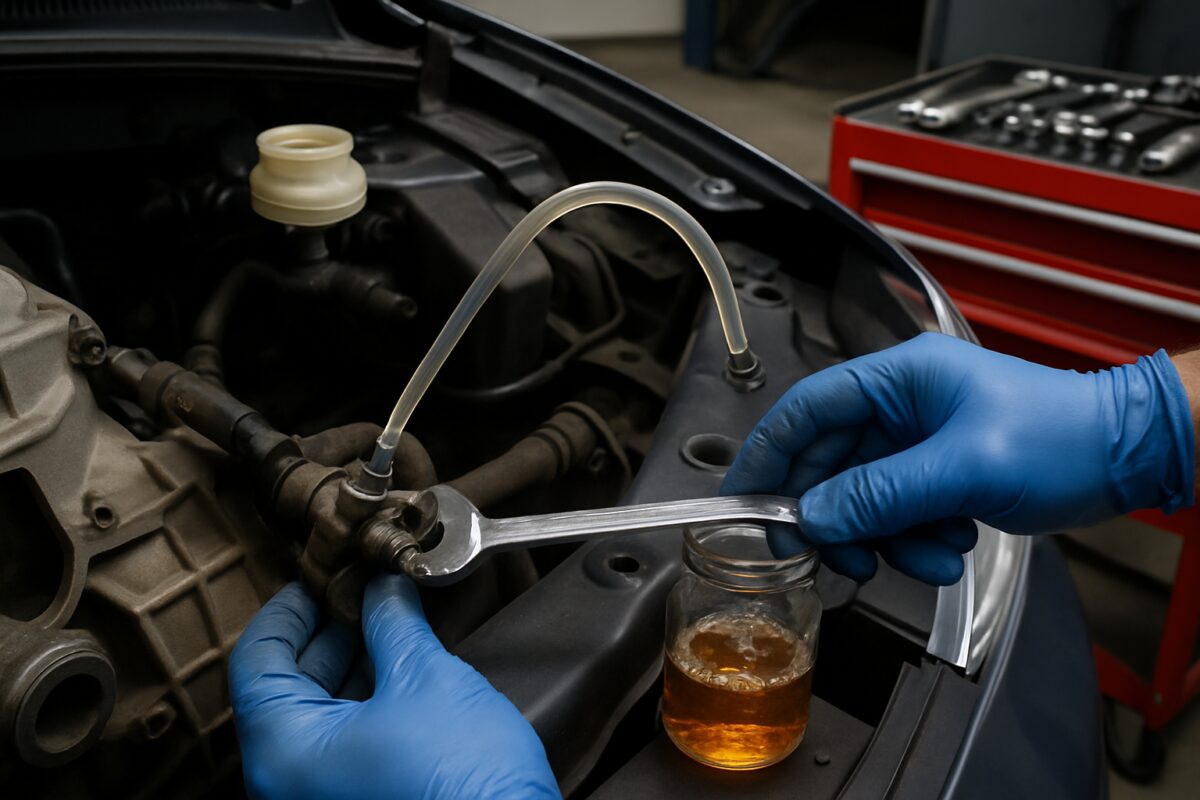
Remove the dust cap from the slave cylinder bleeder valve. Attach clear plastic tubing to the nipple, ensuring a tight fit. Place the other end in a container partially filled with brake fluid to prevent air re-entering the system.
Step 4: Begin bleeding process
Have an assistant pump the clutch pedal 3-4 times, then hold it down. Open the bleeder valve half a turn with your spanner. Fluid and air bubbles will flow through the tubing. Close the valve before the pedal reaches the floor, then release the pedal slowly.
“At AutoPartsPro, our mechanics recommend the ‘gravity bleeding’ method for single-person operations. Simply open the bleeder valve and let gravity pull fluid through the system whilst maintaining reservoir levels. This gentler approach reduces risk of introducing additional air.”
Step 5: Repeat and monitor
Repeat the pumping sequence until no air bubbles appear in the tubing and fluid flows consistently. Check the master cylinder reservoir frequently, topping up as needed. Never let the reservoir run dry, as this introduces more air.
“Professional tip: Watch for colour changes in the expelled fluid. New brake fluid is typically clear or light amber, whilst contaminated fluid appears dark or cloudy. Continue bleeding until fresh fluid colour appears at the slave cylinder.”
Step 6: Final checks
Close the bleeder valve securely and remove the tubing. Replace the dust cap and lower the vehicle. Test clutch pedal feel – it should be firm with consistent engagement point. Top up the master cylinder reservoir to the correct level.
Common mistakes to avoid
Never pump the clutch pedal rapidly, as this creates foam and introduces more air. Avoid mixing different brake fluid types, which can cause seal deterioration and system failure.
Don’t overtighten the bleeder valve, as the threads are delicate and easily damaged. A snug fit is sufficient – typically 8-10 Nm torque. Always bleed from the point furthest from the master cylinder first in multi-slave systems.
Failing to maintain reservoir fluid levels during bleeding is the most common error. This immediately introduces air and negates previous work. Keep checking and topping up throughout the process.
When should you bleed the clutch?
Bleed the clutch system whenever you experience a spongy pedal feel, difficulty engaging gears, or after replacing any hydraulic components. Most manufacturers recommend bleeding every 2-3 years as part of routine maintenance.
Signs requiring immediate attention include the pedal sinking to the floor, grinding noises when shifting, or visible fluid leaks around the master or slave cylinder. These symptoms indicate potential system failure requiring prompt professional attention.
After any clutch hydraulic work, including replacing clutch components or hydraulic lines, bleeding ensures proper system operation and prevents premature component wear.
Related maintenance you can do at the same time
Consider replacing the air filter whilst the bonnet is open, as both tasks require minimal time investment. Check brake pads and discs if you’ve raised the vehicle for clutch bleeding access.
Inspect CV joint boots and suspension components whilst underneath the vehicle. These components are easily accessible and checking them prevents future costly repairs. Learn more about comprehensive vehicle maintenance in our car maintenance guide.
This is also an ideal time to check and top up other fluid levels, including engine oil, power steering fluid, and windscreen washer reservoir.
Frequently asked questions
How often should I bleed my clutch?
Bleed the clutch system every 2-3 years or when experiencing pedal sponginess, gear shifting difficulties, or after hydraulic component replacement.
Can I use any brake fluid for clutch bleeding?
Use only the manufacturer-specified brake fluid type, typically DOT 3 or DOT 4. Never mix different specifications or use DOT 5 in conventional systems.
Why does my clutch pedal feel spongy after bleeding?
Remaining air bubbles, contaminated fluid, or internal cylinder wear can cause sponginess. Re-bleed the system or inspect components for damage.
How long does clutch bleeding take?
Proper clutch bleeding typically takes 30-45 minutes with an assistant, or up to an hour using single-person gravity bleeding methods.
What happens if I don’t bleed the clutch system?
Unbled systems suffer poor pedal feel, difficulty shifting gears, and eventual clutch failure requiring expensive repairs including potential gearbox damage.
Mastering clutch bleeding techniques ensures optimal hydraulic system performance and extends component lifespan. Regular maintenance using quality brake fluid prevents costly repairs and maintains smooth gear changes. With proper tools and systematic approach, this essential maintenance task becomes straightforward for any competent home mechanic.

 Loading...