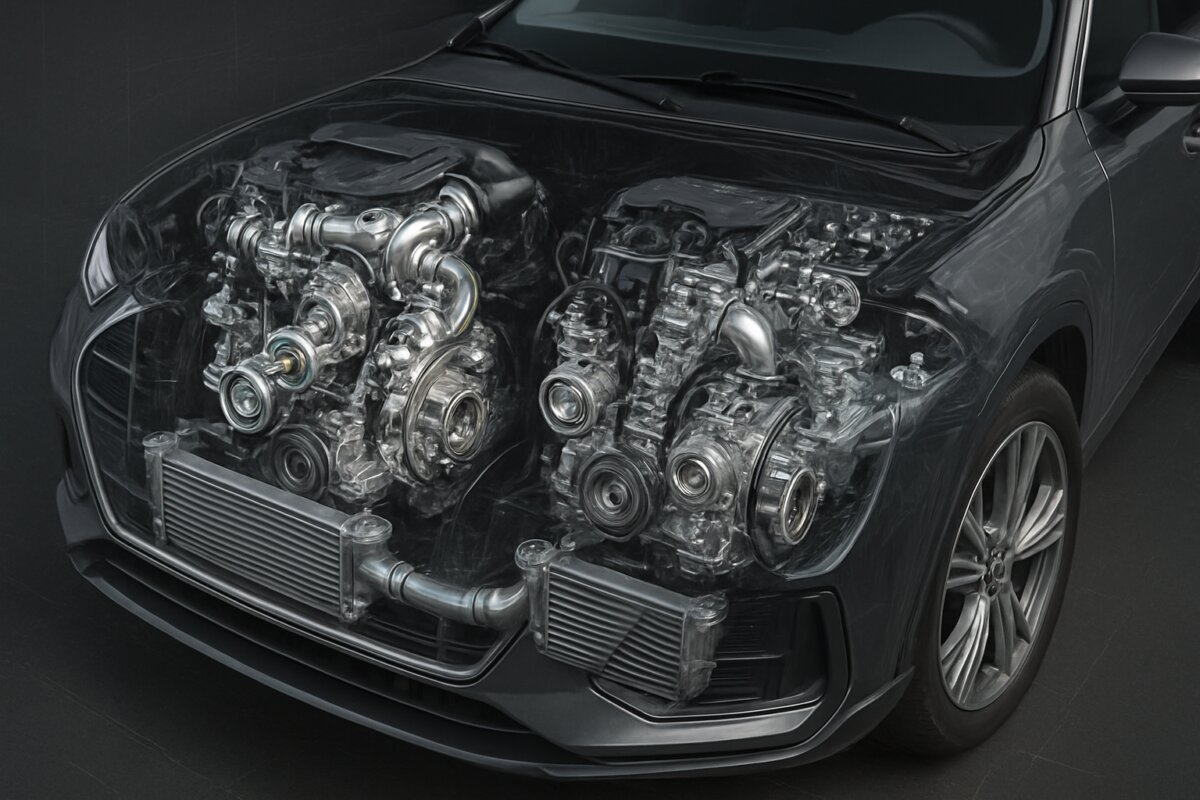
The Audi Q3 sits proudly in the premium compact SUV segment, offering a blend of luxury, practicality, and driving dynamics. At the heart of this popular German crossover lies a selection of well-engineered powerplants that define the vehicle’s character. The engine choice matters tremendously here, as it directly influences fuel economy, performance, and long-term ownership costs. Available options range from efficient four-cylinder petrol units delivering 150-230 PS to robust diesel variants producing 150-184 PS, each paired with turbocharged technology and direct injection systems.
Comparison table of all engines
| Engine | Power output | Torque | Fuel consumption | Reliability |
|---|---|---|---|---|
| 1.5 TFSI | 150 PS | 250 Nm | 42-47 mpg | Excellent |
| 2.0 TFSI (190 PS) | 190 PS | 320 Nm | 38-42 mpg | Very Good |
| 2.0 TFSI (230 PS) | 230 PS | 350 Nm | 35-39 mpg | Very Good |
| 2.0 TDI (150 PS) | 150 PS | 340 Nm | 50-56 mpg | Excellent |
| 2.0 TDI (184 PS) | 184 PS | 380 Nm | 47-53 mpg | Very Good |
1.5 TFSI engine overview
The 1.5-litre TFSI represents Audi’s modern approach to efficient motoring. This inline-four turbocharged petrol engine uses a sophisticated four-cylinder configuration with 1,498 cc displacement. The unit features direct fuel injection technology and variable valve timing, delivering 150 PS at 5,000-6,000 rpm. Cylinder-on-demand technology shuts down two cylinders under light loads, making it remarkably economical for urban driving. Our mechanics at Autopartspro note that this engine benefits from regular oil filter changes to maintain optimal performance.
Pros
- Outstanding fuel economy with cylinder deactivation technology
- Smooth power delivery across the rev range
- Low running costs and affordable maintenance
- Reduced CO2 emissions compared to larger units
- Proven reliability in various VAG applications
Cons
- Lacks punch for overtaking at motorway speeds
- Can feel strained when fully loaded with passengers
- Seven-speed S tronic gearbox occasionally hesitates
- Not available with quattro all-wheel drive
Top tip: Always use manufacturer-approved engine oil with the 1.5 TFSI. Lower-grade lubricants can affect the cylinder deactivation system and cause premature wear on valve train components.
2.0 TFSI (190 PS) engine overview
This two-litre turbocharged petrol inline-four offers a brilliant balance between performance and practicality. The 1,984 cc engine employs direct injection with turbocharging, producing 190 PS and 320 Nm of torque. Available with both front-wheel drive and quattro configurations, it suits buyers who want decent performance without venturing into RS territory. The engine shares its basic architecture with numerous VW Group products, which means parts availability remains excellent. Regular inspection of the turbocharger ensures longevity.
Pros
- Well-balanced performance for daily driving
- Available with quattro all-wheel drive system
- Refined operation with minimal vibration
- Strong mid-range torque delivery
- Adequate power reserves for safe overtaking
Cons
- Higher fuel consumption than diesel equivalents
- Premium unleaded petrol requirement increases costs
- Timing chain can stretch on high-mileage examples
- Carbon buildup on intake valves requires periodic cleaning
2.0 TFSI (230 PS) engine overview
The range-topping petrol variant delivers 230 PS from the same 2.0-litre turbocharged inline-four configuration. This engine comes exclusively with quattro all-wheel drive and S tronic dual-clutch transmission. Peak torque of 350 Nm arrives from just 1,600 rpm, providing impressive acceleration characteristics. The sophisticated fuel pump system operates at high pressure to maximise combustion efficiency. Autopartspro specialists recommend this powerplant for enthusiasts who prioritise driving engagement.
Pros
- Genuinely quick acceleration (0-62 mph in 7.0 seconds)
- Standard quattro enhances traction and stability
- Sporty exhaust note adds character
- Impressive overtaking capability
- Well-suited to towing duties
Cons
- Significantly higher fuel costs than other variants
- Increased insurance premiums
- More expensive brake pads wear due to performance driving
- Premium components mean costlier repairs
2.0 TDI (150 PS) engine overview
This turbocharged diesel inline-four represents exceptional value for high-mileage drivers. The 1,968 cc unit generates 150 PS whilst delivering a substantial 340 Nm of torque from low revs. Direct injection technology combines with advanced emissions control systems, including a particulate filter. The engine demonstrates remarkable efficiency on motorway journeys, where it truly excels. Our technicians report that proper maintenance of the fuel filter prevents expensive injector problems.
Pros
- Exceptional fuel economy (50+ mpg achievable)
- Strong low-end torque ideal for urban driving
- Lower CO2 emissions reduce tax liability
- Proven reliability across multiple generations
- Minimal depreciation compared to petrol variants
Cons
- DPF issues can arise from short journeys
- EGR valve requires periodic cleaning
- Diesel fuel costs fluctuate considerably
- Less refined than petrol engines at idle
Professional insight: The 2.0 TDI benefits enormously from using premium diesel fuel. Higher cetane ratings improve combustion quality and reduce deposits on injectors, potentially saving thousands in repair costs.
2.0 TDI (184 PS) engine overview
The uprated diesel option provides 184 PS and an impressive 380 Nm of torque. This turbocharged four-cylinder uses the same basic architecture as its lower-powered sibling but features revised turbocharger mapping and enhanced cooling systems. Available with quattro all-wheel drive, it combines performance with outstanding efficiency. The intercooler plays a crucial role in maintaining consistent power delivery under demanding conditions.
Pros
- Excellent torque delivery suits all driving scenarios
- Maintains strong fuel economy despite extra power
- Refined cruising ability on long journeys
- Quattro option enhances winter driving confidence
- Competitive performance against petrol alternatives
Cons
- Higher initial purchase price
- AdBlue system requires regular top-ups
- Complex emissions equipment increases repair costs
- Turbocharger replacement proves expensive when needed
Maintenance cost
| Engine | Recommended Interval | Estimated Cost | Cost per 10,000 miles |
|---|---|---|---|
| 1.5 TFSI | 12 months/10,000 miles | £280-£350 | £280-£350 |
| 2.0 TFSI (190 PS) | 12 months/10,000 miles | £320-£400 | £320-£400 |
| 2.0 TFSI (230 PS) | 12 months/10,000 miles | £380-£480 | £380-£480 |
| 2.0 TDI (150 PS) | 12 months/12,000 miles | £350-£450 | £290-£375 |
| 2.0 TDI (184 PS) | 12 months/12,000 miles | £380-£490 | £315-£410 |
Major service intervals arrive at 24,000 miles for petrol engines and 36,000 miles for diesels. These include air filter replacement, cabin filter changes, and brake fluid renewal. Timing chain inspection becomes critical beyond 80,000 miles, whilst diesel variants require glow plugs checking around 60,000 miles.
Engine sound and character
The 1.5 TFSI delivers a subdued, refined soundtrack perfectly suited to its efficiency-focused mission. Under acceleration, a pleasant four-cylinder thrum emerges without becoming intrusive. Cylinder deactivation operates seamlessly, though attentive ears might detect the subtle transition.
Both 2.0 TFSI variants produce a more purposeful note. The 190 PS version remains cultured during normal driving, whilst the 230 PS model offers a sportier character with satisfying turbo whoosh under hard acceleration. Neither sounds particularly memorable, but they avoid the artificial amplification found in some rivals.
Diesel engines naturally exhibit more mechanical noise at idle. The 150 PS TDI provides a characteristically gruff diesel burble that settles into smooth cruising refinement once underway. The 184 PS variant sounds marginally more refined thanks to enhanced sound deadening materials. Both prove impressively quiet at motorway speeds, where wind noise becomes more noticeable than engine drone.
Who each engine is best for
| Engine | Best for | Recommendation |
|---|---|---|
| 1.5 TFSI | Daily commuters, budget-conscious owners | Ideal for urban and suburban driving with occasional motorway trips |
| 2.0 TFSI (190 PS) | Balanced drivers seeking versatility | Perfect all-rounder for mixed driving conditions |
| 2.0 TFSI (230 PS) | Performance enthusiasts | Best choice for spirited driving and maximum engagement |
| 2.0 TDI (150 PS) | Long-distance drivers, high-mileage users | Outstanding efficiency for motorway-focused journeys |
| 2.0 TDI (184 PS) | Performance-minded diesel fans | Combines strong performance with diesel economy |
Frequently asked questions
Which Audi Q3 engine offers the best fuel economy?
The 2.0 TDI 150 PS delivers outstanding efficiency, achieving 50-56 mpg in real-world driving. Regular maintenance of components like spark plugs on petrol variants helps maintain optimal consumption figures.
Are timing chains or belts used in Q3 engines?
All current Q3 engines employ timing chains rather than belts. Chains typically last longer but require inspection around 80,000-100,000 miles. Listen for rattling noises during cold starts indicating potential tensioner issues.
How reliable are turbocharged Q3 engines?
Modern turbocharged units prove highly reliable when properly maintained. Regular oil changes using correct specifications protect turbocharger bearings. Our specialists recommend checking the engine mount condition to prevent excessive vibration affecting turbo pipework.
What problems affect high-mileage Q3 diesel engines?
DPF blockage represents the most common issue, particularly on vehicles used for short journeys. Regular motorway runs help regeneration. The exhaust gas recirculation valve may require cleaning beyond 60,000 miles to maintain smooth running.
Can I upgrade to quattro all-wheel drive later?
Retrofitting quattro proves economically unviable due to extensive drivetrain differences. Choose quattro-equipped models initially if all-wheel drive matters. Front-wheel drive versions still offer excellent traction with proper tyres and working ABS sensors.

 Loading...