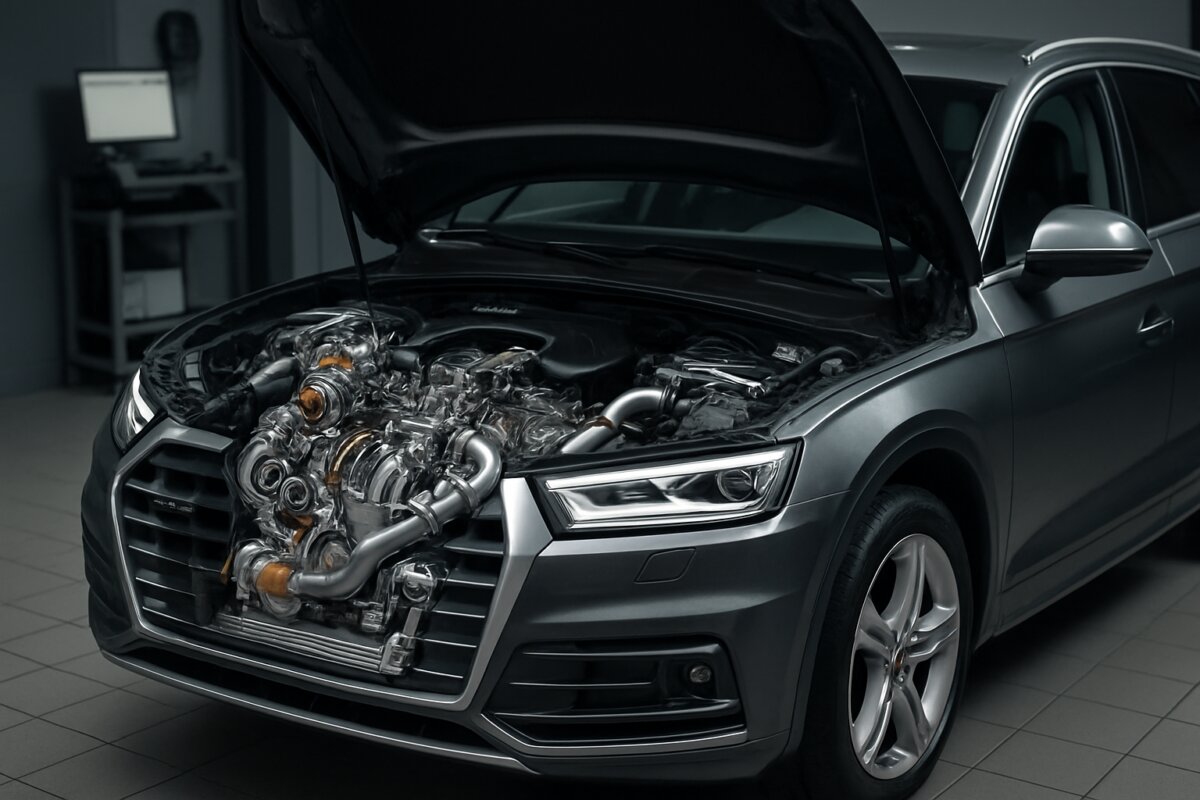
The Audi Q5 has established itself as a premium compact SUV that balances refinement with practicality. Central to this vehicle’s appeal is its range of sophisticated powerplants that deliver both performance and efficiency. With options spanning turbocharged petrol, diesel, and plug-in hybrid variants, the Q5 caters to diverse driving preferences. The current generation offers engines ranging from 163 PS to 367 PS, with torque figures peaking at 500 Nm in certain variants. Understanding which engine suits your needs can significantly impact ownership satisfaction and running costs.
Comparison table of all engines
| Engine | Power output | Torque | Fuel consumption | Reliability |
|---|---|---|---|---|
| 2.0 TFSI 40 | 204 PS | 320 Nm | 33.6 mpg | Above average |
| 2.0 TFSI 45 | 249 PS | 370 Nm | 32.1 mpg | Good |
| 2.0 TDI 40 | 204 PS | 400 Nm | 44.1 mpg | Excellent |
| 50 TFSI e PHEV | 299 PS | 450 Nm | 128.4 mpg (combined) | Good |
| SQ5 3.0 TFSI | 354 PS | 500 Nm | 27.7 mpg | Good |
2.0 TFSI 40 overview
The 2.0 TFSI 40 represents the entry point into Audi Q5 ownership, delivering competent performance without breaking the bank. This inline-four configuration displaces 1,984cc and incorporates sophisticated engineering principles. The turbocharged unit employs direct fuel injection with multi-point technology, ensuring optimal combustion efficiency. Peak power arrives at 4,200 rpm, whilst maximum torque plateau extends between 1,600 and 4,300 rpm, providing excellent mid-range flexibility.
Built around a lightweight aluminium construction, this powerplant features variable valve timing on both camshafts and an integrated exhaust manifold within the cylinder head. The cooling system utilises a sophisticated thermostat mapping strategy to reduce warm-up times.
Our technicians at AutoPartsPro have observed that regular oil filter changes every 10,000 miles significantly extend turbocharger lifespan in these units.
Pros
- Excellent fuel economy for the segment, achieving genuine 33+ mpg in mixed driving
- Responsive throttle characteristics with minimal turbo lag below 2,000 rpm
- Lower insurance group classification compared to higher-output variants
- Reduced road tax liability due to lower CO2 emissions bracket
- Proven EA888 architecture with extensive aftermarket support
Cons
- Can feel strained when fully loaded, particularly on steep inclines
- Requires premium unleaded fuel for optimal performance and engine protection
- Timing chain tensioner wear reported on higher-mileage examples
- Carbon buildup on intake valves affects direct-injection engines over time
2.0 TDI 40 overview
The 2.0 TDI 40 diesel represents the most economical option in the Q5 range whilst delivering impressive torque characteristics. This four-cylinder turbocharged diesel displaces 1,968cc and employs common-rail direct injection technology operating at pressures exceeding 2,000 bar. The unit produces its 204 PS at 3,800 rpm, but the headline figure is the 400 Nm torque available from just 1,750 rpm.
This powerplant incorporates selective catalytic reduction (SCR) with AdBlue injection, alongside a sophisticated particulate filter system. The aluminium block construction reduces overall weight, whilst the balancer shaft arrangement minimises typical diesel vibrations. Twin-stage oil pump technology optimises lubrication efficiency across the rev range.
Pros
- Outstanding fuel economy regularly exceeding 45 mpg on motorway journeys
- Effortless overtaking capability thanks to abundant low-end torque
- Lower depreciation rates compared to petrol equivalents in UK market
- Extended service intervals reduce overall maintenance frequency
- Refined operation with minimal noise intrusion into cabin
Cons
- AdBlue replenishment adds ongoing consumable costs
- DPF regeneration cycles require periodic motorway driving
- Higher initial purchase price versus petrol alternatives
- Potential issues with EGR valve carbon accumulation
2.0 TFSI 45 overview
Sitting in the middle of the performance spectrum, the 2.0 TFSI 45 offers enhanced output whilst maintaining reasonable running costs. This turbocharged inline-four shares its basic architecture with the 40 variant but incorporates uprated components and revised calibration. The 249 PS arrives at 5,000 rpm, with 370 Nm torque spread between 1,600 and 4,500 rpm.
Enhanced turbocharger specifications provide quicker spool characteristics, whilst reinforced pistons and connecting rods tolerate increased cylinder pressures. The cooling system benefits from an uprated intercooler specification to manage higher intake temperatures under sustained acceleration.
Pros
- Noticeably quicker acceleration with 0-62 mph achieved in 6.3 seconds
- Stronger mid-range punch for confident motorway merging
- Retains relatively acceptable fuel economy around 30-32 mpg
- Quattro all-wheel drive system exploits power delivery effectively
- Popular specification maintains strong residual values
Cons
- Higher insurance premiums due to increased performance classification
- Premium fuel requirement increases per-mile fuel costs
- Wear on spark plugs accelerated under spirited driving
- Increased brake component wear demands more frequent pad replacement
50 TFSI e PHEV overview
The plug-in hybrid variant combines a 2.0 TFSI petrol engine with an electric motor integrated into the transmission housing. Total system output reaches 299 PS with 450 Nm torque, whilst the 14.1 kWh battery pack enables approximately 26 miles of pure electric range. The petrol engine delivers 252 PS independently, with the 105 kW electric motor providing instantaneous torque supplementation.
Regenerative braking recuperates energy during deceleration, whilst intelligent energy management prioritises electric operation in urban environments. The hybrid system adds approximately 270 kg versus conventional models, though weight distribution remains favourable. Charging infrastructure compatibility includes Type 2 connectors with maximum 7.4 kW AC charging capability.
AutoPartsPro specialists recommend monitoring the health of the auxiliary battery in PHEV models, as it works harder than conventional systems to power ancillaries.
Pros
- Dramatically reduced benefit-in-kind taxation for company car drivers
- Silent electric operation ideal for urban commuting scenarios
- Combined power delivery provides rapid acceleration when required
- Potential for zero-emission school runs and short journeys
- Access to low-emission zones without penalty charges
Cons
- Significantly higher purchase price creates extended payback period
- Reduced boot capacity due to battery pack positioning
- Real-world economy plummets without regular charging discipline
- Additional complexity increases potential maintenance scenarios
- Battery degradation affects electric range over ownership period
SQ5 3.0 TFSI overview
The performance-oriented SQ5 employs a 2,995cc V6 turbocharged petrol engine delivering 354 PS at 5,400 rpm. This TFSI unit generates 500 Nm from just 1,370 rpm through to 4,500 rpm, providing relentless acceleration. The 90-degree V configuration incorporates twin-scroll turbocharger technology with electrically-assisted wastegate control.
Aluminium construction throughout reduces weight penalty, whilst the cylinder deactivation system shuts down three cylinders during light-load cruising. The sophisticated engine mounting system employs active damping to isolate vibrations. An uprated cooling package including larger radiator and supplementary oil cooler maintains optimal temperatures.
Pros
- Exhilarating performance with 0-62 mph dispatched in 5.4 seconds
- Characterful V6 soundtrack enhances driving engagement
- Sport differential optimises traction during enthusiastic cornering
- Upgraded braking system provides exceptional stopping power
- Adaptive dampers deliver excellent ride quality versatility
Cons
- Fuel consumption rarely exceeds 27 mpg even with careful driving
- Premium maintenance costs reflect performance-oriented specification
- Higher road tax due to CO2 emissions classification
- Increased tyre wear from performance-oriented rubber compound
- Potential issues with carbon buildup on intake valves
Maintenance cost
| Engine | Recommended interval | Estimated cost | Cost per 10,000 miles |
|---|---|---|---|
| 2.0 TFSI 40 | 18,600 miles / 2 years | £295-£380 | £158-£204 |
| 2.0 TFSI 45 | 18,600 miles / 2 years | £310-£395 | £167-£212 |
| 2.0 TDI 40 | 18,600 miles / 2 years | £340-£425 | £183-£228 |
| 50 TFSI e PHEV | 18,600 miles / 2 years | £385-£475 | £207-£255 |
| SQ5 3.0 TFSI | 18,600 miles / 2 years | £425-£550 | £228-£295 |
These figures encompass engine oil, filters, and inspection labour. Additional costs arise when components like brake pads, brake discs, or suspension springs require replacement. The diesel variant includes AdBlue replenishment costs, whilst PHEV models may necessitate air filter changes less frequently due to reduced petrol engine operation.
Engine sound and character
The 2.0 TFSI variants produce a refined four-cylinder note that remains subdued during normal driving. Under acceleration, a purposeful growl emerges without becoming intrusive. The exhaust note features a subtle burble during overrun conditions, particularly in Sport mode where throttle mapping sharpens response.
Diesel fans will appreciate the 2.0 TDI’s hushed operation at idle, with minimal clatter penetrating the cabin. Modern sound insulation techniques effectively isolate occupants from typical compression-ignition characteristics. The engine remains virtually silent during motorway cruising, contributing to the Q5’s refined ambience.
The PHEV combines whisper-quiet electric operation with seamless transitions to petrol power. The electric motor’s instant torque delivery provides a uniquely linear acceleration feel. When the combustion engine engages, sophisticated calibration ensures minimal disruption to the driving experience.
SQ5 buyers receive an authentic V6 soundtrack that rewards enthusiastic inputs. The deeper bass note distinguishes this variant from four-cylinder alternatives, whilst the active exhaust system amplifies character in Dynamic mode. During spirited driving, the turbocharger whistle adds an appealing technical edge to proceedings.
Who each engine is best for
| Driver profile | Recommended engine | Reasoning |
|---|---|---|
| Daily commuters | 2.0 TDI 40 | Outstanding fuel economy and torque delivery ideal for traffic conditions |
| Performance enthusiasts | SQ5 3.0 TFSI | Exhilarating acceleration with V6 character and sport chassis upgrades |
| Long-distance drivers | 2.0 TDI 40 | Superior motorway economy with comfortable high-speed refinement |
| Budget-conscious owners | 2.0 TFSI 40 | Lower purchase price and reduced running costs versus higher outputs |
| Company car drivers | 50 TFSI e PHEV | Minimal benefit-in-kind taxation with emission-friendly credentials |
| Urban dwellers | 50 TFSI e PHEV | Electric-only capability for emission zones and short journeys |
Frequently asked questions (FAQ)
Which Audi Q5 engine is most reliable?
The 2.0 TDI 40 demonstrates exceptional reliability when properly maintained. Regular oil changes and quality diesel fuel prevent common issues. Our workshops see fewer problems with this unit compared to petrol alternatives.
Do Audi Q5 engines require timing belt replacement?
Modern Q5 engines utilise timing chains rather than belts, eliminating scheduled replacement. However, chain tensioners may require attention beyond 100,000 miles. Regular oil changes prove critical for chain longevity and proper lubrication.
What fuel should I use in my Q5 TFSI engine?
All TFSI variants require 95 RON minimum, though 98 RON optimises performance and efficiency. Using lower octane ratings risks knock damage and reduced power output. Premium fuel investment delivers measurable benefits in these turbocharged units.
How often should Q5 engine oil be changed?
Audi specifies 18,600-mile intervals, but enthusiastic driving or urban use benefits from 10,000-mile changes. Quality synthetic oil prevents sludge buildup in turbocharged engines. Our technicians recommend shorter intervals for maximum engine longevity and optimal turbocharger health.
Can the Q5 PHEV operate purely on electric power?
Yes, the 50 TFSI e provides approximately 26 miles of electric-only range when fully charged. The system automatically switches to petrol when battery depletes or demands exceed electric capacity. Regular charging maximises emission-free operation significantly.

 Loading...