Charging a car battery typically takes 30 minutes to several hours depending on the method used. While driving charges fastest at 30-60 minutes for basic operation, idling requires 2-4 hours, and battery chargers need 4-24 hours for complete restoration. The charging time varies based on battery capacity, alternator output, and current charge level.
Understanding battery charging times helps drivers avoid unexpected breakdowns and maintain reliable vehicle operation. Whether you’re dealing with a flat battery or planning preventive maintenance, knowing these timeframes ensures you make informed decisions about your vehicle’s electrical system.
How car battery charging works during driving
Your vehicle’s alternator serves as the primary charging system whilst driving. This electromagnetic device converts mechanical energy from the engine into electrical current, typically producing 13.8 to 14.4 volts. The alternator not only powers all electrical components but simultaneously recharges the battery through a continuous cycle.
During normal driving conditions, the alternator generates sufficient power to fully charge a moderately depleted battery within 30 to 60 minutes. However, this timeframe assumes the battery isn’t completely flat and the alternator functions properly. Our mechanics at AutoPartsPro frequently observe that highway driving provides optimal charging conditions due to consistent engine RPM.
The charging rate depends heavily on engine speed and electrical load. At idle, alternators produce minimal output, whilst higher RPMs generate maximum charging capacity. This explains why short city trips with frequent stops provide less effective charging compared to motorway journeys.
Battery charging through idling explained
Idling represents the least efficient method for battery charging, requiring significantly longer periods to achieve meaningful results. At idle speed, most alternators produce only 30-50% of their maximum output, making the charging process considerably slower than normal driving conditions.
Typically, idling takes 2 to 4 hours to restore a moderately discharged battery to acceptable levels. However, this method proves inefficient and potentially harmful to your engine. Extended idling causes incomplete fuel combustion, carbon buildup, and unnecessary wear on engine components.
Modern vehicles with numerous electrical accessories compound this challenge. Air conditioning, heated seats, radio, and lights consume substantial power, potentially outpacing the alternator’s limited idle output. Our technicians recommend avoiding prolonged idling as a charging method whenever possible.
External battery charger charging times
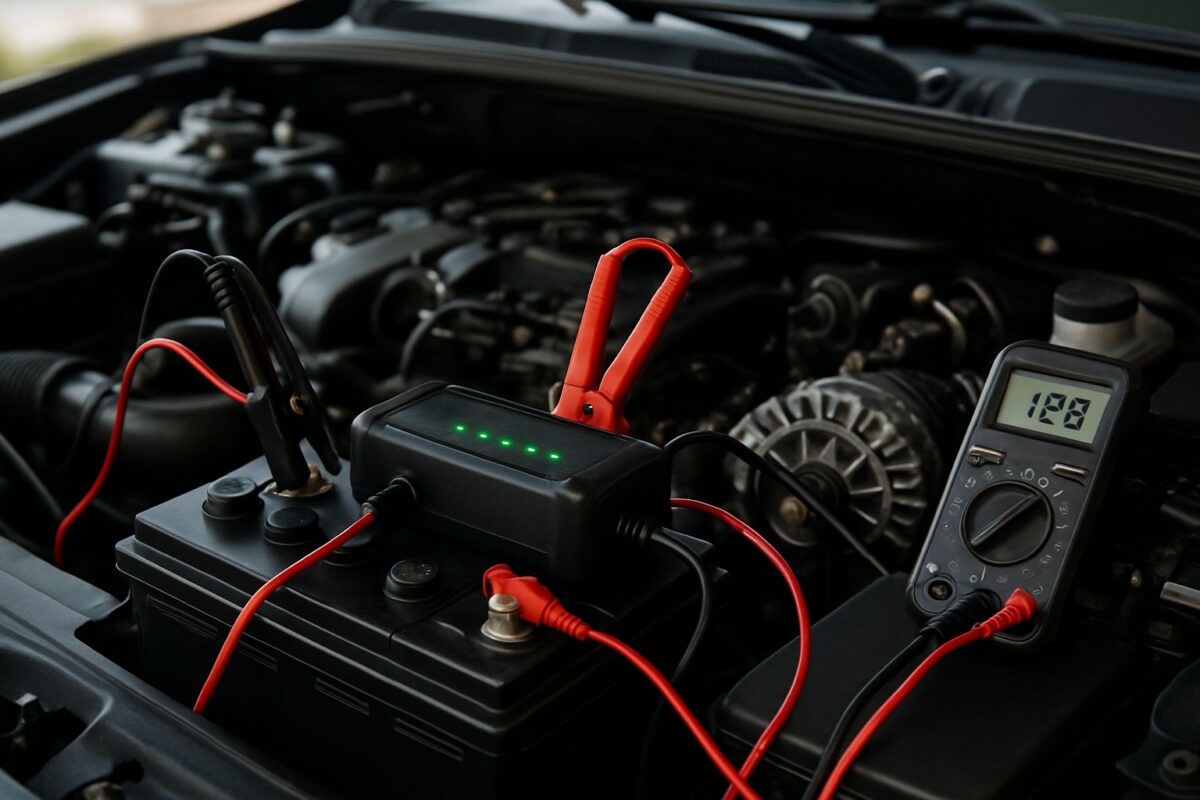
External battery chargers offer controlled, thorough charging but require significantly more time than driving methods. Standard automotive batteries (45-75 Ah capacity) typically need 4 to 12 hours with a conventional charger, depending on the charger’s amperage output and battery condition.
Smart chargers automatically adjust charging rates, starting with higher amperage for rapid initial charging, then switching to trickle charging for battery conditioning. This process ensures optimal battery health and longevity, though it extends total charging time to 8-24 hours for complete restoration.
Types of battery chargers and their speeds
Different charger types offer varying charging speeds and applications:
- Trickle chargers (1-2 amps): Slow, gentle charging perfect for long-term storage
- Standard chargers (4-10 amps): Balanced charging for regular maintenance
- Fast chargers (15-40 amps): Quick restoration for emergency situations
- Smart chargers: Automatic adjustment with multi-stage charging cycles
Factors affecting charging time
Several variables influence how quickly your battery charges, regardless of the charging method employed. Understanding these factors helps predict charging times and identify potential issues with your vehicle’s electrical system.
Battery capacity and condition
Battery capacity, measured in ampere-hours (Ah), directly correlates with charging time requirements. Larger batteries naturally require longer charging periods, whilst older batteries with reduced capacity may charge faster but hold less power overall.
Age significantly impacts charging efficiency. Batteries over three years old typically exhibit reduced charging acceptance, meaning they require longer periods to reach full capacity. Additionally, sulphated batteries common in neglected vehicles charge extremely slowly and may never reach optimal capacity.
Temperature impact on charging
Ambient temperature dramatically affects battery charging performance. Cold weather reduces chemical reaction rates within the battery, extending charging times by 25-50%. Conversely, excessive heat accelerates chemical reactions but may damage internal battery components.
Our specialists recommend charging batteries in moderate temperatures (15-25°C) for optimal results. Extremely cold batteries should be warmed gradually before charging to prevent damage and ensure efficient power absorption.
Alternator output and electrical load
The alternator’s condition and output capacity determine charging effectiveness during driving. Standard alternators produce 60-200 amps, but actual output varies with engine speed and electrical demand from accessories.
High electrical loads from air conditioning, heating, lights, and electronic systems reduce available charging current for the battery. During peak electrical demand, alternators may struggle to maintain battery charge, particularly at idle or low engine speeds.
| Electrical Load | Typical Power Draw | Impact on Charging |
|---|---|---|
| Headlights | 10-15 amps | Moderate reduction |
| Air conditioning | 15-25 amps | Significant reduction |
| Heated rear screen | 8-12 amps | Moderate reduction |
| Radio/infotainment | 2-5 amps | Minimal impact |
Signs your battery needs charging
Recognising battery charging requirements prevents unexpected breakdowns and extends battery lifespan. Several symptoms indicate insufficient battery charge or charging system problems requiring immediate attention.
Common warning signs include:
- Slow engine cranking: Starter motor struggles to turn engine over
- Dim headlights: Reduced brightness, particularly at idle
- Dashboard warning lights: Battery or charging system indicators
- Electrical system malfunctions: Radio resets, clock loses time
- Clicking sounds: Starter solenoid clicks without engine engagement
Professional battery testing reveals actual capacity and charging system performance. Most automotive retailers offer free battery testing, helping identify whether charging or replacement is necessary.
Optimal charging practices for battery longevity
Proper charging techniques significantly extend battery lifespan and maintain reliable performance. Following manufacturer recommendations and understanding charging principles prevents premature battery failure and costly replacements.
Regular driving provides the most natural charging method, maintaining optimal battery chemistry through consistent charge-discharge cycles. Weekly drives of 20-30 minutes ensure adequate charging and prevent sulphation from prolonged storage.
Pro tip: For vehicles driven infrequently, invest in a smart charger with maintenance mode. This prevents battery degradation during extended storage periods and ensures reliable starting when needed.
When to use different charging methods
Each charging method serves specific situations and requirements. Understanding when to employ each technique optimises battery health and prevents charging-related problems.
Use driving for regular battery maintenance and quick top-ups after short trips. Reserve external chargers for deeply discharged batteries or long-term storage preparation. Avoid idling as a charging method except in emergency situations where driving isn’t possible.
| Charging Method | Best Used For | Time Required | Effectiveness |
|---|---|---|---|
| Driving | Regular maintenance | 30-60 minutes | Excellent |
| Idling | Emergency only | 2-4 hours | Poor |
| External charger | Deep discharge/storage | 4-24 hours | Excellent |
Common charging mistakes to avoid
Many drivers unknowingly damage their batteries through improper charging practices. Avoiding these common errors preserves battery life and ensures reliable vehicle operation.
Overcharging represents a serious threat to battery health. Using inappropriate charger settings or leaving batteries connected to fast chargers for extended periods causes electrolyte loss and plate damage. Always follow manufacturer specifications for charging rates and durations.
Attempting to charge frozen batteries can cause internal damage or explosion. Allow frozen batteries to thaw completely before connecting any charging equipment. Similarly, charging in extremely hot conditions accelerates electrolyte evaporation and shortens battery life.
Maintenance tips for optimal battery performance
Regular maintenance ensures maximum battery lifespan and reliable charging performance. Simple preventive measures prevent costly breakdowns and maintain electrical system efficiency throughout your vehicle’s service life.
Clean battery terminals monthly using bicarbonate of soda solution to remove corrosion. Corroded terminals create resistance that impedes charging and reduces electrical system performance. Apply petroleum jelly to clean terminals to prevent future corrosion buildup.
Check electrolyte levels in serviceable batteries, adding distilled water as needed. Maintain proper mounting and security to prevent vibration damage. Inspect the alternator regulator and charging system components regularly for optimal performance.
Understanding battery charging times empowers drivers to maintain reliable vehicles and avoid unexpected breakdowns. Whether charging through driving, idling, or external chargers, proper techniques ensure optimal battery performance and longevity. Regular maintenance combined with appropriate charging methods keeps your vehicle’s electrical system functioning efficiently for years to come.
Frequently Asked Questions (FAQ)
How long does it take to charge a completely flat car battery?
A completely flat battery requires 4-12 hours with an external charger, or 1-2 hours of continuous driving to reach sufficient charge for reliable starting.
Can I charge my car battery by leaving it idling overnight?
Idling overnight isn’t recommended due to fuel waste and engine wear. It takes 2-4 hours of idling to meaningfully charge a depleted battery.
Does driving short distances charge the car battery effectively?
Short trips under 20 minutes provide minimal charging benefit. The alternator needs sustained operation at higher RPMs to effectively charge the battery.
How do I know if my alternator is charging the battery properly?
A properly functioning alternator produces 13.8-14.4 volts whilst running. Dashboard warning lights or dim headlights indicate potential charging system problems requiring professional diagnosis.
What’s the fastest way to charge a car battery in an emergency?
Fast charging with a high-amperage charger (15-40 amps) provides the quickest restoration, typically charging a moderately depleted battery within 1-3 hours safely.

 Loading...