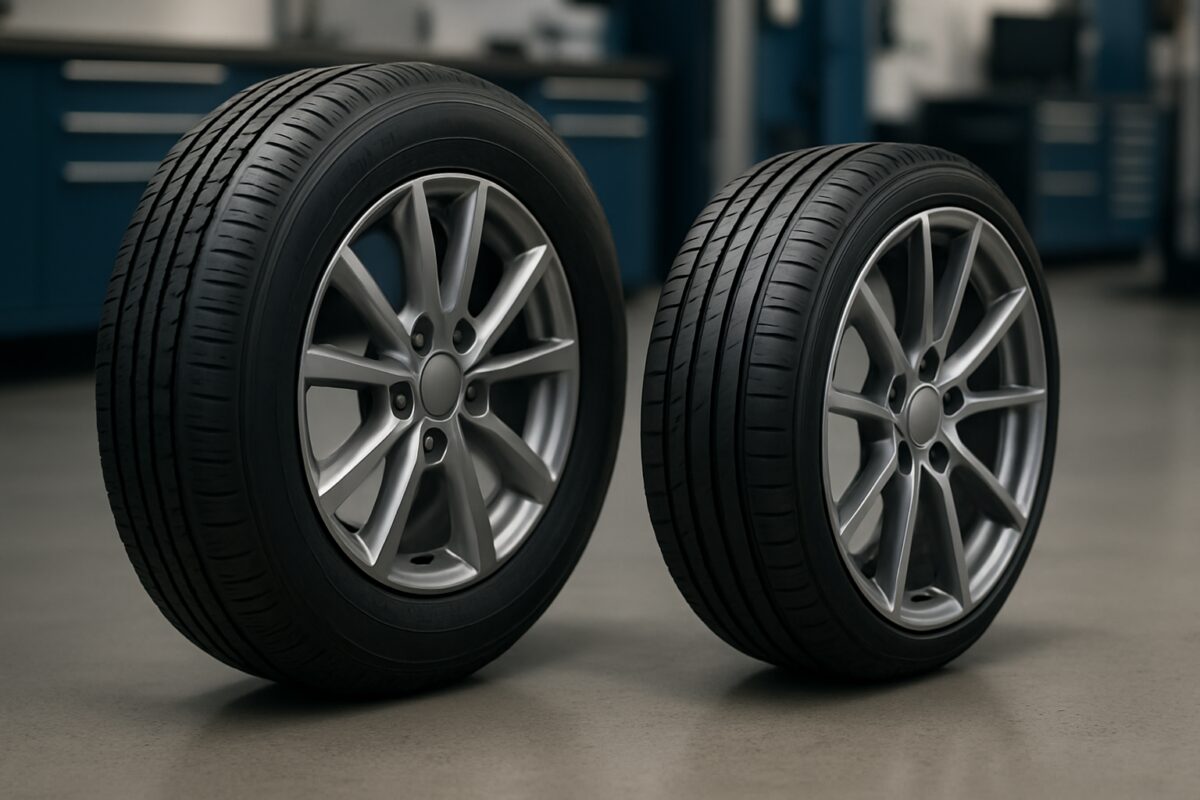
Low profile tyres feature sidewalls that are significantly shorter than standard tyres, typically with an aspect ratio of 55% or lower, creating a sportier appearance whilst providing enhanced handling and road feel. These tyres have become increasingly popular among UK drivers seeking improved performance, but they come with specific maintenance requirements and potential drawbacks that every motorist should understand before making the switch.
Understanding low profile tyre specifications
The term “low profile” refers to the relationship between a tyre’s sidewall height and its width, expressed as an aspect ratio. Standard tyres typically have aspect ratios between 60% and 70%, whilst low profile variants range from 30% to 55%.
When examining tyre markings, you’ll see numbers like 225/40R18. The middle number (40) represents the aspect ratio – meaning the sidewall height is 40% of the tyre’s width. Lower numbers indicate increasingly shorter sidewalls and more aggressive profiles.
Our mechanics at Autopartspro frequently advise customers that understanding these specifications is crucial for proper vehicle maintenance. The reduced sidewall height directly impacts how the tyre performs under various driving conditions and stress levels.
Common low profile aspect ratios
- Ultra-low profile: 30% and below (typically found on supercars and track vehicles)
- Very low profile: 35% (common on performance saloons and sports cars)
- Low profile: 40-45% (popular aftermarket upgrade for standard vehicles)
- Medium-low profile: 50-55% (often original equipment on modern hatchbacks)
Tyre pressure requirements for low profile tyres
Maintaining correct tyre pressure becomes even more critical with low profile tyres due to their reduced air volume and increased susceptibility to pressure changes.
Low profile tyres typically require higher pressures than standard tyres – often 2-5 PSI above conventional recommendations. This increased pressure compensates for the reduced sidewall flex and helps maintain proper contact with the road surface.
According to our technical specialists, checking pressure weekly is essential because low profile tyres lose pressure more rapidly due to their construction. Temperature changes affect these tyres more dramatically, with pressure fluctuations of up to 2 PSI for every 10°C temperature change.
| Aspect Ratio | Typical Pressure Increase | Check Frequency |
|---|---|---|
| 50-55% | +2 PSI | Fortnightly |
| 40-45% | +3-4 PSI | Weekly |
| 35% and below | +4-5 PSI | Weekly |
Always check tyre pressures when cold (before driving or at least 3 hours after driving) as hot tyres will show inflated readings that don’t reflect true operating pressure.
Advantages of low profile tyres
Low profile tyres offer several performance benefits that make them attractive to driving enthusiasts and those seeking enhanced vehicle dynamics.
Enhanced handling and cornering
The reduced sidewall flex provides more precise steering response and improved cornering stability. This characteristic makes the vehicle feel more connected to the road, particularly during spirited driving or emergency manoeuvres.
Professional drivers often prefer low profile tyres for their predictable behaviour during high-speed cornering. The stiffer sidewalls resist deformation under lateral loads, maintaining optimal tyre contact patch geometry.
Improved braking performance
Low profile tyres typically feature larger contact patches when properly inflated, which can improve braking distances on dry surfaces. The reduced sidewall movement also provides more consistent brake pedal feel.
Many performance vehicles come equipped with low profile tyres specifically to complement their advanced brake systems and achieve optimal stopping performance.
Aesthetic appeal
The sporty appearance of low profile tyres appeals to many vehicle owners. They create a more aggressive, performance-oriented look that complements modern alloy wheel designs.
Larger wheel diameters paired with low profile tyres can transform a vehicle’s appearance, giving it a more premium and contemporary aesthetic that often increases resale value.
Disadvantages and common problems
Despite their performance benefits, low profile tyres present several challenges that owners must consider carefully before making the transition.
Increased vulnerability to damage
The reduced sidewall height provides less protection against road hazards. Potholes, kerb strikes, and debris pose greater risks to low profile tyres, often resulting in irreparable damage where standard tyres might survive.
Our workshop team regularly sees wheel and tyre damage from impacts that wouldn’t affect higher-profile alternatives. The shorter sidewalls simply can’t absorb the same level of shock, transferring more force to the wheel rim.
Harsh ride quality
Low profile tyres transmit more road surface irregularities to the cabin, creating a firmer, sometimes uncomfortable ride. This characteristic is particularly noticeable on poor road surfaces common throughout the UK.
The reduced air volume and stiffer construction mean less cushioning effect, which can lead to increased fatigue during long journeys and more pronounced cabin noise from road surface interactions.
Higher replacement costs
Low profile tyres generally cost significantly more than standard alternatives. Replacement costs can be 30-60% higher, and the tyres often wear more quickly due to their construction and typical usage patterns.
Additionally, finding suitable replacements can be challenging, particularly for ultra-low profile sizes, often requiring special ordering and longer wait times.
| Tyre Type | Average Lifespan | Cost Premium | Damage Risk |
|---|---|---|---|
| Standard (65-70%) | 40,000-60,000 miles | Baseline | Low |
| Low Profile (45-55%) | 25,000-40,000 miles | +30-40% | Moderate |
| Ultra-Low (30-40%) | 15,000-25,000 miles | +50-80% | High |
Specific problems with low profile tyres
Beyond general disadvantages, low profile tyres are prone to specific issues that drivers should anticipate and understand.
Sidewall bulges and blowouts
The thin sidewalls are more susceptible to developing bulges from impact damage or manufacturing defects. These bulges represent structural weakness and can lead to sudden tyre failure.
Professional inspection becomes crucial when sidewall damage occurs, as repairs are rarely possible with low profile tyres. Even minor impacts that might only scuff a standard tyre can cause internal damage requiring immediate replacement.
Aquaplaning susceptibility
Many low profile tyres have wider contact patches that can increase aquaplaning risk in wet conditions. The broader tyre face may struggle to disperse water effectively, particularly at higher speeds.
This characteristic requires adjusted driving techniques during wet weather, with reduced speeds and increased following distances becoming even more important for safety.
Rapid pressure loss
Due to their construction, low profile tyres can lose pressure more quickly when punctured. The reduced air volume means even small punctures can result in rapid deflation, potentially causing dangerous driving situations.
Maintenance considerations
Proper maintenance becomes increasingly important with low profile tyres, requiring more frequent attention and specific care procedures.
Regular pressure monitoring
Weekly pressure checks are essential rather than optional. Consider investing in a quality pressure gauge and tyre pressure monitoring system if not already equipped.
Many modern vehicles with low profile tyres benefit from TPMS (Tyre Pressure Monitoring System) upgrades that provide real-time pressure alerts, helping prevent damage from under-inflation.
Wheel alignment importance
Low profile tyres show wear patterns from misalignment much more quickly than standard tyres. Regular alignment checks every 6,000 miles or annually can prevent premature replacement.
The reduced sidewall flex means alignment issues manifest as visible wear patterns within thousands rather than tens of thousands of miles, making preventive maintenance economically essential.
Driving technique adjustments
Adapting driving habits to suit low profile tyre characteristics extends their lifespan significantly. Avoid kerbs, reduce speeds over speed bumps, and approach potholes with extreme caution.
- Maintain greater following distances to spot and avoid road hazards
- Reduce speeds when encountering poor road surfaces
- Park carefully to avoid kerb contact
- Consider alternative routes that avoid known problematic road conditions
- Inspect tyres weekly for signs of damage or irregular wear
Choosing the right low profile tyres
Selecting appropriate low profile tyres requires careful consideration of your driving needs, budget, and local road conditions.
Performance requirements
Consider whether the performance benefits justify the increased costs and maintenance requirements. For daily commuting on typical UK roads, the disadvantages might outweigh the sporty appearance and handling improvements.
However, for weekend driving enthusiasts or those with performance vehicles designed around low profile tyres, the benefits can justify the additional investment and care required.
Seasonal considerations
UK weather conditions pose particular challenges for low profile tyres. Winter performance is often compromised, and many drivers opt for dedicated winter wheel and tyre combinations with higher profiles for cold-weather driving.
All-season low profile tyres represent a compromise but may not provide optimal performance in either summer or winter conditions compared to seasonal alternatives.
Cost analysis and alternatives
Understanding the total cost of ownership for low profile tyres helps make informed decisions about whether they suit your needs and budget.
Total ownership costs
- Initial purchase price premium of 30-80% over standard tyres
- Reduced lifespan requiring more frequent replacement
- Higher risk of damage requiring emergency replacement
- Potential suspension component wear from increased impact transmission
- Increased fuel consumption in some cases due to rolling resistance
These factors can make low profile tyres significantly more expensive over the vehicle’s lifetime, particularly for high-mileage drivers or those in areas with poor road conditions.
Alternative solutions
Consider medium-low profile options (55-60% aspect ratio) that provide some aesthetic and handling benefits whilst maintaining reasonable comfort and durability. These represent a practical compromise for many drivers.
Upgrading suspension components can improve handling and appearance without requiring low profile tyres, potentially providing better value for performance-oriented drivers.
Professional installation and service
Low profile tyre installation requires specific expertise and equipment to prevent damage during mounting and balancing procedures.
Professional fitting becomes particularly important due to the reduced margin for error with low profile tyres. Incorrect installation techniques can cause sidewall damage or improper seating that leads to premature failure.
Many routine maintenance procedures become more critical with low profile tyres, including regular rotation patterns and precise wheel balancing to prevent irregular wear patterns.
Understanding both the benefits and challenges of low profile tyres enables informed decisions about whether they suit your driving needs and circumstances. While they offer undeniable performance and aesthetic advantages, the increased costs, maintenance requirements, and vulnerability to damage make them unsuitable for every application. Consider your local road conditions, driving habits, and budget carefully before making the transition, and always prioritise proper maintenance and professional service to maximise their lifespan and performance benefits.
Frequently Asked Questions (FAQ)
What is considered a low profile tyre?
A low profile tyre has an aspect ratio of 55% or lower, meaning the sidewall height is 55% or less of the tyre width.
Do low profile tyres need higher air pressure?
Yes, low profile tyres typically require 2-5 PSI higher pressure than standard tyres to maintain proper performance and prevent damage.
Why do low profile tyres wear out faster?
The stiffer construction and reduced cushioning effect cause increased wear, particularly on uneven surfaces common in UK driving conditions.
Can low profile tyres be repaired if punctured?
Sidewall punctures are rarely repairable on low profile tyres due to structural integrity concerns, unlike standard tyres with thicker sidewalls.
Are low profile tyres worth the extra cost?
This depends on your priorities – they offer superior handling and appearance but cost significantly more and require careful maintenance.

 Loading...