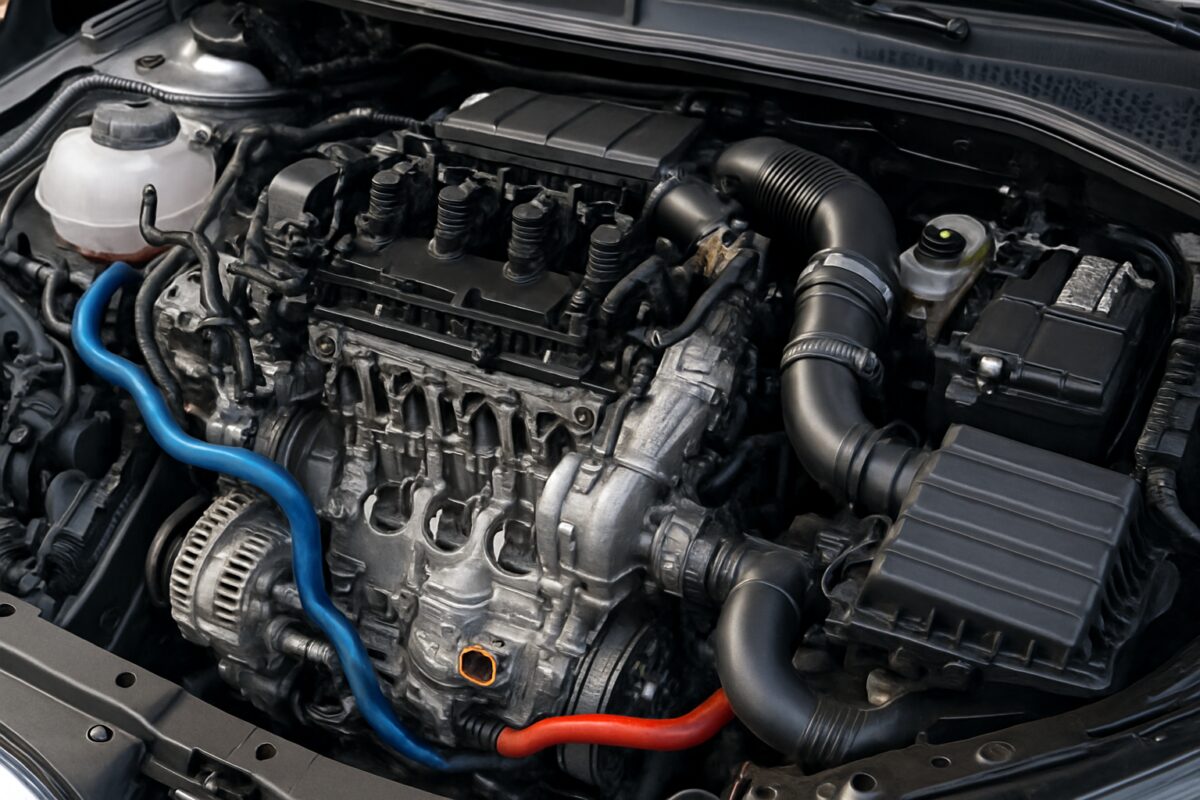
The Skoda Fabia has established itself as a reliable compact car in the UK market, offering practical transport for budget-conscious drivers and young families alike. The engine selection plays a crucial role in determining the vehicle’s performance, running costs, and overall ownership experience. From efficient three-cylinder units producing 60-75bhp to spirited 1.0-litre turbocharged motors delivering up to 110bhp, the Fabia’s powertrain options cater to diverse driving needs whilst maintaining excellent fuel economy.
Comparison table of all engines
Here’s a comprehensive overview of the main engine options available across different Fabia generations:
| Engine | Power output | Torque | Fuel consumption | Reliability |
|---|---|---|---|---|
| 1.0 MPI 60 | 60 bhp | 95 Nm | 55.4 mpg | Excellent |
| 1.0 MPI 75 | 75 bhp | 95 Nm | 52.3 mpg | Excellent |
| 1.0 TSI 95 | 95 bhp | 175 Nm | 58.9 mpg | Very good |
| 1.0 TSI 110 | 110 bhp | 200 Nm | 55.4 mpg | Very good |
| 1.4 TDI 90 | 90 bhp | 230 Nm | 68.9 mpg | Good |
1.0 MPI naturally aspirated engine overview
The 1.0-litre MPI (Multi Point Injection) represents Skoda’s entry-level petrol option, featuring a naturally aspirated three-cylinder configuration. This compact powerplant displaces exactly 999cc and utilises traditional port fuel injection rather than direct injection technology. Available in both 60bhp and 75bhp variants, the MPI engine prioritises simplicity and cost-effectiveness over outright performance.
Built without turbocharging, this unit relies on natural aspiration to draw air into the combustion chambers. The engine runs on standard unleaded petrol and features a straightforward electronic fuel injection system that delivers adequate reliability for urban driving conditions.
Pros
- Exceptional fuel economy reaching up to 55 mpg
- Low maintenance requirements and simple design
- Affordable purchase price and insurance costs
- Proven reliability with minimal electronic complexity
- Adequate power for city driving and short commutes
Cons
- Limited power output struggles on motorways
- Poor overtaking ability at higher speeds
- Three-cylinder vibration noticeable at idle
- Lack of torque makes hill starts challenging
- Engine noise becomes intrusive under hard acceleration
1.0 TSI turbocharged engine overview
The 1.0 TSI represents Skoda’s modern approach to small-capacity motoring, combining turbocharging with direct injection technology. This three-cylinder unit displaces 999cc but delivers significantly more power than its naturally aspirated sibling through forced induction. Available in 95bhp and 110bhp configurations, the TSI employs a sophisticated turbocharger system and direct petrol injection.
The engine features an integrated exhaust manifold within the cylinder head, improving thermal efficiency and reducing emissions. Running on premium unleaded fuel, this unit showcases advanced engineering with turbocharger technology that delivers strong low-end torque whilst maintaining excellent fuel economy.
Pros
- Strong torque delivery from low rpm
- Excellent fuel efficiency despite performance gains
- Smooth power delivery with minimal turbo lag
- Adequate motorway performance for overtaking
- Modern technology with low emissions
Cons
- Higher purchase price than MPI alternatives
- Requires premium fuel for optimal performance
- More complex system increases potential repair costs
- Three-cylinder character still present at idle
- Turbocharger components may require eventual replacement
1.4 TDI diesel engine overview
The 1.4 TDI diesel option provides maximum fuel efficiency for high-mileage drivers, featuring a four-cylinder turbocharged configuration with common rail direct injection. This 1,422cc unit produces 90bhp whilst delivering exceptional torque output of 230Nm, making it ideal for long-distance driving and motorway cruising.
Equipped with a variable geometry turbocharger and sophisticated diesel particulate filter system, the TDI runs on standard diesel fuel with excellent combustion efficiency. The engine incorporates modern emission control technology to meet stringent Euro 6 standards whilst maintaining the traditional diesel advantage of superior fuel economy.
Pros
- Outstanding fuel economy exceeding 65 mpg
- Strong torque delivery perfect for motorway driving
- Excellent long-distance cruising ability
- Lower CO2 emissions than petrol equivalents
- Robust construction suitable for high mileages
Cons
- Higher initial purchase cost
- DPF system requires regular motorway driving
- Potential for expensive emission system repairs
- Diesel fuel costs more than petrol
- Engine noise more pronounced than petrol units
Maintenance cost
Understanding maintenance expenses helps owners budget effectively for their Fabia’s upkeep. Different engines require varying service intervals and component costs:
| Engine | Recommended Interval | Estimated Cost | Cost per 10,000 miles |
|---|---|---|---|
| 1.0 MPI 60/75 | 12 months/10,000 miles | £180-220 | £180-220 |
| 1.0 TSI 95/110 | 12 months/10,000 miles | £220-280 | £220-280 |
| 1.4 TDI 90 | 12 months/10,000 miles | £260-320 | £260-320 |
Our AutoPartsPro mechanics recommend keeping detailed service records and using quality oil filters during maintenance intervals. The MPI engines prove most economical for servicing, whilst TSI units require premium components that increase costs moderately.
“Regular servicing with genuine parts significantly extends engine life and maintains warranty coverage. Don’t compromise on engine oil quality, especially with turbocharged variants.”
Engine sound and character
Each Fabia engine delivers a distinct acoustic signature that reflects its underlying technology. The 1.0 MPI units produce a characteristic three-cylinder thrum at idle, becoming more refined under gentle acceleration but growing coarse when pushed hard. This natural aspiration creates an honest, mechanical sound without artificial enhancement.
The 1.0 TSI engines offer improved refinement through turbocharging, delivering a more subdued idle note with satisfying whoosh sounds during acceleration. The forced induction masks much of the three-cylinder roughness, creating a more premium driving experience that feels substantial despite the small displacement.
The 1.4 TDI provides typical diesel characteristics with pronounced compression ignition rattle at idle, settling into a purposeful drone during cruising. Modern sound deadening reduces cabin intrusion, but the diesel nature remains evident, particularly during cold starts and under heavy acceleration.
“The TSI engines strike the best balance between character and refinement, offering engaging sounds without excessive harshness that can become tiring on longer journeys.”
Who each engine is best for
Matching the right engine to your driving requirements ensures optimal satisfaction and running costs:
| Engine | Best for | Driving style | Annual mileage |
|---|---|---|---|
| 1.0 MPI 60 | Budget-conscious owners | City driving, short trips | Under 8,000 miles |
| 1.0 MPI 75 | Daily commuters | Mixed urban/rural driving | 8,000-12,000 miles |
| 1.0 TSI 95 | Performance-conscious drivers | Spirited driving, longer trips | 10,000-15,000 miles |
| 1.0 TSI 110 | Performance enthusiasts | Motorway driving, overtaking | 12,000-18,000 miles |
| 1.4 TDI 90 | Long-distance drivers | Motorway cruising, efficiency | Over 15,000 miles |
Frequently asked questions (FAQ)
Which Skoda Fabia engine is most reliable?
The 1.0 MPI engines demonstrate exceptional reliability due to their simple naturally aspirated design with fewer complex components to fail over time.
How often should I service my Fabia engine?
All Fabia engines require servicing every 12 months or 10,000 miles, whichever comes first, to maintain optimal performance and warranty coverage.
Can the 1.0 TSI engine run on regular unleaded fuel?
Whilst the TSI can run on standard fuel, premium unleaded is recommended for optimal performance, efficiency, and long-term engine health.
What’s the main difference between MPI and TSI engines?
MPI uses natural aspiration with port injection, whilst TSI combines turbocharging with direct injection for significantly more power and torque output.
Should I choose diesel for high-mileage driving?
The 1.4 TDI suits drivers covering over 15,000 miles annually, offering superior fuel economy but requiring regular motorway driving for DPF regeneration.
For reliable spark plugs and fuel filters to keep your Fabia running smoothly, AutoPartsPro offers comprehensive parts coverage for all engine variants. Regular maintenance with quality components ensures your chosen powerplant delivers years of dependable service, whether you’ve selected the frugal MPI, versatile TSI, or efficient TDI option.

 Loading...