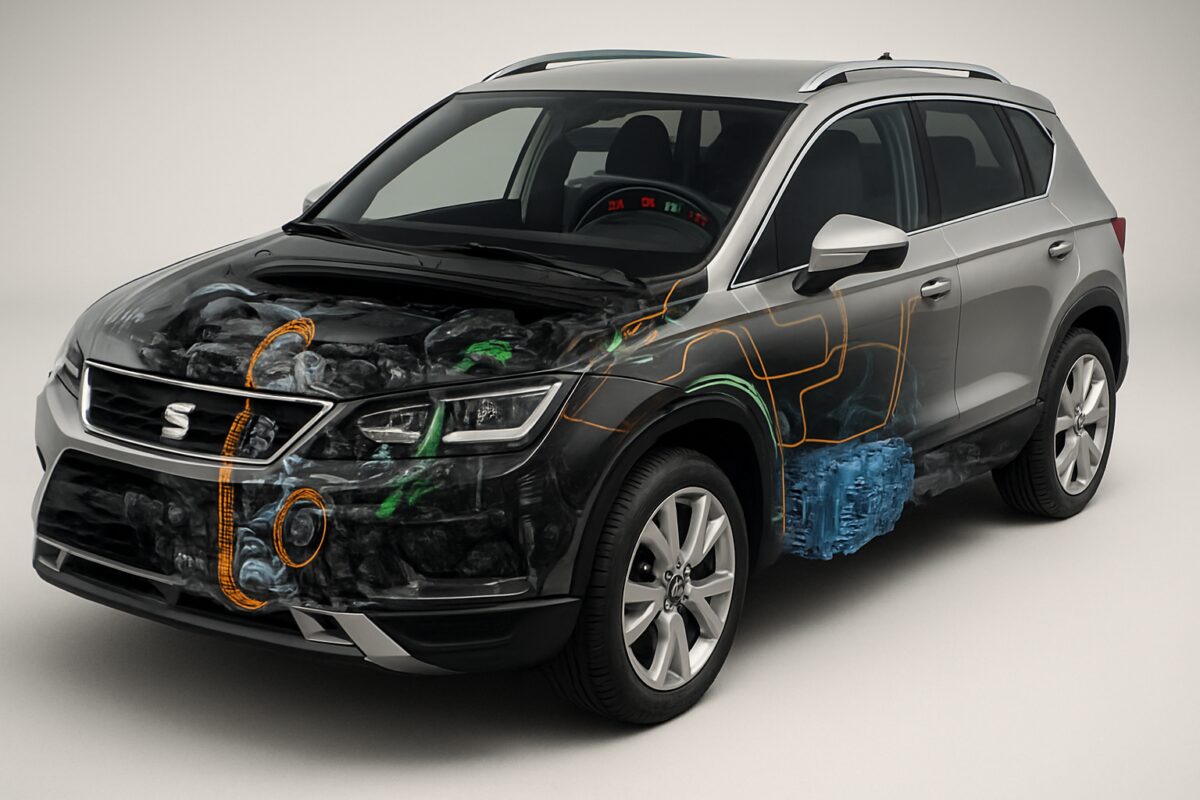
The Seat Ateca has established itself as a popular compact SUV in the UK market since its launch in 2016. However, like any vehicle, it’s not immune to certain mechanical issues that can affect performance and reliability. Understanding these common problems helps owners make informed decisions about maintenance and repairs.
Engine timing chain problems
One of the most serious issues affecting Seat Ateca models is premature timing chain stretch, particularly in 1.4 TSI engines. This problem typically manifests between 40,000 and 80,000 miles, causing a rattling noise from the engine bay during cold starts.
The stretched timing chain can lead to incorrect valve timing, reduced engine performance, and potentially catastrophic engine damage if left unaddressed. Our specialists at Autopartspro have observed that this issue stems from inadequate lubrication of the timing chain tensioner system, often exacerbated by extended service intervals.
Early warning signs include metallic rattling sounds during engine startup, rough idling, and decreased fuel economy. The engine management light may also illuminate when the problem becomes severe enough to affect engine timing significantly.
DSG transmission malfunctions
The dual-clutch DSG transmission, whilst offering smooth gear changes, presents several reliability concerns in the Ateca. Common symptoms include jerky gear changes, hesitation during acceleration, and complete transmission failure in severe cases.
Mechatronic unit failures are particularly prevalent, causing erratic shifting patterns and warning lights on the dashboard. The dry clutch system in seven-speed DSG units is especially susceptible to premature wear, particularly in stop-start city driving conditions.
Temperature-related issues also affect DSG performance, with the transmission entering limp mode during hot weather or heavy traffic conditions. Regular transmission fluid changes and software updates can help mitigate these problems, but complete mechatronic unit replacement may be necessary in severe cases.
Turbocharger reliability issues
Turbocharger problems plague many Ateca models, particularly those with 1.4 TSI and 2.0 TSI engines. The most common issue involves actuator failure, which controls boost pressure regulation and can cause significant performance loss.
Carbon build-up in the turbocharger system leads to reduced efficiency and potential component failure. This problem is exacerbated by short journey patterns common in urban driving, preventing the turbo from reaching optimal operating temperatures.
Wastegate problems also occur frequently, causing overboost conditions that trigger limp mode and reduce engine power. Oil contamination from worn seals can damage turbo bearings, leading to complete turbocharger failure requiring expensive replacement.
Electronic system failures
Modern Atecas rely heavily on electronic systems, making them vulnerable to various electrical faults. The infotainment system frequently experiences software glitches, causing touchscreen freezing and connectivity issues.
Parking sensor malfunctions are particularly common, with sensors becoming dirty or damaged, leading to false warnings or complete system failure. The rear parking camera may also develop image distortion or complete blackout issues.
Climate control systems suffer from actuator failures, preventing proper temperature regulation and causing unusual noises from the dashboard. These electronic problems often require diagnostic equipment to identify and can be expensive to repair due to the integrated nature of modern vehicle electronics.
Warning signs your car has a problem
Recognising early warning signs can prevent minor issues from becoming major repairs. Pay attention to these key indicators:
- Unusual engine noises, particularly metallic rattling during startup
- Dashboard warning lights, especially engine management and transmission warnings
- Changes in driving behaviour, such as rough idling or hesitation during acceleration
- Electronic system malfunctions, including infotainment freezing or sensor errors
- Unusual smells, particularly burning odours from the engine bay
Visual inspections can also reveal potential problems. Look for oil leaks, unusual wear patterns on tyres, and corrosion around electrical connections.
How to fix the problems
Different problems require specific approaches and vary significantly in complexity and cost:
| Problem | DIY Difficulty | Professional Cost | Prevention |
|---|---|---|---|
| Timing Chain Stretch | Very High | £800-£1,500 | Regular oil changes |
| DSG Transmission | Very High | £1,200-£3,000 | Proper service intervals |
| Turbocharger Failure | High | £600-£2,000 | Quality oil, proper warm-up |
| Electronic Faults | Medium | £150-£800 | Software updates |
Professional tip: Always use genuine or OEM-equivalent parts when replacing critical components like timing chains or turbochargers. Cheaper alternatives may save money initially but often lead to premature failure and additional repair costs.
For electronic issues, software updates and system resets can resolve many problems without component replacement. However, complex electrical faults require professional diagnostic equipment and expertise.
When to see a mechanic
Certain symptoms require immediate professional attention to prevent expensive damage. Contact a qualified technician if you experience engine knocking noises, transmission warning lights, or complete loss of power.
Timing chain issues should never be ignored, as stretched chains can cause valve timing problems leading to complete engine failure. Similarly, DSG transmission problems can strand you unexpectedly and cause expensive internal damage if not addressed promptly.
Electronic faults affecting safety systems like parking sensors or ABS sensors require immediate attention. These systems are crucial for safe vehicle operation and may cause MOT failures if faulty.
Expert advice from Autopartspro: Don’t attempt DIY repairs on complex systems like DSG transmissions or timing chains. These components require specialist tools and knowledge. Improper installation can cause more expensive damage than the original fault.
Regular diagnostic checks can identify developing problems before they become serious. Many electronic issues show fault codes before symptoms become apparent to drivers.
Frequently asked questions
What is the most common Seat Ateca problem?
Timing chain stretch in 1.4 TSI engines is the most frequently reported issue, typically occurring between 40,000-80,000 miles.
How reliable is the Seat Ateca compared to competitors?
The Ateca ranks average for reliability, with main issues concentrated in engine timing and transmission systems.
Should I buy a high-mileage Seat Ateca?
High-mileage Atecas can be good value if timing chain and DSG service history is documented and recent.
What maintenance prevents most Ateca problems?
Regular oil changes, transmission services, and software updates prevent the majority of common issues effectively.
Are Seat Ateca repairs expensive compared to other SUVs?
Repair costs are moderate for routine items but high for timing chains and DSG transmission work.
Final recommendation
The Seat Ateca remains a compelling choice in the compact SUV segment despite its known issues. Most problems are manageable with proper maintenance and early intervention. Timing chain and DSG transmission concerns shouldn’t deter potential buyers who maintain vehicles properly.
When purchasing a used Ateca, prioritise vehicles with complete service histories and evidence of timing chain replacement if applicable. Budget for potential DSG services and consider extended warranties for added peace of mind.
Our experience at Autopartspro suggests that well-maintained Atecas provide reliable service when owners address known issues proactively. Regular professional inspections and prompt attention to warning signs significantly extend vehicle lifespan and reduce overall ownership costs.

 Loading...