The Volkswagen Polo 6R, produced between 2009 and 2017, is a reliable supermini that has earned its place on British roads. However, like many vehicles of its era, the VW Polo 6R water pump can develop specific issues that owners should understand. Our mechanics at AutoPartsPro have diagnosed countless Polo 6R cooling system problems, and we’ve compiled this comprehensive guide to help you recognise, prevent, and address water pump complications before they become costly repairs.
Coolant leaks around the water pump housing
One of the most common water pump problems in the VW Polo 6R involves coolant leaks developing around the pump housing. These leaks typically manifest as puddles of pink or green coolant beneath your vehicle, particularly noticeable after parking overnight.
The issue often stems from deteriorating gaskets and seals within the water pump assembly. As these rubber components age, they lose elasticity and begin to allow coolant to seep through microscopic gaps. Temperature fluctuations common in British weather accelerate this degradation process.
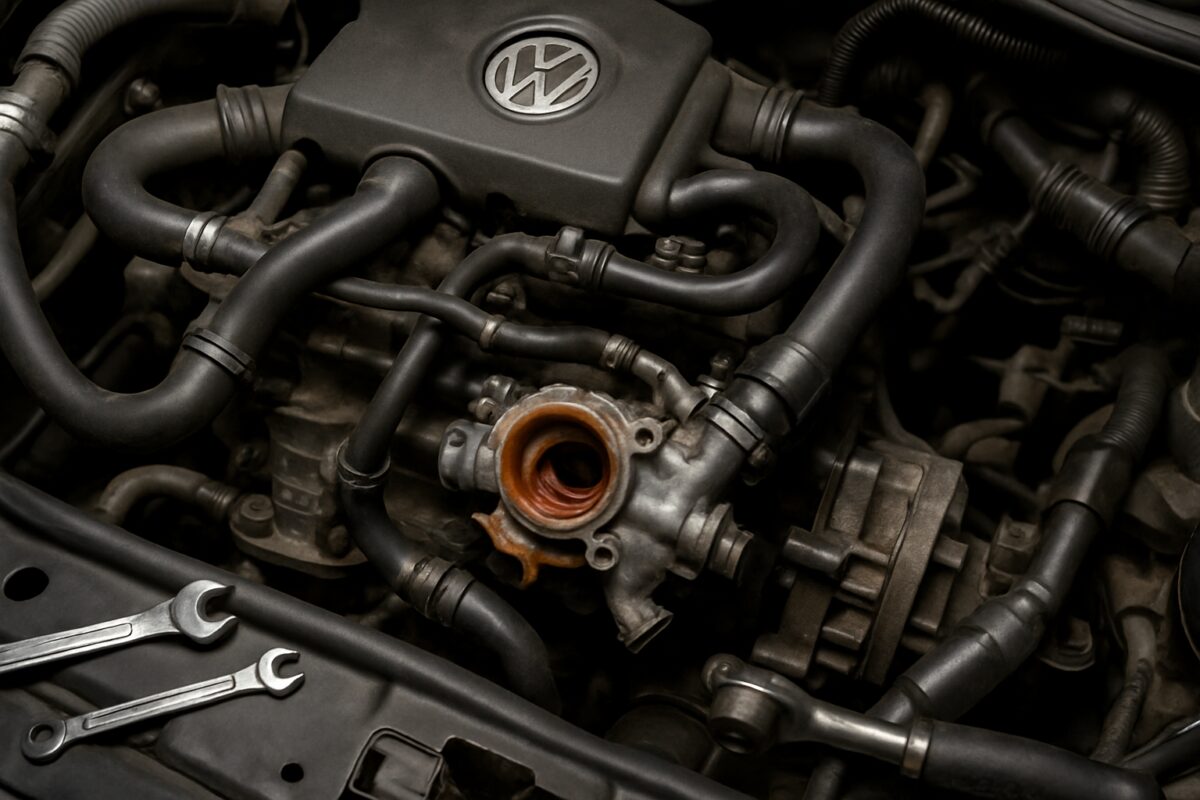
External coolant leaks are easier to spot than internal ones. You might notice white residue or crystalline deposits around the pump housing where coolant has evaporated. The leak usually starts small but progressively worsens, eventually leading to overheating if left unchecked.
Our experience shows that Polo 6R models with higher mileage are particularly susceptible to this problem. The combination of constant pressure cycling and thermal stress gradually compromises the sealing components. Early detection through regular visual inspections can prevent more serious engine damage.
Strange noises from the engine bay
Unusual sounds emanating from your Polo 6R’s engine compartment often indicate water pump bearing failure. These noises typically present as grinding, whining, or squealing sounds that become more pronounced during cold starts or when the engine reaches operating temperature.
The water pump’s internal bearings support the impeller shaft and allow smooth rotation. When these bearings begin to fail, friction increases dramatically, creating the characteristic grinding noise. This problem is particularly common in vehicles that have experienced coolant contamination or have gone extended periods without proper maintenance.
Metal-on-metal contact occurs when bearing lubrication fails completely. At this stage, the noise becomes constant and may be accompanied by visible wobbling of the cooling fan or belt tensioner. The grinding sound often intensifies when accelerating or when additional load is placed on the engine.
Temperature changes can temporarily mask these symptoms. Cold weather may reduce the noise initially, whilst hot conditions typically make the problem more apparent. If you hear persistent grinding from the front of your engine, immediate inspection is essential to prevent catastrophic failure.
Overheating despite adequate coolant levels
A failing water pump can cause engine overheating even when coolant levels appear normal in the expansion tank. This occurs when the pump’s impeller becomes damaged or when internal circulation becomes restricted.
Impeller erosion is a gradual process that reduces the pump’s ability to circulate coolant effectively. The impeller blades may develop pitting, crack, or even break away entirely. This significantly reduces coolant flow throughout the engine, particularly to critical areas like the cylinder head and engine block.
Cavitation damage represents another serious concern in Polo 6R water pumps. Air bubbles in the coolant system collapse violently against the impeller surface, gradually eating away at the metal. This process accelerates when coolant levels drop or when air enters the system through leaks.
Internal blockages can also impede coolant circulation. Corrosion products, scale deposits, or debris may accumulate within the pump housing, creating restrictions that limit flow. Regular coolant system maintenance helps prevent these buildups, but older vehicles often develop problems despite proper care.
Warning signs your car has a problem
Recognising water pump failure symptoms early can save you from expensive engine repairs. Here are the key indicators every Polo 6R owner should monitor:
- Temperature gauge reading higher than normal during routine driving
- Visible coolant puddles beneath your vehicle, especially after parking
- White steam emanating from the engine bay during operation
- Unusual grinding, whining, or squealing noises from the front of the engine
- Sweet antifreeze smell inside or outside the vehicle
Additional warning signs include fluctuating temperature readings, particularly during stop-and-go traffic. The heater may also blow cold air when the engine is warm, indicating poor coolant circulation through the heater core.
- Rust-coloured coolant or visible contamination in the expansion tank
- Repeated need to top up coolant levels without obvious external leaks
- Engine performance issues, including rough idling or reduced power
- Coolant warning lights illuminating on the dashboard
- Excessive pressure buildup in the cooling system
Professional tip: Check your coolant weekly during winter months. Temperature fluctuations put extra stress on ageing water pump seals, and early detection prevents costly repairs.
How to fix the problems
Addressing water pump issues in your VW Polo 6R requires systematic diagnosis and proper repair procedures. The following table outlines common problems and their solutions:
| Problem | Immediate Action | Long-term Solution | Estimated Cost |
|---|---|---|---|
| Minor coolant leak | Monitor levels, add coolant | Replace pump gaskets/seals | £180-£320 |
| Bearing noise | Reduce driving, avoid overheating | Complete water pump replacement | £280-£450 |
| Overheating | Stop driving immediately | Replace pump and thermostat | £350-£600 |
| Coolant contamination | Flush system, check for leaks | System flush and pump replacement | £400-£650 |
Prevention strategies significantly extend water pump life in your Polo 6R. Regular coolant changes using VW-approved antifreeze prevent corrosion and maintain proper lubrication. The recommended interval is every four years or 60,000 miles, whichever comes first.
| Maintenance Task | Frequency | Cost Range | DIY Difficulty |
|---|---|---|---|
| Coolant level check | Monthly | Free | Easy |
| Visual leak inspection | Monthly | Free | Easy |
| Coolant system flush | 4 years/60,000 miles | £80-£150 | Moderate |
| Drive belt inspection | Every service | £25-£60 | Moderate |
Expert advice: Always replace the thermostat when changing your water pump. The labour costs overlap significantly, making it economical to address both components simultaneously.
When to see a mechanic
Certain water pump symptoms require immediate professional attention to prevent catastrophic engine damage. Any grinding noise from the engine bay warrants urgent inspection, as bearing failure can occur rapidly once symptoms appear.
Temperature gauge readings consistently above the normal range indicate serious cooling system problems that demand expert diagnosis. Driving with an overheating engine risks permanent damage to pistons, cylinder heads, and gaskets that can cost thousands to repair.
Visible steam from the engine compartment represents an emergency situation requiring immediate attention. This usually indicates significant coolant loss that could lead to complete cooling system failure within minutes of continued operation.
Professional diagnosis becomes essential when multiple symptoms occur simultaneously. Complex cooling system problems often involve several components, and proper repair requires systematic testing to identify all affected parts. Our certified technicians use pressure testing equipment and thermal imaging to pinpoint exact failure locations.
Frequently asked questions (FAQ)
How much does a VW Polo 6R water pump replacement cost in the UK?
Water pump replacement typically costs between £280-£450 for parts and labour, depending on your location and chosen garage.
Can I drive my Polo 6R with a failing water pump?
Driving with water pump problems risks severe engine damage. Stop immediately if you notice overheating or grinding noises.
How long do VW Polo 6R water pumps typically last?
With proper maintenance, Polo 6R water pumps generally last 80,000-120,000 miles or 8-10 years under normal driving conditions.
What causes water pump failure in the VW Polo 6R?
Common causes include seal deterioration, bearing wear, coolant contamination, overheating episodes, and inadequate maintenance of the cooling system.
Should I replace other components when changing the water pump?
Yes, replace the thermostat and consider new coolant hoses. This prevents future failures and maximises repair value.
Final recommendation
Water pump problems in the VW Polo 6R are manageable with proper awareness and timely intervention. Our experience at AutoPartsPro shows that most failures occur gradually, giving owners adequate warning time for planned repairs rather than emergency breakdowns.
Regular cooling system maintenance represents the most effective prevention strategy. Monthly visual inspections, proper coolant changes, and prompt attention to unusual symptoms can extend your water pump’s service life significantly beyond average expectations.
When replacement becomes necessary, choose quality OEM or equivalent parts from reputable suppliers. Cheaper alternatives may save money initially but often fail prematurely, leading to repeated repairs and potential engine damage. Our technical team recommends combining water pump replacement with comprehensive cooling system service for optimal long-term reliability.
Don’t ignore early warning signs hoping problems will resolve themselves. Water pump failure progression is predictable, and early intervention always costs less than emergency repairs or engine rebuilds caused by catastrophic cooling system failure.

 Loading...