To replace rear wiper blades, you’ll need a new vehicle-specific rear wiper blade, basic tools, and about 10 minutes. The process involves lifting the wiper arm away from the glass, releasing the old blade from its mounting mechanism, and securing the new blade in place.
Tools & parts required
Replacing your rear wiper blade is simpler than you might think. Most jobs require minimal equipment and can be completed without professional assistance.
Parts needed:
- Rear wiper blade (vehicle specific)
- Clean cloth or towel
- Glass cleaner (optional)
Tools required:
- None for most vehicles
- Small flathead screwdriver (some models)
- Clean workspace
Always ensure the rear wiper blade matches your vehicle’s make, model, and year. The wrong size or attachment type won’t fit properly and could damage your wiper motor.
Safety precautions
Work in good lighting conditions where you can see the attachment mechanism clearly. Avoid forcing components that don’t move easily, as this could damage the wiper arm or motor assembly.
Keep a clean cloth handy to protect the rear window from scratches. If your vehicle has a heated rear window, handle the wiper arm gently to avoid damaging the heating elements.
Step-by-step instructions
Follow these detailed steps to replace your rear wiper blade safely and effectively.
Step 1: Prepare the work area
Park your vehicle on level ground away from direct sunlight. Clean the rear window and surrounding area to remove dirt that might interfere with the replacement process.
Position the rear wiper arm in its resting position against the glass. This gives you the best access to the blade attachment point.
Step 2: Lift the wiper arm
Gently pull the wiper arm away from the rear window until it locks in the raised position. Most rear wiper arms have a spring mechanism that holds them away from the glass.
If the arm won’t stay raised, have someone hold it steady whilst you work. Never let the arm snap back onto the glass without a blade attached.
Step 3: Remove the old wiper blade
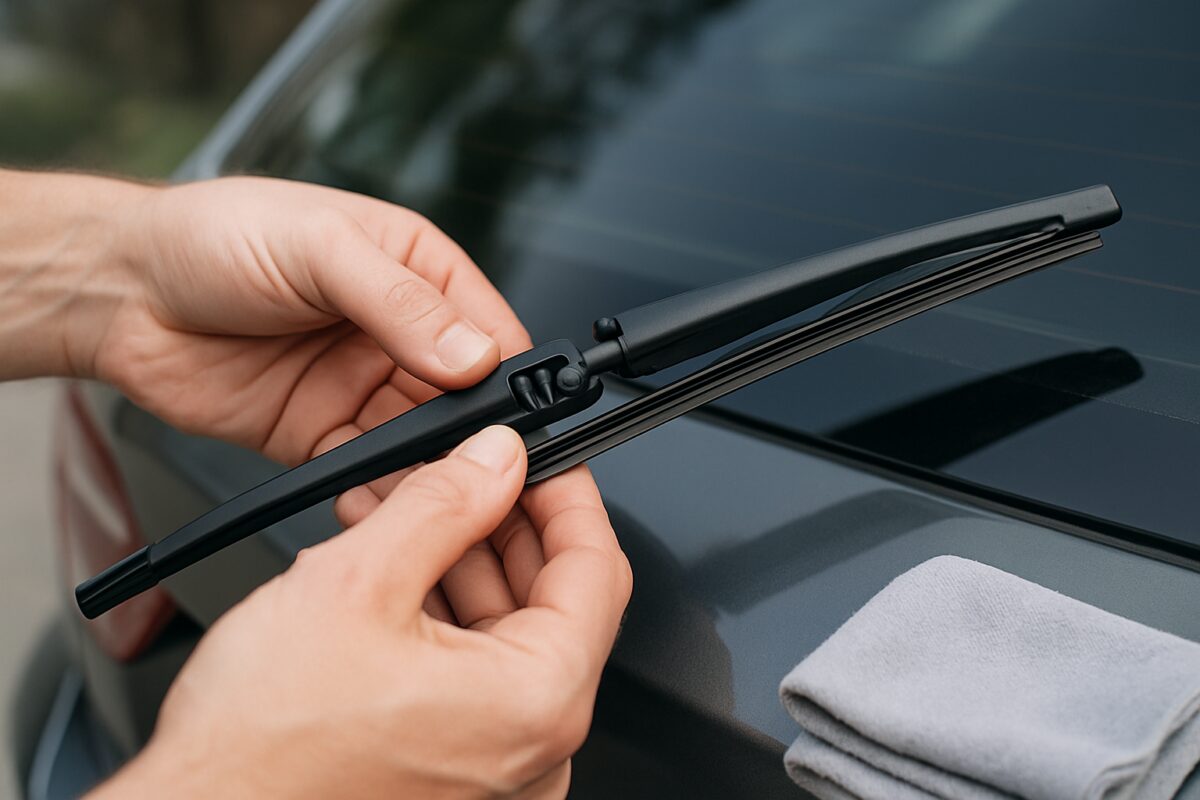
Locate the attachment mechanism where the blade connects to the arm. Common types include hook-style, bayonet, and push-button connections.
For hook-style attachments, lift the small plastic tab and slide the blade away from the curved end of the arm. Bayonet connections require a quarter-turn twist before pulling the blade free.
Professional tip from our AutoPartsPro mechanics: Take a photo of the old blade’s position before removal. This helps ensure correct installation of the new blade.
Step 4: Install the new wiper blade
Remove the new blade from its packaging and identify the correct attachment end. Align the blade’s connector with the wiper arm’s attachment point.
For hook connections, slide the blade onto the arm until you hear a click. Bayonet fittings require insertion followed by a quarter-turn to lock in place.
Gently tug the blade to ensure it’s securely attached. A properly fitted blade won’t slide or rotate on the arm.
Step 5: Test the installation
Lower the wiper arm back onto the rear window carefully. Turn on your vehicle’s ignition and test the rear wiper function.
The new blade should move smoothly across the glass without chattering or leaving streaks. If you notice irregular movement, check that the blade is properly seated on the arm.
Common mistakes to avoid
Many DIY enthusiasts make preventable errors that can damage their vehicle or reduce wiper performance.
Installing the wrong blade size: Using incorrect dimensions causes poor contact with the glass and potential motor strain. Always verify your vehicle’s specifications before purchasing.
Forcing difficult connections: If the blade won’t attach easily, check you’re using the correct fitting type. Never use excessive force on wiper components.
Letting the arm hit the glass: Without a blade attached, the metal arm can crack or chip your rear window. Always control the arm’s movement during replacement.
Expert advice: Our AutoPartsPro specialists recommend replacing rear wiper blades every 12-18 months, or sooner if you notice streaking or chattering during operation.
When should you replace it?
Several symptoms indicate your rear wiper blade needs replacement. Streaking across the glass suggests the rubber has hardened or split.
Chattering or skipping motion during operation means the blade isn’t maintaining proper contact with the window surface. Visible cracks, splits, or missing pieces of rubber are clear signs for immediate replacement.
Most rear wiper blades last 12-18 months under normal UK conditions. However, exposure to extreme weather, parking under trees, or frequent use can reduce this lifespan significantly.
Related maintenance you can do at the same time
While accessing the rear wiper area, consider these additional maintenance tasks that can improve your vehicle’s performance and safety.
Clean the rear window thoroughly with quality glass cleaner. Check the condition of your air filter, as a clogged filter reduces demisting efficiency.
Inspect the rear windscreen washer jet for blockages. Test the washer fluid level and top up if necessary. Consider upgrading to additional lighting if your rear visibility needs improvement.
This is also an excellent opportunity to check your brake pads visually through the wheel spokes whilst you’re working at the rear of the vehicle.
Frequently asked questions
How often should I replace my rear wiper blade?
Replace rear wiper blades every 12-18 months or when you notice streaking, chattering, or visible rubber damage during operation.
Can I use any rear wiper blade on my car?
No, you must use the correct size and attachment type for your specific vehicle make and model year.
Why does my new rear wiper blade chatter on the glass?
Chattering usually indicates incorrect installation, wrong blade size, or a dirty window surface that needs cleaning before use.
Is it safe to drive without a rear wiper blade?
While not illegal, driving without a rear wiper blade reduces visibility during rain and may fail an MOT inspection.
Can I replace just the rubber part instead of the whole blade?
Some premium rear wiper blades allow rubber replacement, but most budget models require complete blade replacement for optimal performance.
Replacing your rear wiper blade regularly ensures optimal visibility and safety during adverse weather conditions. Using the correct wiper blade type and following proper installation procedures will deliver reliable performance for many months of driving.

 Loading...