Brake discs typically last between 30,000 to 70,000 miles under normal driving conditions, though some can exceed 100,000 miles with proper care. The lifespan depends on driving style, vehicle weight, disc quality, and environmental factors. Most drivers need replacement every 50,000 miles on average, making it essential to understand when your brake discs require attention.
Understanding brake disc longevity helps you plan maintenance costs and ensure vehicle safety. These critical components convert kinetic energy into heat through friction, gradually wearing down over time. Regular inspection prevents costly repairs and maintains optimal braking performance.
How many miles do brake discs typically last?
Standard brake disc mileage varies significantly across different vehicle types and usage patterns. Economy cars with lighter weight often see discs lasting 60,000 to 80,000 miles, whilst heavier vehicles like SUVs may require replacement at 30,000 to 50,000 miles.
Several factors influence these figures considerably. Urban driving with frequent stops reduces lifespan compared to motorway cruising. Quality brake rotors from premium manufacturers typically outlast budget alternatives by 20-30%.
Here’s a breakdown of typical mileage expectations by vehicle category:
| Vehicle Type | Average Lifespan (Miles) | Replacement Interval |
|---|---|---|
| Small Cars | 60,000-80,000 | Every 4-6 years |
| Family Saloons | 50,000-70,000 | Every 3-5 years |
| SUVs/4x4s | 30,000-50,000 | Every 2-4 years |
| Performance Cars | 20,000-40,000 | Every 1-3 years |
Premium vehicles often feature larger, more robust discs that handle heat better. However, their increased performance capabilities and weight can offset this advantage. Regular inspection remains crucial regardless of vehicle type.
Key factors affecting brake disc lifespan
Understanding what influences brake disc wear helps maximise their service life. Multiple elements work together to determine replacement intervals, from your driving habits to environmental conditions.
Driving style and patterns
Aggressive braking significantly reduces disc life. Hard stops generate excessive heat, causing thermal stress and accelerated wear. Smooth, progressive braking extends component life by distributing wear evenly across the disc surface.
City driving poses particular challenges with frequent traffic lights and roundabouts. Stop-and-go conditions create more braking events per mile compared to steady motorway driving. This increased frequency compounds wear rates substantially.
Hills and mountains add another dimension to wear patterns. Downhill descents require prolonged braking, generating sustained heat that can warp discs or create hot spots. Engine braking helps reduce this stress considerably.
Vehicle weight and load
Heavier vehicles demand more braking force, naturally wearing discs faster. A fully loaded van works its brakes harder than an empty one. Passenger load, cargo weight, and towing all contribute to increased wear rates.
Weight distribution affects individual disc wear patterns. Front discs typically wear 1.5-2 times faster than rears due to weight transfer during braking. This imbalance necessitates different replacement schedules for front and rear components.
Regular brake pads inspection helps identify uneven wear patterns early. Worn pads damage discs through metal-to-metal contact, significantly reducing their lifespan.
Environmental conditions
Salt exposure from coastal areas or winter gritting accelerates corrosion. Rust pitting weakens disc structure and creates uneven surfaces that increase wear rates. Regular cleaning helps mitigate these effects.
Temperature extremes affect brake disc performance differently. Cold conditions make materials brittle, whilst excessive heat can cause warping or cracking. Thermal cycling between hot and cold creates stress that gradually weakens the material.
Dust and debris from unpaved roads act as abrasives, gradually wearing disc surfaces. Off-road driving introduces additional contaminants that accelerate component degradation through increased friction.
Warning signs your brake discs need replacement
Recognising early warning signs prevents dangerous brake failure and reduces repair costs. Several indicators suggest approaching replacement intervals, from visual cues to performance changes.
Visual inspection indicators
Scoring or grooving on the disc surface indicates excessive wear. Deep scratches reduce braking efficiency and may require immediate replacement. Surface rust after parking isn’t concerning, but extensive corrosion weakens the disc structure.
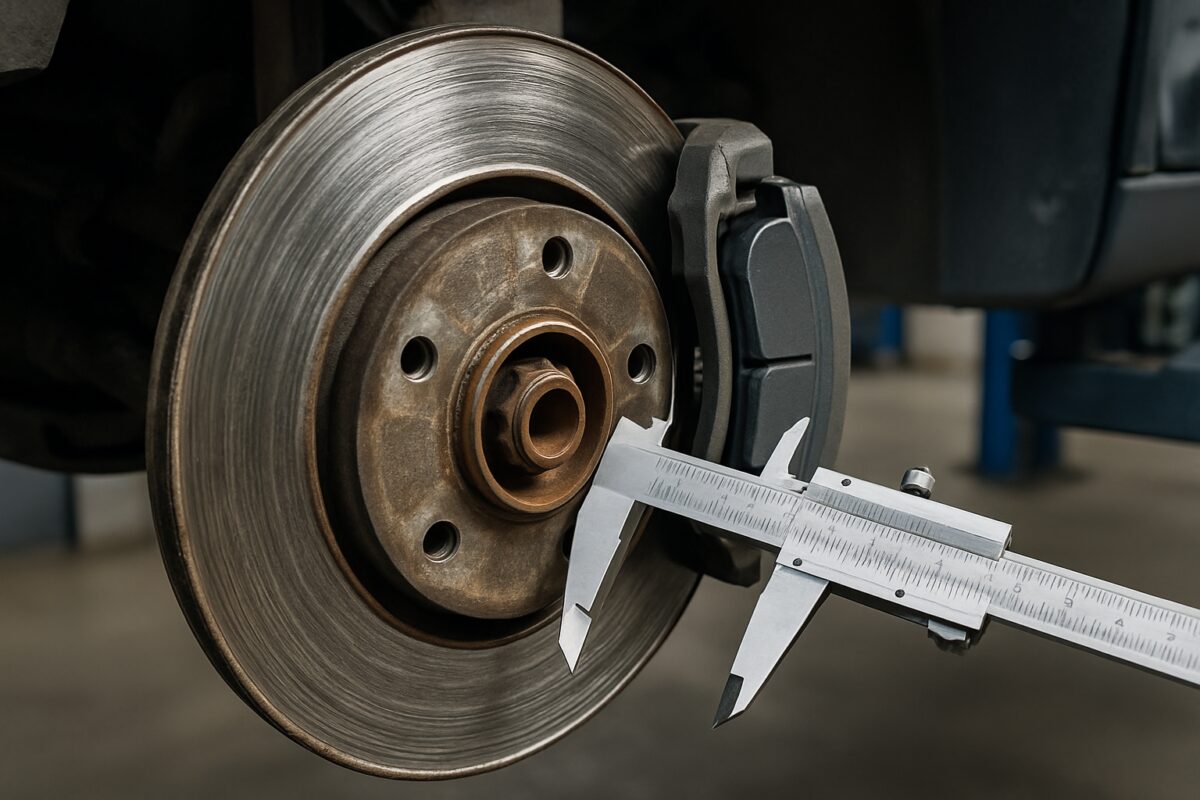
Disc thickness measurement provides objective wear assessment. Most discs have minimum thickness specifications stamped on them. Measuring with callipers reveals remaining material before replacement becomes necessary.
Edge lipping around the disc circumference shows normal wear progression. However, excessive lip formation indicates advanced wear requiring prompt attention. This occurs when brake pads wear unevenly or completely.
Performance-related symptoms
Steering wheel vibration during braking often indicates warped discs. This pulsing sensation worsens under heavy braking and affects vehicle control. Warped discs require immediate replacement for safety reasons.
Squealing or grinding noises suggest various brake system issues. High-pitched squealing often comes from worn pad indicators, whilst grinding indicates metal-to-metal contact damaging the disc surface.
Notable symptoms requiring attention include:
- Increased stopping distances
- Brake pedal pulsation or vibration
- Unusual noises during braking
- Visual scoring or cracking
- Excessive rust or corrosion
Changes in brake pedal feel indicate system problems. A spongy pedal might suggest fluid issues, whilst excessive travel could indicate worn components. These symptoms warrant immediate professional inspection.
Different types of brake discs and their lifespans
Various disc designs offer different performance characteristics and longevity. Understanding these options helps select appropriate replacements for your driving needs and budget requirements.
Solid brake discs
Standard solid discs represent the most common and economical option. These single-piece units handle normal driving conditions adequately whilst offering reasonable longevity. They typically last 50,000-70,000 miles under average conditions.
Solid discs suit economy cars and light-duty applications perfectly. Their simple construction reduces manufacturing costs, making replacement more affordable. However, they offer limited heat dissipation compared to more advanced designs.
Vented brake discs
Vented discs feature internal cooling passages that improve heat dissipation. This design extends lifespan by preventing thermal stress and maintaining consistent performance. They typically last 60,000-80,000 miles with proper maintenance.
These discs suit heavier vehicles and performance applications where heat generation poses concerns. The improved cooling reduces fade and maintains braking efficiency during extended use. However, they cost more initially than solid alternatives.
Cross-drilled and slotted discs
Performance-oriented discs feature holes or slots for enhanced cooling and wet weather performance. Whilst they offer superior initial bite and heat dissipation, their lifespan often falls shorter at 30,000-50,000 miles due to stress concentration points.
These designs suit enthusiast driving but require more frequent replacement. The holes or slots can crack under extreme stress, necessitating replacement sooner than standard discs. Professional installation ensures proper performance and safety.
| Disc Type | Average Cost (£) | Typical Lifespan | Best Application |
|---|---|---|---|
| Solid | £30-60 each | 50,000-70,000 miles | Economy cars, rear axles |
| Vented | £50-120 each | 60,000-80,000 miles | Family cars, front axles |
| Performance | £80-250 each | 30,000-50,000 miles | Sports cars, track use |
How to extend brake disc life
Proper maintenance and driving techniques significantly extend brake disc lifespan. Simple adjustments to your driving style and regular maintenance prevent premature wear whilst maintaining safety.
Proper braking techniques
Smooth, progressive braking reduces thermal stress and wear. Anticipating stops allows gentler deceleration, distributing heat buildup more evenly. This technique particularly benefits urban driving with frequent stops.
Engine braking on downhill sections reduces brake system load. Using lower gears helps control speed without excessive brake pedal use. This technique prevents overheating whilst preserving disc and pad life.
Following effective braking practices:
- Apply brakes gradually rather than abruptly
- Use engine braking on descents
- Maintain safe following distances
- Avoid riding the brake pedal
- Allow cooling between heavy braking sessions
Regular maintenance importance
Scheduled brake inspections identify problems before they become expensive. Professional technicians spot early wear signs that untrained eyes might miss. This preventive approach saves money and ensures safety.
Brake fluid changes maintain system efficiency and prevent corrosion. Old fluid absorbs moisture, reducing boiling points and causing internal damage. Fresh brake fluid maintains consistent pedal feel and system performance.
Prompt pad replacement prevents disc damage. Worn pads expose metal backing plates that score disc surfaces. This damage often necessitates premature disc replacement, significantly increasing repair costs.
Pro tip: Have brake components inspected every 12,000 miles or during routine service intervals. Early detection of wear prevents costly disc replacement and maintains optimal braking performance.
Cost considerations for brake disc replacement
Brake disc replacement costs vary considerably based on vehicle type, disc quality, and labour requirements. Understanding these factors helps budget for maintenance whilst making informed purchasing decisions.
Parts pricing factors
OEM discs typically cost more than aftermarket alternatives but offer guaranteed fitment and quality. Premium brands command higher prices but often provide superior longevity and performance. Budget options suit cost-conscious owners but may require more frequent replacement.
Vehicle complexity affects parts costs significantly. Luxury cars with advanced braking systems require expensive components. Performance vehicles need specialised discs that cost considerably more than standard applications.
Replacement cost breakdown for typical vehicles:
- Small car front discs: £60-150 for parts, £80-120 labour
- Family saloon complete set: £150-300 parts, £150-250 labour
- SUV/4×4 front discs: £120-280 parts, £100-180 labour
- Performance car discs: £200-600+ parts, £120-200 labour
- Premium vehicle systems: £300-800+ parts, £150-300 labour
When to replace brake pads simultaneously
Replacing pads with discs often proves economical. New pads on worn discs create uneven contact patterns that reduce performance and accelerate wear. Simultaneous replacement ensures optimal performance and longevity.
Labour costs overlap when replacing both components together. Mechanics access the same components for both jobs, reducing overall labour time. This approach typically saves 30-40% on total labour costs.
The expertise of Autopartspro’s mechanics suggests replacing these components as matched sets whenever possible. This approach maximises component life and ensures consistent braking performance throughout the replacement interval.
MOT requirements for brake discs
UK MOT tests include stringent brake disc inspections that can result in failure if components don’t meet standards. Understanding these requirements helps ensure test success whilst maintaining road safety.
Examiners check for minimum thickness, surface condition, and structural integrity. Discs below minimum thickness fail immediately, regardless of remaining material. Surface scoring beyond acceptable limits also triggers failure notifications.
Preparation for MOT success involves pre-test inspection. Professional assessment identifies potential issues before official testing. This proactive approach prevents test failure and associated retest fees whilst ensuring roadworthiness.
Professional vs DIY brake disc replacement
Brake disc replacement requires specialised tools and expertise for safe completion. Professional installation ensures proper torque specifications, bedding procedures, and safety standards. DIY attempts risk personal safety and vehicle performance.
Modern vehicles often incorporate complex systems like ABS and ESP that require specific procedures during brake work. Professional technicians understand these requirements and follow manufacturer specifications precisely. Incorrect installation can affect these safety systems’ operation.
The specialists at Autopartspro recommend professional installation for brake components. Their extensive experience with various vehicle systems ensures proper installation whilst maintaining warranty coverage on parts and labour.
If you’re experiencing brake disc issues, consider reading about brake disc and pad replacement procedures or learn about squeaky brake solutions for common problems. For comprehensive maintenance guidance, explore our car maintenance guide or discover brake fluid maintenance requirements. Understanding braking distance calculations also helps appreciate the importance of maintaining optimal brake disc condition.
Regular brake disc maintenance and timely replacement ensure your vehicle’s safety and performance. By understanding wear patterns, recognising warning signs, and following proper maintenance schedules, you’ll maximise component life whilst protecting your investment. Quality replacement parts from trusted suppliers combined with professional installation provide the best long-term value for brake disc replacement needs.
How often should brake discs be replaced?
Most brake discs need replacement every 50,000-70,000 miles, though this varies by driving conditions and vehicle type. Regular inspection helps determine actual replacement needs.
Can brake discs be resurfaced instead of replaced?
Discs can be machined if they meet minimum thickness requirements and show only minor scoring. However, replacement often proves more cost-effective long-term.
What causes brake discs to warp?
Excessive heat from hard braking, uneven pad contact, or rapid cooling causes warping. This creates vibration during braking and requires immediate replacement for safety.
Should brake discs be replaced in pairs?
Yes, replacing discs in axle pairs ensures balanced braking performance. Mismatched discs can cause pulling and reduced braking efficiency, compromising vehicle safety.
How can I tell if my brake discs are too thin?
Measure disc thickness with callipers and compare to manufacturer specifications stamped on the disc. Professional inspection provides accurate assessment of remaining service life.

 Loading...