A Webasto diesel heater is an auxiliary heating system that burns diesel fuel to warm your vehicle’s cabin or engine block without running the main engine. These standalone heaters draw fuel from your tank or dedicated reservoir and use minimal battery power whilst providing efficient, independent heating for caravans, motorhomes, boats, and commercial vehicles. Understanding proper operation and troubleshooting common issues ensures reliable performance during cold weather conditions.
These versatile heating systems have revolutionised comfort for outdoor enthusiasts and professional drivers alike. At Autopartspro, our specialists regularly service and repair various auxiliary heating systems, giving us valuable insights into their operation and maintenance requirements. Whether you’re planning winter camping trips or need reliable heating for your work van, mastering your Webasto heater’s functionality proves essential.
Understanding Webasto diesel heater operation
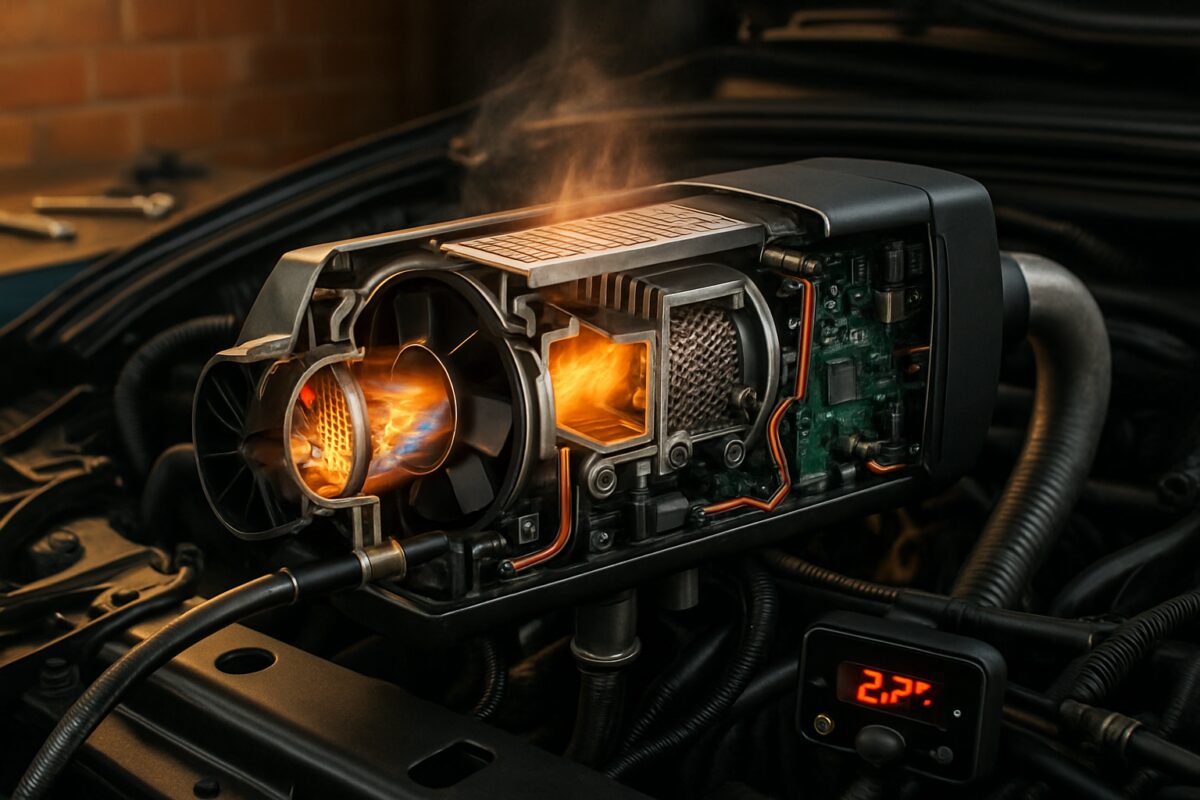
Webasto heaters operate through a sophisticated combustion process that’s completely separate from your vehicle’s engine. The system draws diesel fuel through a metering pump, mixes it with combustion air, and ignites the mixture in a sealed combustion chamber. Hot exhaust gases pass through a heat exchanger, warming air that’s then circulated throughout your vehicle by an internal fan.
The control unit manages the entire process, monitoring temperatures and adjusting fuel flow accordingly. Most modern units feature digital displays showing current temperature, operating mode, and fault codes. The heater’s independent design means you can enjoy warmth without idling your engine, saving fuel and reducing emissions whilst maintaining battery charge.
Key components include the combustion chamber, heat exchanger, circulation fan, fuel pump, glow plug, and control electronics. Each element works together to provide reliable, efficient heating that’s particularly valuable for caravan heating applications where engine-dependent systems aren’t practical.
How to operate your Webasto diesel heater properly
Starting your Webasto heater requires following a specific sequence to ensure safe, efficient operation. Begin by checking fuel levels and ensuring adequate battery voltage – most units require at least 10.5 volts for reliable ignition. Switch on the control panel and select your desired temperature setting.
During the startup phase, you’ll hear the fuel pump priming and the combustion air fan beginning to circulate. The glow plug heats for approximately 60-120 seconds before fuel injection begins. Once ignition occurs, the heater gradually increases output whilst monitoring combustion quality through various sensors.
Here’s the proper startup procedure:
- Verify fuel availability and battery charge status
- Ensure exhaust outlet and air intake are unobstructed
- Set thermostat to desired temperature
- Press the start button and wait for ignition confirmation
- Monitor display for any error codes during warm-up
Temperature control works through the integrated thermostat, which cycles the heater on and off to maintain your selected setting. Most units offer multiple heating levels, allowing you to balance comfort with fuel consumption. During operation, avoid blocking air circulation vents and ensure proper ventilation in enclosed spaces.
Shutdown procedures are equally important. Allow the heater to complete its cooling cycle rather than switching off immediately. This prevents fuel carbonisation and extends component life. The circulation fan continues running briefly after combustion stops, cooling internal components to safe temperatures.
Common Webasto heater problems and their causes
Our mechanics at Autopartspro frequently encounter several recurring issues with diesel auxiliary heaters. Understanding these common faults helps identify problems early and prevents costly repairs. Many issues stem from poor maintenance or incorrect installation rather than component failures.
Ignition failures represent the most frequent complaint. These typically result from contaminated glow plugs, low battery voltage, or fuel supply problems. The heater attempts to start but fails to achieve stable combustion, often displaying specific error codes on the control panel.
Fuel-related problems include clogged filters, air in fuel lines, or contaminated diesel. Water contamination particularly affects heater performance, causing rough running or complete failure to start. Quality fuel filters prevent many of these issues from developing.
The most common problems include:
- Glow plug failures causing ignition difficulties
- Blocked combustion air intake reducing efficiency
- Fuel pump wear leading to inconsistent fuel delivery
- Exhaust restrictions causing overheating and shutdown
- Control unit malfunctions affecting operation modes
Electrical issues often manifest as intermittent operation or complete system failure. Poor connections, corroded terminals, or inadequate earth connections disrupt normal function. The sophisticated electronics require stable power supplies and clean signal paths to operate correctly.
Overheating protection may trigger if exhaust outlets become blocked or internal airflow is restricted. The system automatically shuts down to prevent damage, but repeated overheating cycles can affect component longevity. Regular inspection of air passages prevents most overheating incidents.
Diagnostic procedures and error code interpretation
Modern Webasto heaters incorporate comprehensive diagnostic systems that help identify faults quickly. Error codes appear on the control display, indicating specific problems with numbered fault codes. Understanding these codes enables targeted troubleshooting rather than guesswork repairs.
Common error codes and their meanings provide valuable diagnostic information. Code F01 typically indicates temperature sensor faults, whilst F02 suggests flame detection problems. F05 points to overheating issues, and F10 indicates control unit communication failures. Each manufacturer maintains specific code definitions in their service documentation.
| Error Code | Problem Description | Typical Cause |
|---|---|---|
| F01 | Temperature sensor fault | Damaged sensor or poor connection |
| F02 | Flame detection failure | Contaminated sensor or electrical issue |
| F05 | Overheating protection | Blocked exhaust or restricted airflow |
| F10 | Control unit fault | Electronic component failure |
Diagnostic procedures begin with error code interpretation, followed by systematic component testing. Our specialists recommend checking power supply voltage, verifying fuel availability, and inspecting exhaust systems before component replacement. Many apparent failures resolve through proper cleaning and maintenance procedures.
Advanced diagnostics may require specialised equipment to monitor fuel pressure, combustion air flow, and exhaust gas temperatures. Professional diagnosis often identifies multiple contributing factors rather than single component failures. This comprehensive approach ensures effective repairs that prevent recurring problems.
Effective solutions for heater malfunctions
Resolving Webasto heater problems requires systematic approaches that address root causes rather than symptoms. Our experience shows that proper diagnosis prevents unnecessary component replacement whilst ensuring reliable long-term operation. Many issues respond to cleaning and adjustment procedures rather than expensive part replacement.
Glow plug problems often require complete removal and cleaning rather than immediate replacement. Carbon deposits reduce heating efficiency, but careful cleaning with appropriate solvents restores function. However, severely damaged plugs need replacement with genuine parts to ensure proper ignition characteristics.
Fuel system solutions focus on contamination removal and filter replacement. Drain any water from fuel lines, replace filters, and purge air from the system. Quality fuel pumps ensure consistent pressure delivery, preventing many combustion-related problems.
Professional tip: Always use genuine Webasto parts for critical components like glow plugs and control units. Our mechanics find that aftermarket alternatives often cause more problems than they solve, particularly with sensitive electronic components that require precise specifications.
Exhaust system maintenance involves checking for blockages, ensuring proper slope for condensation drainage, and verifying secure connections. Blocked exhausts cause dangerous back-pressure that triggers safety shutdowns. Regular inspection prevents carbon build-up that restricts gas flow.
Electrical solutions require systematic testing of connections, earth points, and supply voltage. Clean terminals with appropriate contact cleaners and apply protective coatings to prevent corrosion. Ensure wiring harnesses are properly secured to prevent chafing and damage from vibration.
Preventive maintenance for optimal performance
Regular maintenance significantly extends Webasto heater life whilst preventing costly breakdowns. Our specialists recommend seasonal service schedules that address wear items before they cause system failures. Proactive maintenance costs considerably less than emergency repairs during winter breakdowns.
Fuel quality management forms the foundation of preventive care. Use only clean diesel fuel and replace filters according to manufacturer schedules. Consider fuel additives that prevent bacterial growth and reduce carbon formation during extended storage periods. Poor fuel quality causes more heater problems than component wear.
Seasonal maintenance tasks ensure reliable operation when you need heating most. Before winter storage, run the heater for several minutes to burn off accumulated deposits. Check exhaust outlets for obstructions and clean air intake screens. Test operation at various temperature settings to identify developing problems early.
Essential maintenance procedures include:
- Replace fuel filters annually or every 500 operating hours
- Clean combustion air intake screens monthly during use
- Test battery condition and connection security
- Inspect exhaust system for damage or blockages
- Verify control panel operation and display clarity
Professional service intervals depend on usage patterns but typically occur annually for recreational users or every six months for commercial applications. Service procedures include combustion chamber cleaning, glow plug inspection, and control system calibration. These procedures require specialised knowledge and equipment for proper execution.
Storage preparation proves critical for seasonal users. Drain fuel systems or use preservation additives to prevent degradation. Protect electrical connections from moisture and ensure proper ventilation around the unit. Battery maintenance during storage prevents startup problems when heating becomes necessary.
Installation considerations and safety requirements
Proper installation determines heater performance, safety, and longevity. Our specialists emphasise that DIY installations often create more problems than they solve, particularly regarding exhaust routing and fuel connections. Professional installation ensures compliance with safety standards and warranty requirements.
Exhaust system design requires careful attention to prevent carbon monoxide risks. Exhaust outlets must locate away from air intakes, windows, and doors. Proper slope prevents condensation accumulation that can freeze and block gas flow. Use only approved exhaust components designed for your specific heater model.
Fuel supply connections need secure, leak-proof joints using approved fittings and hoses. Never use automotive fuel line for heater connections – the different pressure requirements and chemical compatibility demand purpose-built components. Install shut-off valves for maintenance access and safety isolation.
| Installation Aspect | Key Requirement | Safety Consideration |
|---|---|---|
| Exhaust routing | Proper slope and clearances | Prevent CO entry into cabin |
| Fuel connections | Approved materials only | Leak prevention and isolation |
| Electrical supply | Adequate wire gauge | Fuse protection and earthing |
| Mounting location | Vibration isolation | Access for maintenance |
Electrical installation requires appropriate wire gauges to handle startup current demands. Most heaters draw significant power during ignition, necessitating heavy-duty connections and proper fusing. Earth connections prove particularly critical for reliable operation and electromagnetic compatibility.
Ventilation requirements ensure adequate combustion air supply whilst preventing cabin pressure problems. Sealed combustion systems draw air from outside, but installations still need proper ventilation for safety and comfort. Consider ventilation systems that complement your heating installation.
Troubleshooting specific operational issues
Different symptoms indicate specific problem areas that guide effective troubleshooting. Our experience shows that systematic diagnosis prevents multiple component replacement whilst identifying underlying causes. Understanding symptom patterns helps prioritise repair efforts for fastest resolution.
Heaters that start but shut down immediately often suffer from flame detection problems or overheating protection activation. Check exhaust restrictions first, then examine flame detection sensors for contamination. These safety systems prevent dangerous operation but can trigger unnecessarily if sensors malfunction.
Units that cycle on and off repeatedly typically indicate thermostat problems, inadequate fuel supply, or electrical interference. Verify temperature sensor operation and check for loose connections that create intermittent faults. Electromagnetic interference from other vehicle systems sometimes disrupts control signals.
Poor heat output despite normal operation suggests restricted air circulation or heat exchanger fouling. Clean internal air passages and verify circulation fan operation. Carbon deposits on heat exchanger surfaces reduce efficiency but respond to professional cleaning procedures. Consider cabin filter replacement if using ducted distribution systems.
Excessive fuel consumption indicates incomplete combustion or calibration problems. Check combustion air supply, clean injector components, and verify proper fuel pressure. Control unit calibration may drift over time, requiring professional adjustment to restore efficient operation. Our specialists use diagnostic equipment to verify combustion parameters and adjust settings accordingly.
Noise problems range from combustion irregularities to mechanical wear. Irregular combustion creates puffing sounds that indicate fuel supply or ignition timing issues. Mechanical noises suggest fan bearing wear or loose mounting components. Address noise problems quickly to prevent secondary damage from vibration or overheating.
Selecting quality replacement parts and components
Component quality significantly affects heater reliability and safety. Our specialists strongly recommend genuine Webasto parts for critical components, particularly control electronics and safety systems. Aftermarket alternatives may appear cost-effective but often create compatibility problems that exceed initial savings.
Glow plugs require precise heating characteristics matched to specific heater models. Generic replacements may function initially but often fail prematurely or cause ignition problems. Genuine plugs ensure proper heating curves and longevity that justify their higher initial cost through reduced maintenance requirements.
Fuel system components need careful material compatibility with diesel fuel and heating system additives. Standard automotive components may not withstand the different operating conditions and chemical exposures in auxiliary heating systems. Use only approved fuel filters and pump components designed for heater applications.
Control electronics prove particularly sensitive to specification variations. Aftermarket control units often lack proper calibration data or safety certifications required for reliable operation. The complex software and hardware integration makes genuine replacement units essential for maintaining system integrity and warranty compliance.
Our specialists maintain comprehensive parts inventories to support various Webasto models. Quality replacement components backed by proper technical support ensure successful repairs that restore reliable operation. Consider upgrading older systems with improved components that offer enhanced efficiency and reliability compared to original specifications.
Frequently Asked Questions (FAQ)
How long should a Webasto diesel heater last?
With proper maintenance, quality Webasto heaters typically last 8-12 years or 3,000-5,000 operating hours depending on usage patterns and environmental conditions.
Can I run my Webasto heater whilst driving?
Yes, most Webasto heaters operate safely whilst driving. However, ensure adequate ventilation and follow manufacturer guidelines for mobile operation and safety requirements.
Why does my heater smell like diesel when starting?
Initial diesel odours during startup are normal, but persistent smells indicate fuel leaks, incomplete combustion, or exhaust system problems requiring immediate attention.
How much fuel does a Webasto heater consume per hour?
Consumption varies by model and heat output, typically ranging from 0.1-0.5 litres per hour depending on temperature settings and efficiency levels.
What battery capacity do I need for overnight heating?
Most Webasto heaters require 100-200Ah battery capacity for overnight operation, depending on insulation quality, outside temperature, and desired comfort level.

 Loading...