Ford brake pads and discs replacement typically costs between £150-450 per axle in the UK, depending on your model and chosen parts quality. The process involves removing wheels, replacing worn pads and discs with vehicle-specific components, and ensuring proper torque settings. Most Ford models require replacement every 25,000-50,000 miles, with clear warning signs including squealing noises and reduced braking performance.
Tools & parts required
Successful Ford brake replacement demands specific tools and quality components. Getting the right parts for your exact Ford model ensures optimal performance and safety.
Parts needed
- Brake pads (Ford-specific compound)
- Brake rotors (correct diameter and thickness)
- Brake cleaner spray
- High-temperature brake grease
- New brake fluid (DOT 4 specification)
Tools required
- Jack and axle stands
- Wheel brace
- Socket set (10mm-19mm)
- Brake caliper wind-back tool
- Torque wrench
- Wire brush
Always match brake components to your Ford’s chassis number and engine specification. Our Autopartspro specialists recommend checking your owner’s manual before ordering parts.
Safety precautions
Working with braking systems requires absolute attention to safety protocols. Never compromise on protective measures.
Work on level ground using proper axle stands – never rely solely on a jack. Wear safety glasses and gloves when handling brake components. Ensure your battery is disconnected to prevent accidental activation of electronic parking brakes.
Keep a fire extinguisher nearby when working with brake fluids and solvents. Allow brakes to cool completely before starting work, as recent driving can heat discs to dangerous temperatures.
Step-by-step instructions
Follow this systematic approach for professional-quality results. Each step builds upon the previous one, ensuring safe and effective brake replacement.
Step 1: Prepare the vehicle
Park on level ground and apply the handbrake. Loosen wheel nuts whilst the car remains on the ground – this prevents wheel spin. Jack up the vehicle and secure with axle stands before removing wheels completely.
Step 2: Remove brake calipers
Locate the brake caliper bolts, typically 13mm or 15mm depending on your Ford model. Remove the lower bolt first, allowing the caliper to pivot upwards. For complete disc replacement, remove both bolts and support the caliper with wire to avoid damaging brake lines.
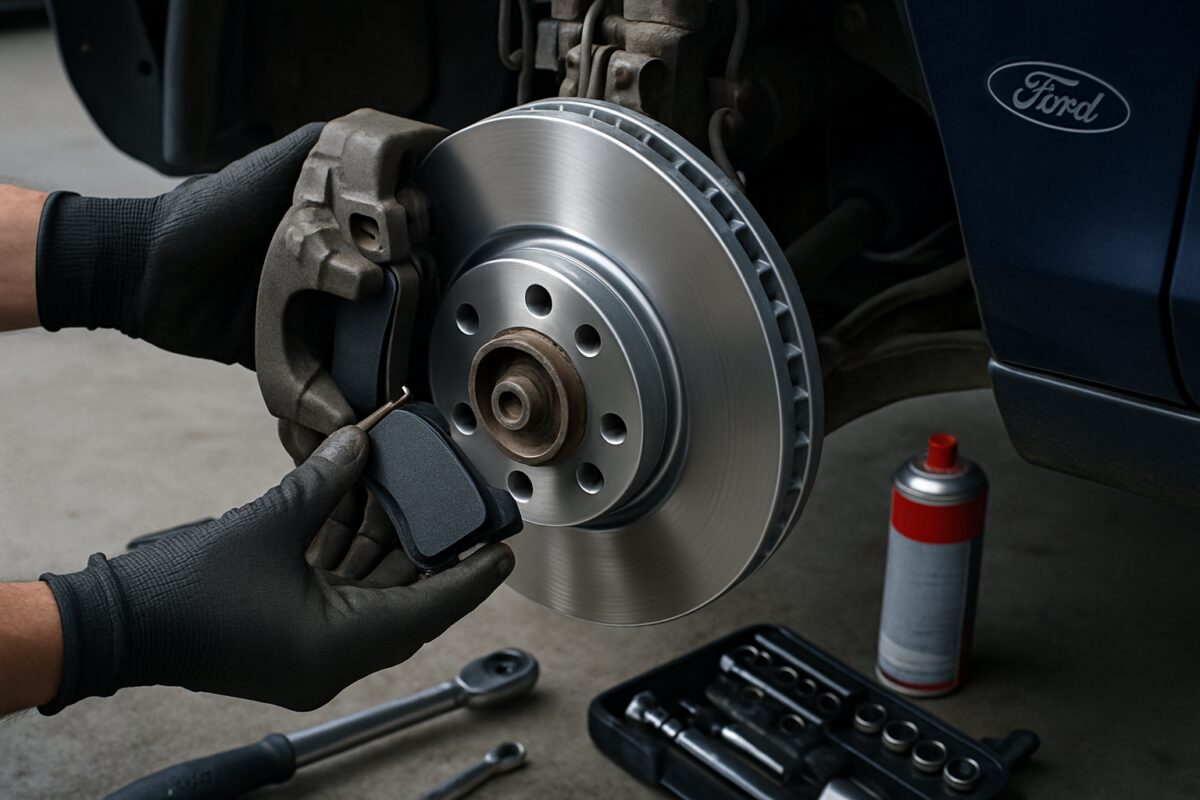
Step 3: Replace brake pads
Slide out the old pads, noting their orientation for correct installation. Clean the caliper pistons with brake cleaner and wind them back using the appropriate tool. Install new pads with anti-squeal compound applied to backing plates.
Step 4: Replace brake discs
Remove the caliper bracket using an 18mm socket. The old disc should lift away easily – if stuck, tap gently with a rubber mallet. Clean the hub face thoroughly before fitting the new disc. Apply thread locker to disc retaining screws where fitted.
Step 5: Reassemble and test
Reverse the removal process, ensuring all bolts reach specified torque settings. Pump the brake pedal several times before lowering the car. Check brake fluid level and top up if necessary. Test brakes at low speed before normal driving.
Common mistakes to avoid
Even experienced mechanics can fall into these traps. Learning from others’ errors saves time and prevents dangerous situations.
Never reuse old brake fluid or ignore contaminated fluid. Mixing different brake pad compounds can cause uneven wear and reduced performance. Failing to properly clean hub surfaces leads to disc run-out and vibration problems.
Over-tightening caliper bolts can crack the caliper housing, whilst under-tightening creates safety hazards. Always use a torque wrench for critical fasteners. Forgetting to pump the pedal before driving results in the car moving without brakes – a potentially fatal oversight.
Our Autopartspro technicians emphasise checking brake fluid colour during every service. Dark or contaminated fluid indicates moisture absorption, reducing braking efficiency and promoting corrosion.
When should you replace it?
Ford brake components show distinct warning signs when replacement becomes necessary. Regular monitoring prevents expensive repairs and maintains safety.
Replace brake pads when thickness drops below 3mm – most have wear indicators that squeal when this point approaches. Brake discs need replacement when thickness falls below manufacturer minimums or when surface scoring exceeds acceptable limits.
Typical replacement intervals vary by model: Ford Focus requires attention every 30,000-40,000 miles, whilst heavier Transits may need servicing every 25,000 miles. Driving style significantly affects these intervals – city driving with frequent stops accelerates wear considerably.
Professional inspection reveals problems invisible to untrained eyes. Our specialists recommend annual brake checks, particularly for high-mileage Fords where component fatigue becomes critical.
Related maintenance you can do at the same time
Brake replacement provides excellent opportunities for additional maintenance. Combining jobs reduces labour costs and improves overall vehicle reliability.
Replace the air filter during brake servicing for improved engine performance. Oil filter replacement follows similar timing intervals. Check suspension components whilst wheels are removed – worn shock absorbers affect braking distances significantly.
Inspect brake lines for corrosion or damage, particularly on older Fords where salt exposure causes deterioration. Consider upgrading to performance brake components if your driving demands exceed standard specifications.
Frequently asked questions
How much does Ford brake replacement cost in the UK?
Expect to pay £150-280 per axle for standard pads and discs, with premium components costing £300-450 per axle including fitting.
Can I replace just brake pads without changing discs?
Yes, if discs remain within thickness tolerances and show no scoring damage. However, new pads on worn discs reduce braking efficiency.
How long do Ford brake components typically last?
Front brakes usually last 25,000-40,000 miles, whilst rear components often achieve 40,000-60,000 miles depending on driving conditions and vehicle weight.
What’s the difference between OEM and aftermarket Ford brake parts?
OEM parts match original specifications exactly, whilst quality aftermarket options often provide similar performance at lower costs. OEM components guarantee perfect fitment.
Should I replace brake fluid during pad and disc replacement?
Professional mechanics recommend brake fluid replacement every two years or when contamination appears, regardless of brake component changes.
Professional Ford brake servicing ensures optimal performance and safety for UK driving conditions. Quality components from established suppliers, combined with proper installation techniques and regular maintenance schedules, provide reliable braking performance for thousands of miles. Whether choosing budget-friendly options or premium upgrades, selecting parts specifically designed for your Ford model guarantees proper fitment and performance characteristics.

 Loading...