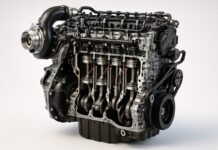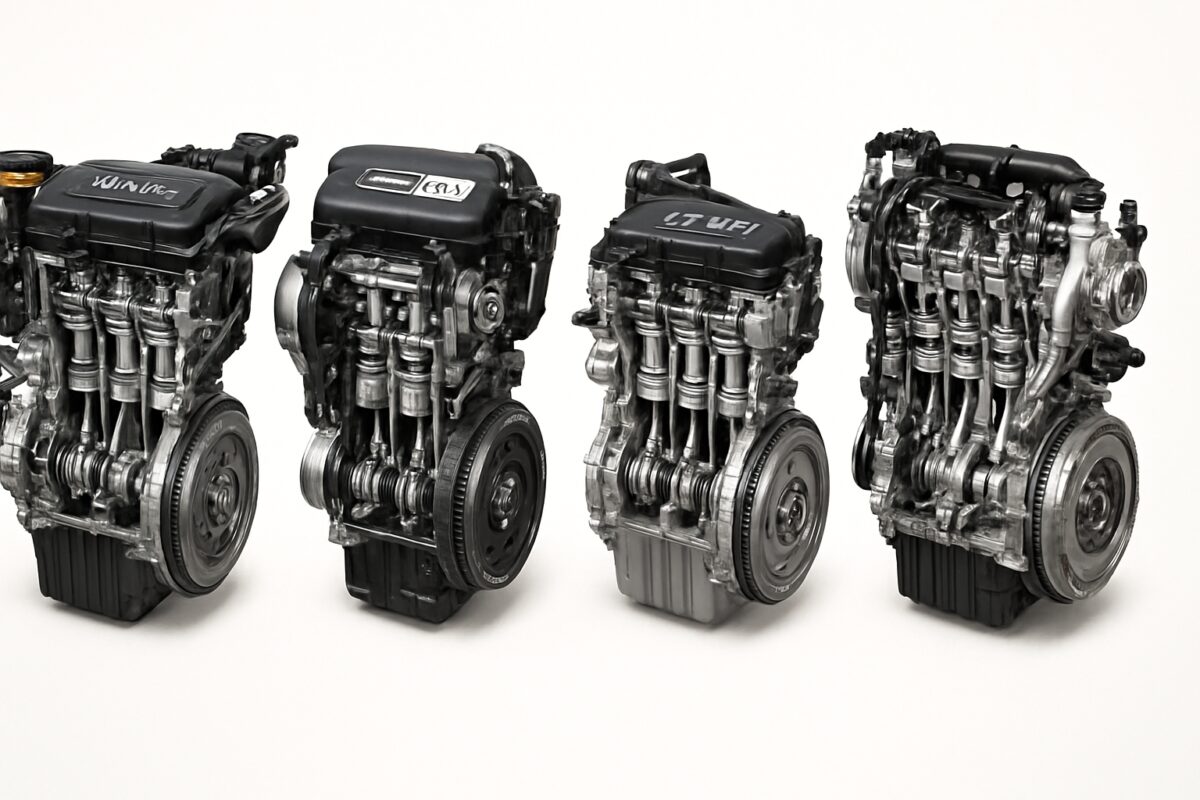
The Fiat Panda stands as one of Italy’s most enduring small cars, serving urban commuters and budget-conscious families across Europe for over four decades. Engine selection proves crucial for this compact vehicle, directly affecting fuel economy, performance, and long-term ownership costs. The Panda’s powerplant lineup spans from frugal naturally aspirated units to spirited turbo engines, offering 69-100 horsepower with torque figures ranging from 102-190 Nm across petrol and diesel configurations.
Comparison table of all engines
| Engine | Power output | Torque | Fuel consumption | Reliability |
|---|---|---|---|---|
| 1.0 MPI | 69 hp | 102 Nm | 5.2-5.8 l/100km | Very Good |
| 0.9 TwinAir Turbo | 85 hp | 145 Nm | 4.9-5.4 l/100km | Good |
| 1.2 MPI | 69 hp | 102 Nm | 5.3-5.9 l/100km | Excellent |
| 1.3 MultiJet | 75-95 hp | 190-200 Nm | 4.1-4.8 l/100km | Very Good |
Engine #1 overview
The 1.0-litre MPI represents Fiat’s entry-level petrol solution for the Panda range. This naturally aspirated, three-cylinder unit displaces 999cc and features multi-point fuel injection technology. The engine operates without turbocharging, relying on simple atmospheric induction for combustion air supply.
Pros
- Exceptional fuel economy in urban driving conditions
- Low maintenance requirements and straightforward servicing
- Affordable spare parts availability across Europe
- Smooth idle characteristics despite three-cylinder configuration
- Proven reliability with minimal electronic complexity
Cons
- Limited power output restricts motorway performance
- Three-cylinder vibration becomes noticeable under load
- Struggles with fully loaded vehicle or steep gradients
- Engine noise intrusion at higher revolutions
Engine #2 overview
The 0.9 TwinAir turbo showcases Fiat’s innovative approach to small-displacement performance. This two-cylinder, twin-turbocharged unit produces 85 horsepower from just 875cc displacement. The engine utilises direct injection and variable valve timing, coupled with a sophisticated turbocharging system designed for immediate throttle response.
Pros
- Outstanding power-to-weight ratio for city driving
- Impressive torque delivery from low engine speeds
- Distinctive exhaust note appeals to enthusiast drivers
- Modern technology reduces emissions significantly
- Compact dimensions aid vehicle packaging
Cons
- Complex turbo system requires premium maintenance attention
- Two-cylinder configuration creates inherent vibration issues
- Higher service costs compared to naturally aspirated alternatives
- Turbo lag noticeable in stop-start traffic conditions
Engine #3 overview
The 1.2-litre MPI serves as the Panda’s most balanced petrol option. This four-cylinder, naturally aspirated unit displaces 1,242cc and employs proven multi-point injection technology. The engine delivers reliable performance without turbocharging complexity, making it ideal for traditional car buyers seeking dependable transport.
Pros
- Four-cylinder smoothness eliminates vibration concerns
- Proven mechanical design ensures long-term durability
- Straightforward maintenance procedures reduce ownership costs
- Adequate power for most driving scenarios
- Excellent parts availability throughout Europe
Cons
- Higher fuel consumption than smaller displacement alternatives
- Limited power output affects overtaking performance
- Lacks modern efficiency technologies found in competitors
- Engine feels dated compared to turbocharged rivals
Engine #4 overview
The 1.3 MultiJet diesel represents the Panda’s most economical long-distance option. Available in 75 and 95 horsepower variants, this turbocharged four-cylinder unit employs common-rail direct injection technology. The engine features a variable-geometry turbocharger and advanced fuel filtration systems to maximise efficiency and reliability.
Pros
- Exceptional fuel economy exceeds 60 mpg in combined driving
- Strong torque output suits motorway cruising
- Proven diesel technology with established service networks
- Low CO2 emissions reduce road tax obligations
- Excellent range capabilities for touring applications
Cons
- Diesel particulate filter requires regular motorway driving
- Higher purchase price compared to petrol alternatives
- Potential injector problems in high-mileage examples
- Cold-start noise characteristic of small diesels
Maintenance cost
| Engine | Recommended Interval | Estimated Cost | Cost per 10,000 miles |
|---|---|---|---|
| 1.0 MPI | 12,000 miles | £180-220 | £150-183 |
| 0.9 TwinAir | 9,000 miles | £250-300 | £278-333 |
| 1.2 MPI | 12,000 miles | £190-230 | £158-192 |
| 1.3 MultiJet | 12,000 miles | £220-280 | £183-233 |
Engine sound and character
Each Panda engine delivers distinct acoustic characteristics that define the driving experience. The 1.0 MPI produces a gentle three-cylinder thrum, pleasant at idle but becoming vocal under acceleration. Our Autopartspro mechanics note that proper engine mounting maintenance significantly reduces cabin vibration in three-cylinder variants.
The TwinAir’s two-cylinder configuration creates a unique exhaust note reminiscent of motorcycle engines, appealing to drivers seeking character over refinement. However, this distinctive sound can become intrusive during extended motorway journeys.
The 1.2 MPI offers conventional four-cylinder refinement, delivering smooth operation across the rev range without the quirks of smaller-displacement alternatives. Meanwhile, the MultiJet diesel provides typical modern diesel characteristics – quiet at idle but developing a purposeful growl under load.
Professional tip: Regular oil filter replacement at manufacturer intervals prevents premature wear in all Panda engines, particularly crucial for the complex TwinAir unit.
Who each engine is best for
| Engine | Best for |
|---|---|
| 1.0 MPI | Budget-conscious urban commuters, first-time buyers |
| 0.9 TwinAir | Enthusiast drivers, city dwellers seeking character |
| 1.2 MPI | Traditional buyers preferring proven reliability |
| 1.3 MultiJet | Long-distance drivers, high-mileage users |
Maintenance insight: The MultiJet diesel benefits from quality engine oils meeting Fiat’s specific viscosity requirements to maintain injector performance and turbocharger longevity.
Frequently asked questions
Which Fiat Panda engine offers the best fuel economy?
The 1.3 MultiJet diesel delivers exceptional fuel efficiency, achieving over 60 mpg in combined driving conditions while providing adequate performance for most applications.
Are TwinAir engines reliable for high-mileage use?
TwinAir engines prove reliable when maintained properly, though their complex turbo system requires more frequent servicing compared to naturally aspirated alternatives in the range.
What’s the most affordable Panda engine to maintain?
The 1.0 MPI offers lowest maintenance costs due to simple design, widely available parts, and straightforward service requirements without turbocharging complexity.
Which engine provides the best motorway performance?
The 1.3 MultiJet diesel excels on motorways, delivering strong torque for effortless cruising while maintaining excellent fuel economy at steady speeds.
Do Panda engines require premium fuel?
All Panda petrol engines operate satisfactorily on standard 95-octane fuel, though the TwinAir benefits from premium fuel during spirited driving for optimal performance.

 Loading...