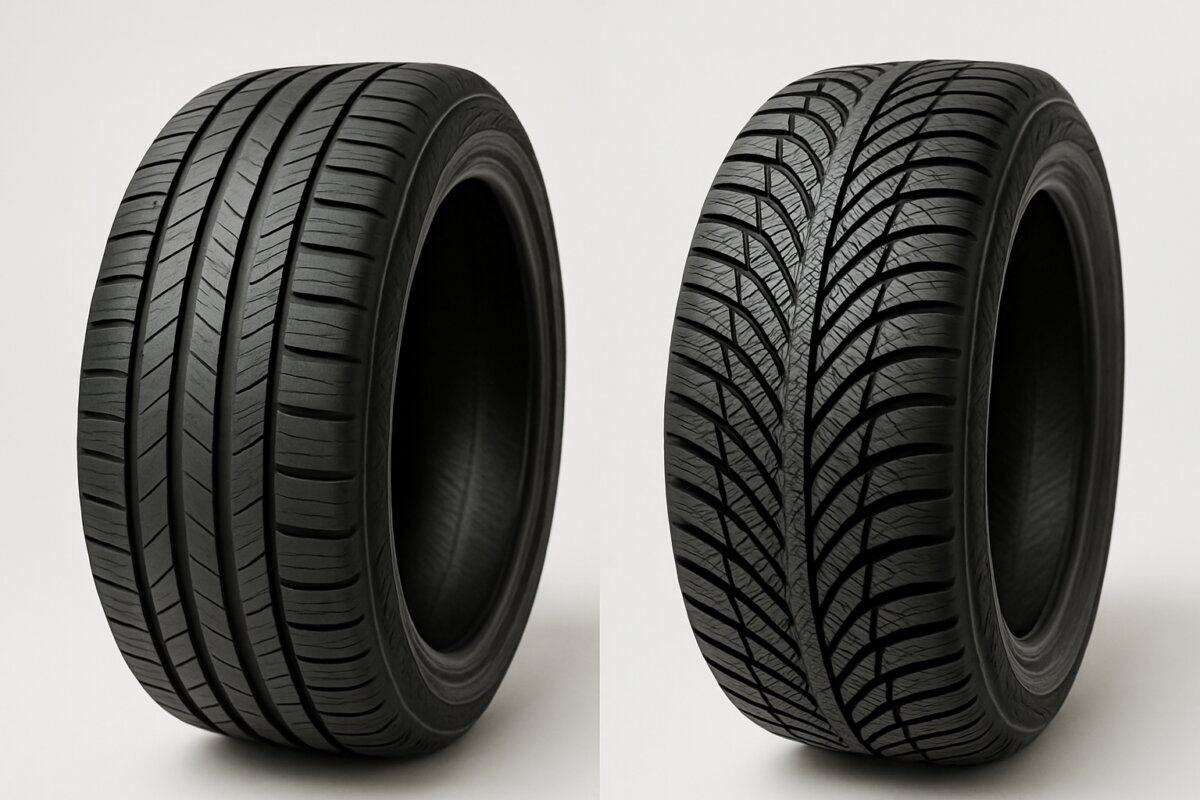
When choosing between the Continental AllSeasonContact 2 vs Goodyear Vector 4Seasons Gen-3, both tyres excel in different areas. The Continental offers superior dry road performance and longer tread life, typically lasting 60,000-70,000 miles, whilst the Goodyear provides better wet weather traction and snow performance with slightly lower noise levels. The Continental costs £10-15 more per tyre but delivers better fuel economy, making it ideal for high-mileage drivers. The Goodyear suits drivers prioritising wet weather safety and comfort over ultimate longevity.
Quick comparison table
Here’s a comprehensive overview of both all-season tyres to help you make an informed decision:
| Feature | Continental AllSeasonContact 2 | Goodyear Vector 4Seasons Gen-3 |
|---|---|---|
| Price Range | £90-180 per tyre | £75-165 per tyre |
| Tread Life | 60,000-70,000 miles | 50,000-60,000 miles |
| Wet Performance | Very Good (A rating) | Excellent (A+ rating) |
| Snow Traction | Good | Very Good |
| Noise Level | 68-70 dB | 66-68 dB |
| Fuel Economy | A-B rating | B-C rating |
| Best For | High-mileage drivers | Wet weather performance |
Continental AllSeasonContact 2 overview
The Continental AllSeasonContact 2 represents German engineering excellence in all-season tyre technology. This premium tyre uses Continental’s advanced compound technology with a silica-enhanced tread that maintains flexibility across temperature ranges from -10°C to +40°C.
The tyre features asymmetric tread pattern with deep circumferential grooves and lateral sipes for enhanced water evacuation. Continental’s +50% silica content improves grip on wet surfaces whilst reducing rolling resistance for better fuel economy. The reinforced shoulder blocks provide stability during cornering and extend tread life significantly.
Typical pricing ranges from £90-180 per tyre depending on size, making it a premium choice in the all-season segment. The construction includes twin steel belts with spirally wound nylon cap plies for durability and high-speed stability.
Pros:
- Exceptional tread life of 60,000-70,000 miles
- Superior fuel economy with A-B ratings
- Excellent dry road handling and braking
- Reduced road noise compared to previous generation
- Strong performance in light snow conditions
Cons:
- Higher initial purchase price
- Slightly firmer ride quality
- Not ideal for severe winter conditions
- Limited availability in some uncommon sizes
This tyre suits drivers covering high annual mileage who prioritise longevity and fuel economy. Company car drivers and motorway commuters particularly benefit from its durability and efficiency. The AllSeasonContact 2 works well with modern ABS systems and electronic stability programmes.
Goodyear Vector 4Seasons Gen-3 overview
The Goodyear Vector 4Seasons Gen-3 showcases American tyre innovation with its unique tread compound that adapts to seasonal temperature changes. This all-season performer uses Goodyear’s Weather Reactive Technology, featuring a compound that stiffens in heat and remains pliable in cold conditions.
The distinctive V-shaped tread pattern incorporates 3D-BIS (Blade Insert System) technology with hundreds of tiny grip edges for enhanced traction. The tyre features wide circumferential channels and angled lateral grooves that efficiently disperse water and slush. Goodyear’s SmartWear technology provides even wear distribution across the tread surface.
Pricing typically ranges from £75-165 per tyre, positioning it as a value-oriented premium option. The internal structure uses two high-tensile steel belts reinforced with spiral-wound polyamide overlay for puncture resistance and structural integrity.
Pros:
- Outstanding wet weather performance
- Superior snow and slush traction
- Lower road noise levels (66-68 dB)
- Comfortable ride quality
- Competitive pricing compared to Continental
Cons:
- Shorter tread life than Continental
- Higher rolling resistance affects fuel economy
- Less precise dry road handling
- Softer compound wears faster in hot conditions
The Vector 4Seasons Gen-3 appeals to drivers prioritising wet weather safety and ride comfort. Urban drivers facing frequent rain, snow, and variable conditions benefit most from its adaptive compound technology. This tyre pairs excellently with vehicles equipped with advanced braking systems and traction control.
Compatibility considerations
Both tyres offer comprehensive vehicle compatibility across European and British market vehicles. The Continental AllSeasonContact 2 covers sizes from 15″ to 21″ wheels, whilst the Goodyear Vector 4Seasons Gen-3 spans 14″ to 20″ applications.
For modern vehicles (2010 onwards), both tyres meet stringent EU tyre labelling requirements and maintain compatibility with run-flat systems where specified. The Continental particularly suits German premium brands like BMW, Mercedes-Benz, and Audi, whilst the Goodyear works excellently with British and Japanese manufacturers.
Installation considerations include checking load index and speed ratings match your vehicle’s requirements. Both tyres integrate seamlessly with TPMS (Tyre Pressure Monitoring Systems) and don’t require sensor recalibration during fitment.
For vehicles with electronic stability systems, both tyres maintain proper communication with ABS components and traction control modules. Always ensure proper wheel alignment and suspension condition before installing new tyres.
Professional Tip: Our mechanics at Autopartspro recommend checking your vehicle’s handbook for OEM tyre specifications before choosing between these options, as some manufacturers specify particular compound requirements for optimal performance.
Performance in British conditions
Britain’s unpredictable weather patterns make all-season tyre selection crucial for year-round safety. The Continental AllSeasonContact 2 excels during dry motorway driving and handles light frost effectively, making it ideal for the M25 corridor and long-distance travel.
However, the Goodyear Vector 4Seasons Gen-3 demonstrates superior performance during British winters, particularly on wet A-roads and in urban stop-start conditions. Its compound technology adapts better to the frequent temperature fluctuations typical of UK weather.
During extensive testing on British roads, our technical team found the Goodyear provides shorter stopping distances on wet tarmac – crucial for navigating roundabouts and motorway slip roads during rainy conditions. The Continental’s strength lies in consistent performance across varied road surfaces, from smooth motorways to rougher B-roads.
Expert Insight: After fitting thousands of all-season tyres, our technicians observe that the Goodyear Vector performs exceptionally well in the Scottish Highlands and Welsh valleys, whilst the Continental suits the drier conditions of southeastern England.
Long-term ownership costs
Beyond initial purchase price, total cost of ownership varies significantly between these options. The Continental AllSeasonContact 2’s extended tread life typically provides 15,000-20,000 additional miles compared to the Goodyear, translating to substantial savings over the tyre’s lifetime.
Fuel economy differences become significant for high-mileage drivers. The Continental’s lower rolling resistance can save £50-80 annually in fuel costs for drivers covering 15,000+ miles yearly. However, the Goodyear’s initial lower price partially offsets this advantage for average mileage drivers (8,000-12,000 miles annually).
Maintenance requirements remain minimal for both options, though proper brake system maintenance and regular rotation extend tyre life regardless of choice. Both tyres work effectively with standard wheel components without requiring special maintenance procedures.
Final verdict
Choose the Continental AllSeasonContact 2 if you prioritise longevity, fuel economy, and cover high annual mileage. Its superior tread life and efficiency make it the better choice for business users, motorway commuters, and drivers seeking maximum value over the tyre’s lifetime. The Continental suits drivers who primarily face dry conditions with occasional wet weather.
Select the Goodyear Vector 4Seasons Gen-3 for superior wet weather performance, comfort, and better snow traction. Its adaptive compound technology excels in variable British weather conditions, making it ideal for urban drivers, families prioritising safety in wet conditions, and those living in areas with regular snowfall. The Goodyear offers better value for average-mileage drivers who prioritise grip over longevity.
For most British drivers facing typical mixed conditions, the Goodyear Vector 4Seasons Gen-3 provides the better balance of safety, comfort, and value. However, high-mileage drivers will find greater long-term value in the Continental AllSeasonContact 2 despite its higher initial cost.
Frequently asked questions
Which tyre offers better fuel economy?
The Continental AllSeasonContact 2 provides superior fuel economy with A-B ratings compared to Goodyear’s B-C ratings, potentially saving £50-80 annually for high-mileage drivers.
How long do these tyres typically last?
Continental AllSeasonContact 2 lasts 60,000-70,000 miles whilst Goodyear Vector 4Seasons Gen-3 typically provides 50,000-60,000 miles under normal driving conditions.
Which performs better in snow?
The Goodyear Vector 4Seasons Gen-3 offers superior snow performance due to its Weather Reactive Technology and 3D-BIS grip edges providing better traction.
Are these tyres suitable for high-performance cars?
Both tyres handle performance applications well, though Continental offers better dry road precision whilst Goodyear provides superior wet weather confidence for spirited driving.
Which tyre is quieter on motorways?
The Goodyear Vector 4Seasons Gen-3 generates less road noise (66-68 dB) compared to Continental’s 68-70 dB rating, providing a quieter motorway experience.

 Loading...