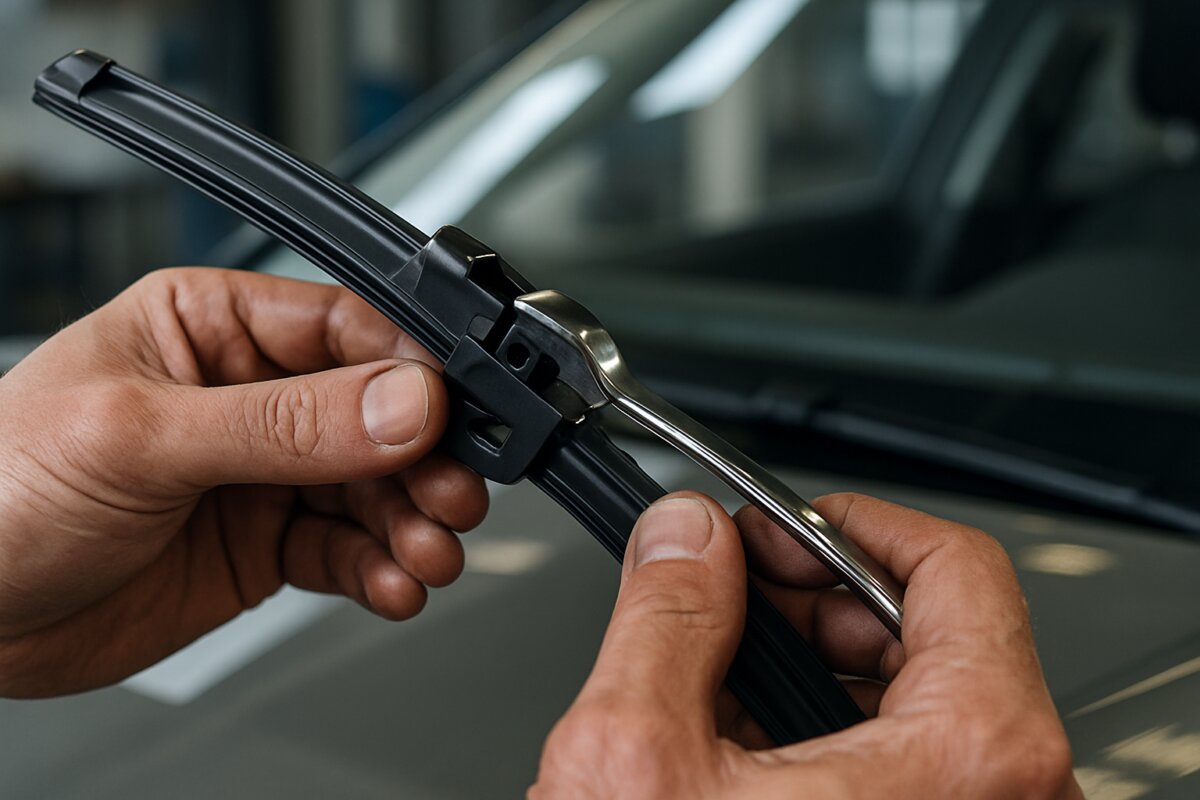
To change windscreen wipers, you’ll need replacement wiper blades that match your vehicle’s fitment, a clean cloth, and about 10 minutes of your time. The process involves lifting the wiper arm away from the windscreen, releasing the old blade from its mounting clip, sliding on the new blade until it clicks into place, and testing the wipers to ensure proper operation. Most modern vehicles use hook, bayonet, or pin-type fittings, so always check your vehicle’s requirements before purchasing.
Tools and parts required
Getting the right equipment before you start makes the job straightforward and prevents unnecessary trips to the shop.
Parts needed:
- Replacement windscreen wiper blades (driver and passenger side)
- Rear wiper blade (if applicable)
- Cleaning solution for windscreen preparation
Tools required:
- Clean microfibre cloth
- Measuring tape (if blade length unknown)
- Protective blanket or towel (to prevent windscreen scratches)
Always verify the correct blade length and fitting type using your vehicle’s handbook or registration number. Different manufacturers use various attachment mechanisms, and selecting the wrong type means the blade won’t secure properly, compromising visibility and safety.
Safety precautions
While changing wiper blades is low-risk, taking basic precautions prevents damage to your vehicle and ensures a smooth process.
- Place a soft towel on the windscreen when working to prevent accidental scratches if the wiper arm snaps back
- Handle wiper arms carefully as the spring tension can cause them to strike the glass with considerable force
- Work in a sheltered area when possible to prevent wind interfering with the process
- Ensure the vehicle is switched off and the wipers are in their rest position before starting
Never force components apart. If a blade won’t release easily, check you’re pressing the correct release mechanism rather than applying excessive pressure that could damage the arm.
Step 1: Identify your wiper blade type
Modern vehicles typically use one of three main fitting types: hook (also called J-hook or U-hook), bayonet (push-button), or pin-type connectors. Check your existing blades or consult your vehicle’s documentation to determine which type you need.
The fitting type directly affects which replacement blades you can use. Universal blade sets often include multiple adaptors, but vehicle-specific blades guarantee proper fit and optimal performance. Our technical team at Autopartspro recommends always matching the original equipment specification rather than opting for generic alternatives, as this ensures correct pressure distribution across the windscreen.
Step 2: Measure your existing blades
If you’re unsure about blade length, measure from end to end of the rubber element on your current blades. Driver and passenger sides often differ in length, typically by 2-4 inches, with the driver’s side being longer.
Record both measurements separately. Installing incorrectly sized blades creates blind spots or causes the wipers to collide during operation, potentially damaging both the blades and the wiper motor mechanism.
Step 3: Lift the wiper arm
Gently pull the wiper arm away from the windscreen until it locks in a perpendicular position. The arm should stay upright on its own due to spring tension. Place your protective towel on the windscreen beneath the raised arm as a precaution.
Some vehicles feature a service position that moves wipers to the middle of the screen for easier access. Consult your handbook if the arms are difficult to reach in their normal rest position.
Step 4: Remove the old wiper blade
Locate the release mechanism on the blade’s mounting point where it connects to the arm. For hook-type fittings, you’ll typically find a small tab that you press whilst sliding the blade downwards. Bayonet types feature a push-button that releases the blade when pressed.
Support the wiper arm with one hand whilst removing the blade with the other. Once released, slide the old blade away from the arm completely. Inspect the arm’s hook or connector for any corrosion or damage that might affect the new blade’s fit.
Top tip from Autopartspro mechanics: Before disposing of old blades, photograph how they connect to the arm. This visual reference proves invaluable when fitting new blades, especially if you’re working on multiple vehicles or different fitting types.
Step 5: Install the new wiper blade
If your new blade includes adaptors, select the correct one for your vehicle’s fitting type and attach it to the blade according to the manufacturer’s instructions. Slide the new blade onto the wiper arm, ensuring it engages with the hook or connector properly.
You should hear or feel a distinct click when the blade locks into position. Gently tug the blade to confirm it’s secure before lowering the arm. Never release a wiper arm whilst the blade is only partially connected, as the spring force could damage the mounting point.
Step 6: Lower the arm and test
Carefully guide the wiper arm back down to the windscreen rather than allowing it to snap back. Remove your protective towel and repeat the entire process for the passenger side wiper and rear wiper if applicable.
Once all blades are fitted, spray washer fluid onto the windscreen and test the wipers through several cycles. Listen for unusual noises, check for smooth operation without juddering, and verify that the entire swept area clears properly.
Common mistakes to avoid
Installing blades backwards is surprisingly common with modern flat-blade designs that look symmetrical. The aerodynamic spoiler should face towards the rear of the vehicle to prevent wind lift at higher speeds.
Mixing up driver and passenger blades causes inadequate coverage and potential collisions between the wipers. Always double-check measurements before fitting. Another frequent error is failing to remove protective covers from new blade edges, which prevents proper contact with the glass.
Over-tightening or forcing connections damages the fitting mechanism. If a blade won’t attach easily, verify you have the correct adaptor rather than applying excessive force.
Professional insight: We see many customers who delay replacing wipers until they’re completely ineffective. Our specialists recommend changing blades at the first sign of streaking or juddering, typically every 12-18 months. Degraded rubber compounds not only reduce visibility but can scratch windscreen coatings, creating an expensive problem from a simple maintenance oversight.
When should you replace windscreen wipers?
Replace wiper blades every 12 months as a baseline, or every 6 months if your vehicle is parked outdoors regularly. UV exposure and temperature fluctuations degrade rubber compounds even when wipers aren’t being used.
Visible signs that demand immediate replacement include:
- Streaking or smearing across the windscreen
- Chattering or juddering during operation
- Visible cracks or tears in the rubber element
- Uneven clearing with patches left untouched
- Metal frame contacting the glass
Don’t wait until your MOT to address wiper problems. Defective wipers constitute an MOT failure point and compromise safety during unexpected rain or when debris needs clearing.
Related maintenance you can do at the same time
Since you’re already working around the windscreen area, consider these complementary maintenance tasks that improve visibility and vehicle care:
- Top up washer fluid reservoir with quality screenwash concentrate
- Clean windscreen thoroughly, including removing any wax or coating build-up
- Inspect washer jet nozzles and clear any blockages with a pin
- Check wiper arm spring tension and adjust if necessary
- Apply rubber conditioner to new blades for extended life
These additional steps take minimal extra time but significantly enhance your wiper system’s overall performance and longevity.
Frequently asked questions
Can I replace just one wiper blade?
Whilst you can technically replace a single blade, we recommend changing both front wipers simultaneously. Blades age at similar rates, and mismatched performance creates uneven clearing patterns. This approach also ensures you’re not caught out when the second blade fails shortly after.
How long does it take to change windscreen wipers?
Expect 10-15 minutes for both front wipers once you’re familiar with your vehicle’s fitting type. First-time changes might take slightly longer whilst you identify the correct release mechanism. Rear wipers typically take 5 minutes.
Do expensive wipers last longer than budget options?
Premium blades generally feature superior rubber compounds and structural design that provide better durability and performance. Our parts specialists note that mid-range to premium options typically last 50-80% longer than basic alternatives, making them more economical long-term despite higher initial cost.
Will any wiper blade fit my vehicle?
No. Blade length, fitting type, and sometimes curvature must match your specific vehicle. Using incorrect specifications creates safety issues and potential damage. Always verify compatibility using your registration number or vehicle handbook before purchasing.
Maintaining clear visibility through properly functioning wipers is one of the simplest yet most critical aspects of vehicle safety. With correctly specified replacement blades and the straightforward process outlined above, you’ll ensure optimal performance throughout the year. Taking ten minutes now to fit quality wiper blades prevents the dangerous situation of discovering failed wipers during heavy rain when you need them most.

 Loading...