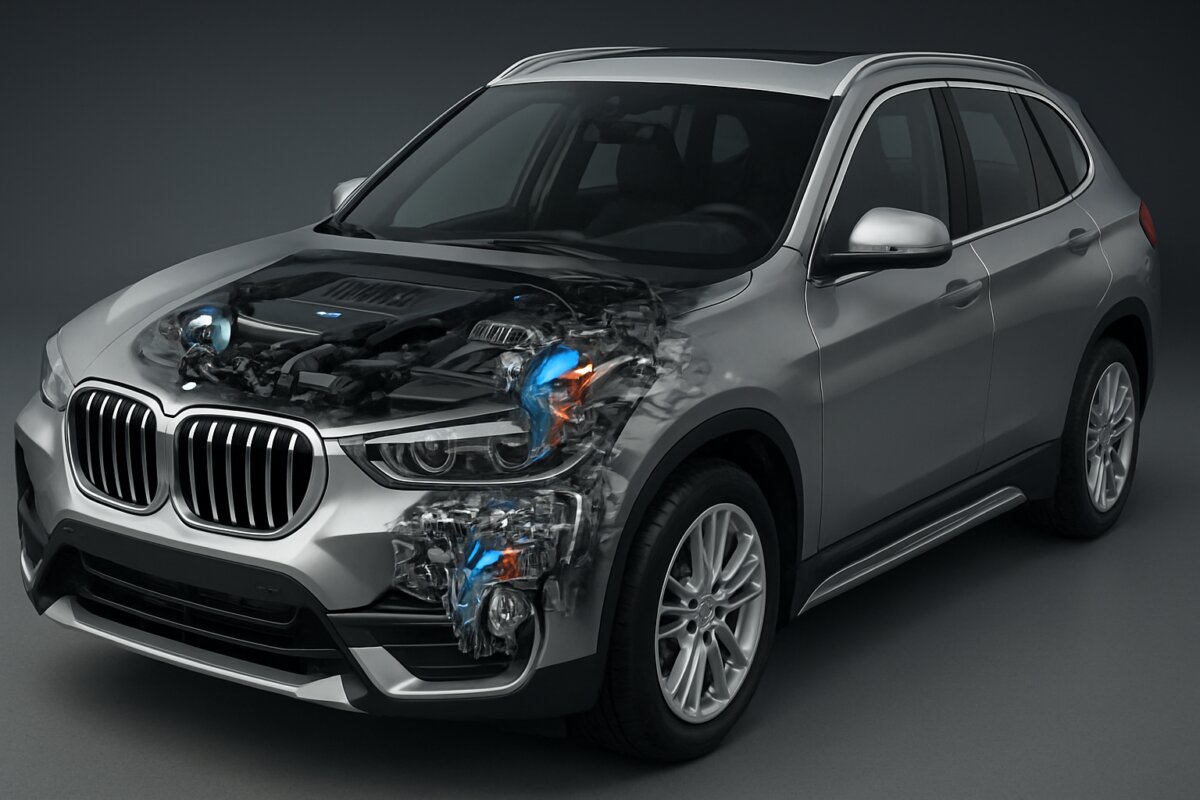
The BMW X1 sits comfortably in the premium compact SUV segment, blending practicality with the Bavarian brand’s renowned driving dynamics. What truly defines this vehicle’s character, however, is the engine beneath its bonnet. The powerplant determines everything from daily running costs to motorway overtaking confidence. Today’s X1 lineup offers a diverse range of turbocharged units, from efficient three-cylinder petrols producing around 136 PS to spirited four-cylinder diesels delivering up to 190 PS and 400 Nm of torque. Understanding these options helps you select the right balance between performance and economy for your needs.
Comparison table of all engines
| Engine | Power output | Torque | Fuel consumption | Reliability |
|---|---|---|---|---|
| sDrive18i (1.5 3-cyl) | 140 PS | 220 Nm | 47-50 mpg | Very Good |
| sDrive20i (2.0 4-cyl) | 192 PS | 280 Nm | 42-45 mpg | Excellent |
| xDrive25i (2.0 4-cyl) | 231 PS | 350 Nm | 38-41 mpg | Excellent |
| sDrive18d (2.0 4-cyl) | 150 PS | 350 Nm | 57-62 mpg | Very Good |
| xDrive20d (2.0 4-cyl) | 190 PS | 400 Nm | 53-57 mpg | Excellent |
sDrive18i engine overview
The entry-level sDrive18i employs BMW’s modular B38 three-cylinder turbocharged petrol engine. This 1.5-litre unit shares its fundamental architecture with the renowned B-series family. Displacement comes in at precisely 1,499cc, distributed across three inline cylinders. Turbocharging provides forced induction, whilst direct fuel injection ensures optimal combustion efficiency. This configuration represents modern downsizing philosophy at its finest.
According to our specialists at Autopartspro, the three-cylinder architecture delivers surprisingly smooth operation for daily use, though some vibration becomes apparent under hard acceleration. The turbocharger spools quickly, providing adequate mid-range punch for urban environments. Regular maintenance of the air filter and oil filter keeps this compact powerplant running sweetly.
Pros
- Outstanding fuel economy for a petrol SUV
- Low road tax and insurance grouping
- Responsive throttle in town driving
- Relatively simple maintenance requirements
- Front-wheel drive reduces mechanical complexity
Cons
- Three-cylinder thrum noticeable at motorway speeds
- Struggles with fully laden vehicle on steep gradients
- Limited towing capability compared to larger units
- Can feel strained during overtaking manoeuvres
sDrive20i and xDrive25i engine overview
Both the sDrive20i and xDrive25i utilise BMW’s excellent B48 2.0-litre four-cylinder turbocharged petrol engine, albeit in different states of tune. This inline-four configuration displaces 1,998cc and features TwinPower Turbo technology. Direct injection combines with variable valve timing across both camshafts. The fundamental difference lies in power output: 192 PS for the sDrive20i versus 231 PS for the xDrive25i. Additionally, the xDrive variant routes power through all four wheels via BMW’s intelligent all-wheel-drive system.
Our mechanics rate this powerplant amongst the finest four-cylinder units currently available. The timing chain system eliminates cambelt replacement concerns, though the water pump and radiator thermostat require periodic attention. Proper engine oil specification proves absolutely critical for longevity.
Professional tip: Always use BMW Longlife-04 approved oil in these engines. Cheaper alternatives may cause timing chain wear and expensive repair bills down the line.
Pros
- Silky-smooth power delivery throughout rev range
- Excellent refinement levels at cruising speeds
- Strong mid-range torque for effortless overtaking
- Proven reliability across BMW model range
- xDrive system provides excellent traction in adverse conditions
Cons
- Higher fuel consumption than diesel equivalents
- Premium unleaded requirement increases running costs
- Carbon build-up on intake valves requires periodic cleaning
- xDrive models suffer slight efficiency penalty
sDrive18d engine overview
The sDrive18d features BMW’s B47 2.0-litre four-cylinder turbocharged diesel. This inline-four architecture displaces precisely 1,995cc and employs a single variable-geometry turbocharger. Common-rail direct injection operates at exceptionally high pressures, whilst selective catalytic reduction manages emissions. Front-wheel drive keeps weight and complexity down. With 150 PS on tap and a hefty 350 Nm of torque, this represents the sweet spot for high-mileage drivers.
Autopartspro’s technicians particularly appreciate this unit’s low-end torque and relaxed cruising ability. Regular replacement of the fuel filter prevents injector issues, whilst quality engine oil protects critical components. The particulate filter requires occasional regeneration cycles to maintain efficiency.
Pros
- Exceptional fuel economy approaching 60 mpg
- Strong low-end torque perfect for urban driving
- Lower CO2 emissions than petrol alternatives
- Excellent for long-distance motorway work
- Diesel resale values remain strong in commercial sectors
Cons
- AdBlue top-ups add minor running cost
- DPF regeneration necessary for short-journey drivers
- Slightly higher purchase price versus petrol
- Noisier than petrol units at idle
xDrive20d engine overview
The range-topping xDrive20d employs the same B47 diesel architecture as the 18d, but tuned for enhanced performance. This variant produces 190 PS alongside an impressive 400 Nm of torque. The turbocharged 2.0-litre four-cylinder sends power to all four wheels through BMW’s xDrive system. Variable-geometry turbocharging and high-pressure common-rail injection remain core technologies. This combination delivers the ultimate balance between performance and efficiency within the X1 diesel range.
From our workshop experience, this engine variant proves remarkably durable when maintained correctly. The turbocharger benefits from gentle warm-up and cool-down procedures, whilst the intercooler requires periodic inspection for debris. Quality brake fluid and regular brake pad replacement maintain the stopping power necessary for this performance level.
Professional tip: If you regularly tow or carry heavy loads, the xDrive20d’s additional torque prevents excessive strain on the drivetrain, potentially extending component lifespan significantly.
Pros
- Outstanding torque delivery from very low revs
- All-wheel drive provides confidence in all weather
- Still achieves over 50 mpg in real-world conditions
- Strong towing capability up to 2,000 kg
- Refined at motorway speeds despite diesel origins
Cons
- Higher initial purchase cost than other variants
- xDrive system adds weight and mechanical complexity
- AdBlue consumption higher than 18d model
- Premium tyres required across all four corners
Maintenance cost
| Engine | Recommended Interval | Estimated Cost | Cost per 10,000 miles |
|---|---|---|---|
| sDrive18i | 10,000 miles / 12 months | £280-£350 | £280-£350 |
| sDrive20i / xDrive25i | 10,000 miles / 12 months | £320-£400 | £320-£400 |
| sDrive18d | 12,000 miles / 12 months | £350-£450 | £290-£375 |
| xDrive20d | 12,000 miles / 12 months | £380-£480 | £315-£400 |
These figures include oil, filters, and labour at independent specialists. Main dealers typically charge 20-30% premium. Diesel variants require additional expenditure for AdBlue fluid, approximately £15-£25 per refill. Major services involving spark plugs or cabin filter replacement occur at extended intervals. Budget for brake rotors and suspension springs around 40,000-60,000 miles depending on driving style.
Engine sound and character
The three-cylinder 18i produces a distinctive thrum that some find characterful, others slightly coarse. Under acceleration, you’ll hear a definite mechanical edge that reveals its compact configuration. The four-cylinder petrol units sound significantly smoother, with a muted growl under hard acceleration that never becomes intrusive. They burble pleasantly at idle and remain hushed at motorway cruising speeds.
Diesel variants naturally exhibit more compression clatter at idle, particularly when cold. However, modern sound insulation means cabin intrusion remains minimal. Once rolling, both diesel options settle into a distant hum. The xDrive20d’s extra power doesn’t translate to additional noise; refinement matches the 18d admirably. All variants benefit from proper engine mount condition, which dramatically affects vibration transmission into the cabin.
Who each engine is best for
| User Profile | Recommended Engine | Reasoning |
|---|---|---|
| Daily commuters (under 10,000 miles/year) | sDrive18i | Lowest running costs, adequate performance for urban use, minimal depreciation impact |
| Performance enthusiasts | xDrive25i | Strongest acceleration, all-weather capability, most engaging driving dynamics |
| Long-distance drivers (over 20,000 miles/year) | xDrive20d | Superior fuel economy, effortless torque, excellent motorway refinement |
| Budget-conscious owners | sDrive18d | Best real-world economy, lower tax, manageable maintenance costs, strong resale |
Company car drivers should pay particular attention to benefit-in-kind rates, where diesel variants historically offered advantages. Private buyers doing mixed driving patterns often find the sDrive20i petrol hits the sweet spot between performance and running costs. Those in rural areas or frequently encountering adverse weather conditions will appreciate xDrive’s confidence-inspiring traction.
Frequently asked questions (FAQ)
Which BMW X1 engine is most reliable?
The B48 2.0-litre petrol and B47 2.0-litre diesel both demonstrate excellent reliability when properly maintained. Timing chain longevity on four-cylinder variants exceeds three-cylinder alternatives. Regular oil changes using correct specifications prove absolutely critical for sustained durability.
Do BMW X1 diesel engines suffer DPF problems?
Diesel particulate filters can clog on vehicles used predominantly for short journeys. Regular motorway runs allow proper regeneration cycles. Symptoms include reduced power and increased fuel consumption. Preventative maintenance and driving habits matter more than engine design itself.
What is the real-world fuel economy of the X1 20i?
Expect around 38-42 mpg in mixed driving conditions with the sDrive20i. Motorway cruising can achieve 45+ mpg, whilst urban environments drop figures to 32-35 mpg. Driving style and traffic conditions significantly influence consumption patterns.
Should I choose petrol or diesel for my X1?
Annual mileage determines optimal choice. Above 15,000 miles yearly, diesel economics become compelling despite higher purchase prices. Below this threshold, petrol variants offer lower maintenance complexity and initial cost. Consider your typical journey profiles carefully.
How often should I service my BMW X1 engine?
BMW recommends condition-based servicing, typically 10,000-12,000 miles or annually. However, severe conditions warrant more frequent intervals. Oil quality degrades faster in short-journey use. Independent specialists using quality parts provide excellent value versus main dealers.
Understanding your BMW X1’s engine options helps you make an informed decision that matches your driving patterns and budget. Whether you prioritise fuel economy, performance, or all-weather capability, there’s a suitable variant within the range. Regular maintenance using quality components from suppliers like Autopartspro ensures your chosen powerplant delivers years of reliable service. The X1’s engine lineup demonstrates BMW’s engineering excellence, offering something for everyone from the efficiency-focused commuter to the performance-minded enthusiast.

 Loading...