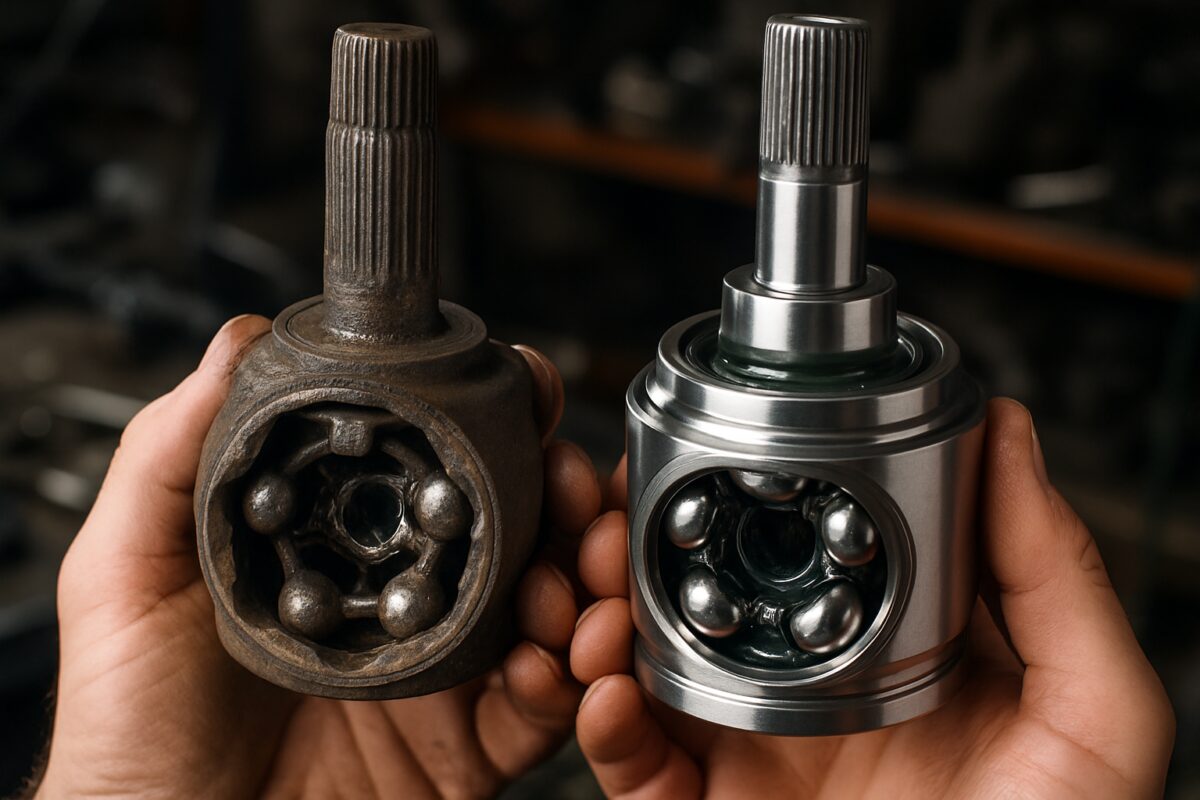
Your car’s CV joints are crucial components that transfer power from the transmission to your wheels whilst allowing them to move up and down with the suspension. When these joints begin to fail, the symptoms can range from subtle vibrations to complete loss of power transmission. Understanding the warning signs and replacement costs helps you address issues before they leave you stranded.
Clicking noise during turns
The most common symptom of a failing CV joint is a distinctive clicking or popping sound when turning corners. This noise typically occurs during low-speed manoeuvres, especially when reversing out of driveways or navigating car parks.
The clicking happens because the worn joint’s internal components have excessive play, causing metal-to-metal contact during articulation. You’ll notice the sound is more pronounced during sharp turns, as this puts maximum stress on the joint. Front-wheel-drive vehicles commonly experience this issue with outer CV joints, whilst all-wheel-drive cars may develop problems in both front and rear joints.
Initially, the clicking may only occur during full-lock turns, but as wear progresses, it becomes audible during gentler steering inputs. Left untreated, the joint can completely separate, causing sudden loss of power to that wheel. This creates a dangerous situation, particularly during acceleration or on inclines.
Professional tip: Test for CV joint wear by slowly reversing whilst turning the steering wheel full lock in both directions. Consistent clicking indicates joint replacement is needed.
Vibration through the steering wheel
Worn CV joints often cause vibrations that travel through the drivetrain to your steering wheel. These vibrations are most noticeable during acceleration, particularly when pulling away from traffic lights or joining motorways.
The vibration occurs because damaged joint components create imbalance in the rotating assembly. Unlike wheel balance issues that cause vibrations at specific speeds, CV joint vibrations intensify under load. You might feel pulsing through the accelerator pedal alongside steering wheel shake.
Inner CV joints typically cause vibrations during straight-line acceleration, whilst outer joints create disturbances during cornering. The problem worsens progressively, eventually affecting ride comfort and vehicle control. Severe cases can cause vibrations throughout the cabin, making long journeys uncomfortable.
These vibrations can damage other components including hub bearings and suspension arms if left unaddressed. Early intervention prevents costly secondary repairs.
Grease leakage around CV joint boots
CV joints are protected by rubber boots filled with specialised grease. When these CV joint gaiters crack or tear, grease escapes and contaminants enter the joint, accelerating wear.
Inspect your CV joint boots regularly for splits, cracks, or grease splatter around the wheel area. Fresh grease appears black or dark brown, whilst old grease becomes lighter and more viscous. You might notice grease on the inner rim of your wheels or splattered on nearby components.
Boot failure often occurs due to age, heat cycles, or road debris damage. Once compromised, the joint loses lubrication whilst dirt and moisture cause rapid deterioration. Replacing boots early can prevent complete joint replacement, saving significant costs.
Expert advice: Check CV joint boots during routine maintenance intervals. Catching boot damage early allows for boot-only replacement rather than complete joint renewal.
Knocking sounds during acceleration
Damaged inner CV joints produce knocking or clunking noises during acceleration, especially from standstill. This sound differs from the clicking associated with outer joint wear, presenting as deeper, more pronounced impacts.
The knocking occurs when worn joint components slam together under torque load. You’ll hear it most clearly when accelerating uphill or carrying heavy loads. Manual transmission vehicles may experience the noise during aggressive gear changes or clutch engagement.
This symptom indicates advanced wear requiring immediate attention. Continued driving risks complete joint failure and potential damage to the differential or transmission output components.
Warning signs your car has a problem
Recognising CV joint problems early prevents roadside breakdowns and expensive secondary damage. Watch for these key indicators:
- Clicking noises during parking manoeuvres or tight turns
- Vibrations through steering wheel during acceleration
- Grease spots under the car near the wheels
- Knocking sounds when accelerating from rest
- Torn or damaged CV joint boots visible during inspection
How to fix the problems
CV joint repair options depend on the extent of damage and your budget considerations:
| Repair Type | Cost Range | Labour Time | Durability |
|---|---|---|---|
| Boot replacement only | £50-£100 | 1-2 hours | Good if joint undamaged |
| Single CV joint | £150-£300 | 2-3 hours | Excellent with quality parts |
| Complete CV axle | £200-£400 | 2-4 hours | Best long-term solution |
| Both sides | £300-£600 | 4-6 hours | Prevents future issues |
For minor boot damage without joint wear, boot replacement offers an economical solution. However, if clicking or knocking noises are present, complete joint replacement is necessary. Many mechanics recommend replacing both sides simultaneously to prevent future labour costs.
When to see a mechanic
Immediate professional attention is required when you notice clicking noises during turns or vibrations during acceleration. These symptoms indicate active wear that will worsen rapidly without intervention.
Don’t delay repairs if you discover torn CV joint boots, as contamination accelerates joint destruction. Similarly, any knocking sounds during acceleration suggest advanced wear requiring urgent replacement.
Schedule repairs promptly if you’re planning long journeys or notice symptoms worsening. CV joint failure can strand you unexpectedly, often in inconvenient locations. Early intervention prevents more expensive repairs to related components like wheel hubs or brake rotors.
Frequently Asked Questions (FAQ)
How long do CV joints typically last?
Most CV joints last 80,000-120,000 miles under normal driving conditions, though severe weather and aggressive driving reduce lifespan significantly.
Can I drive with a clicking CV joint?
Short distances at low speeds are generally safe, but avoid long journeys or high-speed driving until repairs are completed.
What causes premature CV joint failure?
Torn boots allowing contamination, aggressive driving, frequent full-lock turns, and worn shock absorbers accelerate CV joint wear considerably.
Is it cheaper to replace just the joint or entire axle?
Complete axle replacement often costs only marginally more than joint-only repairs whilst providing better long-term reliability and warranty coverage.
How can I prevent CV joint problems?
Regular boot inspections, gentle steering inputs, quality engine oil changes, and prompt brake pad replacement help maximise joint lifespan.
Final recommendation
CV joint problems shouldn’t be ignored, as they compromise vehicle safety and reliability. At AutoPartsPro, our technical specialists recommend addressing symptoms immediately to prevent costly secondary damage. Quality replacement parts paired with professional installation ensure optimal performance and longevity.
Consider replacing both CV joints simultaneously if one has failed, as the other likely has similar wear. This approach minimises future labour costs and ensures balanced drivetrain operation. Choose genuine or OEM-equivalent parts from reputable suppliers to guarantee proper fit and durability.
Regular maintenance including boot inspection and prompt attention to unusual noises keeps your vehicle roadworthy and prevents expensive breakdowns.

 Loading...