The Volkswagen Crafter stands as a formidable presence in the commercial vehicle market, serving businesses across Europe with its robust construction and reliable performance. The engine lineup proves crucial for this workhorse, determining everything from payload capacity to operational costs. With power outputs ranging from 102 to 177 horsepower and torque figures reaching up to 410 Nm, the Crafter’s diesel powertrains deliver the muscle needed for demanding commercial applications.
Comparison table of all engines
| Engine | Power output | Torque | Fuel consumption | Reliability |
|---|---|---|---|---|
| 2.0 TDI 102hp | 102 hp | 250 Nm | 8.2-9.1 L/100km | Good |
| 2.0 TDI 122hp | 122 hp | 340 Nm | 8.4-9.3 L/100km | Very Good |
| 2.0 TDI 140hp | 140 hp | 340 Nm | 8.5-9.4 L/100km | Very Good |
| 2.0 TDI 177hp | 177 hp | 410 Nm | 8.8-9.7 L/100km | Good |
2.0 TDI 102hp overview
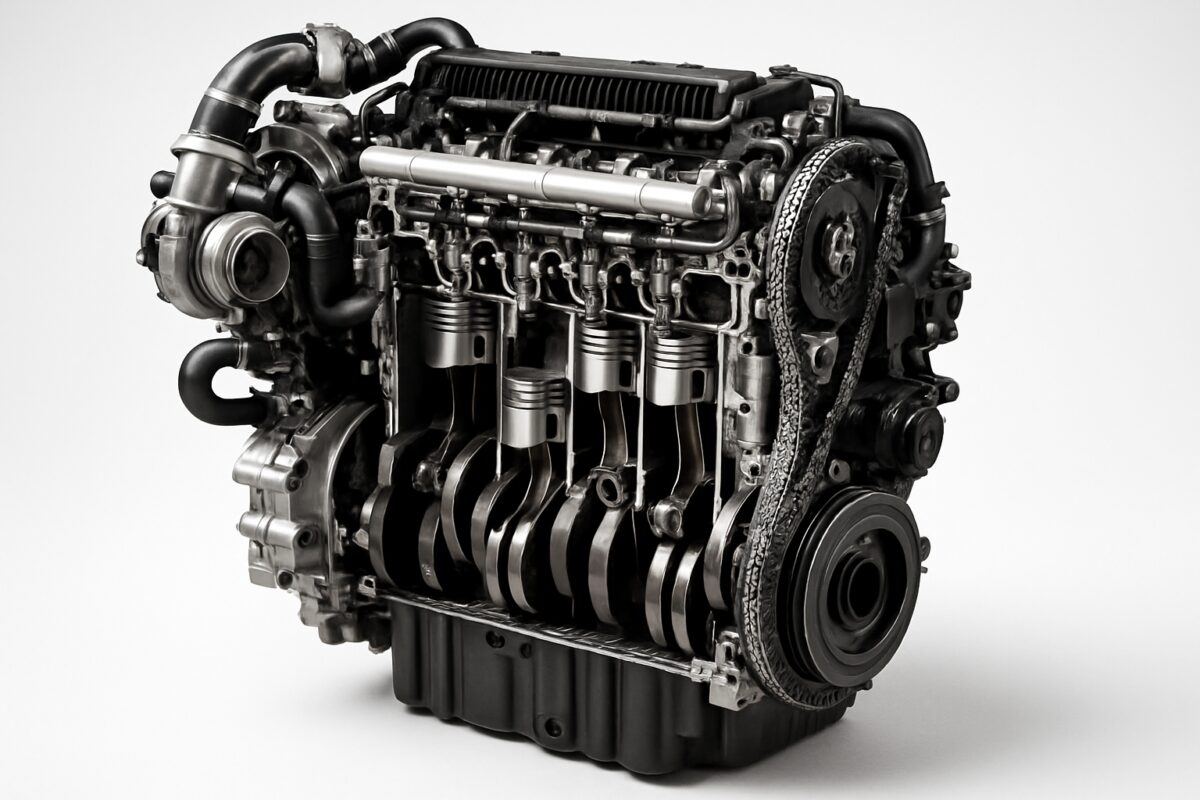
The entry-level 2.0-litre turbocharged diesel represents the most affordable option in the Crafter range. This inline-four configuration features a displacement of 1,968cc and utilises common-rail direct injection technology. The turbocharger provides adequate boost for commercial duties, whilst the diesel fuel system ensures excellent economy for budget-conscious operators.
Pros
- Excellent fuel economy for commercial applications
- Lower initial purchase cost
- Adequate power for light-duty applications
- Simple maintenance requirements
- Good parts availability
Cons
- Limited torque output affects heavy load performance
- Struggles with fully loaded operations
- Less refined than higher-power variants
- May require frequent gear changes on hills
2.0 TDI 122hp overview
The 122-horsepower variant strikes an excellent balance between performance and efficiency. This turbocharged diesel unit shares the same 2.0-litre displacement but benefits from enhanced tuning and improved fuel pump specifications. The common-rail injection system delivers precise fuel metering, contributing to both performance and emissions compliance.
Pros
- Well-balanced power and torque delivery
- Good fuel consumption figures
- Reliable operation in various conditions
- Adequate for most commercial applications
- Proven durability record
Cons
- May feel underpowered when fully loaded
- DPF maintenance requirements
- Higher service costs than base engine
- Turbo lag noticeable at low speeds
2.0 TDI 140hp overview
The 140-horsepower configuration provides enhanced performance whilst maintaining reasonable fuel consumption. This turbocharged diesel features the same displacement but incorporates advanced engine management systems and improved breathing capabilities. The naturally aspirated characteristics have been eliminated in favour of forced induction across the range, with this variant offering excellent mid-range response.
Pros
- Strong mid-range torque delivery
- Good acceleration with moderate loads
- Refined operation compared to lower variants
- Excellent overtaking ability
- Well-suited to mixed driving conditions
Cons
- Higher fuel consumption than base engines
- More complex emission control systems
- Increased maintenance complexity
- Premium fuel recommendations in some markets
2.0 TDI 177hp overview
The flagship 177-horsepower engine represents the pinnacle of Crafter performance. This turbocharged diesel incorporates advanced technologies including variable geometry turbocharging and sophisticated engine oil management systems. The injection system utilises piezo injectors for precise fuel delivery and optimal combustion efficiency.
Pros
- Exceptional pulling power for heavy loads
- Smooth and refined operation
- Excellent highway cruising ability
- Quick acceleration even when loaded
- Advanced emission control systems
Cons
- Highest fuel consumption in range
- Most expensive maintenance costs
- Complex emission systems require specialist knowledge
- Premium components increase repair costs
- Sensitive to fuel quality variations
Maintenance cost
| Engine | Recommended Interval | Estimated Cost | Cost per 10000 miles |
|---|---|---|---|
| 2.0 TDI 102hp | 15,000 miles | £180-£220 | £120-£147 |
| 2.0 TDI 122hp | 15,000 miles | £200-£250 | £133-£167 |
| 2.0 TDI 140hp | 15,000 miles | £220-£280 | £147-£187 |
| 2.0 TDI 177hp | 12,000 miles | £280-£350 | £233-£292 |
Regular maintenance proves essential for Crafter longevity, with oil filter changes forming a critical component of the service schedule. Our mechanics at AutoPartsPro consistently observe that customers who maintain strict service intervals experience significantly fewer costly repairs and enjoy extended engine life.
> **Professional Tip:** Always use VW-approved engine oil specifications, particularly for the higher-output engines which operate under greater stress and require premium lubricants for optimal performance.
Engine sound and character
The Crafter’s diesel engines exhibit distinctly different acoustic signatures depending on the power output. The base 102hp unit produces a characteristic diesel clatter at idle, becoming more subdued under load but lacking the refinement of premium alternatives. The 122hp and 140hp variants offer improved noise insulation and smoother operation, whilst the 177hp flagship delivers surprisingly refined performance with minimal vibration transmission to the cabin.
All engines demonstrate the typical turbo-diesel character with initial lag followed by strong mid-range surge. The air filter quality significantly impacts throttle response, with premium filters maintaining optimal airflow characteristics throughout their service life.
> **Expert Advice:** Regular DPF regeneration cycles are crucial for maintaining engine character and preventing the rough running associated with clogged particulate filters.
Who each engine is best for
| Engine | Daily commuters | Performance enthusiasts | Long-distance drivers | Budget-conscious owners |
|---|---|---|---|---|
| 2.0 TDI 102hp | Poor | Poor | Fair | Excellent |
| 2.0 TDI 122hp | Good | Fair | Good | Good |
| 2.0 TDI 140hp | Very Good | Good | Very Good | Fair |
| 2.0 TDI 177hp | Excellent | Very Good | Excellent | Poor |
Commercial operators should consider their typical load requirements and duty cycles when selecting engines. Fleet managers often find the 122hp variant offers the best compromise between performance and operating costs, whilst those requiring maximum capability gravitate towards the 177hp option despite higher running costs.
Frequently asked questions (FAQ)
What’s the most reliable VW Crafter engine?
The 122hp and 140hp variants demonstrate the best long-term reliability records, with fewer reported issues compared to base and flagship engines.
How often should I change the engine oil in my Crafter?
Follow VW’s recommended intervals: 15,000 miles for most engines, but 12,000 miles for the 177hp variant due to higher operating stresses.
Can I upgrade my Crafter engine for more power?
Professional ECU remapping can safely increase power by 15-25%, but warranty implications and emissions compliance must be considered carefully.
What causes DPF problems in Crafter engines?
Short journeys, poor-quality diesel fuel, and neglected servicing contribute to DPF blockages, requiring expensive cleaning or replacement procedures.
Which Crafter engine offers the best fuel economy?
The 102hp base engine typically achieves the lowest consumption figures, though the 122hp variant offers better economy under load.
Understanding your Crafter’s engine characteristics helps optimise performance and minimise operating costs. Whether you’re managing a single vehicle or an entire fleet, selecting the appropriate powerplant ensures your commercial operations run smoothly. Regular maintenance using quality components from trusted suppliers like our maintenance guides keeps these reliable workhorses performing at their best for years to come.

 Loading...