The Toyota Corolla stands as one of the world’s most popular compact cars, praised for its reliability and efficiency. However, even this well-regarded vehicle experiences certain recurring issues that owners should be aware of. Understanding these potential problems can help you maintain your Corolla properly and avoid costly repairs down the line.
Engine oil consumption issues
Many Toyota Corolla owners, particularly those with 2009-2013 models, report excessive engine oil consumption. This issue primarily affects vehicles equipped with the 1.8-litre 2ZR-FE engine.
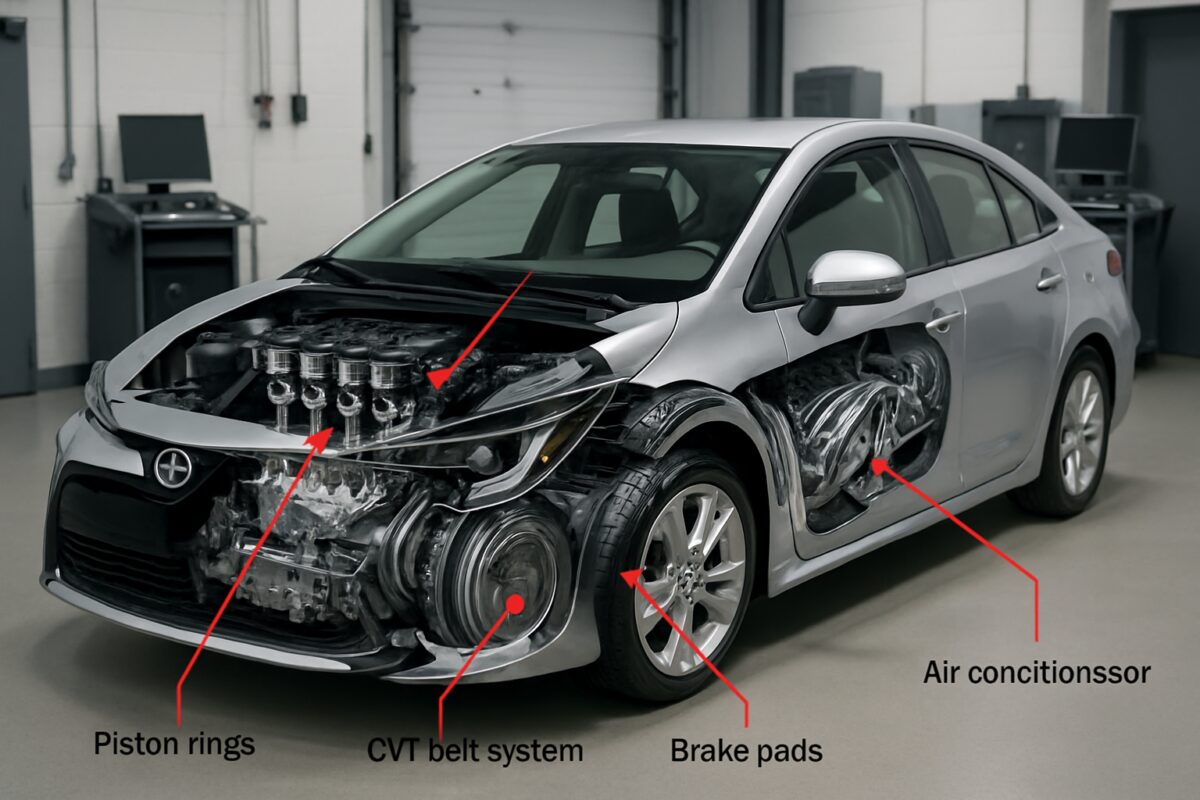
The problem stems from faulty piston ring design, which allows oil to seep into the combustion chamber. Drivers notice their oil levels dropping significantly between scheduled changes, sometimes requiring top-ups every 1,000 miles.
Our mechanics at AutoPartsPro have observed that this issue often manifests around 60,000-80,000 miles. The excessive consumption can lead to engine damage if not addressed promptly. Toyota issued a warranty extension for affected vehicles, covering repairs up to 10 years or 150,000 miles.
Early warning signs include blue exhaust smoke, particularly during startup, and frequent low oil level warnings. Regular oil level checks become crucial for these model years.
CVT transmission problems
Continuously Variable Transmission (CVT) units in newer Corollas (2014 onwards) present reliability concerns. These transmission systems are designed to provide smooth power delivery and improved fuel economy but can develop issues over time.
Common symptoms include jerking during acceleration, delayed engagement when shifting from park to drive, and unusual whining noises. The CVT may also struggle to maintain proper gear ratios, causing the engine to rev higher than expected.
According to our specialist technicians, proper transmission fluid maintenance significantly extends CVT life. Toyota recommends fluid changes every 100,000 miles, but many experts suggest more frequent intervals of 60,000 miles for better longevity.
Heat buildup remains the primary enemy of CVT systems. City driving with frequent stop-and-go traffic accelerates wear. Installing auxiliary transmission coolers can help mitigate temperature-related damage.
Air conditioning system failures
Toyota Corolla air conditioning systems, particularly in 2009-2016 models, suffer from premature compressor failures and refrigerant leaks. The compressor clutch often fails prematurely, leaving drivers without cooling during hot weather.
Evaporator core leaks present another common issue, typically occurring around 80,000-100,000 miles. These leaks require dashboard removal for repair, making them expensive fixes. Symptoms include reduced cooling performance, musty odours, and visible refrigerant stains under the vehicle.
Regular system maintenance helps prevent major failures. Our automotive specialists recommend annual AC system inspections, including refrigerant level checks and leak detection. Replacing the cabin filter regularly also maintains system efficiency.
Blocked condensate drains can cause water damage to interior electronics. Cleaning these drains during routine maintenance prevents costly electrical repairs.
Premature brake wear
Toyota Corolla brake systems, whilst generally reliable, tend to wear faster than expected in certain driving conditions. Front brake pads and rotors often require replacement between 30,000-50,000 miles, depending on driving habits.
Rear brake components, particularly on drum brake-equipped models, suffer from moisture-related corrosion. This leads to uneven braking performance and premature component failure. Upgrading to disc brakes all round improves performance and longevity.
Our brake specialists note that city driving significantly reduces brake component life. Frequent stops and starts generate excessive heat, accelerating pad and rotor wear. Regular brake system inspections help identify wear patterns early.
Brake fluid contamination also causes problems. Toyota recommends brake fluid changes every three years, but humid climates may require more frequent intervals to prevent corrosion damage.
Warning signs your car has a problem
Recognising early warning signs helps prevent minor issues from becoming major repairs. Regular monitoring of these symptoms can save significant money and prevent roadside breakdowns.
| Warning Sign | Possible Cause | Action Required |
|---|---|---|
| Blue exhaust smoke | Oil burning | Check engine oil level, inspect for leaks |
| Transmission shuddering | CVT problems | Schedule transmission inspection |
| Weak air conditioning | Refrigerant leak | AC system diagnosis required |
| Grinding brake noise | Worn brake components | Immediate brake inspection |
| Engine rattling on startup | Oil pressure issues | Check oil level and pressure |
Professional tip: Keep detailed maintenance records. This documentation helps identify patterns and can be valuable for warranty claims or resale value.
How to fix the problems
Addressing Toyota Corolla issues requires systematic approaches tailored to each problem type. Our experienced technicians recommend specific solutions based on symptom severity and vehicle age.
| Problem | DIY Solution | Professional Solution | Estimated Cost |
|---|---|---|---|
| High oil consumption | Regular oil level monitoring | Engine rebuild/replacement | £3,000-£6,000 |
| CVT transmission issues | Fluid level check | Transmission replacement | £4,000-£7,000 |
| AC compressor failure | System recharge | Compressor replacement | £800-£1,500 |
| Brake wear | Visual inspection | Complete brake service | £300-£800 |
| Ignition coil failure | Coil replacement | Full ignition system service | £200-£600 |
For oil consumption issues, regular monitoring becomes essential. Check levels weekly and maintain records of consumption rates. Using high-quality engine oils can help reduce consumption in some cases.
CVT transmission problems often require professional intervention. However, maintaining proper fluid levels and temperatures can prevent many issues. Consider installing transmission temperature gauges for monitoring.
Expert advice: Address small problems immediately. Delaying repairs often leads to more extensive and expensive damage in interconnected systems.
When to see a mechanic
Certain symptoms require immediate professional attention to prevent safety hazards or expensive damage. Understanding when to seek help versus attempting DIY repairs can save money and ensure safety.
Schedule immediate professional inspection if you experience sudden loss of power, transmission slipping, complete brake failure, or engine overheating. These conditions pose serious safety risks and require expert diagnosis.
For routine maintenance items like oil changes, brake pad replacement, and filter changes, many owners can perform these tasks with proper tools and knowledge. However, complex systems like transmissions, engines, and air conditioning require specialized equipment and expertise.
Our automotive specialists recommend annual comprehensive inspections, even for reliable vehicles like the Corolla. Early detection of developing issues prevents roadside breakdowns and reduces long-term ownership costs.
Choose mechanics familiar with Toyota systems and common Corolla issues. Specialist knowledge ensures accurate diagnosis and appropriate repair strategies. Always request detailed estimates before approving major repairs.
Frequently asked questions
What are the most common Toyota Corolla engine problems?
Excessive oil consumption in 2009-2013 models, primarily affecting the 2ZR-FE 1.8-litre engine due to faulty piston ring design.
How long do Toyota Corolla CVT transmissions typically last?
With proper maintenance, CVT transmissions last 150,000-200,000 miles, though some experience issues around 80,000-100,000 miles without regular fluid changes.
Why does my Corolla’s air conditioning fail prematurely?
Common causes include compressor clutch failure, evaporator leaks, and refrigerant loss, particularly in 2009-2016 models due to design weaknesses.
How often should I replace brake pads on a Toyota Corolla?
Front brake pads typically last 30,000-50,000 miles, whilst rear pads can last 60,000-80,000 miles depending on driving conditions.
Are Toyota Corolla reliability issues covered under warranty?
Some issues like excessive oil consumption have extended warranty coverage. Check with Toyota for specific problem coverage and eligibility requirements.
Final recommendation
Despite these documented issues, the Toyota Corolla remains an excellent choice for reliable, economical transportation. Most problems are well-understood and manageable with proper maintenance and awareness.
Focus on preventive maintenance, particularly for known problem areas like engine oil consumption and CVT transmission health. Regular inspections by qualified technicians help identify developing issues before they become expensive repairs.
For current owners experiencing these problems, don’t panic. Most issues have established repair procedures and replacement parts readily available. Work with experienced Toyota specialists who understand these specific challenges and can provide appropriate solutions.
When considering a used Corolla purchase, have it inspected by a qualified mechanic familiar with model-specific issues. This investment in professional evaluation can prevent costly surprises and ensure you make an informed decision about this otherwise reliable vehicle.

 Loading...