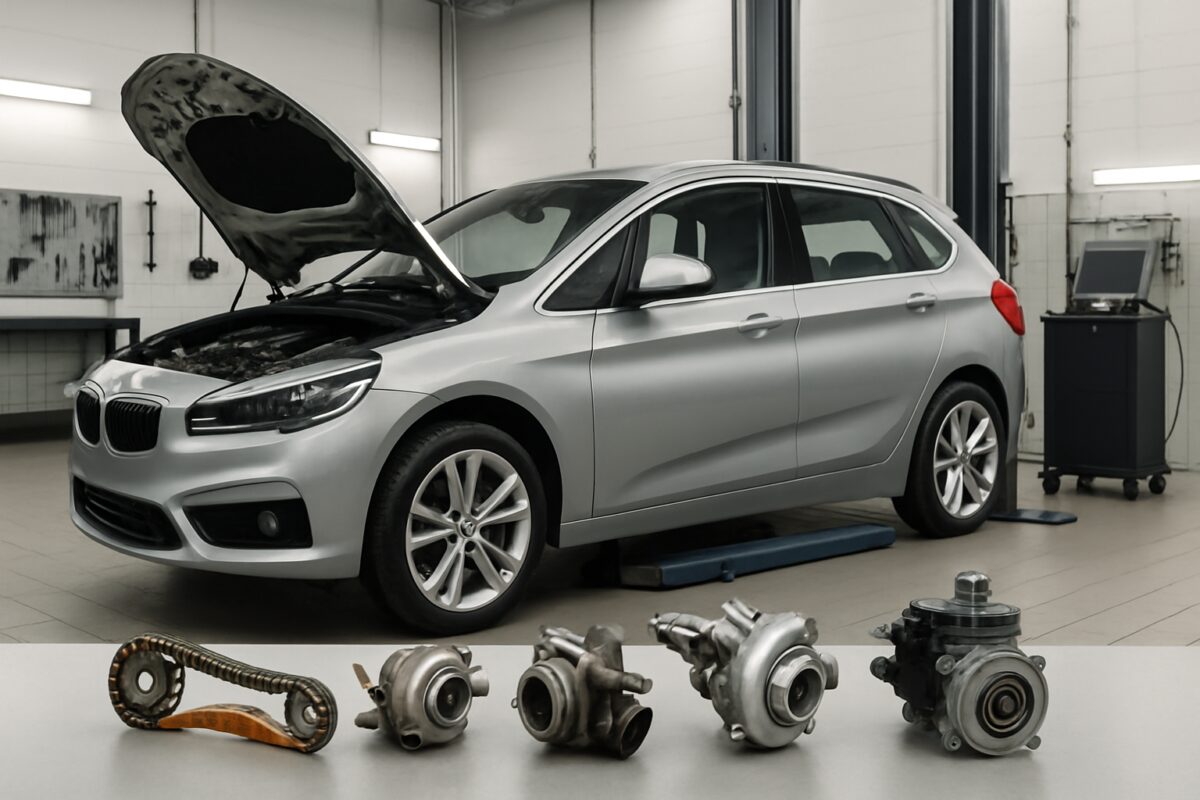
The BMW Active Tourer has gained popularity amongst UK families seeking a practical premium MPV. However, like many modern vehicles, this model experiences specific recurring problems that owners should be aware of. Understanding these common faults helps you maintain your vehicle properly and avoid costly repairs down the line.
Timing chain problems
The BMW Active Tourer’s B38 and B46 three and four-cylinder engines suffer from premature timing chain stretch. This occurs typically between 40,000-80,000 miles, causing a distinctive rattling noise during cold starts.
The plastic chain guides become brittle over time, particularly in the upper chain area. When these guides fail, metal fragments contaminate the oil system. Our AutoPartsPro mechanics have observed that vehicles driven primarily on short journeys experience this problem earlier due to insufficient engine warm-up cycles.
Symptoms include engine rattling at idle, reduced power output, and intermittent engine warning lights. If left untreated, complete timing chain failure can cause catastrophic engine damage requiring expensive rebuilds costing £3,000-£5,000.
Professional tip: Always use manufacturer-approved oil with the correct viscosity rating. Low-quality oil accelerates chain wear significantly.
Turbocharger failure
Active Tourer models equipped with turbocharger units frequently experience bearing failures between 50,000-100,000 miles. The variable geometry mechanism becomes stuck due to carbon build-up from diesel particulate filter regeneration cycles.
Common symptoms include blue smoke from the exhaust, whistling noises under acceleration, and sudden loss of power. The turbo wastegate actuator often fails simultaneously, causing overboosting conditions that trigger limp mode.
Replacement costs range from £1,800-£3,200 depending on whether you choose OEM or aftermarket units. Regular motorway driving helps prevent carbon accumulation, but city driving patterns exacerbate the problem.
Dual-clutch transmission issues
The seven-speed dual-clutch transmission (DCT) in Active Tourer models develops clutch pack wear prematurely. Urban stop-start driving causes excessive heat build-up in the clutch mechanism.
Drivers report jerky gear changes, delayed engagement when pulling away, and transmission error messages on the dashboard. The mechatronic unit, which controls hydraulic pressure, frequently requires replacement around 60,000 miles.
Our specialists recommend avoiding aggressive acceleration and using manual mode in heavy traffic. Complete transmission replacement costs £4,000-£6,000, making this one of the most expensive repairs on the Active Tourer.
Expert advice: Change transmission fluid every 40,000 miles rather than following BMW’s ‘lifetime’ service schedule to prevent costly failures.
EGR valve problems
The exhaust gas recirculation system clogs with carbon deposits, particularly on diesel variants. The EGR valve sticks in the open position, causing rough idling and increased emissions.
Symptoms include black smoke during acceleration, poor fuel economy, and engine management light activation. The valve requires cleaning or replacement every 40,000-60,000 miles depending on driving conditions.
Short journey patterns worsen this problem significantly. Professional cleaning costs £150-£250, whilst valve replacement ranges from £300-£500 including labour.
Cooling system failures
Active Tourer models suffer from water pump failures and thermostat housing cracks. The plastic expansion tank develops stress fractures around the 80,000-mile mark.
Electric water pump failures cause overheating without warning, as there’s no belt-driven backup system. The pump’s electronic controller frequently fails, leading to inadequate coolant circulation.
Thermostat housing cracks occur due to thermal cycling, particularly where plastic meets aluminium components. Coolant leaks onto electrical components can cause expensive secondary damage to ECUs and wiring harnesses.
Warning signs your car has a problem
Recognising early symptoms prevents minor issues becoming major repairs. Watch for these key indicators:
- Unusual engine noises, particularly rattling during cold starts
- Blue or black smoke from the exhaust system
- Jerky or delayed gear changes in automatic models
- Dashboard warning lights, especially engine management or transmission symbols
- Coolant leaks under the vehicle after parking
- Reduced power output or acceleration performance
- Increased fuel consumption without explanation
- Unusual vibrations through the steering wheel or gear selector
How to fix the problems
| Problem | DIY Difficulty | Professional Cost | Parts Required |
|---|---|---|---|
| Timing Chain Replacement | Expert Only | £2,500-£4,000 | Timing chain, guides, tensioner |
| Turbocharger Replacement | Advanced | £1,800-£3,200 | Complete turbo unit, gaskets |
| DCT Transmission Service | Professional | £400-£800 | Transmission fluid, filters |
| EGR Valve Cleaning | Moderate | £150-£500 | EGR valve, cleaning chemicals |
| Water Pump Replacement | Advanced | £600-£1,200 | Water pump, coolant, thermostat |
| Maintenance Item | Interval | Cost Range | Impact on Reliability |
|---|---|---|---|
| Engine oil change | 10,000 miles | £80-£150 | High – prevents timing chain wear |
| Transmission service | 40,000 miles | £400-£600 | Very High – prevents DCT failure |
| Coolant system flush | 60,000 miles | £150-£250 | High – prevents pump/housing cracks |
| Air filter replacement | 20,000 miles | £25-£45 | Moderate – maintains turbo efficiency |
When to see a mechanic
Seek professional diagnosis immediately if you experience timing chain rattling, as this indicates imminent failure risk. Transmission problems require specialist equipment for proper diagnosis and repair.
Any coolant leaks should be inspected promptly, particularly around the thermostat housing and expansion tank. Overheating can cause cylinder head warping within minutes.
For turbocharger issues, visit a specialist immediately upon noticing blue smoke or unusual noises. Continued driving with a failing turbo can damage the engine’s internals through oil starvation or debris contamination.
EGR valve problems, whilst less critical, should be addressed within 1,000 miles to prevent catalyst damage and expensive emissions system repairs.
Frequently Asked Questions (FAQ)
What’s the most expensive BMW Active Tourer repair?
Timing chain failure requiring complete engine rebuild costs £5,000-£8,000, making it the most expensive potential repair.
How often should I service my Active Tourer transmission?
Service the DCT transmission every 40,000 miles rather than BMW’s extended intervals to prevent premature failure.
Can I prevent turbocharger problems through driving habits?
Yes, regular motorway driving and proper warm-up cycles significantly extend turbocharger life by preventing carbon build-up.
Why does my Active Tourer use excessive engine oil?
B38/B46 engines commonly consume oil due to piston ring design. Consumption up to 1 litre per 1,000 miles is considered normal.
Should I buy an extended warranty for my Active Tourer?
Extended warranties prove worthwhile given the high repair costs, particularly for timing chain and transmission coverage.
Final recommendation
The BMW Active Tourer offers excellent practicality and premium features, but requires diligent maintenance to avoid costly repairs. Our AutoPartsPro specialists strongly recommend following shortened service intervals, particularly for oil changes and transmission servicing.
Budget £1,500-£2,000 annually for maintenance and repairs beyond the warranty period. Choose genuine or OEM-equivalent parts to ensure longevity and reliability. Regular diagnostic scans help identify developing problems before they become expensive failures.
Despite these issues, the Active Tourer remains a capable family vehicle when properly maintained. Early intervention and quality parts from trusted suppliers like AutoPartsPro significantly improve ownership experience and reduce long-term costs.

 Loading...