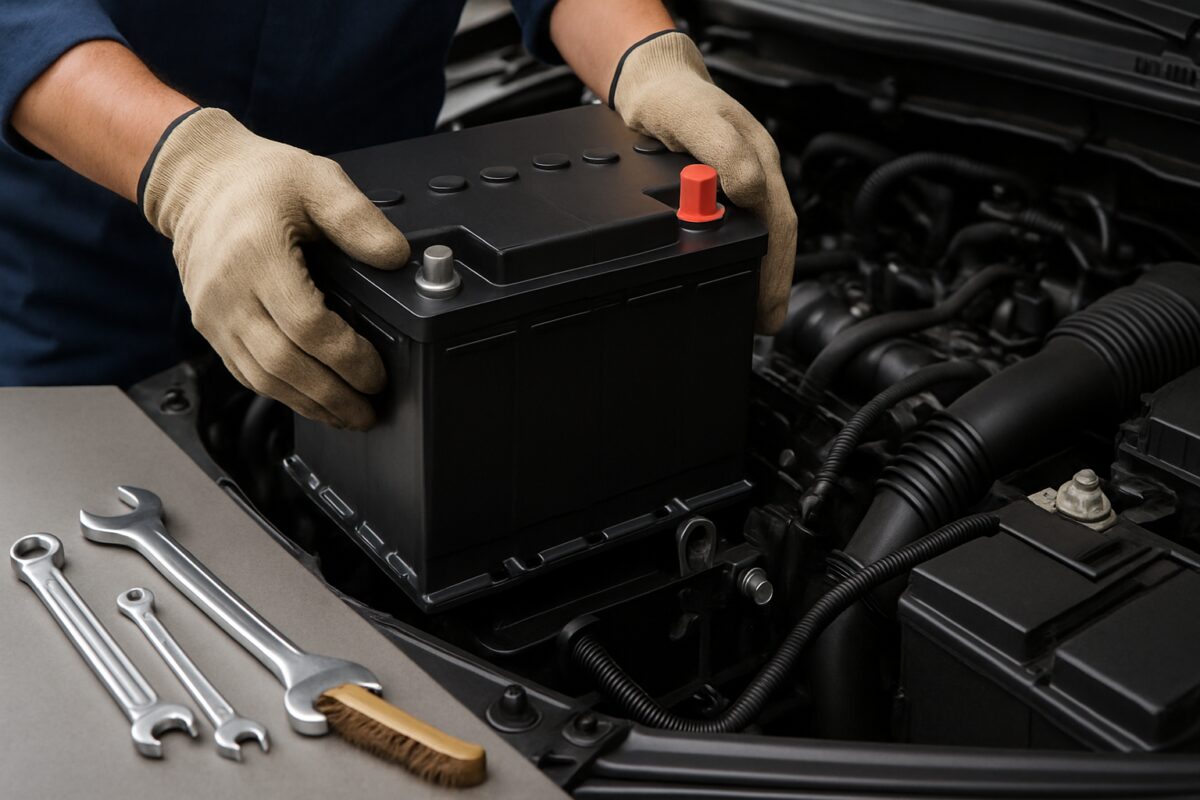
To fit a car battery, you’ll need a replacement battery specific to your vehicle, basic tools including spanners and safety equipment like gloves. The process involves removing the old battery terminals, lifting out the old unit, installing the new battery, and reconnecting the terminals in the correct order.
Tools & parts required
Proper preparation makes fitting a car battery straightforward and safe. Having the right equipment to hand prevents delays and ensures a professional installation.
Parts needed:
- Replacement battery (vehicle specific)
- Terminal protector spray
- Battery terminal grease
Tools required:
- Open-ended spanners (typically 10mm and 13mm)
- Battery terminal puller (if terminals are seized)
- Wire brush or terminal cleaning tool
- Safety gloves
- Safety glasses
- Torch or inspection light
Always verify the replacement battery matches your vehicle’s specifications including dimensions, terminal configuration, and cold cranking amps (CCA) rating. Using an incorrect battery can damage electrical systems.
Safety precautions
Battery replacement involves handling heavy components and working with electrical systems, making safety paramount throughout the process.
Work in a well-ventilated area away from naked flames or sparks. Car batteries contain sulphuric acid and produce hydrogen gas during charging. Ensure the engine is switched off and keys are removed from the ignition.
Wear safety gloves and glasses to protect against acid spills and potential sparks. Keep a fire extinguisher nearby when working with electrical components. Never smoke whilst handling batteries.
Disconnect the negative terminal first to prevent accidental short circuits. This reduces the risk of electrical damage to sensitive control units and prevents sparks near the battery.
Step-by-step instructions
Following the correct sequence prevents electrical damage and ensures safe battery replacement. Take your time with each step to avoid costly mistakes.
Step 1: Prepare the vehicle
Switch off the engine and remove the keys from the ignition. Engage the handbrake and ensure the vehicle is on level ground. Open the bonnet and locate the battery, which is typically mounted in the engine bay or boot.
Some vehicles may have battery covers or air filter boxes that need removing first. Check your owner’s manual for specific access requirements.
Step 2: Disconnect the old battery
Always disconnect the negative terminal first (marked with a minus sign or black cable). Use the appropriate spanner to loosen the terminal clamp, then wiggle it free from the battery post.
Next, disconnect the positive terminal (marked with a plus sign or red cable) using the same method. Keep the terminals separate to prevent accidental contact.
Step 3: Remove the battery hold-down
Most batteries are secured with a hold-down bracket or clamp at the base. Remove the securing nuts or bolts using appropriate spanners. Some vehicles use a top-mounted bracket that spans across the battery.
Store all fasteners safely as you’ll need them for the new battery installation. Check the condition of the hold-down hardware and replace if corroded.
Step 4: Lift out the old battery
Car batteries are heavy, typically weighing 15-25kg. Use proper lifting technique with your legs, not your back. Consider using a battery carrying strap or handle if available.
Lift the battery straight up and out of the compartment. Be careful not to tip it as this can spill acid from the vents.
Step 5: Clean the battery tray
Inspect the battery tray for corrosion or debris. Clean with a wire brush and neutralise any acid residue with a bicarbonate of soda solution. This prevents corrosion of the new battery.
Check that the tray is structurally sound and replace if damaged. A corroded tray can cause the new battery to sit unevenly or become loose.
Step 6: Install the new battery
Lower the new battery into the tray, ensuring it sits level and secure. The terminals should face the same direction as the original battery for proper cable reach.
Replace the hold-down bracket and tighten the securing bolts to specification. The battery shouldn’t move when properly secured, but avoid over-tightening which can crack the case.
Step 7: Reconnect the terminals
Connect the positive terminal first, followed by the negative terminal. This reverse order prevents accidental short circuits during installation.
Clean the terminal posts and cable clamps with a wire brush before connection. Apply a thin layer of terminal grease to prevent future corrosion.
Tighten the terminal clamps firmly but don’t over-tighten, which can damage the battery posts. The connection should be snug without excessive force.
Professional tip from AutoPartsPro mechanics: Always carry your old battery with you when purchasing a replacement to ensure correct specification matching and to benefit from core exchange discounts.
Common mistakes to avoid
Several common errors can cause problems during battery replacement or reduce the new battery’s lifespan.
Connecting terminals in wrong order: Always disconnect negative first and reconnect positive first. This prevents short circuits and protects sensitive electronics.
Over-tightening terminal clamps: Excessive force can crack battery posts, causing leaks and poor connections. Hand-tight plus a quarter turn is usually sufficient.
Ignoring corrosion: Failing to clean terminal posts and clamps reduces connection quality and accelerates future corrosion. Always clean thoroughly before installation.
Wrong battery size: Installing an incorrect size battery can cause vibration damage, poor fit, or inadequate power supply. Always verify specifications before purchase.
Forgetting to reset electronics: Some vehicles require radio codes or electronic system resets after battery disconnection. Check your manual for specific requirements.
When should you replace it?
Most car batteries last 3-5 years depending on usage and climate conditions. However, several warning signs indicate replacement is needed sooner.
Slow starter cranking, especially in cold weather, suggests battery deterioration. Dashboard warning lights, dim headlights, or electrical issues can also indicate battery problems.
Physical signs include swollen battery case, corrosion around terminals, or visible electrolyte leaks. If your battery is over three years old and showing these symptoms, replacement is advisable.
Regular testing with a multimeter can identify declining performance before complete failure. A healthy 12V battery should read 12.6V when fully charged.
Related maintenance you can do at the same time
Battery replacement provides an excellent opportunity to perform related maintenance tasks whilst the bonnet is open and tools are available.
Check and clean all electrical connections throughout the engine bay. Inspect alternator regulator connections and drive belt condition.
Test the charging system with a multimeter to ensure the alternator is maintaining proper voltage. A faulty charging system will quickly damage your new battery.
Inspect the radiator hose clamps and coolant levels whilst in the engine bay. Check brake fluid levels and condition as these routine checks save time later.
Frequently asked questions
How long does a car battery typically last?
Most car batteries last between 3-5 years under normal conditions. Extreme temperatures, frequent short journeys, and electrical demands can reduce lifespan significantly.
Can I fit any battery to my car?
No, you must use a battery with correct dimensions, terminal configuration, and capacity rating. Using wrong specifications can damage electrical systems permanently.
Do I need to program anything after battery replacement?
Some vehicles require radio code entry or electronic system resets. Check your owner’s manual for specific requirements after battery disconnection.
Why disconnect negative terminal first?
Disconnecting negative first prevents accidental short circuits if tools contact the bodywork. This sequence protects sensitive electronic components from voltage spikes.
What should I do with the old battery?
Car batteries must be recycled properly due to lead and acid content. Most retailers offer core exchange discounts for old batteries.
Fitting a new car battery correctly requires attention to safety procedures and proper technique, but it’s well within most motorists’ capabilities. Following the correct terminal connection sequence and using appropriate torque settings ensures reliable operation and protects your vehicle’s electrical system. Quality replacement batteries from reputable suppliers provide the foundation for years of dependable starting performance.

 Loading...