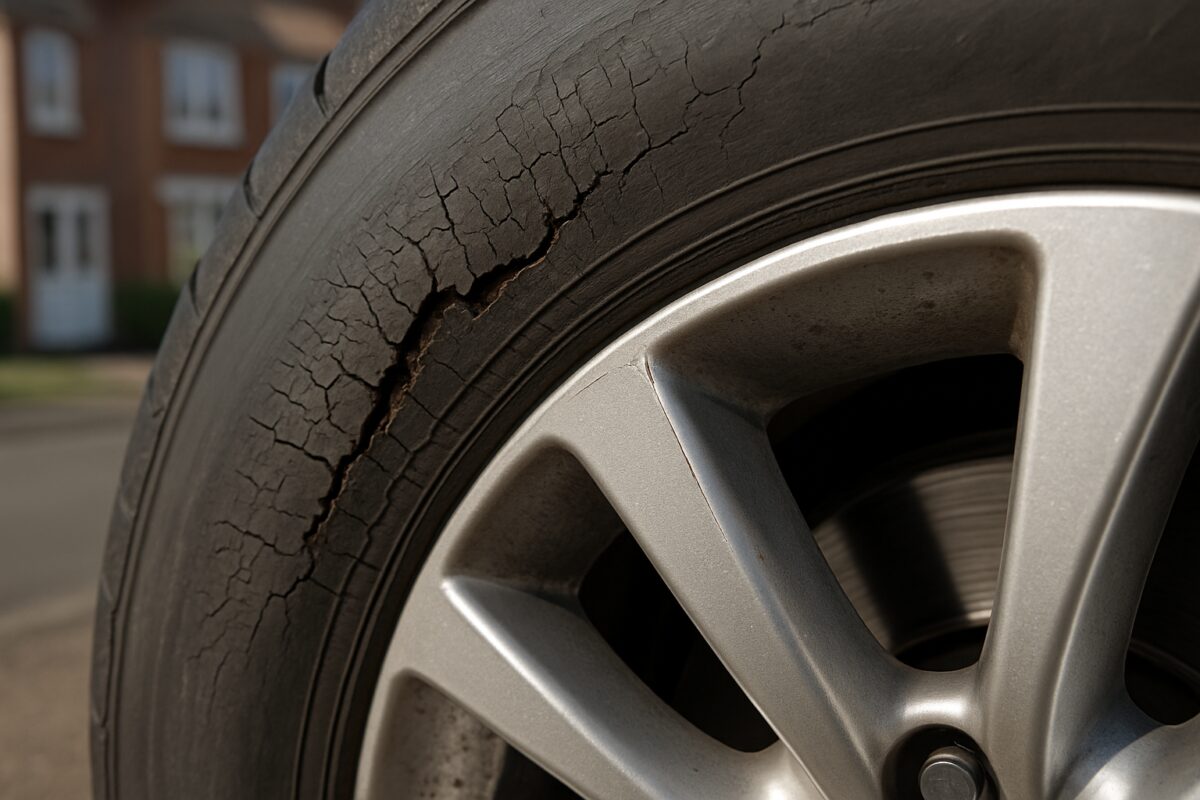
Tyre cracking, also known as tyre perishing, occurs when rubber compounds deteriorate over time due to UV exposure, ozone, temperature fluctuations, and age. These cracks typically appear as small lines on sidewalls or tread areas and indicate structural weakness that compromises grip, handling, and safety. Regular visual inspections every month can help identify early signs of cracking before they become dangerous.
Understanding tyre cracking is crucial for UK drivers, as our climate conditions and road surfaces can accelerate rubber deterioration. Whether you drive daily through city streets or occasionally on motorways, knowing what causes tyres to crack and how to prevent it can save you money and keep you safe.
Tools & parts required
Parts needed:
- Replacement tyres (vehicle-specific sizing)
- New valve caps
- Tyre pressure monitoring sensors (if required)
- Wheel balancing weights
Tools required:
- Tyre pressure gauge
- Tread depth gauge
- Jack and axle stands
- Socket set for wheel removal
- Torque wrench for proper wheel fitting
Always ensure replacement tyres match your vehicle’s load rating and speed index specifications. Check your owner’s manual or door pillar sticker for the correct tyre size and pressure requirements.
Safety precautions
Work on level ground and engage the handbrake before lifting the vehicle. Wear safety glasses and gloves when handling tyres, as cracked rubber can have sharp edges. Never attempt to repair severely cracked tyres – replacement is the only safe option.
Keep a fire extinguisher nearby when working around vehicles, and ensure you have proper battery terminals disconnected if using power tools. Use quality axle stands rather than relying solely on a jack for support.
Understanding tyre cracking types
Sidewall cracking
Sidewall cracks usually run radially from the rim towards the tread area. These are often caused by UV exposure, age, or underinflation. Small surface cracks may be cosmetic, but deep cracks that expose internal cords require immediate tyre replacement.
Check for bulges or deformation alongside cracking, as these indicate internal damage. Sidewall integrity is critical for maintaining proper tyre pressure and handling characteristics.
Tread cracking
Tread area cracks typically appear as circumferential lines following the tyre’s curve. These cracks often result from heat cycling, heavy loads, or chemical exposure from road salts and oils.
Tread cracking reduces grip significantly, especially in wet conditions. Any crack deeper than 1.6mm poses serious safety risks and requires immediate attention.
Bead area cracking
Cracks near the bead (where tyre meets rim) indicate serious structural problems. These can cause sudden air loss and are often accompanied by corrosion on steel wheels or damage to alloy wheels.
Bead cracking is particularly dangerous as it can lead to explosive tyre failure at speed.
What causes tyres to crack and perish?
Age and time
Rubber compounds naturally deteriorate over time, regardless of usage. Most manufacturers recommend replacing tyres after six to ten years, even with adequate tread depth remaining.
Check the DOT code on your tyre sidewall – the last four digits indicate the week and year of manufacture. A tyre showing ‘2219’ was made in the 22nd week of 2019.
UV and ozone exposure
Ultraviolet rays and atmospheric ozone cause rubber oxidation, leading to surface hardening and cracking. Vehicles parked outdoors are particularly susceptible to this type of damage.
Ozone levels are typically higher in urban areas and near industrial sites, accelerating the cracking process even further.
Temperature fluctuations
UK weather patterns with frequent temperature changes stress tyre compounds. Freezing temperatures make rubber brittle, while heat causes expansion and contraction cycles that weaken the structure.
Tyres stored in unheated garages or outdoor conditions experience more severe temperature stress than those kept in climate-controlled environments.
Improper storage and maintenance
Underinflation causes excessive sidewall flexing, generating heat and stress that leads to cracking. Overinflation concentrates stress on the tread centre, causing different crack patterns.
Poor wheel alignment creates uneven wear patterns that can accelerate cracking in specific areas. Regular rotation helps distribute wear evenly across all tyres.
“From our experience at AutoPartsPro, vehicles driven less than 5,000 miles annually often show age-related cracking before tread wear becomes an issue. Regular pressure checks every month can extend tyre life significantly.”
How to inspect tyres for cracking
Visual inspection routine
Examine each tyre monthly, looking for cracks, cuts, bulges, or embedded objects. Use adequate lighting and clean the tyre surface to spot hairline cracks that might be obscured by dirt.
Pay particular attention to the sidewall area between the rim and tread shoulder, where stress cracking commonly begins.
Physical examination
Gently flex suspected crack areas – if cracks open wider under light pressure, the tyre needs replacement. Run your fingers along suspected areas to detect raised or separated rubber sections.
Check tread depth using a 20p coin – if the outer band is visible when inserted into main grooves, your tyres need replacing regardless of cracking issues.
Professional assessment
Have tyres professionally inspected during routine servicing or MOT preparation. Qualified technicians can identify internal damage not visible during casual inspection.
Many tyre specialists offer free safety checks that include pressure testing and visual inspection for damage or wear issues.
When tyre cracking becomes dangerous
Crack depth and extent
Any crack deeper than surface level that exposes underlying cords or fabric requires immediate replacement. Multiple cracks in the same area indicate widespread deterioration.
Cracks longer than 25mm or those that continue growing between inspections pose significant safety risks.
Location-specific risks
Sidewall cracking is more dangerous than tread cracking due to higher stress loads during cornering and manoeuvring. Shoulder area cracks (where sidewall meets tread) combine both risks.
Any cracking near the valve stem area can cause sudden pressure loss and requires immediate attention.
Performance degradation signs
Cracked tyres often show reduced grip, especially in wet conditions. You might notice increased stopping distances or handling instability during cornering.
Vibration through the steering wheel can indicate internal damage associated with visible cracking.
“Our mechanics frequently see drivers attempt to extend cracked tyre life beyond safe limits. Remember, tyres are your only connection to the road – compromising here isn’t worth the risk.”
Prevention strategies for UK drivers
Proper storage practices
Store seasonal tyres in a cool, dry place away from direct sunlight and ozone sources like electric motors or welding equipment. Keep tyres off concrete floors using wooden pallets or tyre racks.
Clean tyres before storage and slightly overinflate to compensate for gradual pressure loss over time.
Regular maintenance schedule
Check tyre pressures monthly when tyres are cold, preferably in the morning before driving. Maintain manufacturer-recommended pressures found on the door pillar or owner’s manual.
Rotate tyres every 6,000-8,000 miles to ensure even wear patterns. Include the spare tyre in rotation if it’s a full-size match.
Driving habits that help
Avoid aggressive acceleration, hard braking, and sharp cornering that stress tyre compounds. Drive smoothly over speed bumps and avoid kerb contact that can cause sidewall damage.
Remove tyres from service gradually – replace the most worn pair first, moving better tyres to the rear for stability.
Professional replacement timing
Age-based replacement
Replace tyres older than six years regardless of tread depth or visible condition. After ten years, tyres become unsafe even if stored properly and never used.
High-performance and low-profile tyres often require earlier replacement due to softer compound formulations.
Seasonal considerations
Replace cracked tyres before winter when wet and icy conditions demand maximum grip. Summer heat can accelerate existing crack growth, making spring an ideal replacement time.
Consider upgrading to higher-quality tyres if current ones crack prematurely due to your specific driving conditions or storage limitations.
Budget planning
Quality tyres from reputable manufacturers often resist cracking longer than budget alternatives. Factor replacement costs into your vehicle maintenance budget rather than waiting for emergency situations.
Buying tyres in pairs or sets often provides better value than individual replacements and ensures consistent performance characteristics.
Common mistakes to avoid
Ignoring early warning signs
Small cracks don’t heal themselves – they only worsen over time. Addressing cracking early prevents more expensive consequences like tyre failure or accident damage.
Don’t assume cracking is merely cosmetic without proper professional assessment of depth and extent.
Attempting DIY repairs
Never attempt to seal or glue cracked tyres – these repairs are temporary at best and dangerous at worst. Only qualified professionals should assess whether minor damage warrants repair or replacement.
Avoid using tyre shine products on cracked tyres, as chemicals can accelerate deterioration of already weakened rubber.
Mixing tyre types inappropriately
Don’t mix different tyre brands, tread patterns, or ages across axles. This creates handling imbalances that can mask developing problems or create new safety issues.
When replacing cracked tyres, consider complete tyre guidance for optimal vehicle performance and safety.
Related maintenance you can do at the same time
When replacing cracked tyres, consider checking your brake pads and brake discs for wear. This comprehensive approach ensures your vehicle’s safety systems work together effectively.
Inspect shock absorbers and suspension components, as worn dampers can contribute to uneven tyre wear and premature cracking. Consider upgrading to quality wheel bearings if you notice any play or noise during tyre replacement.
Check wheel alignment and balancing to prevent future uneven wear patterns that can lead to stress cracking. Many tyre specialists offer package deals combining new tyres with alignment services.
Frequently asked questions
Can I drive with small cracks in my tyres?
Small surface cracks may be acceptable temporarily, but have them professionally assessed immediately. Any crack exposing internal cords requires immediate replacement.
How often should I check my tyres for cracking?
Inspect tyres monthly during routine pressure checks. Increase frequency if your vehicle is stored outdoors or driven infrequently.
Do expensive tyres crack less than budget ones?
Premium tyres typically use better rubber compounds and UV stabilisers that resist cracking longer than budget alternatives, justifying their higher cost.
Can tyre cracking cause sudden failure?
Yes, particularly sidewall and bead area cracking can lead to explosive failure, especially at motorway speeds or under heavy loads.
Should I replace just one cracked tyre or both on the same axle?
Replace tyres in pairs on the same axle to maintain handling balance. If budget allows, replacing all four ensures optimal vehicle stability.
Understanding tyre cracking helps you maintain vehicle safety while managing costs effectively. Regular inspections, proper maintenance, and timely replacement of cracked tyres ensure reliable performance on UK roads. Quality tyres from reputable suppliers, combined with proper care and attention, provide the foundation for safe motoring throughout your vehicle’s service life.

 Loading...