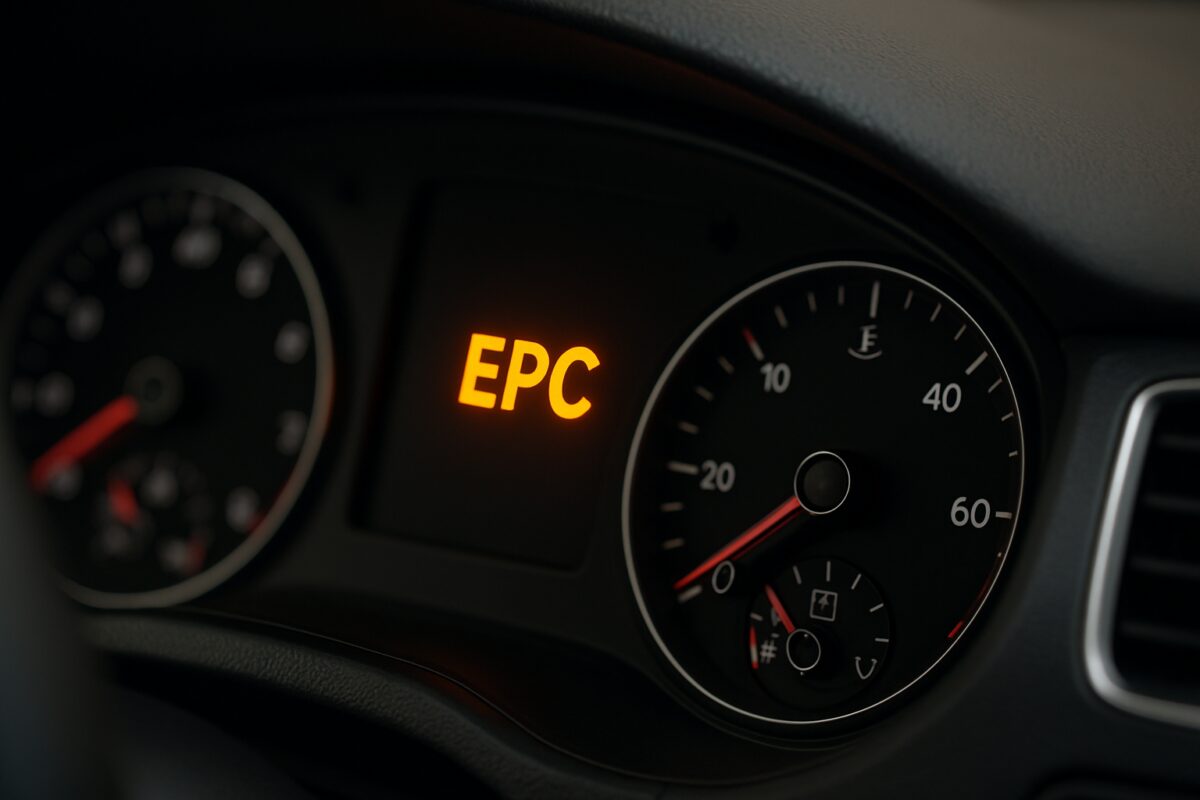
The EPC (Electronic Power Control) warning light on your dashboard signals serious issues with your vehicle’s engine management system. This amber or red indicator can appear suddenly, leaving drivers puzzled about its meaning and potential dangers. Understanding the EPC light’s implications helps you make informed decisions about your car’s safety and necessary repairs.
Throttle body malfunction
A faulty throttle body represents one of the most common causes behind EPC warning light activation. This crucial component controls airflow into your engine, directly affecting acceleration and idle stability.
When the throttle body develops carbon buildup or electronic faults, your vehicle’s engine control unit detects irregular airflow patterns. This triggers the EPC light as a protective measure. You’ll notice symptoms like rough idling, poor acceleration response, or unexpected stalling at traffic lights.
The throttle system relies on precise electronic signals to function correctly. Modern vehicles use drive-by-wire technology, meaning your accelerator pedal sends electrical signals rather than mechanical connections. Any disruption in this communication chain activates the EPC warning.
Carbon deposits often accumulate around the throttle plate, preventing smooth operation. This buildup occurs naturally over time, especially in vehicles with high mileage or poor maintenance history. Professional cleaning can restore proper function, but severely damaged throttle bodies require complete replacement.
Brake pedal switch failure
Your brake pedal switch plays a vital role in vehicle safety systems, communicating brake application to various electronic modules. When this switch fails, it can trigger the EPC warning light unexpectedly.
Modern vehicles integrate brake pedal signals with cruise control, transmission shift patterns, and stability control systems. A malfunctioning switch sends incorrect signals to these systems, causing the engine management computer to activate protective modes.
The brake light switch failure often manifests through multiple symptoms. Your brake lights might stay illuminated constantly, refuse to turn on, or flicker intermittently. Additionally, cruise control may become inoperative, and automatic transmissions might experience harsh shifting patterns.
Switch replacement typically requires accessing the brake pedal assembly under the dashboard. Professional mechanics can diagnose switch problems using diagnostic scanners to read fault codes. The repair process involves careful calibration to ensure proper signal timing and system integration.
Mass air flow sensor problems
The mass air flow (MAF) sensor measures incoming air volume, providing essential data for optimal fuel mixture calculations. When this sensor malfunctions, your engine control unit struggles to maintain proper air-fuel ratios.
Contaminated or failing MAF sensors send inaccurate readings to the engine management system. This causes the EPC light to illuminate as the computer attempts to compensate for irregular fuel delivery patterns. Your vehicle may experience reduced power output, increased fuel consumption, or rough engine operation.
The mass air flow sensor sits between your air filter and throttle body, making it vulnerable to contamination. Dirty air filters allow particles to coat the sensor’s delicate measuring elements, affecting accuracy over time.
Professional diagnosis involves comparing MAF sensor readings with manufacturer specifications. Cleaning solutions can sometimes restore sensor function, but replacement becomes necessary when internal components deteriorate beyond repair. Regular air filter maintenance prevents premature MAF sensor failure.
Warning signs your car has a problem
Recognising early warning signs helps prevent major mechanical failures and expensive repairs. Your vehicle communicates problems through various symptoms that precede EPC light activation.
Engine performance changes often signal developing issues. Watch for unusual hesitation during acceleration, irregular idle speeds, or unexpected power loss while driving. These symptoms indicate potential problems with fuel delivery, ignition timing, or airflow management systems.
Electrical system irregularities also provide important clues. Dashboard warning lights may flicker or illuminate temporarily before becoming permanent. Strange noises from engine compartments, unusual exhaust smoke colours, or changes in fuel economy patterns warrant immediate attention.
Key warning signs include:
- Sudden loss of engine power during acceleration
- Rough or unstable idle when stationary
- Difficulty starting the engine, especially when cold
Additional symptoms to monitor:
- Unusual exhaust emissions or smoke colours
- Strange metallic noises from the engine bay
- Decreased fuel efficiency over short periods
How to fix the problems
Addressing EPC warning light issues requires systematic diagnosis and appropriate repair strategies. Professional mechanics use specialised equipment to identify root causes accurately.
Initial diagnostic steps involve connecting OBD-II scanners to retrieve fault codes stored in your vehicle’s computer memory. These codes provide specific information about malfunctioning components or systems triggering the warning light.
| Problem Type | Diagnostic Method | Typical Repair Cost | Labour Time |
|---|---|---|---|
| Throttle Body Issues | Electronic testing, visual inspection | £150-£400 | 2-3 hours |
| Brake Switch Failure | Electrical continuity testing | £50-£120 | 1-2 hours |
| MAF Sensor Problems | Airflow measurement testing | £100-£250 | 1-1.5 hours |
Professional tip from AutoPartsPro mechanics: Always clear fault codes after repairs and take a test drive to ensure the EPC light doesn’t return. Some systems require specific driving cycles to complete self-diagnostics.
Common repair procedures include component cleaning, electrical connection repairs, or complete part replacement. The sensor systems often benefit from professional calibration after installation to ensure optimal performance.
| Repair Type | Parts Required | Tools Needed | Difficulty Level |
|---|---|---|---|
| Throttle Cleaning | Cleaning solution, gaskets | Basic hand tools, scanner | Moderate |
| Switch Replacement | New brake switch | Socket set, multimeter | Easy |
| Sensor Installation | MAF sensor, mounting hardware | Screwdrivers, diagnostic equipment | Easy to Moderate |
When to see a mechanic
Immediate professional attention becomes necessary when EPC warning lights accompany severe symptoms or safety concerns. Certain situations demand urgent mechanical intervention to prevent further damage or dangerous driving conditions.
Contact qualified technicians immediately if your vehicle experiences complete power loss, uncontrolled acceleration, or brake system malfunctions alongside EPC illumination. These symptoms indicate serious safety risks requiring immediate professional diagnosis.
The control units managing modern engine systems require sophisticated diagnostic equipment for accurate troubleshooting. Attempting complex repairs without proper tools may cause additional damage or compromise vehicle safety systems.
Expert advice from AutoPartsPro specialists: Never ignore flashing EPC lights, as they indicate active misfiring that can damage your catalytic converter. Pull over safely and seek immediate professional assistance.
Schedule professional inspections when EPC lights persist after basic troubleshooting attempts. Qualified mechanics possess specialised knowledge about manufacturer-specific systems and access to technical bulletins addressing known issues.
Emergency situations requiring immediate attention:
- Complete engine power loss while driving
- Unresponsive brake pedal or unusual braking behaviour
- Severe engine misfiring or violent shaking
Frequently asked questions (FAQ)
Can I drive with the EPC light on?
Driving with EPC illuminated poses safety risks and potential engine damage. Seek immediate professional diagnosis to determine underlying causes and necessary repairs.
How much does EPC light repair typically cost?
Repair costs vary from £50 for simple switch replacements to £400 for complex throttle body issues. Professional diagnosis determines exact requirements and pricing.
Will EPC light cause MOT failure?
Yes, illuminated warning lights during MOT testing result in automatic failure. Resolve EPC issues before scheduling your annual safety inspection to avoid complications.
Does EPC light reset automatically?
EPC lights may turn off temporarily but return if underlying problems persist. Professional repair and diagnostic clearing ensure permanent resolution of warning light issues.
What’s the difference between EPC and engine management lights?
EPC specifically indicates electronic power control problems, while engine management lights cover broader powertrain issues. Both require professional diagnosis for accurate problem identification.
Final recommendation
The EPC warning light serves as your vehicle’s early warning system, alerting you to potentially serious powertrain problems before they cause major damage. Ignoring this crucial indicator can lead to expensive repairs, safety hazards, and complete vehicle breakdown.
Based on AutoPartsPro’s extensive experience with EPC-related repairs, we strongly recommend immediate professional diagnosis when this light appears. Modern vehicle systems integrate numerous electronic components, making accurate troubleshooting essential for effective repairs. Our mechanics consistently observe that early intervention prevents minor issues from developing into costly major failures.
Invest in quality replacement parts and professional installation to ensure long-term reliability. The ignition system components work together with engine management systems, requiring careful attention to manufacturer specifications and proper calibration procedures for optimal performance and safety.

 Loading...