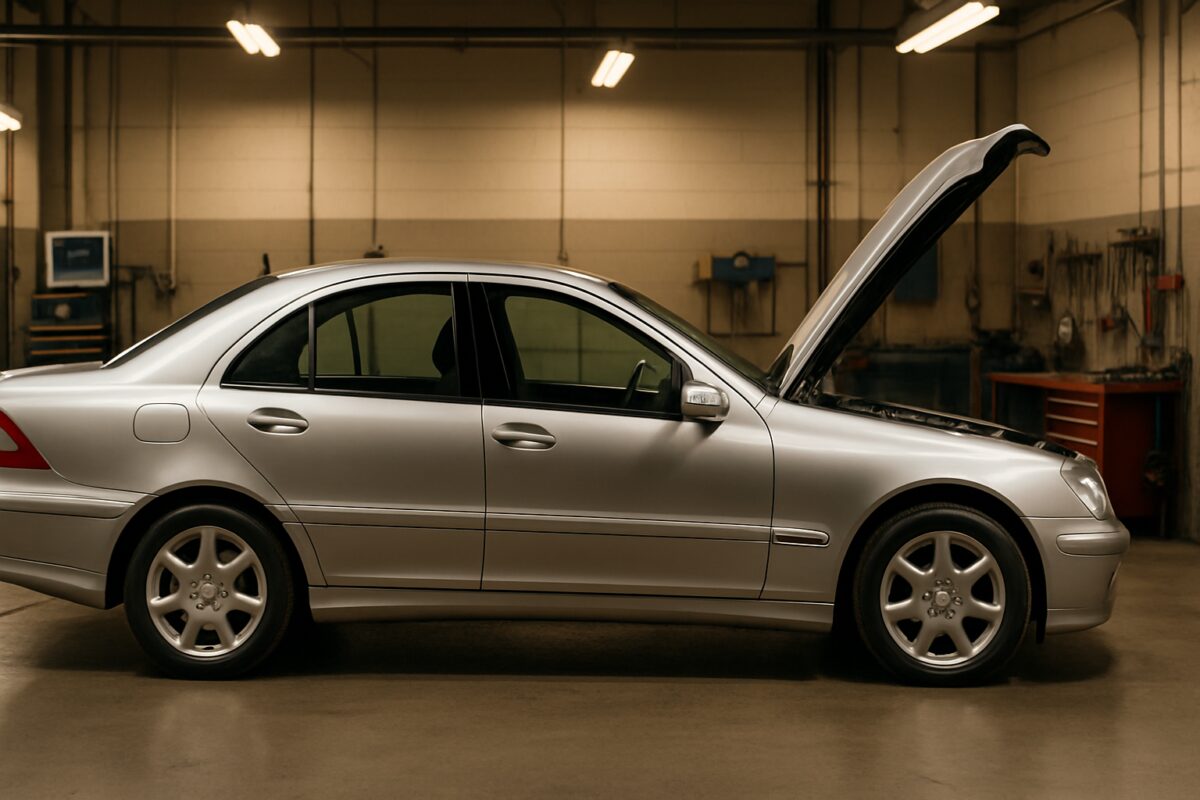
The Mercedes-Benz W203, produced from 2000 to 2007, remains a popular choice amongst British motorists for its blend of luxury and reliability. However, like any vehicle approaching two decades old, certain recurring issues have emerged that owners should be aware of. Understanding these common problems can help you maintain your C-Class properly and avoid costly surprises.
Rust and corrosion issues
One of the most significant concerns with the W203 is its susceptibility to rust, particularly around the rear wheel arches and door frames. This corrosion typically begins from the inside out, making early detection challenging.
The problem stems from inadequate rust protection during manufacturing and the accumulation of moisture in vulnerable areas. Road salt, common on British roads during winter months, accelerates this process considerably. Many owners first notice bubbling paint or small rust spots appearing around the wheel arches.
The rear subframe mounting points are another critical area where corrosion can develop. If left untreated, this can compromise the vehicle’s structural integrity and lead to MOT failures. Regular inspection of these areas is essential, particularly before purchasing a used W203.
Prevention involves keeping the vehicle clean, especially during winter months, and applying protective wax treatments to vulnerable areas. Early intervention with rust treatment products can halt progression, but advanced cases may require professional bodywork.
Electrical system malfunctions
The W203’s complex electrical system has proven problematic for many owners. Common issues include malfunctioning window regulators, central locking failures, and intermittent dashboard warning lights.
Window regulator problems typically manifest as windows dropping unexpectedly or failing to operate entirely. This issue affects both front and rear windows and often requires replacement of the entire window mechanism.
The SAM (Signal Acquisition Module) units, responsible for controlling various electrical functions, are prone to water ingress and subsequent failure. When these units fail, multiple systems can be affected simultaneously, including lighting, air conditioning, and power accessories.
Dashboard warning lights may illuminate sporadically due to faulty sensors or wiring issues. Common culprits include the ABS sensors and mass airflow sensors, which can trigger multiple warning systems.
Engine-related problems
The W203 range featured several engine options, each with specific known issues. The M111 four-cylinder engines are generally reliable but can develop oil leaks from the valve cover gasket and timing case.
The supercharged engines, particularly in the C200 Kompressor models, may experience intercooler pipe failures and supercharger clutch problems. These issues typically manifest as reduced power output and unusual noises during acceleration.
Diesel engines, whilst generally robust, can suffer from injector problems and turbocharger failures. The CDI units are particularly sensitive to fuel quality and require regular servicing to maintain optimal performance.
Oil leaks are common across all engine variants, particularly from the valve cover gaskets and oil pan seals. Regular monitoring of oil levels and prompt attention to leaks can prevent more serious engine damage.
Transmission concerns
The W203’s automatic transmission, particularly the 5G-Tronic unit, has several known issues. The most common problem involves rough shifting or delayed engagement, often caused by worn valve body components or contaminated transmission fluid.
The transmission control module can also fail, leading to erratic shifting patterns or complete transmission failure. This electronic component is sensitive to heat and vibration, making it particularly vulnerable in high-mileage vehicles.
Manual transmissions are generally more reliable but can develop clutch problems, particularly the clutch release bearing and pressure plate. These components typically require replacement around 100,000 miles, depending on driving style and maintenance.
Regular transmission fluid changes are crucial for maintaining optimal performance. Many transmission problems can be prevented through proper maintenance schedules and prompt attention to early warning signs.
Suspension and steering issues
The W203’s sophisticated suspension system provides excellent ride quality but requires regular maintenance. Common issues include worn ball joints, damaged suspension bushings, and leaking shock absorbers.
The front lower control arm bushings are particularly prone to premature wear, causing knocking noises over bumps and affecting wheel alignment. These components typically require replacement every 60,000 to 80,000 miles.
Power steering problems can manifest as heavy steering, fluid leaks, or unusual noises. The power steering pump and associated hoses are common failure points, particularly in vehicles with high mileage.
Regular inspection of suspension components during servicing can identify worn parts before they cause more serious problems or affect vehicle safety.
Warning signs your car has a problem
Recognising early warning signs can help prevent minor issues from becoming major expenses:
- Unusual noises from the engine bay or suspension
- Dashboard warning lights that persist or illuminate intermittently
- Changes in engine performance or fuel consumption
- Electrical malfunctions affecting lights, windows, or air conditioning
- Visible rust spots or paint bubbling
How to fix the problems
| Problem | Difficulty Level | Estimated Cost | Professional Required |
|---|---|---|---|
| Rust treatment (early stage) | Moderate | £50-200 | No |
| Window regulator replacement | Moderate | £150-300 | Recommended |
| Oil leak repair | High | £200-800 | Yes |
| Transmission service | High | £300-600 | Yes |
| Suspension component replacement | High | £400-1200 | Yes |
Our mechanics at AutoPartsPro recommend addressing electrical issues promptly, as delayed repairs often lead to more complex problems affecting multiple systems.
For rust prevention, regular washing and waxing can significantly extend your vehicle’s life. Focus particular attention on wheel arches and door seals where moisture accumulates.
Professional tip: Always use genuine or OEM-equivalent parts when replacing electrical components, as cheaper alternatives often fail prematurely in Mercedes vehicles.
When to see a mechanic
Certain symptoms require immediate professional attention. Engine warning lights, particularly those relating to emissions or engine management, should never be ignored. Similarly, any changes in braking performance or steering response warrant urgent inspection.
Transmission problems typically worsen rapidly once symptoms appear. If you notice delayed engagement, rough shifting, or slipping, seek professional diagnosis immediately to prevent complete transmission failure.
Electrical issues can be particularly challenging to diagnose without proper equipment. Modern diagnostic tools can identify fault codes that pinpoint specific problems, saving time and money compared to trial-and-error repairs.
For complex issues like brake system problems or engine management faults, professional expertise ensures proper diagnosis and repair. Attempting DIY repairs on safety-critical systems can be dangerous and may invalidate insurance coverage.
| Service Type | Frequency | Importance |
|---|---|---|
| Oil and filter change | Every 10,000 miles | Critical |
| Transmission service | Every 40,000 miles | High |
| Brake inspection | Every 20,000 miles | Critical |
| Suspension check | Every 30,000 miles | Moderate |
Frequently Asked Questions (FAQ)
What are the most common W203 reliability issues?
Rust around wheel arches, electrical problems with windows and central locking, plus transmission valve body wear are the primary concerns.
How expensive is W203 maintenance compared to other vehicles?
Maintenance costs are typically 20-30% higher than equivalent vehicles due to premium parts pricing and complex systems requiring specialist knowledge.
Which W203 engines are most reliable?
The naturally aspirated petrol engines, particularly the M111 units, offer the best long-term reliability with proper maintenance and regular servicing.
Can rust problems be prevented on a W203?
Regular cleaning, protective waxing, and prompt treatment of stone chips can significantly reduce rust development, especially in vulnerable areas.
Are W203 electrical problems expensive to fix?
Costs vary widely depending on the specific component, but SAM unit replacement can cost £800-1500 whilst window regulators typically cost £150-300.
Final recommendation
The Mercedes-Benz W203 remains a capable and enjoyable vehicle when properly maintained. Whilst certain issues are well-documented, most can be prevented or minimised through proactive maintenance and prompt attention to warning signs. The key to successful W203 ownership lies in understanding these common problems and budgeting appropriately for maintenance.
Our specialists at AutoPartsPro recommend establishing a relationship with a Mercedes specialist who understands these vehicles’ specific requirements. Regular servicing using quality parts, combined with preventive measures like rust protection, can ensure many more years of reliable service from your W203.
For owners considering purchase, a thorough pre-purchase inspection focusing on the areas highlighted in this guide can help identify potential problems early. With proper care and attention, the W203 continues to offer the Mercedes-Benz experience that made it popular amongst British drivers.

 Loading...