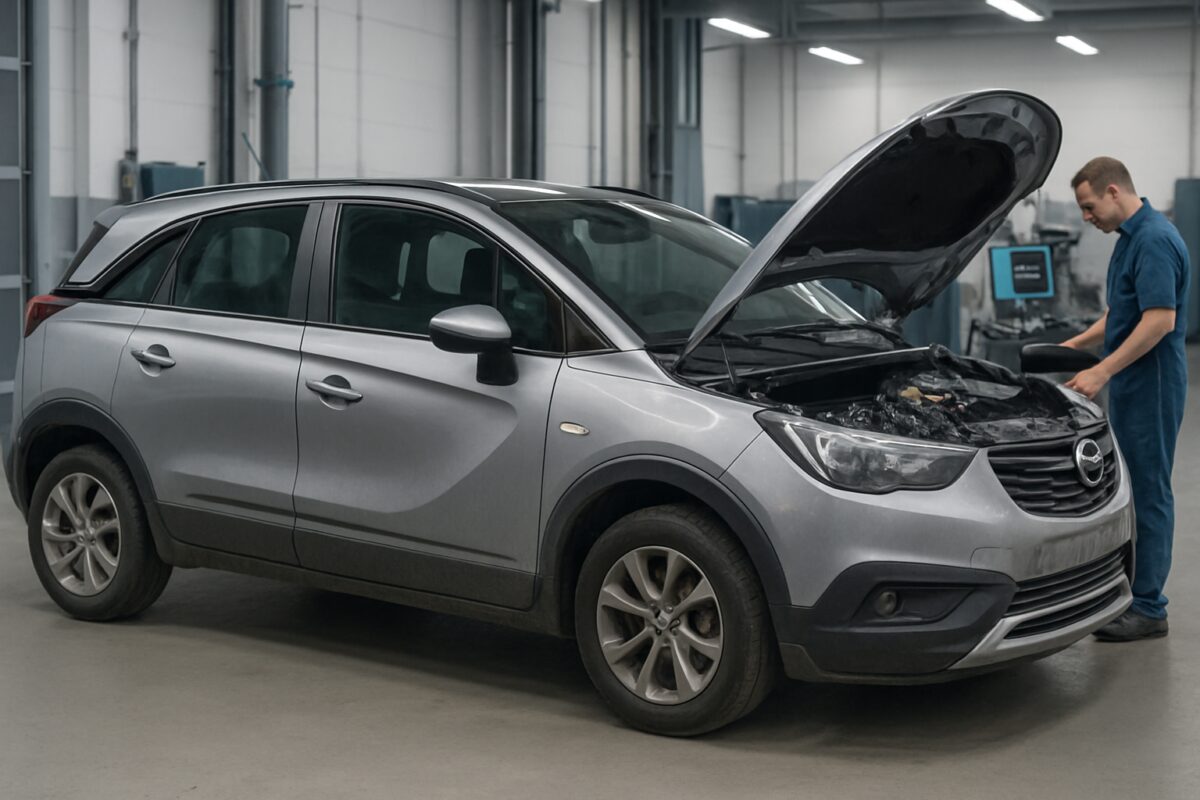
The Opel Crossland has gained popularity amongst UK drivers seeking a practical compact crossover. However, like many modern vehicles, this model experiences specific recurring issues that owners should be aware of. Understanding these problems with the Opel Crossland can save you considerable expense and frustration down the road.
Engine management system failures
One of the most significant concerns affecting Crossland owners involves the control units that manage engine operations. These electronic modules frequently develop faults, particularly in vehicles produced between 2017 and 2020.
The engine management ECU often fails without warning, causing the vehicle to enter limp mode or refuse to start altogether. Symptoms include erratic idling, sudden power loss, and dashboard warning lights. Our specialists at Autopartspro have observed this issue predominantly affects the 1.2-litre turbocharged petrol engines.
Temperature fluctuations and moisture ingress appear to be primary culprits behind these failures. The ECU mounting location beneath the dashboard makes it particularly vulnerable to condensation damage. Replacement costs typically range from £800 to £1,500, including programming and labour.
Professional tip: Always check for software updates during routine servicing, as many ECU issues stem from outdated firmware rather than hardware failure.
Turbocharger premature wear
The turbocharger system in Crossland models shows alarming failure rates, particularly in higher mileage vehicles. This problem primarily affects the 1.2-litre PureTech engines shared with other PSA Group vehicles.
Common symptoms include blue or white smoke from the exhaust, whistling noises during acceleration, and reduced engine performance. The turbocharger’s oil feed lines frequently become blocked with carbon deposits, leading to insufficient lubrication and bearing failure.
Our technical team has identified poor oil filter maintenance as a contributing factor. Using incorrect oil specifications or extending service intervals beyond manufacturer recommendations accelerates turbocharger deterioration. Replacement costs range from £1,200 to £2,000, making preventative maintenance crucial.
The issue becomes more pronounced in stop-start driving conditions common in urban environments. Short journeys prevent the turbocharger from reaching optimal operating temperatures, allowing carbon deposits to accumulate more readily.
Transmission control module defects
Automatic transmission variants suffer from recurring TCM (Transmission Control Module) failures that significantly impact drivability. These units control gear selection, shift timing, and torque converter lock-up functions.
Affected vehicles exhibit harsh shifting, delayed engagement when selecting drive or reverse, and occasional complete transmission failure. The problem typically manifests around 40,000 to 60,000 miles, well within the expected component lifespan.
Electrical interference from other vehicle systems appears to corrupt the TCM’s internal programming. Our diagnosticians frequently encounter corrupted software that requires complete module replacement rather than simple reprogramming. This repair typically costs between £900 and £1,400.
Manual transmission models face fewer issues, though clutch kit premature wear affects some early production vehicles. The dual-mass flywheel shows particular susceptibility to failure in high-stress driving conditions.
Cooling system component failures
The Crossland’s cooling system demonstrates several design weaknesses that lead to premature component failure. The water pump frequently fails before reaching 80,000 miles, particularly in vehicles subjected to heavy traffic conditions.
Plastic radiator hose connections prove especially problematic, developing cracks and leaks that cause overheating. The expansion tank cap also fails regularly, preventing proper system pressurisation and leading to coolant loss.
These failures often occur without obvious warning signs until significant damage occurs. Our mechanics recommend inspecting cooling system components during every service interval to prevent costly engine damage.
Warning signs your car has a problem
Early detection of Crossland issues can prevent minor problems from becoming expensive repairs. Watch for these critical warning signs:
- Engine warning lights appearing intermittently or permanently
- Unusual noises from the engine bay, particularly whistling or grinding sounds
- Reduced engine performance or hesitation during acceleration
- Transmission shifting roughly or slipping between gears
- Coolant level dropping without visible leaks
- Blue or white exhaust smoke, especially during startup
- Dashboard warning messages related to engine management
Don’t ignore these symptoms, as delayed intervention often results in cascading failures that multiply repair costs significantly.
How to fix the problems
| Problem | Solution | Estimated Cost | Difficulty Level |
|---|---|---|---|
| ECU Failure | Replace control unit and reprogram | £800-£1,500 | Professional only |
| Turbocharger Wear | Replace turbo unit and oil lines | £1,200-£2,000 | Professional only |
| TCM Defect | Replace transmission control module | £900-£1,400 | Professional only |
| Water Pump Failure | Replace pump and thermostat | £300-£600 | Intermediate DIY |
| Radiator Hose Leaks | Replace affected hoses and clamps | £50-£150 | Basic DIY |
Most Crossland problems require professional diagnosis and repair due to the complex electronic systems involved. However, maintaining proper service schedules and using quality components can prevent many issues from developing.
| Maintenance Item | Recommended Interval | Notes |
|---|---|---|
| Engine Oil | Every 10,000 miles | Use manufacturer-approved specifications only |
| Coolant System | Every 2 years | Check hoses and connections regularly |
| Transmission Service | Every 40,000 miles | Essential for automatic variants |
| Turbocharger Care | Allow cool-down period | Wait 2 minutes before switching off after motorway driving |
Expert advice: Keep detailed service records and address warning signs immediately. The Crossland’s interconnected systems mean one failure often triggers others, making early intervention crucial.
When to see a mechanic
Certain Crossland symptoms require immediate professional attention to prevent catastrophic damage. If your car doesn’t start or exhibits severe performance issues, don’t attempt DIY repairs.
Seek professional help immediately if you experience complete power loss, transmission failure to engage, or significant coolant leaks. These problems can cause extensive engine or transmission damage if ignored.
For routine maintenance and component replacement, choose workshops familiar with PSA Group vehicles and their specific requirements. Generic service centres may lack the diagnostic equipment necessary for proper Crossland repairs.
Regular diagnostic scans during servicing can identify developing problems before they cause breakdowns. Many Crossland issues show fault codes weeks or months before symptoms become apparent to drivers.
Frequently Asked Questions (FAQ)
How reliable is the Opel Crossland overall?
The Crossland shows average reliability compared to competitors, with specific problem areas affecting certain model years more than others.
Are Crossland turbocharger problems covered under warranty?
Standard warranty typically covers turbocharger failures, but extended warranties may have specific exclusions for wear items and maintenance-related issues.
Can I prevent ECU failures in my Crossland?
Regular software updates and protecting electronic components from moisture help reduce ECU failure risk, though some defects are unavoidable.
What’s the most expensive Crossland repair to expect?
Engine replacement due to turbocharger-related damage represents the costliest repair, potentially exceeding £5,000 in severe cases.
Should I buy a used Crossland knowing these problems?
With proper inspection and maintenance planning, many Crossland issues are manageable, making it viable if priced appropriately.
Final recommendation
The Opel Crossland offers practical transportation with known reliability concerns that require proactive management. Understanding these issues allows owners to budget appropriately and maintain their vehicles properly.
Focus on preventative maintenance, particularly regarding the turbocharger and cooling systems. Use only manufacturer-approved fluids and components, and address warning signs immediately rather than hoping they’ll resolve themselves.
For potential buyers, factor repair costs into your purchase decision and consider extended warranties that cover the vehicle’s known problem areas. With proper care and realistic expectations, the Crossland can provide reliable service despite its documented issues.
Choose reputable parts suppliers and experienced mechanics familiar with PSA Group vehicles to ensure proper repairs and genuine components. Quality OEM parts may cost more initially but often prove more economical long-term than budget alternatives.

 Loading...