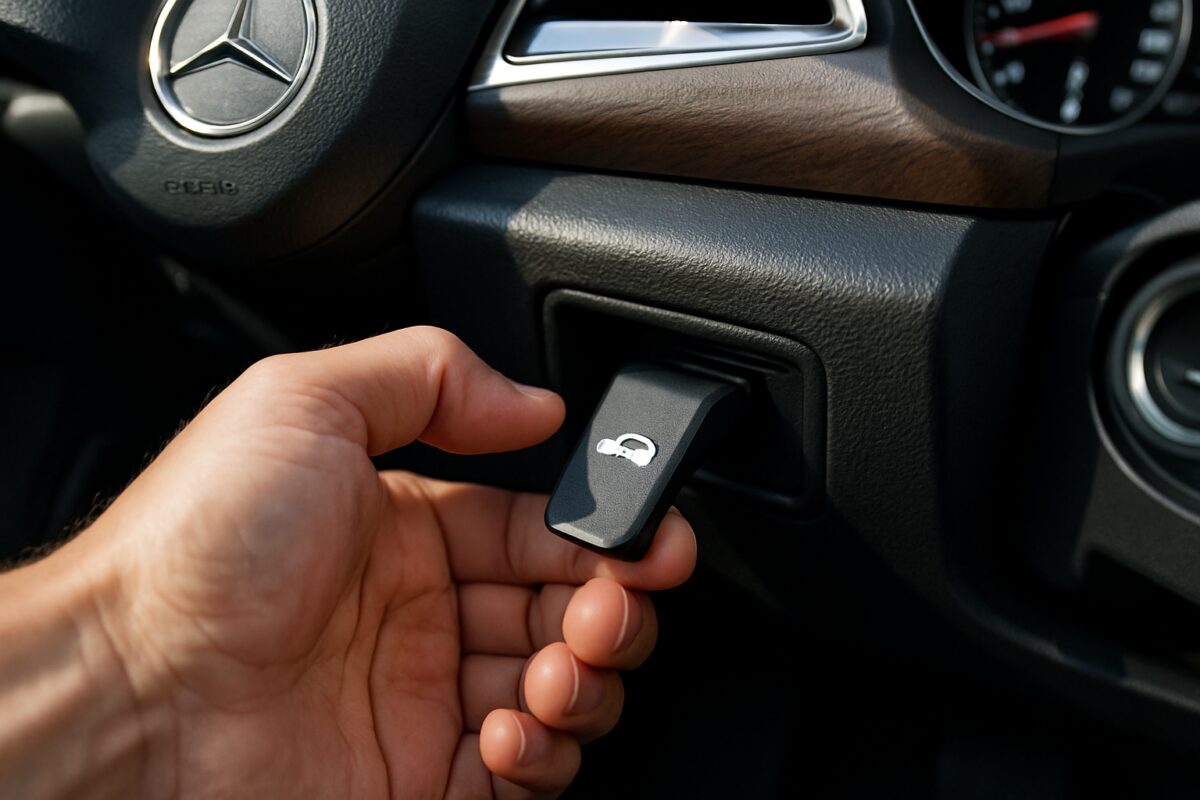
To open a Mercedes A-Class bonnet, pull the release lever inside the car near the driver’s left knee, then use the safety catch under the bonnet to fully release the hood. The bonnet release mechanism requires two steps for security – an interior lever followed by an external safety latch. Always ensure the engine is cool before attempting to access the engine bay.
Tools & parts required
Opening your Mercedes A-Class bonnet requires minimal equipment, but having the right items ensures a smooth process without damage to your vehicle.
Parts needed
- Working bonnet release cable
- Functional safety catch mechanism
- Undamaged release lever
Tools required
- Clean cloth or rag
- Small torch or mobile phone light
- Work gloves (optional)
- Long-nose pliers (emergency use only)
Always check your bonnet release mechanism monthly during routine maintenance checks. A sticking or damaged release can leave you stranded when you need engine access most.
Safety precautions
Before attempting to open your Mercedes A-Class bonnet, ensure the engine has cooled completely. Hot engine components can cause severe burns, and working on a warm engine increases the risk of coolant or oil splashes.
Park on level ground with the handbrake engaged and engine switched off. Never attempt bonnet operations whilst the engine is running, as moving parts present serious injury risks.
Keep hands and loose clothing clear of moving components. If you need to work near the battery, consider disconnecting the negative terminal for additional safety.
Step-by-step instructions
Step 1: Locate the interior release lever
Sit in the driver’s seat and look down to the left of your left knee. The bonnet release lever is positioned low on the dashboard, typically with a bonnet symbol or ‘Hood’ marking. This lever feels different from other controls, often with a distinctive pull-handle design.
The release lever’s exact position varies slightly between A-Class generations (W168, W169, W176, W177), but it’s always within easy reach of the driver’s position.
Step 2: Pull the interior release
Firmly pull the interior release lever towards you. You should hear a distinct ‘pop’ or clicking sound as the primary latch releases. The bonnet will lift slightly – approximately 2-3cm – but won’t open fully due to the safety catch.
If the lever feels stiff or doesn’t engage properly, don’t force it. A damaged release cable may require professional attention to avoid costly repairs.
Step 3: Exit the vehicle and locate the safety catch
Walk to the front of your Mercedes A-Class. You’ll notice the bonnet has lifted slightly, creating a small gap. Look beneath the centre of the bonnet for the safety catch – a small lever or tab, usually black or silver in colour.
The safety catch prevents the bonnet from opening accidentally whilst driving, providing an essential secondary security mechanism.
Step 4: Release the safety catch
Slide your fingers under the slightly raised bonnet and locate the safety catch. Push or lift this mechanism (depending on your specific A-Class model) whilst simultaneously lifting the bonnet with your other hand.
Some models require pushing the catch to one side, whilst others need lifting upwards. Apply gentle pressure – excessive force suggests you haven’t located the correct mechanism.
Step 5: Open the bonnet fully
With the safety catch released, lift the bonnet smoothly upwards. Mercedes A-Class models feature bonnet struts that support the hood automatically once opened past a certain angle.
Allow the struts to take the bonnet’s weight – never prop the bonnet with makeshift supports, as this risks serious injury if they fail.
Common mistakes to avoid
Many owners make the error of pulling too hard on a sticking interior release lever, potentially snapping the cable. If the mechanism feels unusually stiff, investigate before applying excessive force.
Never attempt to force the bonnet open if the safety catch won’t release properly. This dual-latch system exists for your protection, and bypassing it unsafely can cause the bonnet to spring open unexpectedly.
Avoid slamming the bonnet shut from height. Mercedes bonnets require gentle pressure from about 20cm above the closed position, allowing the latches to engage properly without damage.
Don’t work under a bonnet supported only by the struts if you’re performing heavy maintenance. While adequate for routine checks, serious engine work requires additional support for safety.
When should you open the bonnet?
Regular bonnet access forms part of essential vehicle maintenance. Check fluid levels monthly, including engine oil, coolant, brake fluid, and windscreen washer reservoir.
Open the bonnet before long journeys to inspect belts, hoses, and connections. Look for signs of wear, cracking, or fluid leaks that could cause breakdown during travel.
After warning lights appear on your dashboard, bonnet access allows visual inspection of potential issues. Many problems become apparent through simple visual examination of engine bay components.
During winter months, check the battery terminals for corrosion and ensure all connections remain tight and secure.
Related maintenance you can do at the same time
With the bonnet open, take advantage of easy access to perform several routine maintenance tasks simultaneously.
Check and top up all fluid levels, including brake fluid, power steering fluid, and coolant. This prevents multiple bonnet-opening sessions for simple maintenance tasks.
Inspect the air filter condition and replace if contaminated. A clean filter improves engine performance and fuel efficiency significantly.
Examine belts and hoses for cracking, fraying, or bulging. Early detection prevents costly breakdown repairs and roadside emergencies.
Clean the engine bay with a damp cloth, removing debris and checking for unusual wear or damage. This maintenance routine helps spot developing problems before they become serious.
Frequently asked questions
What if the interior release lever doesn’t work?
A broken release cable requires professional repair. Emergency access may be possible through the grille using long-nose pliers, but this risks damage to delicate components and should only be attempted by experienced mechanics.
Can I drive with a partially open bonnet?
Never drive with an unsecured bonnet, even partially open. The airflow can catch the bonnet, causing it to slam into the windscreen or fly open completely, creating extreme danger for you and other road users.
Why won’t my bonnet stay open?
Faulty bonnet struts lose their gas pressure over time, failing to support the bonnet’s weight. Replace worn struts immediately, as a falling bonnet can cause serious injury during engine maintenance.
How often should I lubricate the bonnet mechanism?
Apply light machine oil to the release lever pivot points annually. Use spray lubricant on the safety catch mechanism every six months to prevent corrosion and ensure smooth operation in all weather conditions.
Is it normal for the bonnet to make noise when opening?
Some mechanical noise is normal, particularly from older vehicles. However, grinding, scraping, or excessive creaking suggests worn components requiring attention before complete failure occurs.
Understanding your Mercedes A-Class bonnet mechanism ensures safe, reliable access to essential maintenance areas. Regular inspection and gentle operation of the release system prevent costly repairs whilst maintaining the security features that protect you during normal driving. With proper technique and awareness of common issues, routine maintenance becomes straightforward and worry-free.

 Loading...