To reset your tyre pressure light, you’ll need to first ensure all tyres are inflated to the correct pressure, then use either the TPMS reset button, the vehicle’s infotainment system menu, or the accelerator pedal method depending on your car’s make and model. The process typically takes 2-10 minutes and requires the engine to be running.
Tools & parts required
Before starting the reset procedure, gather these essential items to complete the job properly.
Parts needed:
- None required for most reset procedures
- New sensors (only if replacing faulty TPMS sensors)
- Valve caps (if missing or damaged)
Tools required:
- Accurate tyre pressure gauge
- Air compressor or access to petrol station pump
- Vehicle owner’s manual
- OBD diagnostic scanner (for advanced troubleshooting)
Always check your vehicle’s handbook for the exact reset procedure, as methods vary significantly between manufacturers and model years.
Safety precautions
Working with tyre pressure systems requires attention to safety details. Always work on level ground with the vehicle parked securely.
Ensure tyres are cold before checking pressure, as hot tyres give inaccurate readings. Never exceed the maximum pressure listed on the tyre sidewall. Keep a battery booster pack handy if your vehicle’s battery is weak, as some reset procedures require extended engine running time.
Step-by-step instructions
Follow these detailed steps to successfully reset your tyre pressure monitoring system warning light.
Step 1: Check and adjust tyre pressures
Start by checking all four tyres plus the spare using an accurate gauge. Compare readings against the recommended pressures found on the driver’s door jamb sticker or owner’s manual. Inflate or deflate each tyre to match the specification exactly.
Cold tyre pressure readings are most accurate, so check before driving or after the vehicle has been stationary for at least three hours.
Step 2: Locate the TPMS reset button
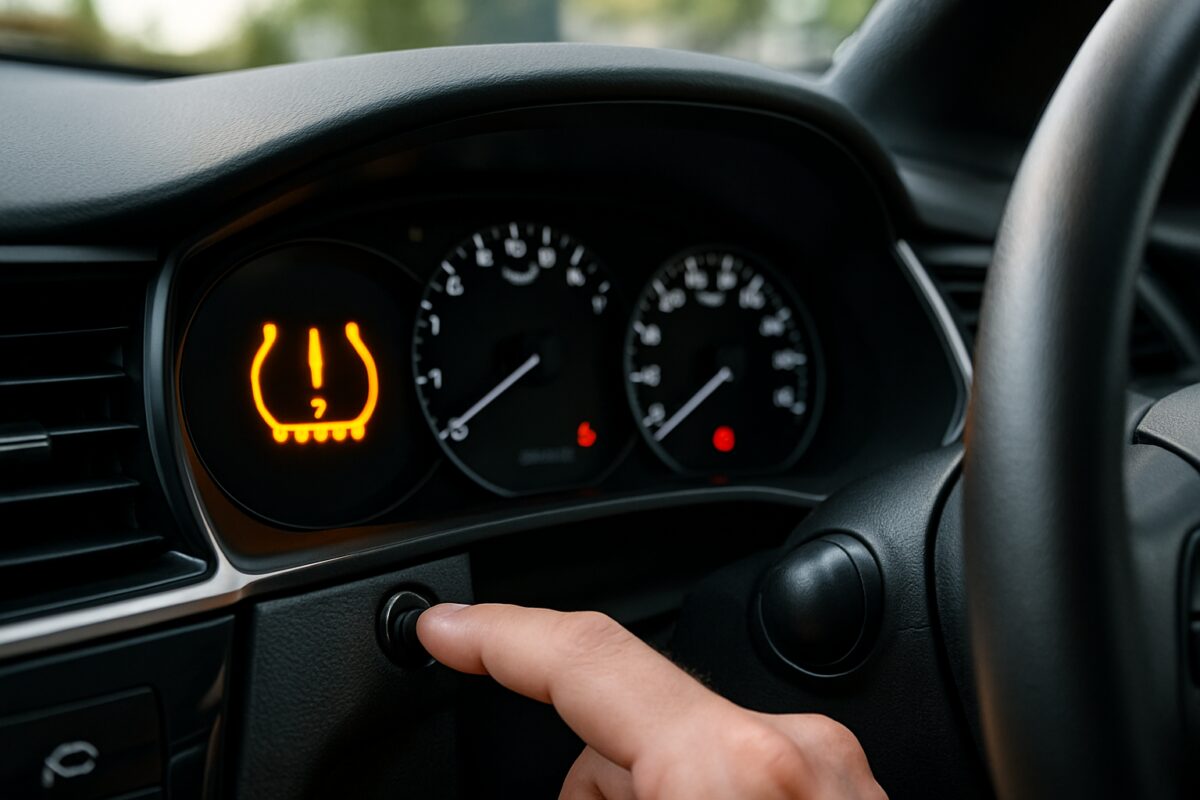
Most vehicles have a dedicated reset button located beneath the steering wheel, near the fuse box, or in the glove compartment. Some models integrate the reset function into the infotainment system menu instead.
If you cannot locate the button, consult your vehicle’s manual or search online for your specific make and model’s reset procedure.
Step 3: Start the engine
Turn the ignition to the “on” position or start the engine, depending on your vehicle’s requirements. The dashboard should display the tyre pressure warning light at this stage.
Some vehicles require the engine to run throughout the reset process, whilst others only need the ignition switched on.
Step 4: Activate the reset procedure
Press and hold the TPMS reset button until the warning light blinks three times, then release. For menu-based systems, navigate to the tyre pressure settings and select “reset” or “initialise”.
Alternative method for certain vehicles: With the engine running, press the accelerator pedal three times within ten seconds, then turn off the ignition.
Step 5: Drive to complete the reset
Drive at speeds above 25mph for 10-15 minutes to allow the system to relearn the correct tyre pressures. The warning light should extinguish during this drive cycle.
If the light remains on after driving, repeat the procedure or check for other issues such as faulty sensors or system malfunctions.
Common mistakes to avoid
Several errors can prevent successful TPMS reset, leading to continued warning light issues.
Never attempt to reset the system with incorrectly inflated tyres, as this teaches the system wrong pressure values. Avoid resetting immediately after driving, as heated tyres affect pressure readings significantly.
Don’t ignore the spare tyre if your vehicle monitors it – many systems include the spare in their calculations. Some drivers forget to replace the valve caps, which can lead to slow leaks and recurring pressure issues.
According to AutoPartsPro mechanics, 70% of failed TPMS resets occur because drivers skip the proper tyre pressure check before starting the reset procedure.
When should you reset the tyre pressure light?
Reset your TPMS warning light whenever it illuminates due to seasonal temperature changes, after inflating tyres, or following tyre rotation or replacement.
Temperature drops of 10°C can reduce tyre pressure by 1-2 PSI, triggering the warning system. Similarly, after fitting new tyres or rotating existing ones, the system needs to relearn the wheel positions.
Professional tyre services should reset the system after any work, but home maintenance requires manual reset procedures. If the light comes on frequently, investigate potential slow punctures or faulty sensors rather than repeatedly resetting.
Related maintenance you can do at the same time
While checking tyre pressures, perform additional maintenance tasks to maximise your vehicle’s safety and efficiency.
Inspect tyre tread depth using a 20p coin – if the outer band is visible when inserted into the tread, consider replacement. Check for uneven wear patterns that might indicate alignment issues or suspension problems requiring shock absorber attention.
Examine valve stems for cracks or damage, and ensure caps are fitted properly. Consider checking your brake pads through the wheel spokes whilst the car is stationary.
This is also an excellent time to inspect your hub bearing condition by listening for unusual noises when spinning the wheels by hand.
Frequently asked questions
Why won’t my tyre pressure light turn off after resetting?
The light may remain on due to incorrect tyre pressures, faulty sensors, or incomplete reset procedures. Drive for 15 minutes above 25mph to complete the relearn process.
Can I drive with the tyre pressure light on?
Whilst not immediately dangerous, you should check tyre pressures promptly. Low pressure increases fuel consumption, tyre wear, and reduces vehicle stability, especially during emergency manoeuvres.
How often should I check my tyre pressures?
Check pressures monthly and before long journeys. Temperature changes, normal permeation through rubber, and small punctures cause gradual pressure loss requiring regular monitoring for optimal safety.
Do I need special equipment to reset the TPMS?
Most vehicles use built-in reset procedures requiring no special tools. Professional diagnostic scanners help with complex systems, but standard resets use dashboard buttons or menu options.
What happens if I ignore the tyre pressure warning?
Ignoring warnings leads to increased tyre wear, poor fuel economy, handling problems, and potential blowouts. Modern tyres can lose significant pressure without visual indication, making monitoring systems essential.
Mastering the tyre pressure light reset procedure ensures your vehicle’s safety systems function correctly and helps maintain optimal fuel efficiency. With proper technique and regular pressure monitoring, you’ll keep your TPMS working reliably for years. Remember that quality sensors and regular maintenance prevent most pressure monitoring issues before they develop into costly problems.

 Loading...