The Kia Rio has established itself as a reliable choice in the supermini segment, offering UK drivers economical running costs without sacrificing dependability. The engine selection plays a crucial role in the Rio’s appeal, with each powerplant designed to deliver specific benefits for different driving needs. Available options range from efficient naturally aspirated petrol units to modern turbocharged variants, producing between 75bhp and 120bhp whilst maintaining impressive fuel economy figures.
Comparison table of all engines
| Engine | Power output | Torque | Fuel consumption | Reliability |
|---|---|---|---|---|
| 1.25L MPI | 84bhp | 121Nm | 50.4mpg | Excellent |
| 1.0L T-GDI | 100bhp | 172Nm | 47.9mpg | Very Good |
| 1.0L T-GDI (120bhp) | 118bhp | 172Nm | 46.3mpg | Very Good |
| 1.4L MPI | 99bhp | 133Nm | 45.6mpg | Excellent |
1.25L MPI engine overview
The 1.25-litre naturally aspirated four-cylinder engine represents the entry-level option in the Rio lineup. This multi-point injection (MPI) unit features a simple design with dual overhead camshafts and variable valve timing. Running on standard petrol with port fuel injection, it delivers predictable performance without turbocharging complexity.
Pros
- Outstanding fuel economy reaching 50+ mpg
- Simple construction reduces maintenance requirements
- Proven reliability with minimal known issues
- Lower insurance group ratings
- Smooth operation at motorway speeds
Cons
- Limited power for overtaking manoeuvres
- Feels underpowered when fully loaded
- Needs frequent gear changes in hilly terrain
- Lacks the torque of turbocharged alternatives
1.0L T-GDI (100bhp) engine overview
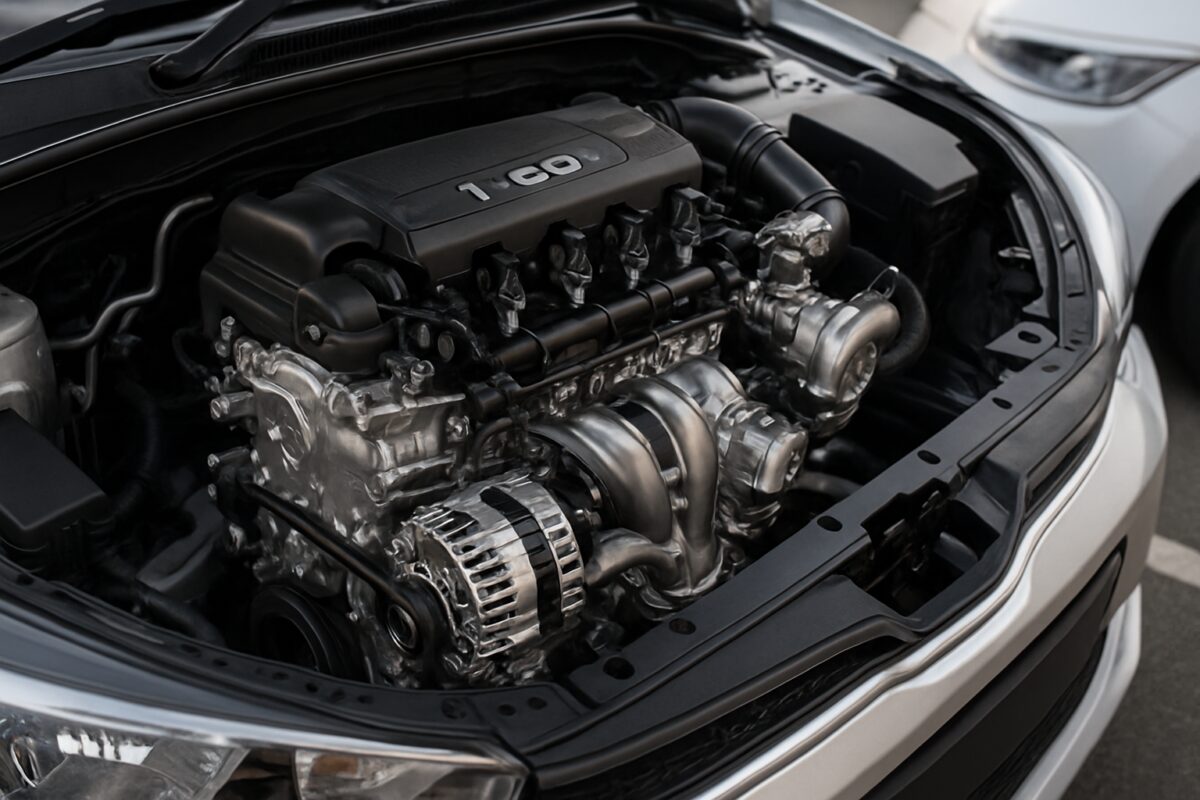
The three-cylinder turbocharged direct injection engine provides an excellent balance between performance and economy. This compact unit features a turbocharger and direct fuel injection system, delivering impressive torque from just 1,500rpm. The turbocharger technology enables strong mid-range performance whilst maintaining reasonable fuel consumption.
Pros
- Strong torque delivery from low revs
- Good fuel economy for a turbocharged unit
- Responsive throttle characteristics
- Adequate power for most driving situations
- Modern engine management systems
Cons
- Three-cylinder vibration at idle
- Turbo lag noticeable from standstill
- Higher maintenance costs than naturally aspirated engines
- Requires premium fuel for optimal performance
1.0L T-GDI (120bhp) engine overview
The higher-output version of the 1.0-litre turbocharged unit delivers additional power through revised engine mapping and components. This three-cylinder direct injection engine maintains the same displacement whilst producing significantly more power. The enhanced performance comes through improved fuel injectors and optimised turbocharger operation.
Pros
- Impressive power-to-weight ratio
- Strong acceleration through the rev range
- Modern direct injection technology
- Competitive fuel economy despite higher output
- Smooth power delivery once on boost
Cons
- Premium fuel recommended for best results
- Turbocharger complexity increases service costs
- Three-cylinder engine note may not suit all drivers
- Potential for carbon build-up with direct injection
1.4L MPI engine overview
The naturally aspirated 1.4-litre four-cylinder engine offers additional displacement for improved refinement. This multi-point injection unit features conventional port injection and provides smooth power delivery without forced induction. The larger capacity delivers better low-end torque compared to the smaller engines whilst maintaining reasonable running costs.
Pros
- Smooth four-cylinder operation
- Good low-end torque characteristics
- Simple maintenance requirements
- Reliable long-term ownership prospect
- No turbocharger-related concerns
Cons
- Higher fuel consumption than smaller engines
- Less power than turbocharged alternatives
- Limited availability in UK market
- Higher road tax due to emissions
Maintenance cost
| Engine | Recommended Interval | Estimated Cost | Cost per 10,000 miles |
|---|---|---|---|
| 1.25L MPI | 10,000 miles | £180 | £180 |
| 1.0L T-GDI | 10,000 miles | £220 | £220 |
| 1.0L T-GDI (120bhp) | 10,000 miles | £240 | £240 |
| 1.4L MPI | 10,000 miles | £200 | £200 |
Engine sound and character
Each Rio engine delivers a distinct acoustic signature and driving character. The 1.25L MPI provides a refined four-cylinder note with smooth operation throughout the rev range. Our Autopartspro mechanics note that this engine produces minimal vibration and maintains composure even when worked hard.
The turbocharged 1.0L units exhibit typical three-cylinder characteristics, including a distinctive thrum at idle that smooths out under acceleration. The turbo whistle becomes apparent under boost, adding sporting character to the driving experience. Both T-GDI variants share similar acoustic properties, though the 120bhp version sounds slightly more aggressive under full throttle.
Professional tip: The 1.0L T-GDI engines benefit from occasional Italian tune-ups – extended motorway runs help prevent carbon build-up in the direct injection system.
The 1.4L MPI offers the smoothest operation with well-balanced four-cylinder refinement. This engine provides adequate performance whilst maintaining civilised behaviour across all operating conditions. The naturally aspirated character means predictable power delivery without turbo lag interruptions.
Maintenance insight: Regular oil filter changes are crucial for turbocharged engines – we recommend using quality synthetic oil to protect the turbocharger bearings.
Who each engine is best for
| Engine | Best suited for |
|---|---|
| 1.25L MPI | Daily commuters, budget-conscious owners, first-time buyers |
| 1.0L T-GDI (100bhp) | Balanced performance seekers, mixed driving conditions |
| 1.0L T-GDI (120bhp) | Performance enthusiasts, frequent motorway users |
| 1.4L MPI | Refinement seekers, long-distance drivers |
The engine choice ultimately depends on individual priorities and driving patterns. Urban drivers benefit most from the 1.25L MPI’s economy, whilst those requiring better performance should consider the turbocharged options. Mixed-use drivers find the 100bhp T-GDI provides optimal versatility.
Budget-conscious buyers appreciate the 1.25L unit’s low running costs and insurance premiums. Performance-minded drivers gravitate towards the 120bhp T-GDI for its spirited acceleration and modern technology. The spark plugs in turbocharged engines require more frequent attention due to higher operating pressures.
Frequently asked questions (FAQ)
Which Kia Rio engine offers the best fuel economy?
The 1.25L MPI engine delivers the highest fuel economy at 50.4mpg combined, making it ideal for cost-conscious drivers.
Are the turbocharged Rio engines reliable?
Yes, the T-GDI units prove reliable with proper maintenance, though they require more frequent servicing than naturally aspirated alternatives.
What fuel should I use in my Rio engine?
Regular unleaded petrol suits the MPI engines, whilst T-GDI variants benefit from premium fuel for optimal performance and longevity.
How often should I service my Rio engine?
Kia recommends 10,000-mile service intervals for all Rio engines, though severe conditions may require more frequent air filter changes.
Which Rio engine is best for motorway driving?
The 1.0L T-GDI 120bhp variant excels on motorways, providing strong mid-range torque for effortless cruising and overtaking manoeuvres.

 Loading...