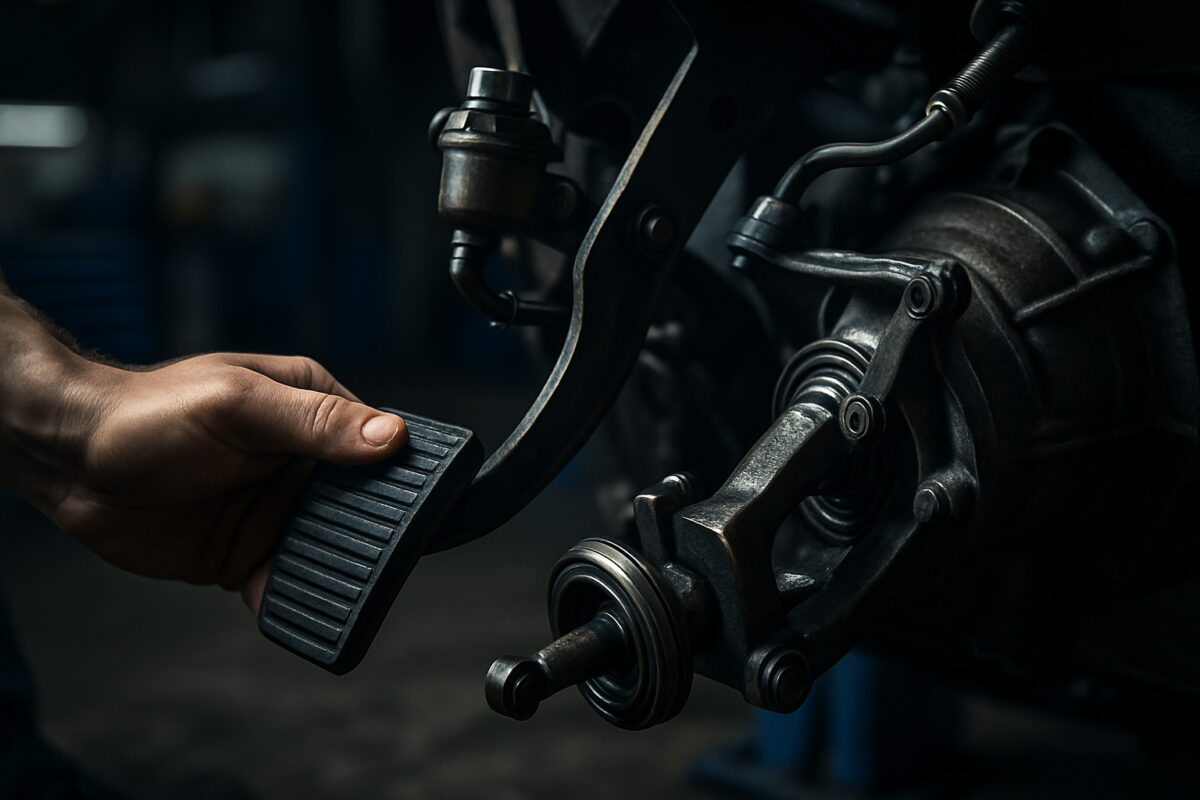
A squeaky clutch pedal can turn your daily drive into an annoying experience. When your clutch pedal creaks, squeaks, or makes grinding sounds during operation, it signals potential issues that need attention. Understanding the root causes helps you address problems before they become costly repairs.
Worn clutch release bearing
The release bearing, also known as the throwout bearing, experiences constant movement when you press the clutch pedal. This component sits between the clutch fork and pressure plate diaphragm spring.
When the release bearing wears out, it produces distinctive squeaking or grinding noises. The bearing’s internal lubrication dries up over time, causing metal-on-metal contact.
Symptoms include:
- High-pitched squealing when pressing the clutch
- Grinding noise during pedal operation
- Difficulty engaging gears smoothly
This bearing typically lasts 60,000-100,000 miles but may fail earlier due to aggressive driving or poor maintenance. Replacement requires removing the transmission, making it a labour-intensive repair.
Faulty clutch master cylinder
The clutch master cylinder converts pedal force into hydraulic pressure. Internal seals can deteriorate, causing squeaks and operational issues.
A failing master cylinder creates squeaking sounds as the piston moves through worn cylinder walls. The noise often occurs when pressing or releasing the pedal slowly.
Additional symptoms include:
- Soft or spongy pedal feel
- Pedal sinking to the floor
- Difficulty changing gears
Master cylinder problems often develop gradually. Early intervention prevents complete hydraulic system failure, which leaves you stranded with an inoperable clutch.
“Regular brake fluid changes help prevent master cylinder seal deterioration. Most manufacturers recommend changing clutch fluid every 24,000 miles or two years,” advises AutoPartsPro’s lead technician.
Damaged clutch fork or pivot point
The clutch fork transfers pedal movement to the release bearing through a pivot mechanism. Wear at the pivot point creates squeaking during clutch operation.
Fork-related squeaks typically occur when:
- Pivot bushings wear out
- Fork develops stress cracks
- Lubrication disappears from contact points
This component experiences significant stress during each clutch engagement. Heavy-duty use or aggressive driving accelerates wear patterns.
Fork problems often accompany other clutch issues. A comprehensive inspection reveals whether replacement is necessary during clutch servicing.
Warning signs your car has a problem
Several symptoms indicate clutch system deterioration beyond simple squeaking:
| Warning Sign | Possible Cause | Urgency Level |
|---|---|---|
| Clutch pedal vibration | Warped flywheel or pressure plate | Medium |
| Burning smell | Clutch disc slipping | High |
| Hard pedal operation | Hydraulic system blockage | Medium |
| Pedal stays on floor | Master or slave cylinder failure | Critical |
| Grinding when shifting | Synchroniser wear | High |
How to fix the problems
Addressing squeaky clutch pedals requires systematic diagnosis and appropriate repairs:
| Problem | Solution | Approximate Cost | Labour Time |
|---|---|---|---|
| Worn release bearing | Replace bearing and clutch kit | £300-800 | 4-6 hours |
| Faulty master cylinder | Replace cylinder and bleed system | £80-200 | 2-3 hours |
| Damaged clutch fork | Replace fork and pivot components | £150-400 | 3-5 hours |
| Contaminated hydraulic fluid | Flush and replace fluid | £40-80 | 1 hour |
“Always replace the entire clutch kit when addressing release bearing issues. This prevents premature failure of new components,” recommends AutoPartsPro’s technical team.
When to see a mechanic
Professional diagnosis becomes essential when squeaking persists after basic maintenance. Seek immediate attention if you experience pedal vibration, burning odours, or gear engagement problems.
Complex clutch repairs require specialised tools and expertise. Attempting DIY repairs on hydraulic systems can lead to safety hazards and expensive mistakes.
Schedule professional inspection when squeaking occurs alongside other symptoms. Early intervention prevents catastrophic clutch failure and reduces repair costs significantly.
Modern clutch systems integrate with electronic stability control and traction management systems. Professional diagnostics ensure proper calibration after repairs.
Frequently asked questions (FAQ)
Why does my clutch squeak when I press it down?
Clutch squeaking typically indicates worn release bearing, dry pivot points, or contaminated hydraulic fluid requiring professional diagnosis.
Can I drive with a squeaky clutch pedal?
Temporary driving is possible, but squeaking often precedes complete clutch failure, potentially leaving you stranded unexpectedly.
How much does clutch pedal repair cost?
Repair costs range from £40 for fluid replacement to £800 for complete clutch system overhaul depending on component condition.
Will WD-40 stop clutch pedal squeaking?
Never use WD-40 on clutch components as it can contaminate friction surfaces, causing slipping and permanent damage.
How long do clutch release bearings last?
Release bearings typically last 60,000-100,000 miles but may fail earlier with aggressive driving or poor maintenance practices.
Final recommendation
Squeaky clutch pedals demand prompt attention to prevent costly repairs and potential safety hazards. While some causes require simple lubrication, others indicate serious component wear needing professional intervention.
AutoPartsPro’s experienced technicians recommend addressing squeaking immediately rather than waiting for complete failure. Our comprehensive clutch replacement guide provides valuable insights for DIY enthusiasts, whilst our extensive parts catalogue ensures quality components for professional repairs.
Regular maintenance, including hydraulic fluid changes and proper driving techniques, significantly extends clutch system lifespan. Don’t ignore warning signs – address squeaking promptly to maintain vehicle reliability and safety.

 Loading...