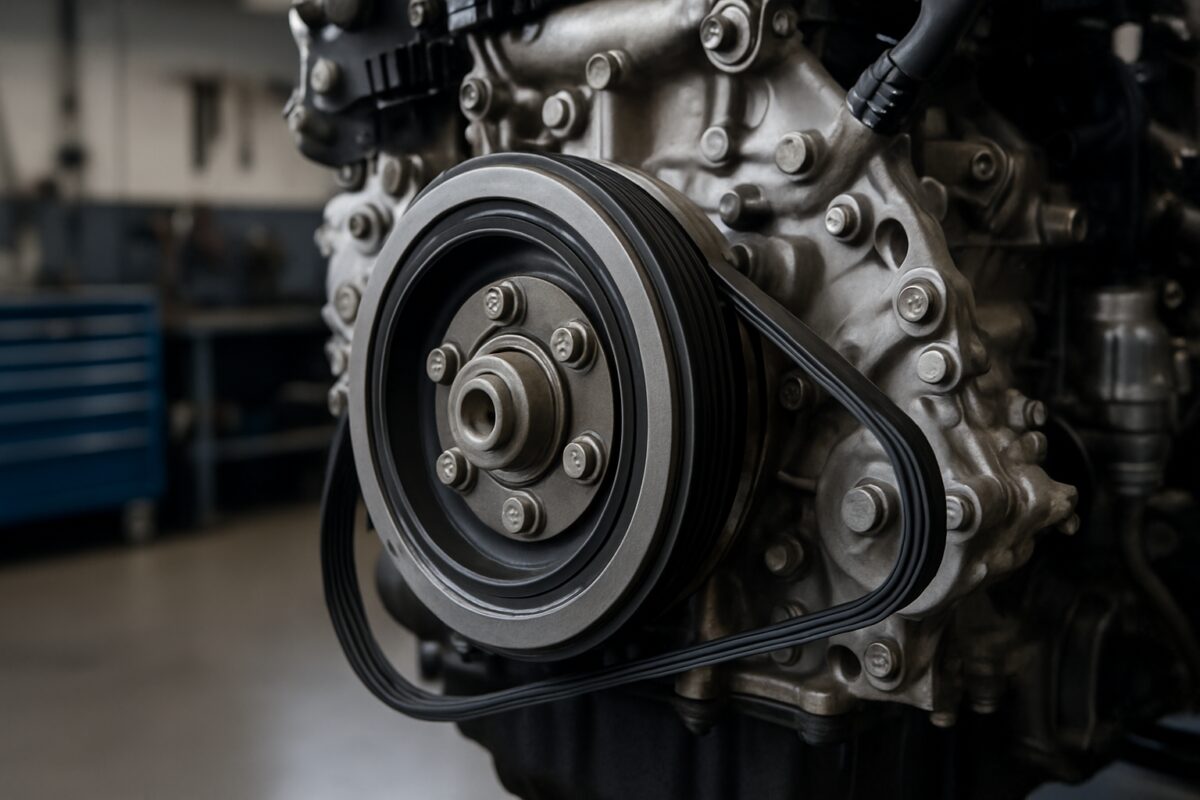
The crankshaft pulley is a crucial component that transfers engine power to essential systems whilst damping vibrations. Common failure symptoms include unusual engine noises, visible cracks or wobbling, serpentine belt issues, and engine vibration. Early detection prevents costly engine damage and ensures reliable performance.
Tools & parts required
Replacing a crankshaft pulley requires specific tools and components to ensure proper installation and optimal engine performance.
Parts needed:
- Crankshaft pulley (vehicle specific)
- New harmonic balancer (if integrated)
- Replacement seals and gaskets
- New serpentine belt (recommended)
Tools required:
- Socket set (various sizes)
- Torque wrench
- Harmonic balancer puller
- Crankshaft holding tool
- Impact wrench (optional)
- Jack and axle stands
- Safety gloves
Professional tip: Always verify the crankshaft pulley matches your engine code and year. Using the wrong specification can cause severe timing issues and engine damage.
Safety precautions
Working on crankshaft components requires strict adherence to safety protocols to prevent injury and component damage.
- Ensure the engine is completely cool before starting work
- Disconnect the vehicle battery negative terminal
- Use proper lifting equipment and secure the vehicle
- Wear safety glasses and protective gloves
- Never attempt removal without proper holding tools
The crankshaft pulley is under tremendous rotational force, making proper tool usage essential for safe removal and installation.
Step-by-step instructions
Follow these detailed steps to safely replace your crankshaft pulley and maintain engine integrity.
Step 1: Prepare the vehicle
Park on level ground and engage the handbrake. Remove the engine cover and locate the crankshaft pulley at the front of the engine. Disconnect the battery and drain the cooling system if radiator removal is necessary for access.
Step 2: Remove access components
Remove the cooling fan assembly and any interfering components. Take photos of belt routing before removing the serpentine belt. This saves time during reassembly and prevents incorrect installation.
Step 3: Secure the crankshaft
Install the crankshaft holding tool to prevent rotation during removal. Never use impact tools without proper restraint as this can damage internal engine components. The crankshaft must remain stationary throughout the process.
Step 4: Remove the old pulley
Use the harmonic balancer puller to remove the crankshaft pulley. Apply steady pressure and avoid hammering, which can damage the crankshaft nose or timing components. Clean the crankshaft surface thoroughly before installation.
Step 5: Install the new pulley
Apply a thin layer of thread locker to the crankshaft bolt. Install the new pulley ensuring proper alignment with the crankshaft keyway. Use the specified torque setting from your service manual – typically between 150-200 Nm depending on the engine.
Step 6: Reassemble and test
Reinstall the serpentine belt following the correct routing pattern. Reconnect all components and refill the cooling system if drained. Start the engine and check for proper operation, unusual noises, or vibrations.
Common mistakes to avoid
Several common errors can lead to component damage or unsafe operation when replacing crankshaft pulleys.
- Using incorrect torque specifications: Over-tightening can strip threads, whilst under-tightening allows the pulley to slip
- Failing to use proper holding tools: This can damage the flywheel or crankshaft
- Installing without keyway alignment: Causes timing issues and potential engine damage
- Reusing old bolts: Stretch bolts lose their clamping force and may fail
- Ignoring belt condition: Old belts may slip on the new pulley surface
Expert advice: Our Autopartspro specialists recommend replacing the serpentine belt simultaneously with the crankshaft pulley. This prevents premature wear and ensures optimal power transmission to auxiliary systems.
When should you replace it?
Crankshaft pulley replacement timing depends on several factors including vehicle age, mileage, and operating conditions.
Mileage intervals: Most crankshaft pulleys last 100,000-150,000 miles under normal conditions. However, severe driving conditions may require earlier replacement.
Immediate replacement indicators:
- Visible cracks in the rubber dampening ring
- Wobbling or runout during engine operation
- Metallic grinding noises from the front of the engine
- Serpentine belt repeatedly jumping off or fraying
- Excessive engine vibration at idle
If your vehicle shows these symptoms, consider replacing the crankshaft pulley promptly to prevent engine damage.
Related maintenance you can do at the same time
When accessing the crankshaft pulley, several related maintenance tasks can be performed efficiently, saving labour costs and ensuring comprehensive engine care.
Belt system components:
- Replace the belt tensioner and associated pulleys
- Install new idler pulleys for smooth operation
- Check accessory pulleys for wear
Engine maintenance:
- Replace the water pump if showing signs of wear
- Inspect the timing chain or belt condition
- Check engine mounts for deterioration
This approach maximises efficiency and ensures all related components are serviced together, reducing future maintenance requirements.
Frequently asked questions
How long does a crankshaft pulley typically last?
Most crankshaft pulleys last between 100,000-150,000 miles under normal driving conditions, though severe use may require earlier replacement.
Can I drive with a damaged crankshaft pulley?
Driving with a damaged crankshaft pulley is dangerous and can cause catastrophic engine failure, serpentine belt damage, and loss of essential systems.
What causes crankshaft pulley failure?
Common causes include age-related rubber deterioration, excessive engine vibration, improper installation, and exposure to oil or coolant contamination over time.
How much does crankshaft pulley replacement cost?
Replacement costs vary by vehicle, but typically range from £150-400 including parts and labour, depending on accessibility and component complexity.
Can I replace just the rubber ring instead of the entire pulley?
Most modern crankshaft pulleys are manufactured as single units, making partial replacement impossible and requiring complete assembly replacement for proper function.
Proper crankshaft pulley maintenance ensures reliable engine operation and prevents costly repairs. Using quality components and following correct procedures helps maintain optimal engine performance whilst protecting connected systems from vibration damage.

 Loading...