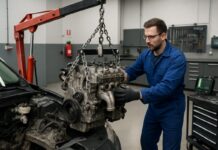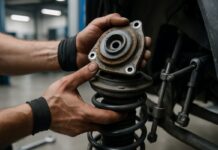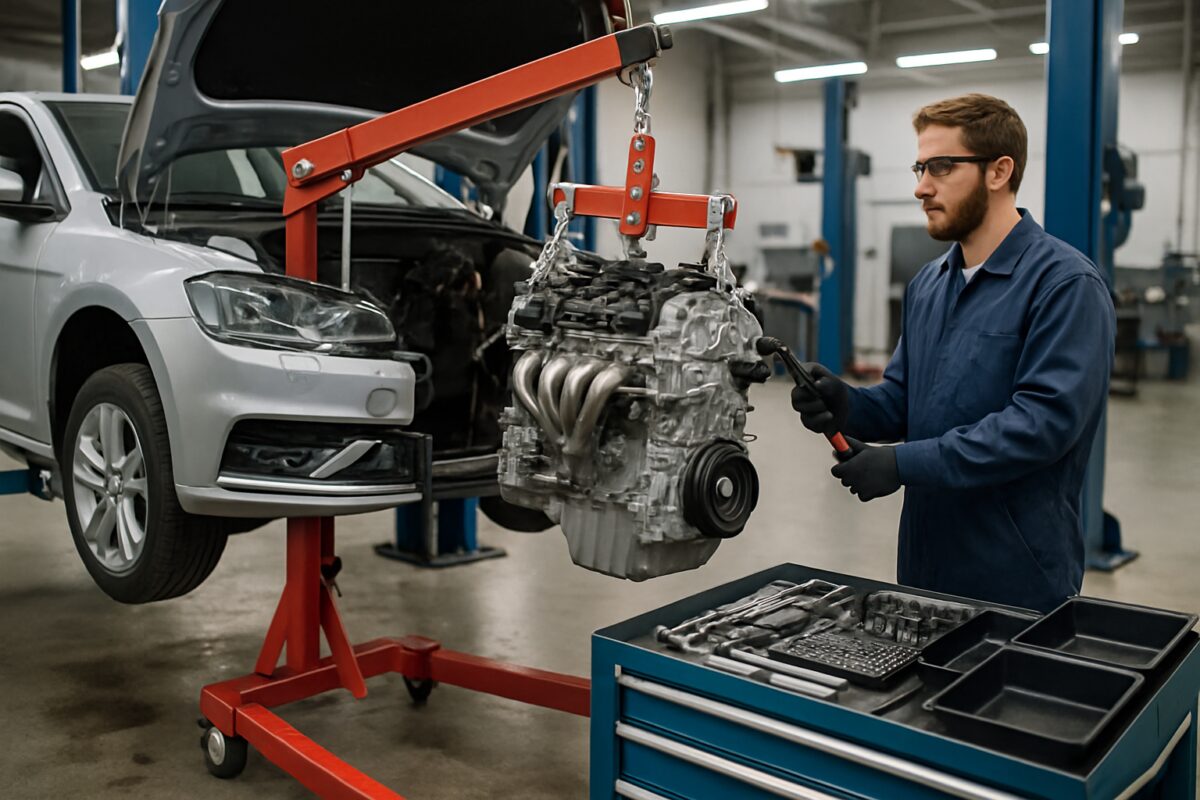
Engine replacement cost varies significantly based on whether you choose new or used units, with total costs ranging from £2,000 to £8,000 including removal and installation. Used engines typically cost £800-£3,000, whilst new engines range from £2,500-£6,000, plus £800-£2,000 for professional labour or considerable DIY effort.
Tools & parts required
Engine replacement demands specialised equipment and numerous components to ensure proper installation. Professional-grade tools are essential for safe removal and installation procedures.
Parts needed
- Replacement engine (new or reconditioned)
- New engine mount assemblies
- Complete gaskets and seals kit
- Fresh engine oil and filter
- New coolant and thermostat
- Replacement spark plugs or glow plugs
- Drive belts and tensioners
Tools required
- Engine hoist (minimum 2-tonne capacity)
- Vehicle lift or heavy-duty jack stands
- Complete socket and spanner sets
- Torque wrench with various ranges
- Engine support bar
- Fluid catch trays
- Transmission jack
- Pry bars and engine leveller
Always verify engine compatibility using your vehicle’s VIN number before ordering. Engine codes must match exactly to avoid costly compatibility issues.
Safety precautions
Engine replacement involves substantial safety risks due to heavy components and hazardous fluids. Proper safety measures prevent serious injury and equipment damage.
Ensure adequate workspace ventilation when working with fuel vapours and cleaning solvents. Disconnect the battery terminals before beginning any electrical work to prevent short circuits.
Wear appropriate safety gear including steel-toed boots, safety glasses, and heavy-duty gloves. Never work beneath a vehicle supported only by a jack – always use certified jack stands or a proper vehicle lift.
Keep fire extinguisher within reach when draining fuel systems or handling hot components. Allow engine to cool completely before beginning removal procedures.
Step-by-step instructions
Engine replacement follows a systematic approach requiring careful documentation of connections and component positions. Take photographs during disassembly to aid reassembly.
Step 1: Prepare the vehicle
Drain all fluids including oil, coolant, and fuel where necessary. Remove the bonnet completely for better access, storing it safely to prevent damage. Mark and disconnect all electrical connections, labelling each connector for proper reassembly.
Remove auxiliary components including alternator, power steering pump, and air conditioning compressor. These items can often be transferred to the replacement engine.
Step 2: Disconnect major systems
Separate the exhaust system at the exhaust manifold connection. Remove the engine radiator and cooling fans to create working space.
Disconnect fuel lines carefully, ensuring proper sealing to prevent contamination. Remove drive belts and any remaining hoses connected to the engine.
Step 3: Support and separate transmission
Support the transmission using a transmission jack or engine support bar. Remove the torque converter or clutch assembly depending on transmission type.
Disconnect transmission bell housing bolts methodically, ensuring proper support throughout the process. Manual transmissions require clutch alignment tools for reassembly.
Step 4: Remove engine mounts
Support engine weight using the hoist before removing mount bolts. Remove engine mount brackets in correct sequence to prevent binding or component damage.
Inspect engine mounts during removal – worn mounts should be replaced during installation to prevent premature failure.
Step 5: Extract the engine
Lift engine slowly whilst checking for remaining connections or obstructions. Angle engine slightly during extraction to clear transmission input shaft and surrounding components.
Lower engine onto suitable stand or prepare for immediate installation if replacement unit is ready.
Step 6: Install replacement engine
Transfer necessary components from old engine including sensors, brackets, and accessories. Use new oil filter and fresh fluids throughout installation.
Reverse removal procedure, ensuring proper torque specifications for critical fasteners. Install new engine mounts and adjust belt tensions according to manufacturer specifications.
Common mistakes to avoid
Many engine replacement failures stem from rushed installation or inadequate preparation. These errors can result in expensive damage or safety hazards.
Never reuse old gaskets, seals, or fluids with a replacement engine. Contaminated oil or coolant can damage internal components within hours of operation.
Incorrect torque specifications on critical fasteners like head bolts or main bearing caps can cause catastrophic failure. Always use calibrated torque wrenches and follow proper tightening sequences.
Failing to properly bleed air from cooling systems leads to overheating and potential engine damage. Ensure all air pockets are eliminated before initial startup.
Mismatched engine codes or incompatible ECU programming prevents proper operation. Verify all compatibility factors before installation begins.
Our AutopartsPro mechanics recommend keeping detailed photographic records during disassembly. These images prove invaluable during reassembly, especially for complex wiring harnesses and vacuum line routing.
When should you replace it?
Engine replacement becomes necessary when repair costs exceed vehicle value or when catastrophic damage occurs. Several indicators suggest engine replacement over repair.
Severe internal damage including cracked cylinder blocks, damaged crankshafts, or multiple cylinder failures typically warrant replacement. Excessive oil consumption, persistent overheating, or complete seizure also indicate replacement necessity.
High-mileage engines showing multiple system failures may benefit from replacement rather than costly piecemeal repairs. Consider replacement when repair estimates exceed 60% of vehicle value.
Timing chain or belt failures causing valve damage often make replacement more economical than extensive head work and component replacement.
Related maintenance you can do at the same time
Engine replacement provides excellent opportunity for additional maintenance that’s normally difficult to access. These concurrent repairs maximise labour efficiency.
Replace the clutch kit on manual transmissions since access is already available. Inspect and replace CV joints and drive shafts if wear is evident.
Service the cooling system completely including radiator, water pump, and hoses. Replace the timing chain or belt assembly regardless of apparent condition.
Upgrade worn suspension components like shock absorbers and bushings while vehicle weight is reduced. Service brake systems including brake pads and fluid.
Frequently asked questions
How long does engine replacement take?
Professional engine replacement typically requires 12-20 hours depending on vehicle complexity and access. DIY projects often extend to several days or weeks for inexperienced mechanics.
Should I choose new or used engines?
New engines offer warranties and reliability but cost significantly more. Used engines provide affordability but carry unknown maintenance history and potential premature failure risks.
Can I replace an engine myself?
DIY engine replacement is possible with proper tools, workspace, and mechanical knowledge. However, complexity and safety risks make professional installation advisable for most vehicle owners.
Do I need to reprogram the ECU?
ECU programming requirements depend on engine compatibility and vehicle age. Modern vehicles often require professional programming to match engine and transmission control systems properly.
What warranty comes with replacement engines?
New engines typically include 3-5 year warranties, whilst reconditioned units offer 12-24 months coverage. Used engines may have limited or no warranty protection depending on supplier.
Professional installation ensures proper procedures and often extends warranty coverage. Quality replacement engines paired with professional fitting provide reliable long-term service, making the investment worthwhile for vehicle longevity and performance restoration.

 Loading...