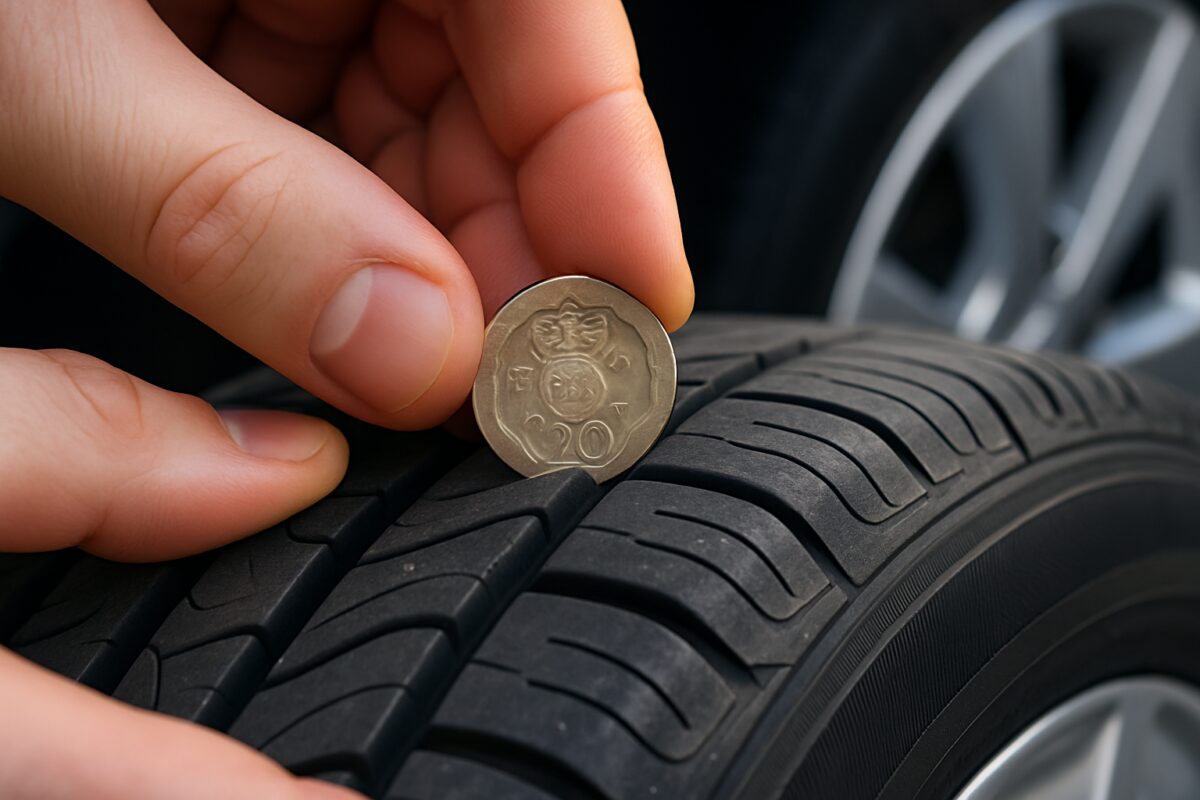
To check tire tread depth, use a 20p coin or tread depth gauge to measure the remaining tread. Insert the coin into the main grooves across the tire width – if the outer band is visible, your tread is below the legal 1.6mm limit. Digital gauges provide precise measurements, whilst visual indicators show uneven wear patterns that signal alignment issues or suspension problems.
Tools and parts required
Checking your tire tread properly requires the right equipment to get accurate readings and spot potential issues early.
Parts needed:
- 20p coin (basic method)
- Tread depth gauge (digital or analogue)
- Tire pressure gauge
- Replacement tires (if needed)
Tools required:
- Torch or mobile phone light
- Clean cloth or brush
- Notebook for recording measurements
- Jack and axle stands (for thorough inspection)
Always check tread depth across the full width of each tire, as uneven wear patterns often indicate mechanical problems that need addressing alongside tire replacement.
Safety precautions
Before starting your tread inspection, ensure your vehicle is parked on level ground with the handbrake applied. Work in good lighting conditions to spot wear patterns clearly.
Never check tires immediately after driving, as hot rubber can give inaccurate readings. Wait at least 30 minutes for the tires to cool down. Wear safety glasses when cleaning debris from tread grooves, and ensure your vehicle battery is disconnected if using electric tools.
Step-by-step instructions
Step 1: Initial visual inspection
Start by examining each tire for obvious damage like cuts, bulges, or embedded objects. Look for uneven wear patterns that might indicate problems with your suspension components or wheel alignment. Clean any debris from the tread grooves using a brush or cloth.
Step 2: Locate measurement points
Identify the main tread grooves running around the tire’s circumference. You’ll need to check at least three points across the tire width: inner edge, centre, and outer edge. Mark these spots to ensure consistent measurements.
Step 3: Perform the 20p coin test
Insert a 20p coin into the main tread groove with the outer band facing down. If you can see the outer band above the tread surface, your tire is below the 1.6mm legal minimum and needs immediate replacement. Repeat this test at multiple points around each tire.
Step 4: Use a tread depth gauge
For precise measurements, insert the probe of your tread depth gauge into the groove until it touches the bottom. Record readings at several points across each tire. Digital gauges typically provide measurements in millimetres, making it easy to track wear progression over time.
Step 5: Check tire pressure
Incorrect tire pressure accelerates uneven tread wear. Use a reliable pressure gauge to check each tire against manufacturer specifications. Under-inflated tires wear faster on the edges, whilst over-inflation causes centre wear.
Step 6: Document your findings
Record tread depths and any wear patterns you’ve identified. This documentation helps track tire condition over time and provides valuable information for your mechanic if wheel alignment or suspension work is needed.
Common mistakes to avoid
Many drivers only check one or two spots on each tire, missing crucial wear patterns that develop elsewhere. Always measure across the full tire width and at multiple points around the circumference.
Don’t ignore the spare tire during your inspection. A flat spare when you need it most can leave you stranded. Check its pressure and condition regularly, even though it’s not in daily use.
Avoid measuring tread depth on the tire’s shoulder or between the main grooves, as these areas don’t represent actual driving surface wear. Focus on the primary contact patches where the rubber meets the road.
Remember that tires can look acceptable from the outside but have dangerous internal damage. If your vehicle vibrates at speed or pulls to one side, have the tires professionally inspected regardless of tread depth readings.
When should you replace your tires?
UK law requires minimum 1.6mm tread depth across the central three-quarters of the tire width. However, stopping distances increase significantly once tread drops below 3mm, especially in wet conditions.
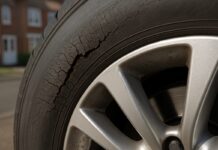
Replace tires immediately if you discover any cuts deeper than 25mm, bulges in the sidewall, or embedded objects like nails or screws. Age also matters – tires over six years old should be professionally inspected annually, regardless of tread depth.
Uneven wear patterns indicate mechanical issues that need addressing alongside tire replacement. Inner edge wear suggests toe-in problems, whilst outer edge wear often points to toe-out alignment issues or worn suspension components.
Related maintenance you can do at the same time
While checking your tire tread, it’s an ideal opportunity to inspect other related components that affect tire wear and vehicle safety.
Examine your brake pads through the wheel spokes for wear indicators. Look at the brake discs for scoring or heat damage that might affect braking performance.
Check the condition of your wheel bearings by grasping the tire and attempting to rock it – excessive play indicates worn bearings that can cause irregular tire wear.
Inspect the CV joints and drive shafts for damage or leaking grease, as failing joints can cause vibration and premature tire wear.
Frequently asked questions
How often should I check my tire tread depth?
Check tire tread monthly, or before long journeys. Regular monitoring helps identify problems early and ensures you maintain legal tread depths for safe driving.
Can I use different coins instead of a 20p piece?
A 20p coin is specifically designed for UK legal limits. Other coins have different thicknesses and won’t provide accurate legal minimum measurements for British roads.
What causes uneven tire wear patterns?
Poor wheel alignment, worn suspension components, incorrect tire pressures, or aggressive driving habits typically cause uneven wear. Professional diagnosis is recommended to identify root causes.
Should I replace just one tire or all four?
Replace tires in pairs (front or rear) when possible to maintain balanced handling. Mixing significantly different tread depths can affect vehicle stability and traction control systems.
How does temperature affect tread depth measurements?
Hot tires expand slightly, potentially giving false readings. Always measure tread depth when tires are cool for the most accurate assessment of remaining tread.
Regular tread depth monitoring is essential for safe driving and legal compliance. Using proper measurement techniques and understanding wear patterns helps you make informed decisions about tire replacement timing. When combined with routine checks of related components like wheel bolts and suspension parts, comprehensive tire maintenance ensures optimal vehicle performance and safety on British roads.

 Loading...