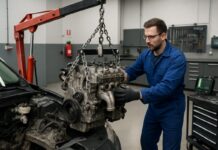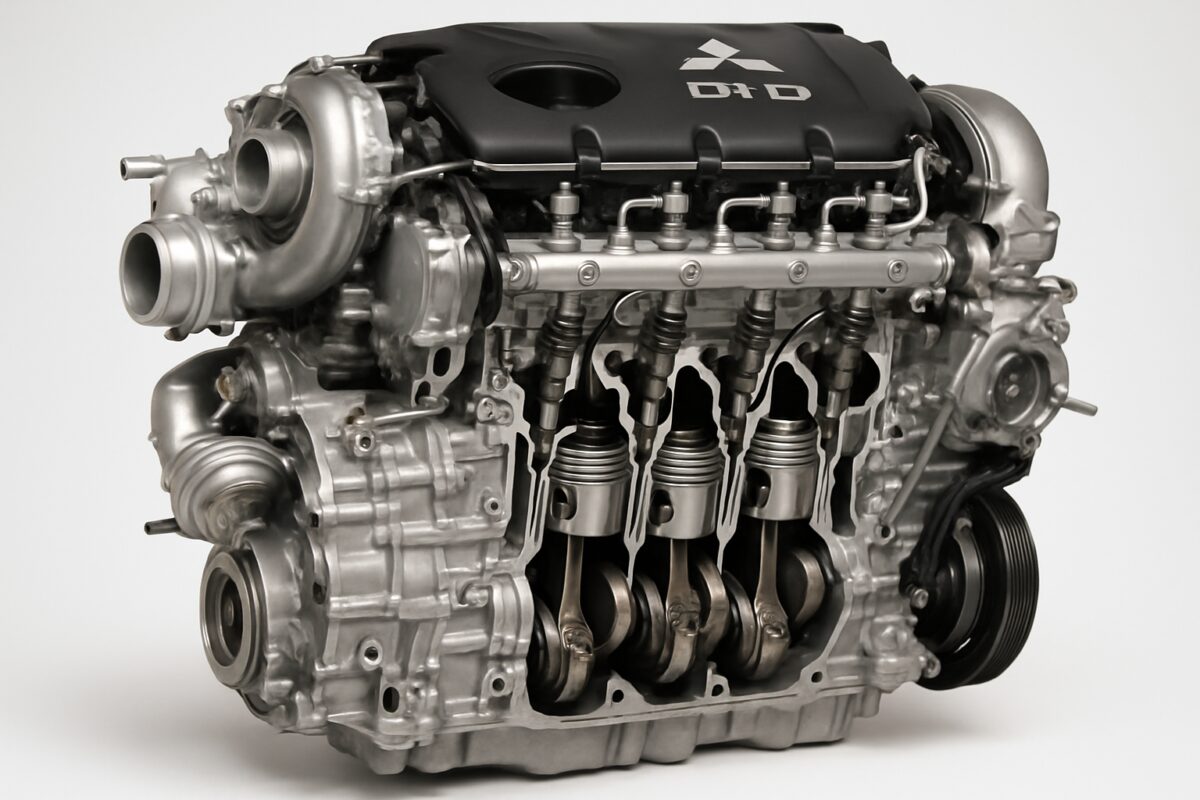
Mitsubishi’s DI-D (Direct Injection Diesel) engines represent a significant advancement in modern diesel technology, offering impressive performance across various vehicle segments. These powerplants combine sophisticated Common Rail fuel injection with turbocharging to deliver exceptional fuel economy and robust torque delivery. The DI-D range spans from compact 1.5-litre units producing 105 horsepower to powerful 3.2-litre V6 engines delivering up to 200 horsepower, making them suitable for everything from city cars to heavy-duty pickup trucks.
Comparison table of all engines
| Engine | Power output | Torque | Fuel consumption | Reliability |
|---|---|---|---|---|
| 1.5 DI-D | 105 HP | 240 Nm | 4.2L/100km | Above Average |
| 1.8 DI-D | 115 HP | 300 Nm | 4.8L/100km | Good |
| 2.0 DI-D | 140 HP | 360 Nm | 5.1L/100km | Excellent |
| 2.2 DI-D | 150 HP | 380 Nm | 5.4L/100km | Very Good |
| 2.5 DI-D | 178 HP | 400 Nm | 6.2L/100km | Good |
| 3.2 DI-D V6 | 200 HP | 441 Nm | 7.8L/100km | Average |
1.5 DI-D engine overview
The 1.5 DI-D represents Mitsubishi’s entry-level diesel offering, featuring a four-cylinder inline configuration with 1,499cc displacement. This turbocharged unit employs Common Rail direct injection technology, delivering fuel precisely into the combustion chamber at pressures exceeding 1,600 bar. The compact design makes it ideal for smaller vehicles whilst maintaining impressive torque characteristics.
Pros
- Outstanding fuel economy with consumption as low as 4.2L/100km
- Lightweight construction reduces vehicle weight
- Low emissions meet Euro 6 standards
- Responsive turbocharger provides good low-end torque
- Relatively simple maintenance requirements
Cons
- Limited power output may feel underpowered in larger vehicles
- Turbo lag noticeable at low RPM
- DPF issues common in urban driving conditions
- Timing belt requires regular replacement every 100,000 miles
Our mechanics recommend using high-quality fuel filters with the 1.5 DI-D, as the Common Rail system is particularly sensitive to fuel contamination.
2.0 DI-D engine overview
The 2.0 DI-D stands as Mitsubishi’s most popular diesel unit, featuring a robust four-cylinder design with 1,968cc displacement. This turbocharged powerplant utilises advanced Common Rail technology with variable geometry turbocharging, providing excellent performance across the rev range. The engine’s sophisticated injector system delivers multiple injection events per combustion cycle.
Pros
- Excellent balance of power and fuel economy
- Strong mid-range torque delivery ideal for overtaking
- Proven reliability with proper maintenance
- Good cold-start performance with glow plugs
- Wide availability of spare parts
Cons
- Higher maintenance costs compared to smaller engines
- EGR valve prone to carbon buildup
- Dual-mass flywheel can be expensive to replace
- Requires premium diesel fuel for optimal performance
2.5 DI-D engine overview
The 2.5 DI-D delivers substantial performance with its 2,477cc displacement and sophisticated turbocharging system. This inline-four configuration features aluminium construction with cast-iron cylinder liners, providing excellent durability whilst keeping weight manageable. The Common Rail system operates at higher pressures than smaller variants, ensuring complete combustion and reduced emissions.
Pros
- Strong power output suitable for heavier vehicles
- Impressive towing capacity with 400 Nm torque
- Refined operation with good NVH characteristics
- Effective intercooler maintains consistent performance
- Robust construction handles commercial use well
Cons
- Higher fuel consumption than smaller alternatives
- Complex emissions control systems require specialist knowledge
- Turbocharger replacement costs can be significant
- Longer warm-up periods in cold weather
3.2 DI-D V6 engine overview
The flagship 3.2 DI-D V6 represents Mitsubishi’s most powerful diesel offering, featuring a 60-degree V6 configuration with 3,200cc displacement. This sophisticated unit employs twin turbochargers and advanced Common Rail injection, delivering exceptional performance for large SUVs and commercial vehicles. The aluminium block construction keeps weight reasonable despite the larger displacement.
Pros
- Outstanding power delivery with 441 Nm torque
- Smooth V6 operation with minimal vibration
- Excellent towing capabilities for heavy loads
- Advanced engine management system optimises performance
- Impressive durability when properly maintained
Cons
- Higher fuel consumption affects running costs
- Complex twin-turbo system increases maintenance complexity
- Expensive to repair due to specialist requirements
- Limited availability in certain markets
Our experience shows that the 3.2 V6 benefits significantly from regular oil filter changes using fully synthetic oil, extending turbocharger life considerably.
Maintenance cost
| Engine | Recommended Interval | Estimated Cost | Cost per 10,000 miles |
|---|---|---|---|
| 1.5 DI-D | 12,500 miles | £180-250 | £144-200 |
| 1.8 DI-D | 12,500 miles | £200-280 | £160-224 |
| 2.0 DI-D | 10,000 miles | £220-300 | £220-300 |
| 2.2 DI-D | 10,000 miles | £240-320 | £240-320 |
| 2.5 DI-D | 10,000 miles | £280-380 | £280-380 |
| 3.2 DI-D V6 | 7,500 miles | £350-450 | £467-600 |
These figures include engine oil, filters, and basic inspection costs. Additional components like air filters and cabin filters may require replacement at different intervals. The V6 engine demands more frequent servicing due to its complexity and higher operating temperatures.
Engine sound and character
DI-D engines exhibit distinct acoustic characteristics that vary significantly across the range. The smaller 1.5-litre unit produces a typical diesel clatter at idle, becoming more refined under acceleration. The 2.0-litre variant offers better sound insulation with less intrusive noise penetration into the cabin. Turbo whistle becomes noticeable during hard acceleration, particularly in the larger displacement engines.
The 2.5-litre engine demonstrates improved refinement with reduced vibration transmitted through the engine mounts. However, the characteristic diesel knock remains audible during cold starts and low-speed operation. The flagship 3.2 V6 provides the smoothest operation with its inherently balanced configuration, though turbo noise becomes more prominent due to the twin-turbo setup.
Modern Common Rail injection technology significantly reduces the harsh diesel clatter associated with older indirect injection systems. Multiple injection events per cycle create smoother combustion, resulting in quieter operation and reduced emissions. The sophisticated EGR valve system further contributes to noise reduction whilst maintaining emissions compliance.
Who each engine is best for
| Engine | Daily commuters | Performance enthusiasts | Long-distance drivers | Budget-conscious owners |
|---|---|---|---|---|
| 1.5 DI-D | Excellent | Poor | Good | Excellent |
| 1.8 DI-D | Very Good | Fair | Very Good | Good |
| 2.0 DI-D | Good | Good | Excellent | Fair |
| 2.2 DI-D | Fair | Very Good | Very Good | Fair |
| 2.5 DI-D | Poor | Excellent | Good | Poor |
| 3.2 DI-D V6 | Poor | Excellent | Fair | Very Poor |
Frequently asked questions
What is the difference between DI-D and conventional diesel engines?
DI-D engines use direct injection technology with Common Rail fuel systems, providing better fuel atomisation and multiple injection events for improved efficiency and reduced emissions compared to indirect injection diesels.
How often should I replace the fuel filter on DI-D engines?
Replace the fuel filter every 20,000-30,000 miles or according to manufacturer specifications. Poor fuel quality may require more frequent replacement to protect Common Rail components.
Are DI-D engines suitable for short urban journeys?
DI-D engines can handle short trips but require regular motorway driving to regenerate the DPF. Frequent short journeys may cause particulate filter clogging and increased maintenance costs.
What causes black smoke from DI-D engines?
Black smoke typically indicates incomplete combustion due to faulty injectors, clogged air filters, or turbocharger problems. Check the mass air flow sensor and boost pressure system for issues.
Can I use biodiesel in DI-D engines?
Most DI-D engines accept up to B7 biodiesel blends. Higher concentrations may damage seals and injection components. Always consult your owner’s manual before using alternative fuels.

 Loading...