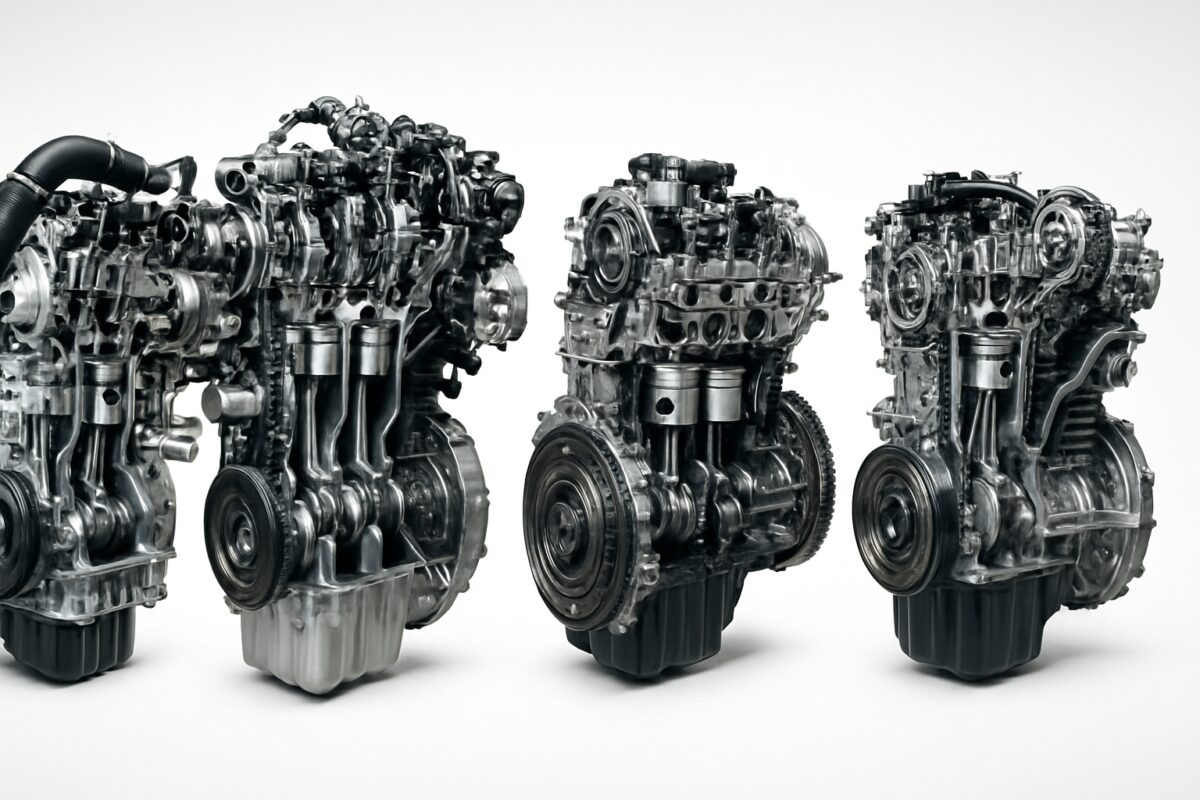
The Dacia Duster has established itself as a budget-friendly SUV that doesn’t compromise on capability. At the heart of this Romanian success story lies a carefully selected range of engines that balance performance, economy, and reliability. From efficient naturally aspirated petrol units to torquey diesel powerplants, the Duster’s engine lineup caters to diverse driving needs whilst maintaining the brand’s commitment to affordability. The available powertrains range from 114 to 150 horsepower, offering torque figures between 200-340 Nm depending on specification.
Comparison table of all engines
Understanding the key differences between Duster engine options helps buyers make informed decisions based on their priorities.
| Engine | Power Output | Torque | Fuel Consumption | Reliability |
|---|---|---|---|---|
| 1.0 TCe 100 | 100 hp | 200 Nm | 42.8 mpg | Good |
| 1.3 TCe 130 | 130 hp | 240 Nm | 40.9 mpg | Very Good |
| 1.3 TCe 150 | 150 hp | 250 Nm | 38.7 mpg | Very Good |
| 1.5 dCi 115 | 115 hp | 260 Nm | 52.3 mpg | Excellent |
| 1.6 SCe 115 | 115 hp | 156 Nm | 38.2 mpg | Good |
1.0 TCe 100 engine overview
The smallest engine in the Duster range represents Renault-Nissan Alliance engineering at its most efficient. This three-cylinder turbocharged unit delivers surprising performance for its compact displacement.
This inline-3 configuration features a 999cc displacement with direct injection and variable valve timing. The turbocharger provides boost pressure from low revs, making it responsive in urban conditions. The engine runs on standard unleaded petrol through a sophisticated fuel injection system that optimises combustion efficiency. Regular maintenance of the air filter ensures optimal performance from this compact powerplant.
Pros
- Excellent fuel economy for a SUV
- Low running costs and affordable servicing
- Responsive performance in city driving
- Compact size reduces vehicle weight
- Modern technology with good refinement
Cons
- Limited power for motorway overtaking
- Three-cylinder vibration at idle
- Struggles with fully loaded vehicle
- Requires frequent gear changes on hills
- Not available with automatic transmission
1.3 TCe 130/150 engine overview
The 1.3-litre turbocharged petrol engine comes in two power outputs and represents the sweet spot in the Duster lineup. Developed jointly with Mercedes-Benz, this unit combines performance with efficiency.
This inline-4 configuration displaces 1,330cc and features advanced turbocharging technology. The direct injection system works alongside variable valve timing to maximise both power and fuel economy. Both variants run on standard unleaded petrol, with the higher-output version featuring enhanced software calibration. The fuel filter requires regular replacement to maintain injection system cleanliness and performance.
Pros
- Strong performance across the rev range
- Good fuel economy despite higher power
- Available with automatic transmission
- Proven reliability from Mercedes partnership
- Smooth four-cylinder refinement
Cons
- Higher purchase price than smaller engines
- Premium fuel recommended for best performance
- Turbocharger increases complexity
- Slightly higher servicing costs
- More expensive to repair than naturally aspirated units
1.5 dCi 115 diesel engine overview
The diesel option remains popular among high-mileage drivers who prioritise fuel economy and torque delivery. This Renault-developed unit has proven itself across multiple model ranges.
This inline-4 diesel displaces 1,461cc and features common-rail direct injection with turbocharging. The naturally balanced four-cylinder configuration provides smooth operation, whilst the turbocharger delivers strong low-end torque. The engine runs on standard diesel fuel through a high-pressure injection system that requires quality fuel pump components for reliable operation.
Pros
- Outstanding fuel economy exceeding 50 mpg
- Excellent torque delivery for towing
- Long-term reliability and durability
- Strong resale values in used market
- Ideal for high-mileage driving
Cons
- Higher purchase price than petrol options
- DPF requires regular motorway driving
- More expensive servicing intervals
- Diesel particulate filter can clog in city use
- Potential future restrictions in urban areas
1.6 SCe 115 naturally aspirated engine overview
The naturally aspirated petrol engine offers traditional simplicity and reliability. This unit appeals to buyers who prefer proven technology over modern complexity.
This inline-4 configuration features 1,598cc displacement with port fuel injection. The naturally aspirated design eliminates turbocharger complexity whilst providing adequate performance for most situations. The engine runs on standard unleaded petrol through a conventional fuel injection system that’s both reliable and economical to maintain. Regular replacement of spark plugs ensures consistent ignition and smooth running.
Pros
- Simple and reliable naturally aspirated design
- Lower maintenance costs than turbocharged units
- Smooth and linear power delivery
- No turbocharger-related complications
- Adequate performance for most driving
Cons
- Higher fuel consumption than modern alternatives
- Limited low-end torque compared to turbocharged engines
- Feels dated compared to newer technology
- Not as refined as turbocharged competitors
- Requires higher revs for best performance
Maintenance cost comparison
Understanding service costs helps budget for long-term ownership. Different engine technologies require varying maintenance approaches and expenses.
| Engine | Recommended Interval | Estimated Cost | Cost per 10,000 miles |
|---|---|---|---|
| 1.0 TCe 100 | 12,000 miles | £280 | £233 |
| 1.3 TCe 130/150 | 12,000 miles | £320 | £267 |
| 1.5 dCi 115 | 18,000 miles | £450 | £250 |
| 1.6 SCe 115 | 12,000 miles | £250 | £208 |
According to Autopartspro’s experienced technicians, diesel engines require more frequent oil filter changes due to higher operating pressures, but their longer service intervals often balance overall costs.
Engine sound and character
Each Duster engine delivers a distinct acoustic and driving experience that influences the overall character of the vehicle.
The 1.0 TCe three-cylinder produces a characterful thrum that’s more noticeable at idle but smooths out under acceleration. The 1.3 TCe engines offer refined four-cylinder smoothness with a subtle turbo whistle under load. The diesel 1.5 dCi provides the typical diesel chatter at startup but becomes remarkably quiet at cruising speeds. The naturally aspirated 1.6 SCe delivers traditional petrol engine sounds with a pleasing note when pushed harder.
Vibration levels vary significantly between engines. The three-cylinder unit exhibits slight vibration through the steering wheel at idle, whilst the four-cylinder engines provide better balance. The diesel engine’s inherent torque characteristics create a different driving experience, with strong pull from low revs but less willingness to rev freely. Proper maintenance of engine mounts ensures minimal vibration transmission to the cabin regardless of engine choice.
Our workshop specialists note that regular replacement of the cabin filter significantly improves interior air quality and reduces engine noise intrusion, particularly beneficial with diesel variants.
Who each engine is best for
Different engines suit various driving patterns and owner priorities. Matching engine characteristics to intended use ensures satisfaction and value.
| Engine | Best For | Driving Style | Priority |
|---|---|---|---|
| 1.0 TCe 100 | Urban commuters | City and suburban driving | Low running costs |
| 1.3 TCe 130 | Balanced users | Mixed urban and motorway | Performance and efficiency |
| 1.3 TCe 150 | Performance enthusiasts | Spirited driving | Power and refinement |
| 1.5 dCi 115 | High-mileage drivers | Long-distance touring | Fuel economy and torque |
| 1.6 SCe 115 | Budget-conscious owners | Reliable transportation | Low maintenance costs |
The choice depends largely on annual mileage and driving patterns. High-mileage drivers benefit from diesel efficiency, whilst occasional users find petrol engines more suitable. The water pump and cooling system components require attention regardless of engine choice, particularly in stop-start urban conditions.
Frequently asked questions
Which Dacia Duster engine is most reliable?
The 1.5 dCi diesel engine demonstrates excellent long-term reliability with proper maintenance, whilst the naturally aspirated 1.6 SCe offers simplicity and proven durability.
What’s the most fuel-efficient Duster engine?
The 1.5 dCi diesel achieves over 52 mpg combined, making it the most economical choice for high-mileage drivers and long-distance touring.
Can the 1.0 TCe engine handle motorway driving?
Yes, but it requires more frequent gear changes and planning for overtaking. It’s adequate for occasional motorway use but struggles with sustained high-speed driving.
Which engine offers the best performance?
The 1.3 TCe 150 provides the strongest performance with 150 hp and 250 Nm torque, offering good acceleration and motorway capability.
Are turbocharged Duster engines reliable?
Modern turbocharged units prove reliable with proper servicing, though they require quality engine oil and regular maintenance to prevent premature wear.

 Loading...