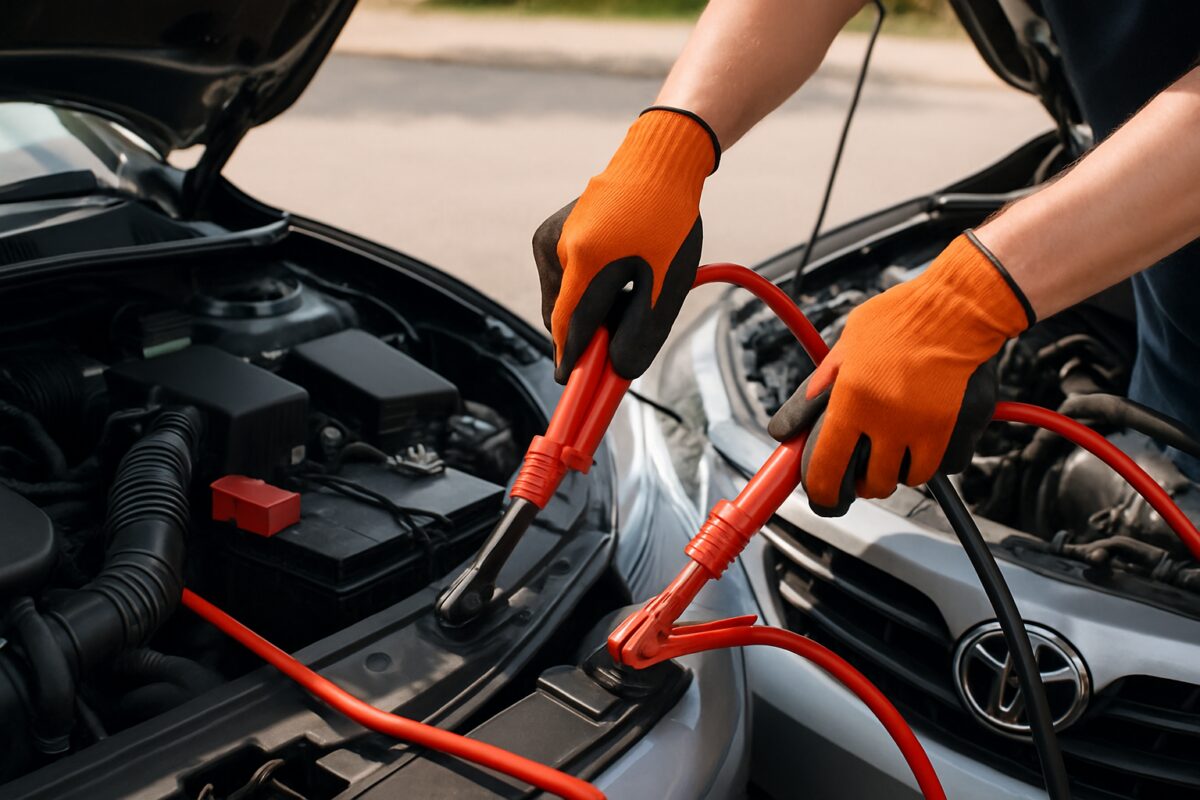
To jump start a car with leads, you’ll need jump leads, a working vehicle, and safety equipment. Connect the positive terminals first, then negative to the working car’s negative and the final lead to an unpainted metal surface in your engine bay. Start the donor vehicle, wait a few minutes, then attempt to start your car.
Tools and parts required
Getting your car running again requires specific equipment and a methodical approach. Having the right tools ensures a safe and successful jump start.
Parts needed
- Jump leads (minimum 16mm² copper core)
- Working donor vehicle with 12V battery
- Safety gloves and glasses
- Clean cloth or wire brush
Tools required
- Torch or mobile phone light
- Wire brush for terminal cleaning
- Multimeter (optional but recommended)
- Insulated pliers
Tip: Always check your jump leads’ condition before use. Look for damaged insulation, corroded clamps, or loose connections that could cause sparks or poor conductivity.
Safety precautions
Jump starting involves working with electrical systems and potentially explosive gases. Following proper safety procedures prevents injury and vehicle damage.
Park the donor vehicle close enough for leads to reach both batteries comfortably. Ensure both vehicles are in park or neutral with handbrakes engaged. Switch off all electrical accessories including lights, radio, and air conditioning.
Work in a well-ventilated area away from naked flames or smoking materials. Batteries produce hydrogen gas which is highly flammable. Wear safety glasses and gloves throughout the process.
Check both batteries for cracks, leaks, or excessive corrosion before proceeding. Never attempt to jump start a damaged or frozen battery as this can cause explosions.
Step-by-step instructions
Step 1: Position the vehicles
Position the donor vehicle so its battery is as close as possible to your car’s battery. This reduces voltage drop through the leads and improves starting power.
Ensure vehicles aren’t touching and there’s enough space to work safely around both engines. Keep the donor vehicle’s engine running at idle to maintain charging system output.
Step 2: Identify battery terminals
Locate the positive and negative terminals on both batteries. Positive terminals are marked with a plus sign (+) and are typically red. Negative terminals show a minus sign (-) and are usually black.
Clean any corrosion from terminals using a wire brush. Poor connections reduce current flow and may prevent successful jump starting.
Step 3: Connect the jump leads
Start with the red lead. Connect one red clamp to the positive terminal of your flat battery. Ensure the connection is tight and secure.
Connect the other red clamp to the positive terminal of the donor battery. Again, make sure the connection is solid.
Take the black lead and connect one end to the negative terminal of the donor battery. For the final connection, attach the remaining black clamp to an unpainted metal surface in your engine bay, away from the battery.
Tip: Never connect the final negative lead directly to your flat battery’s negative terminal. This creates sparks near the battery where hydrogen gas concentrations are highest.
Step 4: Start the engines
Ensure the donor vehicle is running and let it charge your battery for 2-3 minutes. This allows some current to flow into your flat battery.
Try starting your car. If it doesn’t start immediately, wait another few minutes before trying again. Don’t crank for more than 15 seconds at a time to avoid damaging the starter motor.
Step 5: Remove the leads safely
Once your car starts, keep both engines running and remove the leads in reverse order. Start by removing the black clamp from your engine’s earth point.
Remove the black clamp from the donor battery’s negative terminal, then the red clamp from the donor battery’s positive terminal. Finally, remove the red clamp from your car’s positive terminal.
Common mistakes to avoid
Many jump start failures result from simple errors that are easily prevented. Understanding these common pitfalls helps ensure success on your first attempt.
Never connect positive to negative terminals or vice versa. This creates a short circuit that can damage both vehicles’ electrical systems and potentially cause fires.
Avoid letting the clamps touch each other while connected to batteries. This causes dangerous sparks and can damage the jump leads or vehicle electronics.
Don’t attempt to jump start a completely dead battery that’s been flat for weeks. Such batteries may have internal damage and need professional replacement.
Never smoke or use naked flames near batteries. The hydrogen gas produced during charging is extremely explosive and can cause serious injury.
When should you replace your battery?
Car batteries typically last 3-5 years depending on usage patterns and climate conditions. Regular testing helps identify weakening batteries before complete failure.
Signs your battery needs replacement include slow engine cranking, dim headlights when idling, and dashboard warning lights. Cold weather particularly affects weak batteries.
If you’re jump starting frequently, your battery likely needs replacement. Modern vehicles with numerous electronic systems place higher demands on battery capacity than older cars.
Check battery terminals monthly for corrosion and ensure connections remain tight. Clean terminals improve conductivity and extend battery life significantly.
Related maintenance you can do at the same time
While dealing with battery issues, consider other electrical system maintenance that keeps your car reliable and prevents future problems.
Test your generator output to ensure it’s charging properly. A failing alternator will quickly flatten even a new battery.
Check all light bulbs function correctly. Faulty bulbs often indicate electrical problems that can drain your battery overnight.
Inspect the starter motor’s operation. Slow or laboured starting suggests the motor is drawing excessive current from your battery.
Clean and protect battery terminals with petroleum jelly or terminal protector spray. This prevents corrosion that reduces electrical conductivity.
Frequently asked questions
Can I jump start a car with a completely flat battery?
Yes, but you may need to wait longer for the donor battery to charge yours. Very flat batteries require 5-10 minutes charging time.
What size jump leads do I need for my car?
Most cars require 16mm² leads minimum. Larger engines and diesels need 25mm² leads for adequate current flow and successful starting.
Can I use another car’s battery to jump start mine?
Yes, provided both vehicles have 12V systems. Never attempt to jump between different voltage systems as this causes severe damage.
How long should I run my car after jump starting?
Drive for at least 30 minutes to allow the alternator to recharge your battery properly. Short trips may not provide sufficient charging.
What if my car still won’t start after jump starting?
Check all connections are secure and clean. If still unsuccessful, your battery may be beyond recovery and need replacement immediately.
Jump starting becomes straightforward once you understand the correct sequence and safety requirements. Using quality leads and maintaining clean connections ensures reliable results when you need them most. Our experienced mechanics at AutoPartsPro recommend keeping a set of professional-grade jump leads in your boot, along with safety gloves and a torch for emergency situations.

 Loading...