To test a clutch properly, check the pedal travel, bite point engagement, slipping under load, and listen for unusual noises during operation. Begin with the engine off to assess pedal feel, then perform road tests to evaluate engagement smoothness and power transfer efficiency.
Tools and parts required
Before starting your clutch check, gather the necessary equipment for accurate diagnosis.
Parts needed:
- Clutch kit (if replacement required)
- Clutch plate (individual component)
- Clutch pressure plate
- Clutch release bearing
- Clutch cable (cable-operated systems)
Tools required:
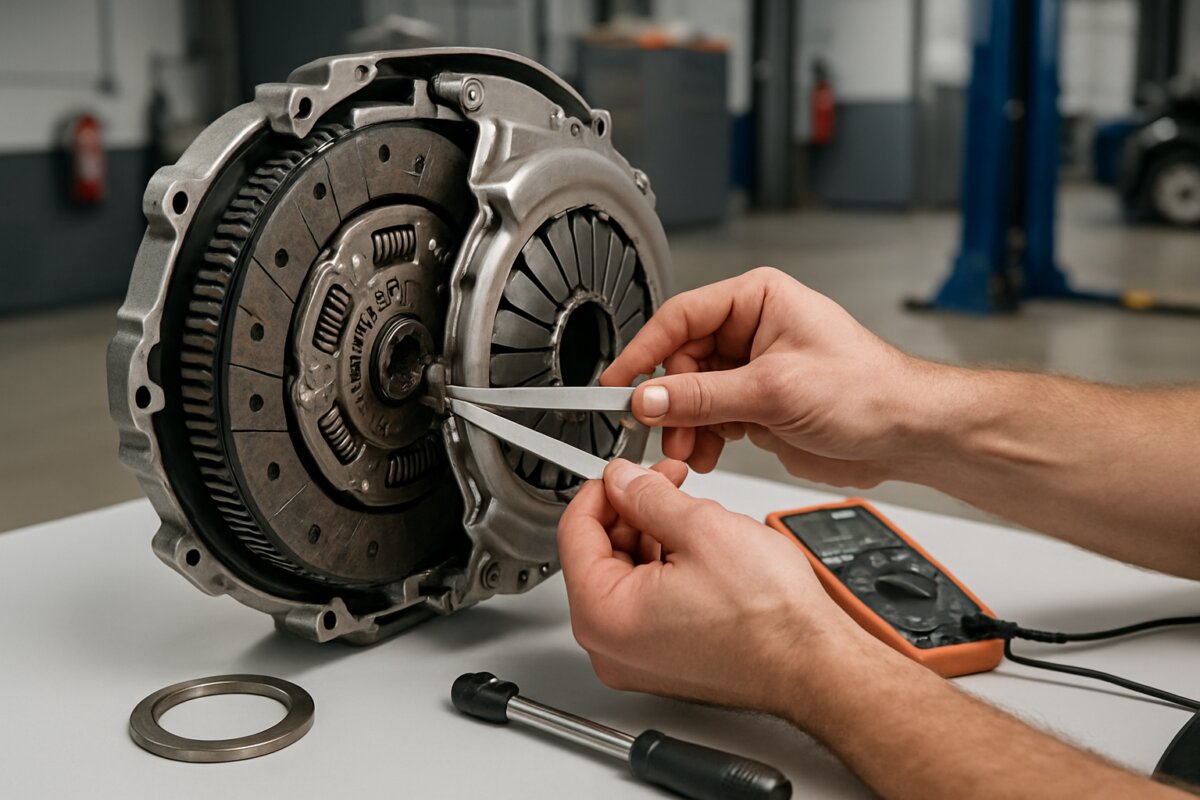
- Digital multimeter
- Feeler gauges
- Torque wrench
- Jack and axle stands
- Basic hand tools
- Inspection light
Always match clutch components to your specific vehicle’s engine code and transmission type for proper fitment and performance.
Safety precautions
Testing a clutch involves working with moving parts and potentially getting under the vehicle. Take proper safety measures to prevent injury.
- Park on level ground with handbrake applied
- Use proper axle stands when working underneath
- Never rely solely on a jack for support
- Wear safety glasses and gloves
- Ensure adequate ventilation in enclosed spaces
- Keep a fire extinguisher nearby when working with hydraulic fluids
Step-by-step instructions
Follow this systematic approach to thoroughly evaluate your clutch condition.
Step 1: Check pedal feel and travel
With the engine off, press the clutch pedal slowly. The pedal should move smoothly without catching or grinding. Measure the total travel distance – typically 15-20cm on most vehicles.
Check for excessive free play at the top of pedal travel. More than 2-3cm suggests cable stretch or hydraulic issues requiring adjustment or component replacement.
Step 2: Test bite point engagement
Start the engine and engage first gear. Slowly release the clutch pedal whilst noting where engagement begins. The bite point should occur roughly halfway through pedal travel.
A high bite point near the top indicates worn friction material, whilst a low bite point suggests adjustment problems or hydraulic issues.
Step 3: Perform slip test
With the engine running, apply the handbrake firmly. Select third gear and gradually release the clutch whilst gently increasing throttle. A healthy clutch should stall the engine immediately.
If the engine continues running with the clutch apparently engaged, the friction surfaces are slipping and require replacement.
Step 4: Check for juddering
Drive slowly and observe clutch engagement during pull-away. Smooth engagement indicates good condition, whilst juddering suggests warped surfaces, oil contamination, or worn engine mounts.
Pay attention to vibrations through the pedal and steering wheel during engagement phases.
Step 5: Listen for unusual noises
With the engine idling, listen for bearing whine or grinding sounds when pressing the clutch pedal. These noises often indicate worn release bearings requiring immediate attention.
Squealing during engagement may suggest glazed friction surfaces or contamination from leaking seals.
Step 6: Test hydraulic system pressure
For hydraulically-operated clutches, check the clutch master cylinder fluid level. Low levels indicate leaks or worn seals.
Pump the pedal several times and hold pressure. The pedal should remain firm without sinking towards the floor.
Common mistakes to avoid
Several testing errors can lead to incorrect diagnosis and unnecessary repairs.
- Confusing transmission problems with clutch issues
- Testing on uneven ground affecting bite point assessment
- Ignoring hydraulic system bleeding requirements
- Misinterpreting normal operational noises as faults
- Failing to check flywheel condition during inspection
- Overlooking contamination from leaking rear main seals
Always investigate the root cause of clutch failure to prevent premature replacement component wear.
When should you replace it?
Clutch replacement timing depends on driving conditions and maintenance history. Most clutches last 60,000-100,000 miles under normal conditions.
Replace immediately if you notice:
- Complete slipping under normal acceleration
- Inability to engage gears properly
- Severe juddering during engagement
- Burning smell during operation
- Hydraulic system failure with internal damage
Early replacement prevents damage to the flywheel surface and transmission components, ultimately saving repair costs.
Related maintenance you can do at the same time
When replacing clutch components, several related items benefit from simultaneous attention.
- Replace the gear oil for optimal transmission lubrication
- Inspect and replace worn CV joints if clicking occurs
- Check suspension arms for wear affecting drivetrain alignment
- Service the starter motor if access permits
- Replace the slave cylinder on hydraulic systems
This comprehensive approach maximises efficiency and prevents future access issues.
Frequently asked questions
How long does a clutch test take?
A thorough clutch assessment typically requires 30-45 minutes including road testing and hydraulic system checks.
Can I test my clutch without special tools?
Basic testing requires no special equipment, though feeler gauges and multimeters improve diagnostic accuracy significantly.
What causes premature clutch wear?
Riding the clutch, aggressive driving, towing heavy loads, and poor adjustment cause accelerated wear patterns.
Should I replace all clutch components together?
Yes, replacing pressure plate, friction disc, and release bearing simultaneously prevents mismatched wear and premature failure.
How do I know if hydraulic fluid needs changing?
Dark, contaminated fluid or spongy pedal feel indicates hydraulic system service requirements regardless of mileage.
Regular clutch testing helps identify problems before complete failure occurs, saving costly repairs and preventing roadside breakdowns. Understanding your clutch’s condition through systematic evaluation ensures reliable vehicle operation and optimal component longevity.

 Loading...