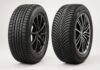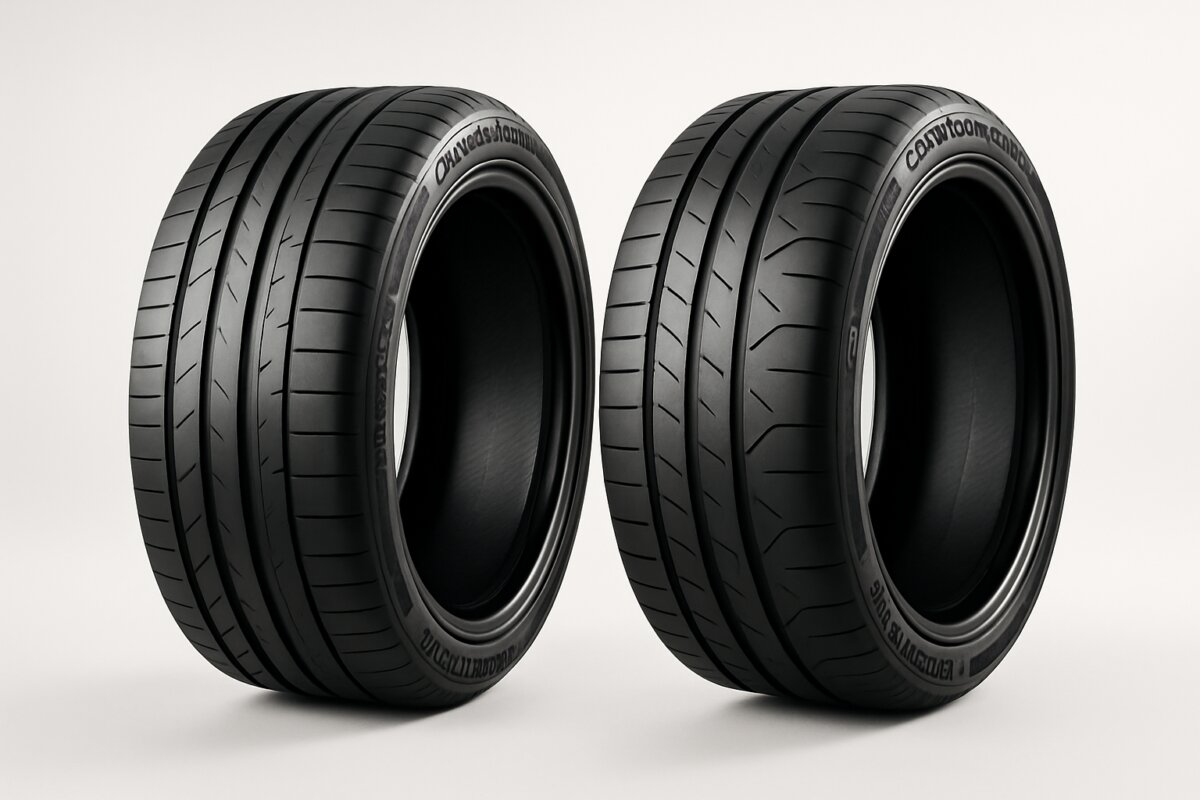
The Continental SportContact 7 represents a significant evolution over the SportContact 6, offering improved wet weather performance, reduced rolling resistance, and enhanced cornering stability. Whilst the SC6 remains a capable choice for budget-conscious drivers, the SC7’s advanced silica compound and optimised tread pattern deliver superior grip and shorter braking distances, making it the clear winner for performance-focused motorists seeking the latest tyre technology.
Quick comparison table
Here’s a side-by-side comparison to help you choose between these two Continental performance tyres:
| Feature | SportContact 6 | SportContact 7 |
|---|---|---|
| Price Range | £120-250 per tyre | £150-300 per tyre |
| Wet Performance | A-rated | A+ rated |
| Fuel Efficiency | C-D rated | B-C rated |
| Noise Level | 70-72 dB | 68-70 dB |
| Tread Life | 25,000-30,000 miles | 30,000-35,000 miles |
| Best For | Track days, spirited driving | All-round performance |
Continental SportContact 6 overview
The SportContact 6 arrived in 2016 as Continental’s flagship ultra-high-performance tyre, designed primarily for sports cars and powerful saloons. This tyre features Continental’s BlackChili compound technology, which combines special silica with carbon black for exceptional grip levels on both dry and wet surfaces.
The SC6 uses an asymmetric tread design with large outer shoulder blocks that provide maximum contact during cornering. The inner section features longitudinal grooves that efficiently channel water away from the contact patch. This design philosophy prioritises dry performance whilst maintaining respectable wet weather capabilities.
Pricing typically ranges from £120 to £250 per tyre, depending on size and retailer. The SportContact 6 remains popular among track enthusiasts who value its precise steering response and high-speed stability.
Advantages:
- Exceptional dry grip and cornering precision
- Strong high-speed stability
- Sharp steering response
- Competitive pricing for a premium tyre
- Proven track record in motorsport applications
Disadvantages:
- Higher rolling resistance affects fuel economy
- Road noise can be intrusive at motorway speeds
- Shorter tread life compared to touring tyres
- Limited wet performance compared to newer designs
The SC6 suits drivers who prioritise outright performance over comfort and efficiency. Track day enthusiasts, sports car owners, and those who enjoy spirited driving on twisty roads will appreciate its dynamic capabilities.
Our AutoPartsPro specialists recommend the SportContact 6 for drivers who frequent track days, as its compound responds well to heat cycling and maintains consistent performance under extreme conditions.
Continental SportContact 7 overview
Launched in 2021, the SportContact 7 represents Continental’s latest thinking in ultra-high-performance tyre development. This newer model incorporates lessons learned from the SC6 whilst addressing its shortcomings through advanced materials and design optimisation.
The SC7 features an updated BlackChili compound with increased silica content, improving wet weather performance whilst maintaining dry grip levels. The tread pattern uses adaptive shoulder blocks that adjust their rigidity based on cornering forces, providing better feedback and control.
Continental’s engineers redesigned the internal structure with a new cap ply arrangement that reduces rolling resistance by up to 15% compared to the SC6. This improvement translates directly into better fuel efficiency without compromising performance.
Expect to pay £150 to £300 per tyre for the SportContact 7, reflecting its position as Continental’s premium offering. The price premium over the SC6 typically ranges from £20-50 per tyre.
Advantages:
- Superior wet weather performance with shorter braking distances
- Reduced rolling resistance improves fuel economy
- Lower noise levels enhance cabin comfort
- Extended tread life saves money long-term
- Advanced compound technology for consistent performance
Disadvantages:
- Higher initial purchase price
- Limited availability in some sizes
- Newer technology means less long-term reliability data
- May feel slightly less aggressive than SC6 on track
The SportContact 7 appeals to drivers seeking the perfect balance between performance and practicality. Those who drive powerful cars daily will appreciate its refined character and improved efficiency.
According to our tyre specialists, the SC7’s improved wet performance makes it particularly suitable for British driving conditions, where sudden weather changes are common.
Compatibility considerations
Both tyres share similar fitment ranges, covering most performance vehicles from 17-inch to 22-inch wheel diameters. Popular sizes include 225/45R17, 245/40R18, and 275/35R19, making them suitable for everything from hot hatches to luxury sports cars.
The SportContact series fits vehicles including BMW M3/M4, Audi RS models, Mercedes-AMG variants, and Porsche 911s. Both tyres maintain Continental’s OE approvals for major manufacturers, ensuring they meet original equipment specifications.
Installation requires no special considerations beyond standard mounting kit procedures. However, these performance tyres demand proper wheel alignment and regular pressure monitoring to achieve optimal performance and longevity.
Consider your vehicle’s shock absorber condition before fitting either tyre, as worn suspension components can negatively impact performance and cause uneven wear patterns.
Load and speed ratings remain consistent between both models, with most sizes offering Y-rated (300 km/h) capability. Always verify the correct specifications for your vehicle using the manufacturer’s handbook or door pillar information.
Performance comparison in detail
Real-world testing reveals distinct characteristics between these Continental tyres. The SportContact 6 excels in dry conditions, delivering razor-sharp turn-in and outstanding grip levels during aggressive cornering. Its compound reaches optimal operating temperature quickly, making it ideal for track applications.
Wet weather performance shows the SC7’s technological advancement. Independent tests demonstrate 8-10% shorter braking distances from 100-0 km/h in wet conditions. The improved tread compound maintains flexibility at lower temperatures, crucial for British weather patterns.
Comfort levels differ noticeably between the two models. The SC7 generates 2-3 decibels less noise at motorway speeds, whilst its improved sidewall construction reduces road surface irregularities transmitted to the cabin. This makes extended drives more pleasant without sacrificing handling precision.
Fuel consumption tests show the SportContact 7’s efficiency gains. Real-world driving typically yields 3-5% better fuel economy, which over the tyre’s lifespan can offset much of the initial price difference. The reduced rolling resistance particularly benefits motorway driving.
Both tyres perform admirably with modern safety systems. Their predictable behaviour works well with ABS sensors and electronic stability programs, providing consistent feedback to these systems during emergency manoeuvres.
Longevity and value analysis
Tread wear patterns differ between these models due to their compound formulations. The SportContact 6 typically shows more aggressive wear on the outer edges when used for spirited driving, reflecting its track-focused nature. Regular rotation every 5,000 miles helps maximise lifespan.
The SportContact 7’s advanced compound chemistry provides more even wear characteristics. Its improved silica content maintains compound flexibility throughout the tyre’s life, reducing the performance drop-off experienced with heavily worn tyres.
Cost-per-mile calculations favour the SC7 despite its higher initial price. The combination of longer tread life and better fuel economy typically results in lower total ownership costs over the tyre’s service life. This makes particular sense for high-mileage drivers.
Seasonal considerations play a role in longevity. Neither tyre performs optimally below 7°C, so drivers in colder regions should consider winter tyre changes. This shared limitation means both require similar seasonal planning.
Final verdict
Choose the Continental SportContact 6 if you prioritise maximum dry performance and sharp handling response above all else. Track day enthusiasts and drivers who rarely encounter wet conditions will appreciate its aggressive character and competitive pricing.
Select the SportContact 7 for the best overall package of performance, comfort, and efficiency. Daily drivers of powerful cars, particularly in variable weather conditions, will benefit from its technological refinements and improved wet weather capabilities.
The SC7 represents the future of performance tyre development, whilst the SC6 remains a capable choice for specific applications. Consider your driving priorities, budget, and typical conditions when making this decision.
For most drivers, the SportContact 7’s advantages justify its premium pricing. However, budget-conscious track enthusiasts may find the SC6 offers better value for their specific needs.
Frequently asked questions
Can I mix SportContact 6 and 7 tyres on the same vehicle?
Mixing different tyre models isn’t recommended as it affects handling balance and stability. Both tyres should be fitted as complete axle pairs minimum.
How do these tyres perform in winter conditions?
Neither tyre performs well below 7°C. Both use summer compounds that harden in cold weather, reducing grip and safety significantly.
What’s the recommended tyre pressure for both models?
Follow your vehicle manufacturer’s specifications, typically found on the door pillar. Performance tyres often require 2-3 psi above standard recommendations.
Do these tyres work with run-flat technology?
Continental offers run-flat versions of both models with SSR (Self Supporting Runflat) technology for compatible vehicles and wheel designs.
How often should I rotate these performance tyres?
Rotate every 5,000-6,000 miles to ensure even wear. However, directional tread patterns may limit rotation options to front-rear only.

 Loading...