A car thermostat is a valve that regulates engine coolant flow to maintain optimal operating temperature, typically opening at 82-95°C to allow coolant circulation through the engine radiator. When faulty, it can cause overheating or poor fuel economy. Replacement costs range from £80 to £250 in the UK, including parts (£15-£80) and labour (£65-£170), though prices vary by vehicle make and complexity of access.
What does a car thermostat actually do
The thermostat sits between your engine block and radiator, acting as a temperature-controlled gatekeeper. When you start your cold engine, this clever valve remains closed, preventing coolant from flowing to the radiator. This allows your engine to reach its ideal operating temperature quickly, which reduces emissions and improves fuel efficiency.
Once the coolant reaches the thermostat’s rated temperature, a wax pellet inside expands and opens the valve. This allows hot coolant to flow to the radiator where it cools down before returning to the engine. The thermostat continuously adjusts its position to maintain steady engine temperature, regardless of driving conditions.
Modern vehicles often use electronically controlled thermostats that work with the engine management system. These sophisticated units can adjust opening temperatures based on load, speed, and ambient conditions. According to Autopartspro’s mechanics, electronically controlled thermostats offer better fuel economy but are more expensive to replace than traditional mechanical versions.
How the thermostat mechanism functions
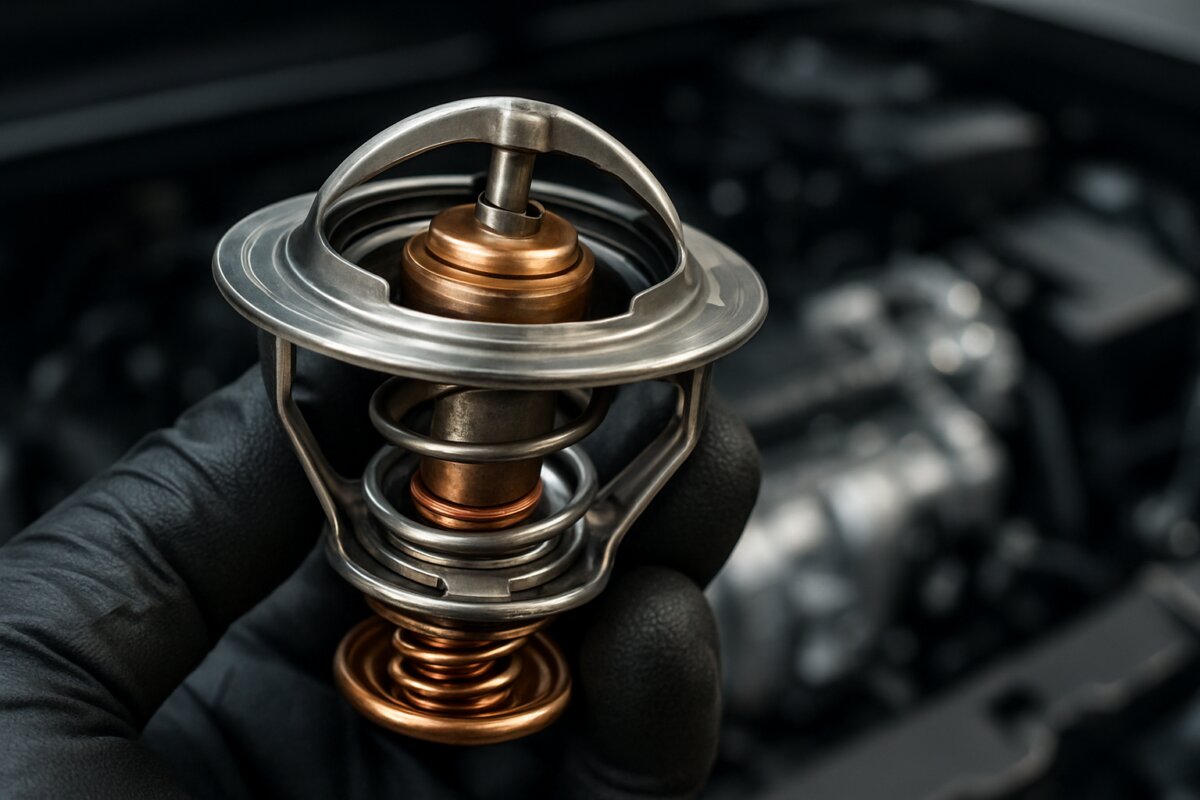
The traditional wax-pellet thermostat operates through thermal expansion. Inside the valve housing, a sealed copper cup contains special wax mixed with metal powder. As coolant temperature rises, the wax melts and expands, pushing a piston that opens the valve against spring pressure.
The opening process isn’t binary. Your thermostat gradually opens wider as temperature increases, providing precise flow control. This modulation ensures the water pump circulates just enough coolant to maintain optimal temperature without over-cooling the engine.
Key components of a thermostat assembly
- Valve disc: The main seal that blocks or allows coolant flow through the housing
- Wax pellet: Temperature-sensitive element that expands when heated to push the valve open
- Return spring: Closes the valve when coolant temperature drops below the rated threshold
- Frame and piston: Mechanical linkage that transfers expansion force to the valve disc
- Bypass port: Small opening that allows minimal circulation even when closed
Common symptoms of thermostat failure
A stuck-closed thermostat prevents coolant circulation, causing rapid overheating. Your temperature gauge will climb into the red zone, the cooling fan will run constantly, and you might see steam from under the bonnet. This situation demands immediate attention to prevent catastrophic engine damage.
Conversely, a stuck-open thermostat allows constant coolant flow, preventing the engine from reaching proper operating temperature. You’ll notice poor heater performance, increased fuel consumption, and sluggish engine response. The temperature gauge may never reach the normal range, even after extended driving.
Warning signs to watch for
- Erratic temperature readings: Gauge fluctuates wildly or remains unusually low during operation
- Poor cabin heating: Heater blows lukewarm air even when the engine has been running for ages
- Engine overheating: Temperature rises quickly, especially in traffic or during hard acceleration
- Reduced fuel economy: Cold-running engine uses richer fuel mixture, wasting petrol
- Check engine light: Modern vehicles detect abnormal coolant temperature sensor readings and trigger warnings
Autopartspro’s specialists note that many drivers overlook a constantly running cooling fan as a symptom. If your fan engages immediately on startup or runs continuously during normal driving, your thermostat likely isn’t regulating temperature properly.
Types of car thermostats available
Traditional mechanical thermostats use only the wax pellet mechanism and remain the most common type in older vehicles. They’re reliable, inexpensive, and easy to replace. These units have fixed opening temperatures stamped on the body, typically ranging from 82°C to 95°C depending on engine design.
Electronically controlled thermostats feature heating elements that can adjust the opening temperature on demand. The engine control unit monitors various sensors and signals the thermostat to open earlier or later for optimal efficiency. These systems improve cold-start emissions and allow higher operating temperatures during motorway cruising.
Map-controlled thermostats represent the latest technology, integrating directly with the engine management system. They provide infinite adjustment capability and work alongside variable water pump speeds for maximum efficiency. However, their complexity makes diagnosis and replacement more challenging.
Replacement cost breakdown
The total cost of thermostat replacement varies considerably based on your vehicle’s make, model, and engine type. Location also matters, with London workshops typically charging 20-30% more than rural garages. Below you’ll find typical price ranges for different scenarios.
| Vehicle Type | Parts Cost | Labour Cost | Total Cost |
|---|---|---|---|
| Small hatchback (Ford Fiesta, Vauxhall Corsa) | £15-£35 | £65-£100 | £80-£135 |
| Family saloon (Volkswagen Passat, BMW 3 Series) | £25-£55 | £80-£130 | £105-£185 |
| Performance car (Audi S4, Mercedes AMG) | £45-£80 | £100-£170 | £145-£250 |
| Electronic thermostat (various models) | £60-£150 | £80-£150 | £140-£300 |
Factors affecting replacement costs
Accessibility plays a huge role in labour charges. Some manufacturers bury the thermostat under intake manifolds, requiring removal of multiple components. Engines with the thermostat located at the bottom of the engine require draining the entire cooling system, adding time and complexity.
According to Autopartspro’s service team, German vehicles often require special tools and programming equipment for electronic thermostats, pushing costs higher. Additionally, many modern engines integrate the thermostat into the coolant flange assembly, forcing you to replace the entire housing rather than just the valve.
Professional tip: Always replace the thermostat gasket or O-ring during installation, even if the old one looks serviceable. A £3 seal costs far less than dealing with coolant leaks and repeat repairs. Also, verify the replacement thermostat matches your original unit’s temperature rating to maintain proper engine performance.
Additional parts you might need
Rarely does thermostat replacement involve only the valve itself. Smart mechanics recommend refreshing related cooling system components whilst the system is already drained. This preventative approach saves labour costs on future repairs and ensures optimal cooling performance.
- Coolant: You’ll lose at least two litres during removal, so factor in top-up or complete flush costs
- Radiator hose: Inspect radiator hoses for cracks or soft spots whilst accessing the thermostat
- Expansion tank cap: A faulty expansion tank cap can cause pressure issues that mimic thermostat problems
- Temperature sensor: If your gauge reads erratically, the temperature sensor might be failing alongside the thermostat
DIY replacement versus professional service
Replacing a thermostat seems straightforward on paper, but complications frequently arise. If you’ve got mechanical experience and proper tools, a straightforward installation on an accessible engine might take 60-90 minutes. You’ll need a drain pan, fresh coolant, new gasket, torque wrench, and various spanners.
However, many modern engines present challenges that make professional service worthwhile. Trapped air pockets can cause overheating if you don’t bleed the system properly. Electronic thermostats often require programming with diagnostic equipment. And if you strip a bolt or crack the housing, your simple repair becomes an expensive disaster.
When to definitely use a professional
| Situation | Reason for Professional Service |
|---|---|
| Electronic thermostat | Requires diagnostic equipment for programming and fault code clearing |
| Integrated housing design | Complex assemblies with multiple seals increase risk of leaks if improperly installed |
| Limited access | Removing intake manifolds or other major components requires specialist knowledge |
| Warranty concerns | DIY repairs may void remaining manufacturer or extended warranty coverage |
Autopartspro’s technicians emphasise that proper diagnosis matters most. Sometimes what appears as thermostat failure actually stems from air locks, failing water pumps, or blocked radiators. Professional diagnostic equipment can pinpoint the actual problem before you waste money on unnecessary parts.
How to test your thermostat
Before spending money on replacement, you can perform simple tests to confirm thermostat failure. Start with your cold engine and carefully touch the upper radiator hose after starting. It should remain cool for several minutes as the thermostat blocks flow, then suddenly become hot when the valve opens.
If the upper hose heats immediately, your thermostat is stuck open. If it never gets hot despite the engine reaching operating temperature, the valve is stuck closed or the water pump has failed. You can also remove the thermostat and test it in a pan of heated water with a thermometer to verify it opens at the correct temperature.
Preventing premature thermostat failure
Regular cooling system maintenance dramatically extends thermostat life. Flush your coolant according to manufacturer intervals, typically every three to five years. Old coolant becomes acidic and deposits scale that damages the thermostat mechanism and clogs passages.
Using incorrect coolant types accelerates corrosion and seal deterioration. Always use the specific coolant type recommended for your vehicle, whether that’s OAT, HOAT, or traditional ethylene glycol. Mixing coolant types creates chemical reactions that form gel-like deposits within the cooling system.
Monitor your temperature gauge regularly during normal driving. Catching problems early prevents cascade failures where one component damages others. For instance, an overheating engine can warp the head gasket, turning a simple thermostat replacement into a major engine rebuild.
Impact on engine performance and efficiency
A properly functioning thermostat affects nearly every aspect of engine operation. Cold-running engines operate on rich fuel mixtures that waste petrol and increase emissions. You might see fuel economy drop by 10-15% when the thermostat sticks open, particularly noticeable during winter months.
Engine longevity suffers when operating temperature strays from design parameters. Cold engines experience accelerated wear because oil doesn’t flow properly and combustion produces more contaminants. Conversely, overheating damages gaskets, seals, and can warp metal components.
Modern emissions systems require precise temperature control to function correctly. The catalytic converter only works efficiently within specific temperature ranges. A malfunctioning thermostat can cause your vehicle to fail MOT emissions tests and trigger persistent check engine lights.
Choosing quality replacement parts
Not all thermostats are created equal, despite identical appearance. Original equipment manufacturer parts guarantee exact specifications and proven reliability, though they command premium prices. Autopartspro stocks quality aftermarket alternatives that meet or exceed OEM standards whilst offering better value.
Avoid ultra-cheap thermostats from unknown suppliers. These often use inferior wax compounds that fail prematurely or open at incorrect temperatures. The £10 you save initially becomes £100+ in repeat labour charges when the budget part fails within months.
Check that replacement thermostats include new gaskets or O-rings. Some economy packages omit these essential sealing components, forcing separate purchases. Quality kits bundle everything needed for proper installation, including new bolts if they’re single-use torque-to-yield designs.
Understanding your vehicle’s cooling system
The thermostat works as part of a sophisticated cooling system that includes the radiator, water pump, cooling fan, and various hoses and sensors. Each component relies on others functioning correctly. When diagnosing cooling issues, experienced mechanics examine the entire system rather than fixating on individual parts.
The expansion tank pressurises the system, raising coolant’s boiling point and improving heat transfer efficiency. A failing pressure cap can cause boiling and overheating that mimics thermostat problems. Similarly, air locks from improper filling prevent proper circulation regardless of thermostat condition.
According to Autopartspro’s experienced technicians, interconnected cooling system problems often confuse DIY diagnostics. They recommend professional assessment if simple thermostat replacement doesn’t resolve temperature issues, as underlying problems like internal head gasket leaks might be present.
What happens during professional replacement
Professional workshops follow systematic procedures that ensure reliable repairs. The technician begins by verifying the fault with diagnostic equipment, checking actual coolant temperature against gauge readings and monitoring opening times. This confirms the thermostat actually requires replacement rather than addressing secondary issues.
After draining the cooling system, the mechanic removes components blocking access to the thermostat housing. They clean mating surfaces thoroughly, removing old gasket material and corrosion that could cause leaks. The new thermostat installs with proper torque specifications, critical for preventing both leaks and housing cracks.
Refilling involves careful bleeding to remove air pockets that cause overheating. Professional equipment allows vacuum filling, which eliminates air completely. The final step involves running the engine to operating temperature whilst monitoring for leaks and verifying proper temperature control.
Quality workshops test-drive your vehicle after major cooling system work, ensuring real-world operation meets expectations. This catches problems like trapped air that only appear under load. They’ll also check coolant level after the first heat cycle, topping up as needed when air purges from the system.
Frequently Asked Questions (FAQ)
Can I drive with a faulty thermostat?
Driving with a stuck-open thermostat causes poor fuel economy and heater performance but isn’t immediately dangerous. However, a stuck-closed thermostat causes rapid overheating that can destroy your engine within minutes, requiring immediate停车 and professional recovery.
How long does a car thermostat typically last?
Most thermostats last 80,000-100,000 miles under normal conditions. However, poor maintenance, contaminated coolant, or overheating episodes can reduce lifespan significantly. Regular cooling system servicing maximises thermostat longevity and prevents premature failure.
Will a new thermostat improve my fuel economy?
Replacing a stuck-open thermostat can improve fuel economy by 10-15% by allowing proper engine warm-up. Cold engines run rich fuel mixtures for extended periods. A properly functioning thermostat ensures optimal operating temperature and maximum efficiency.
Why are some thermostats so much more expensive than others?
Electronic thermostats with integrated heating elements and control circuitry cost substantially more than simple mechanical versions. Additionally, some designs integrate the thermostat into complex housings requiring complete assembly replacement rather than just the valve element.
Should I replace my thermostat as preventative maintenance?
Unlike wear items such as brake pads, thermostats don’t require scheduled replacement. Replace only when symptoms indicate failure or during major cooling system overhauls. Quality units often outlast the vehicle with proper coolant maintenance and system care.

 Loading...