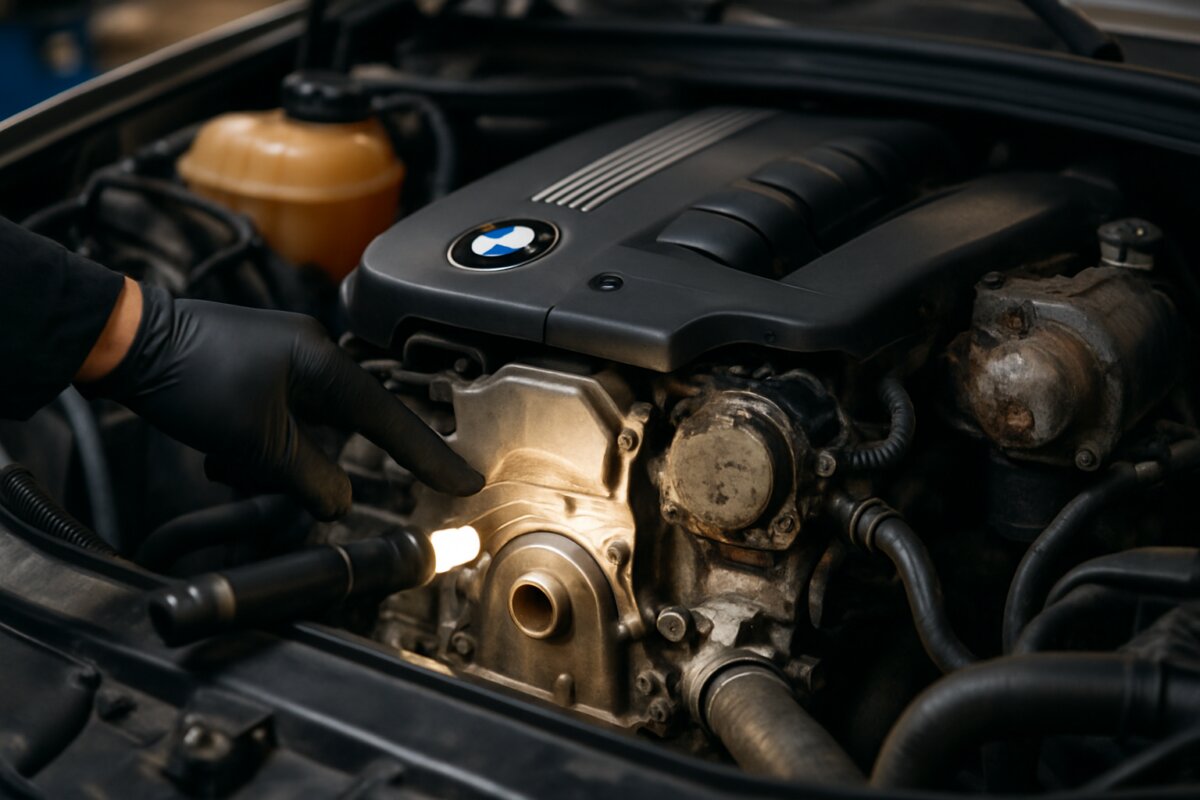
The BMW F20 fitted with the N43 engine has earned a reputation for being troublesome amongst UK motorists. This four-cylinder naturally aspirated petrol unit powers various 1 Series models from 2011 onwards, but the BMW F20 N43 engine reliability problems have left many owners facing unexpected repair bills. Our specialists at Autopartspro have seen countless cases where these engines develop serious faults, often requiring extensive work to rectify. Understanding these common failures helps you identify issues early and potentially save thousands in repair costs.
Timing chain failure and stretched components
The N43 engine’s most notorious weakness lies in its timing chain system. This isn’t a simple case of wear – it’s a fundamental design flaw that affects thousands of vehicles. The timing chain components stretch prematurely, creating a rattling noise that’s particularly noticeable during cold starts.
Our mechanics regularly see F20 N43 engines with less than 60,000 miles showing significant chain stretch. The problem stems from inadequate lubrication to the chain guides and tensioners. When the chain elongates, it disrupts valve timing, causing poor performance, rough idling, and potentially catastrophic engine damage if it jumps teeth or breaks completely.
The timing chain tensioner fails to maintain proper tension as the chain wears. BMW issued several technical service bulletins about this, but many vehicles outside warranty periods face bills exceeding £2,000 for complete timing chain replacement. The job requires removing the cylinder head and replacing guides, tensioners, sprockets, and the chain itself.
Professional tip: If you hear any rattling from the engine bay on startup, don’t delay inspection. A stretched timing chain can jump position and bend valves, turning a £2,000 repair into a £5,000 engine rebuild.
Vacuum pump oil leaks
The vacuum pump mounted at the rear of the N43 engine develops persistent oil leaks that plague these vehicles. This component provides vacuum assistance for the brake servo, but its seal design proves inadequate for long-term reliability. Oil seeps from the pump’s mounting point, often going unnoticed until it becomes severe.
What makes this particularly frustrating is how the leaked oil travels down the back of the engine block, coating everything below. The oil drips onto exhaust components, creating burning smells in the cabin. It also contaminates the engine mounts, causing them to deteriorate faster than normal.
Our technicians find that most F20 N43 engines show signs of vacuum pump seepage by 50,000 miles. The repair isn’t particularly expensive – typically £200-400 including labour – but the leak causes secondary damage if ignored. The brake servo itself can fail if oil contaminates the vacuum system, leading to reduced braking assistance.
Thermostat housing coolant leaks
The plastic thermostat housing on the N43 engine represents another weak point. BMW used a composite material that becomes brittle with heat cycling, eventually cracking and leaking coolant. This isn’t just inconvenient – it’s potentially engine-destroying if coolant levels drop too low.
The housing sits at the front of the engine, making leaks visible as pink or orange fluid beneath the vehicle after parking. Small cracks start as minor seepage but rapidly worsen. The thermostat assembly contains O-rings that also perish, compounding the problem.
We’ve seen cases where drivers ignored small leaks, only to have the housing fail catastrophically on the motorway. When this happens, the engine overheats within minutes, potentially warping the cylinder head or damaging the head gasket. Replacement parts cost around £100-150, with labour adding another £150-200. Always use genuine BMW or OEM-quality components – cheap aftermarket housings often fail just as quickly.
Injector seal failures causing misfires
The N43 engine suffers from deteriorating injector seals that allow combustion gases to escape past the fuel injectors. These seals harden over time due to constant heat exposure, losing their ability to seal properly. The result is rough running, misfires, and fault codes that point to ignition problems when the real culprit is fuel delivery.
Drivers typically notice lumpy idling and hesitation under acceleration. The engine management light illuminates, and diagnostic scans reveal multiple cylinder misfire codes. Many people waste money replacing spark plugs and ignition coils before discovering the injector seals are at fault.
Our experience shows that N43 engines between 60,000-80,000 miles commonly develop this issue. The fix involves removing the injectors and replacing all seals simultaneously – doing one at a time inevitably leads to repeat repairs. Budget £300-500 for the complete job. When replacing seals, it’s wise to clean carbon deposits from the injector tips and check spray patterns to ensure optimal fuel atomisation.
Carbon build-up on intake valves
Direct injection engines like the N43 face inevitable carbon accumulation on intake valves. Without fuel washing over the valves (as happens in port injection systems), oil vapour from the crankcase ventilation system bakes onto the valve surfaces. This creates crusty deposits that restrict airflow and disrupt the fuel-air mixture.
The symptoms develop gradually – reduced power output, poor throttle response, increased fuel consumption, and rough idling. Many owners don’t realise anything’s wrong until performance has degraded significantly. The engine struggles to breathe properly, and efficiency plummets as the ECU tries to compensate for restricted airflow.
Professional walnut blasting offers the most effective solution, removing carbon without damaging valve surfaces. This involves dismantling the intake manifold and blasting crushed walnut shells at the valves to strip away deposits. Expect to pay £400-600 for this service. Our specialists recommend having this done every 60,000 miles as preventative maintenance. Installing a quality air filter and using premium fuel helps slow carbon formation.
Professional tip: Adding a catch can to intercept oil vapour before it reaches the intake manifold dramatically reduces carbon build-up. This £150-200 modification can save you thousands in cleaning costs over the vehicle’s lifetime.
Warning signs your car has a problem
Recognising early symptoms prevents minor issues becoming catastrophic failures. Pay attention to these indicators:
- Rattling noise from the engine bay during cold starts – suggests timing chain stretch
- Oil puddles under the vehicle after parking overnight – indicates vacuum pump or seal failure
- Coolant warning light or sweet smell from the engine – points to thermostat housing leaks
- Rough idling and hesitation when accelerating – often caused by injector seal or carbon issues
- Rising engine temperature gauge readings – suggests cooling system problems
- Illuminated check engine light with misfire codes – could be multiple causes
- Reduced fuel economy without driving habit changes – indicates efficiency loss from carbon deposits
- Burning oil smell in the cabin – typically vacuum pump oil on exhaust components
How to fix the problems
| Problem | Solution | Approximate Cost | Urgency Level |
|---|---|---|---|
| Timing chain stretch | Complete timing chain kit replacement including guides and tensioners | £1,800-£2,500 | High – address immediately |
| Vacuum pump leak | Replace vacuum pump or seals depending on severity | £200-£400 | Medium – repair within weeks |
| Thermostat housing leak | Replace housing with upgraded part and new coolant | £250-£350 | High – risk of overheating |
| Injector seal failure | Replace all injector seals and clean injector tips | £300-£500 | Medium – affects performance |
| Carbon build-up | Walnut blasting of intake valves | £400-£600 | Low – service as needed |
Preventative maintenance schedule
| Mileage Interval | Recommended Service | Key Components |
|---|---|---|
| Every 10,000 miles | Oil and filter change using BMW LL-04 spec oil | Oil filter, engine oil |
| Every 30,000 miles | Inspect timing chain for stretch, check coolant system | Timing components, expansion tank |
| Every 60,000 miles | Walnut blast intake valves, replace thermostat housing preventatively | Intake valves, thermostat assembly |
| Every 80,000 miles | Replace timing chain regardless of symptoms | Complete timing system |
When to see a mechanic
Some situations demand immediate professional attention. If you hear any rattling from the timing chain area, stop driving and arrange recovery. A broken chain destroys the engine in seconds. Similarly, overheating requires immediate shutdown – continued running with high coolant temperatures warps the cylinder head.
For persistent misfires or rough running, seek diagnosis within a few days. Running the engine with faulty injector seals causes unburnt fuel to damage the catalytic converter, adding £800-1,200 to your repair bill. Oil leaks warrant attention within a fortnight – whilst not immediately catastrophic, they cause progressive damage.
Choose a specialist familiar with BMW N43 engine problems rather than a general garage. These engines require specific diagnostic knowledge and tools. Our technicians at Autopartspro recommend finding a workshop with BMW-specific diagnostic equipment and experience with timing chain replacements on these units.
Frequently Asked Questions
How long do N43 engines typically last before major problems occur?
Most N43 engines develop timing chain issues between 60,000-80,000 miles, though some fail earlier. With preventative maintenance including early chain replacement, they can exceed 150,000 miles reliably.
Is the BMW F20 N43 engine worth buying or should I avoid it?
Avoid purchasing unless the timing chain has been recently replaced with proof. Budget £2,000-3,000 for immediate repairs on higher mileage examples. Consider alternative engine variants like the N20 or B48 instead.
Can I replace the timing chain myself to save money?
This job requires specialist tools including camshaft locking devices and timing equipment. Incorrect installation causes catastrophic engine damage. Professional replacement costs less than fixing DIY mistakes, so use a qualified technician.
Does using premium fuel help prevent N43 engine problems?
Premium fuel reduces carbon deposits slightly but won’t prevent timing chain stretch or seal failures. It’s worth using for carbon reduction, but don’t expect it to solve mechanical design flaws.
What’s the difference between N43 and N46 engine reliability?
Both share similar timing chain weaknesses, but the N43 added direct injection which causes additional carbon build-up issues. The N46 is marginally more reliable overall, though both require preventative chain replacement.
Final recommendation
The BMW F20 N43 engine presents significant reliability challenges that require proactive management. Our specialists at Autopartspro strongly advise against purchasing these vehicles unless comprehensive service history proves timing chain replacement. If you already own one, prioritise timing chain inspection and replacement before 80,000 miles regardless of symptoms.
Budget annually for preventative maintenance beyond standard servicing. This includes checking for coolant leaks, monitoring oil consumption, and addressing vacuum pump seepage promptly. The N43 can provide satisfactory service with diligent maintenance, but neglect leads to expensive failures. Consider these running costs carefully – what seems like an affordable used BMW quickly becomes a money pit without proper care. For peace of mind, many owners choose to upgrade to newer F20 models with the more reliable B48 engine series. Whatever you decide, ensure you have a contingency fund for repairs, as these engines will eventually require significant investment to keep running properly.

 Loading...