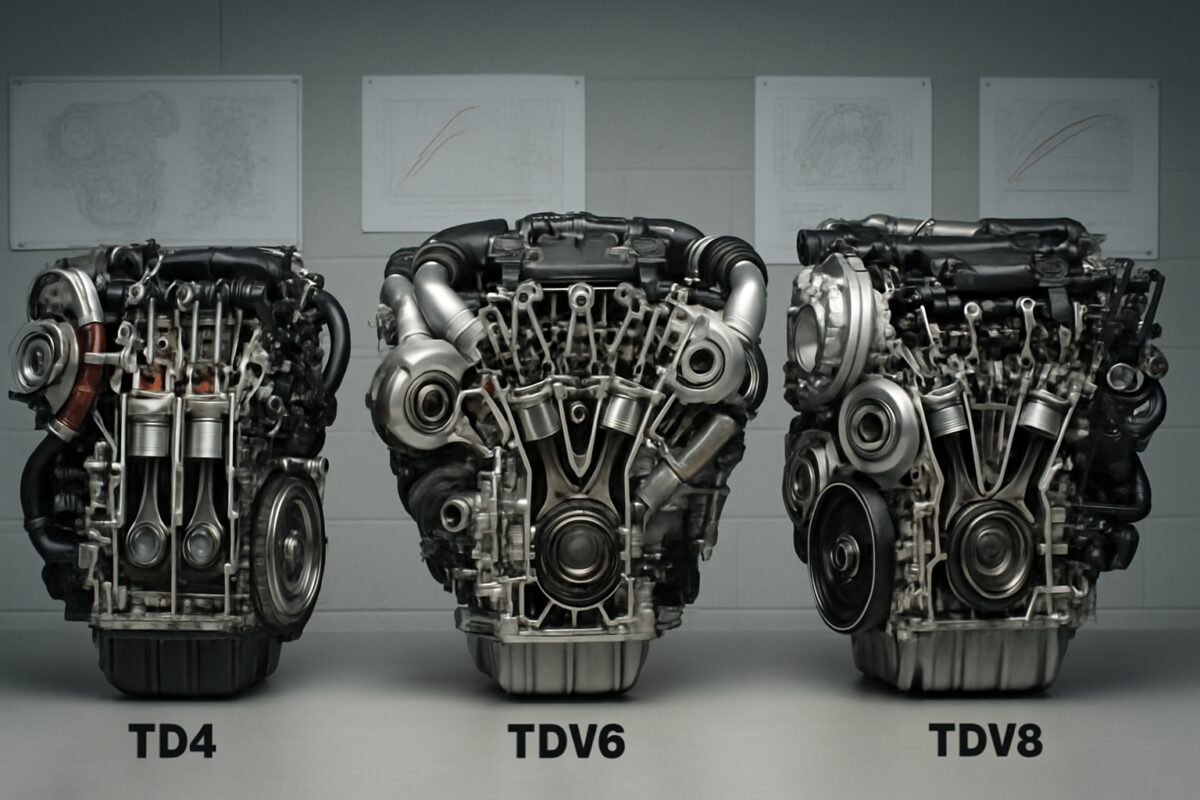
Land Rover’s diesel engine lineup represents decades of engineering excellence, powering some of the world’s most capable off-road vehicles. The TD4, TDV6, and TDV8 engines form the backbone of Land Rover’s diesel offerings, each delivering distinct performance characteristics tailored to different driving needs. These Common Rail diesel powerplants combine robust construction with advanced fuel injection technology, producing impressive torque figures that make them ideal for towing and challenging terrain.
Comparison table of all engines
| Engine | Power output | Torque | Fuel consumption | Reliability |
|---|---|---|---|---|
| TD4 2.0L | 122-150 bhp | 300-360 Nm | 35-40 mpg | Good |
| TD4 2.2L | 150-190 bhp | 400-420 Nm | 32-38 mpg | Very Good |
| TDV6 2.7L | 190-200 bhp | 440-472 Nm | 28-32 mpg | Excellent |
| TDV6 3.0L | 211-306 bhp | 520-700 Nm | 30-35 mpg | Excellent |
| TDV8 3.6L | 272 bhp | 640 Nm | 25-28 mpg | Good |
TD4 engine overview
The TD4 represents Land Rover’s four-cylinder diesel offering, available in both 2.0-litre and 2.2-litre configurations. These inline-four engines feature Common Rail direct injection with variable geometry turbocharging. The powerplants run on standard diesel fuel with high-pressure fuel injection systems delivering precise fuel metering for optimal combustion efficiency.
Built with cast-iron blocks and aluminium heads, the TD4 engines incorporate intercooled turbocharging to maximise power output whilst maintaining reasonable fuel consumption. The fuel filter system requires regular maintenance to ensure optimal performance of the high-pressure injection components.
Pros
- Excellent fuel economy for a Land Rover
- Strong low-end torque delivery
- Relatively simple maintenance requirements
- Good parts availability across the UK
- Proven reliability in various applications
Cons
- Limited power compared to larger engines
- Can feel strained under heavy loads
- Turbocharger lag at low revs
- Higher noise levels than V6 alternatives
- Prone to EGR valve carbon build-up
TDV6 engine overview
The TDV6 engine family encompasses both 2.7-litre and 3.0-litre V6 diesel engines, representing Land Rover’s premium diesel offering. These sophisticated powerplants feature sequential twin turbocharging on later variants, delivering exceptional performance across the rev range. The V6 configuration provides inherently smoother operation compared to four-cylinder alternatives.
Constructed with advanced materials including lightweight aluminium components, the TDV6 engines incorporate sophisticated Common Rail injection systems operating at pressures exceeding 2,000 bar. Regular oil filter changes are crucial for maintaining the complex lubrication requirements of these high-performance engines.
Pros
- Smooth V6 operation with minimal vibration
- Impressive power and torque delivery
- Sequential turbocharging eliminates lag
- Refined driving experience
- Excellent towing capabilities
Cons
- Higher maintenance costs than TD4
- Complex turbocharger systems
- Increased fuel consumption
- Expensive replacement parts
- Potential crankshaft bearing issues
TDV8 engine overview
The TDV8 3.6-litre represents Land Rover’s flagship diesel engine, delivering uncompromising performance for the most demanding applications. This V8 diesel features twin turbochargers with variable geometry technology, producing massive torque figures ideal for heavy towing and extreme off-road conditions. The engine runs on standard diesel fuel with ultra-high-pressure Common Rail injection.
Built with a sophisticated aluminium block and heads, the TDV8 incorporates advanced engine management systems to optimise performance and emissions. The complexity of this engine demands meticulous maintenance, particularly regarding the air filter system which must handle significant airflow volumes.
Our AutoPartsPro mechanics recommend TDV8 owners invest in premium quality filters and fluids, as this engine’s performance depends heavily on maintaining optimal operating conditions throughout its complex systems.
Pros
- Exceptional power and torque output
- Smooth V8 refinement
- Outstanding towing capacity
- Impressive off-road performance
- Prestige factor for Range Rover models
Cons
- High fuel consumption
- Expensive maintenance requirements
- Complex turbocharger systems
- Limited availability in newer models
- Potential timing chain issues
Maintenance cost
| Engine | Recommended Interval | Estimated Cost | Cost per 10,000 miles |
|---|---|---|---|
| TD4 | 12,000 miles | £180-£250 | £150-£210 |
| TDV6 | 12,000 miles | £280-£400 | £230-£330 |
| TDV8 | 10,000 miles | £450-£650 | £450-£650 |
Land Rover’s diesel engines require specific maintenance schedules to ensure optimal performance and longevity. The TD4 engines offer the most economical servicing costs, whilst the TDV8 demands significant investment in maintenance. Regular engine oil changes using manufacturer-approved specifications are essential for all variants.
AutoPartsPro specialists strongly advise against extending service intervals on these engines, as the high-pressure fuel systems and turbocharging components are particularly sensitive to contaminated fluids.
Engine sound and character
Each Land Rover diesel engine possesses distinct acoustic characteristics that reflect their engineering philosophy. The TD4 produces a characteristic diesel clatter at idle, becoming more refined under load but never achieving the smoothness of larger engines. The four-cylinder configuration creates inherent vibration that can be felt throughout the vehicle structure.
TDV6 engines deliver significantly more refined operation, with the V6 configuration naturally balanced to reduce vibration. These engines produce a deeper, more sophisticated exhaust note whilst maintaining the unmistakable diesel character that enthusiasts appreciate. Under acceleration, the sequential turbocharging creates a distinctive whoosh as boost pressure builds.
The TDV8 represents the pinnacle of diesel refinement, with its V8 architecture producing incredibly smooth operation across all rev ranges. The engine generates a deep, purposeful rumble that matches its impressive performance capabilities. However, the complexity of twin turbochargers creates additional acoustic layers during operation.
Who each engine is best for
| Engine | Daily commuters | Performance enthusiasts | Long-distance drivers | Budget-conscious owners |
|---|---|---|---|---|
| TD4 | Excellent | Fair | Good | Excellent |
| TDV6 | Good | Excellent | Excellent | Fair |
| TDV8 | Fair | Excellent | Good | Poor |
The TD4 suits drivers prioritising economy and practicality, particularly those covering moderate annual mileages in mixed driving conditions. For more detailed maintenance guidance, our oil filter replacement guide provides comprehensive instructions for these engines.
TDV6 engines appeal to drivers wanting balanced performance and refinement, ideal for those who appreciate smooth operation without sacrificing capability. The 3.0-litre variant particularly suits performance-oriented drivers who demand responsive acceleration combined with long-distance comfort.
TDV8 ownership suits those prioritising maximum performance and prestige, particularly drivers who regularly tow heavy loads or demand the ultimate in off-road capability. However, the significant running costs make this engine suitable primarily for high-mileage users or enthusiasts who value performance above economy.
Frequently Asked Questions (FAQ)
Which Land Rover diesel engine is most reliable?
The TDV6 engines generally offer the best balance of reliability and performance, with the 2.7-litre variant being particularly dependable.
How often should I service my Land Rover diesel engine?
Follow manufacturer intervals: 12,000 miles for TD4/TDV6 engines, 10,000 miles for TDV8, using approved oils and filters throughout.
Can I use biodiesel in my Land Rover diesel engine?
Most Land Rover diesels accept up to B20 biodiesel blend, but check your handbook for specific recommendations and warranty implications.
What causes black smoke from Land Rover diesel engines?
Common causes include clogged air filters, faulty fuel injectors, turbocharger issues, or EGR valve problems requiring professional diagnosis.
Are Land Rover diesel engines suitable for short journeys?
Modern diesels prefer longer journeys for DPF regeneration, though newer engines handle short trips better than older variants.

 Loading...