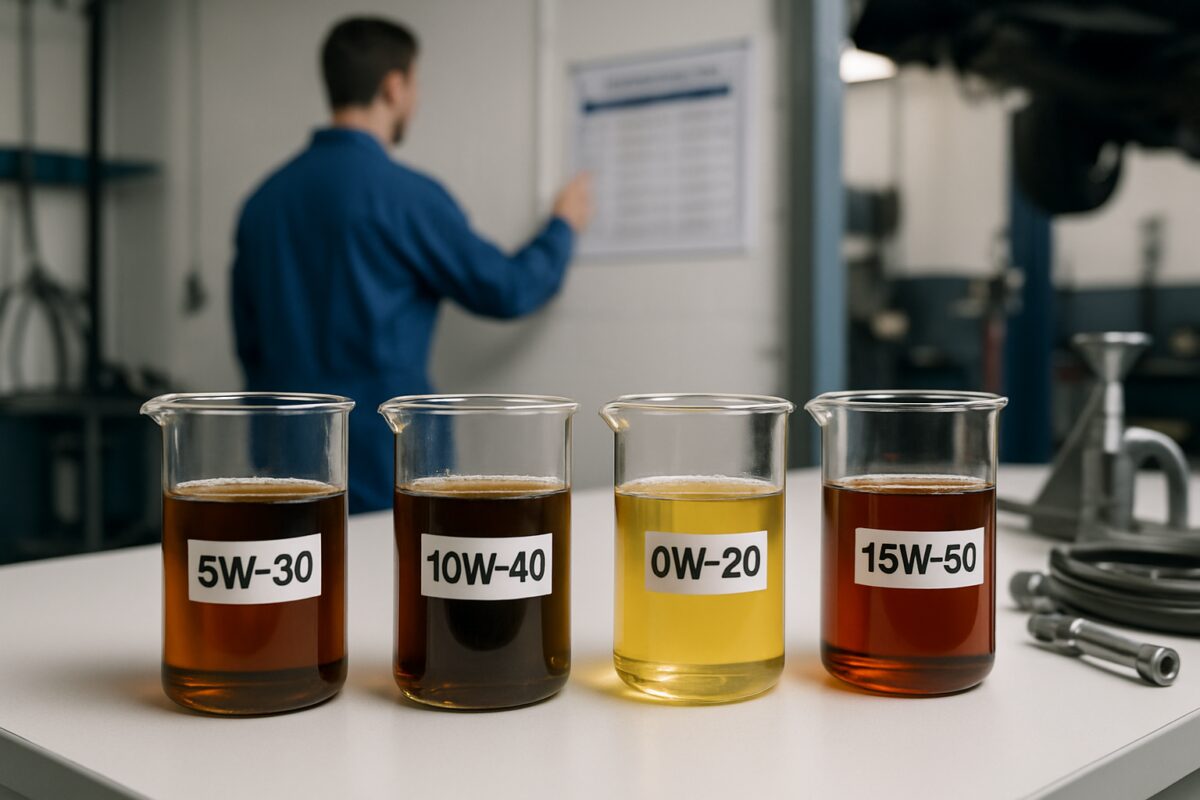
Engine oil types and grades determine your car’s lubrication performance through standardised viscosity ratings like 5W-30 and 10W-40. The SAE (Society of Automotive Engineers) classification system uses numbers before and after the ‘W’ to indicate oil flow characteristics at cold and operating temperatures respectively. Lower first numbers (0W, 5W) provide better cold-start protection, whilst higher second numbers (30, 40, 50) offer thicker protection at operating temperature. Modern engines typically require multigrade oils that balance cold-weather performance with high-temperature stability.
Understanding SAE viscosity ratings
The SAE grading system provides a standardised method for identifying oil performance characteristics. Each oil grade contains two numbers separated by a ‘W’ (winter) designation that indicates the oil’s behaviour under different temperature conditions.
Winter viscosity grades (0W, 5W, 10W, 15W, 20W, 25W) measure oil flow at cold temperatures. Lower numbers indicate better cold-start performance, allowing oil to circulate faster when you start your engine on frosty mornings. The summer grade (20, 30, 40, 50, 60) represents the oil’s thickness at 100°C operating temperature.
According to our Autopartspro mechanics, multigrade oils like 5W-30 provide optimal year-round protection because they maintain fluidity in winter whilst offering adequate viscosity when fully warmed. This dual performance eliminates the need for seasonal oil changes that were common with single-grade lubricants.
Viscosity index and temperature effects
Temperature dramatically affects oil thickness, with conventional oils becoming thick as treacle in cold weather and thin as water when hot. Quality engine oil formulations use viscosity index improvers to minimise these variations.
The viscosity index measures how much an oil’s thickness changes with temperature. Higher index values indicate more stable viscosity across temperature ranges, which explains why synthetic oils often outperform conventional alternatives in extreme conditions.
Types of engine oil explained
Modern automotive lubricants fall into four main categories, each offering distinct advantages for different engine types and driving conditions. Understanding these differences helps you select the optimal product for your vehicle’s requirements.
Conventional mineral oil
Conventional oils derive from refined crude oil with basic additive packages. These budget-friendly options suit older engines with higher mileage where advanced synthetic properties aren’t necessary. They require more frequent changes (every 3,000-5,000 miles) but cost significantly less than premium alternatives.
Mineral oils work adequately for normal driving conditions but break down faster under severe service conditions like stop-start city driving, towing, or extreme temperatures.
Semi-synthetic blend oils
Semi-synthetic oils combine conventional base stocks with synthetic components, typically 20-30% synthetic content. This blend offers improved performance over straight mineral oil whilst maintaining reasonable pricing.
These formulations provide better cold-start protection and thermal stability than conventional oils. They’re ideal for newer engines under moderate service conditions, offering change intervals of 5,000-7,500 miles depending on manufacturer recommendations.
Full synthetic motor oil
Full synthetic oils utilise laboratory-engineered base stocks designed for maximum performance. These premium lubricants excel in extreme conditions, offering superior cold-start protection, high-temperature stability, and extended drain intervals up to 10,000 miles.
Our specialists recommend synthetic oils for turbocharged engines, high-performance vehicles, and severe service conditions. Whilst initially more expensive, longer change intervals and superior engine protection often justify the additional cost.
High-mileage formulations
High-mileage oils contain seal conditioners and leak-stop additives designed for vehicles exceeding 75,000 miles. These specialised formulations help reduce oil burn-off, minimise leaks, and restore engine seals that may have hardened over time.
Oil thickness comparison charts
Understanding relative oil thickness helps you select appropriate grades for your engine’s requirements. The following tables provide viscosity comparisons at different temperatures.
| Grade | Cold Viscosity (cP at -18°C) | Operating Viscosity (cSt at 100°C) | Suitable Applications |
|---|---|---|---|
| 0W-20 | 6,200 | 6.9-9.3 | Modern engines, fuel economy priority |
| 5W-30 | 6,600 | 9.3-12.5 | Most common grade, balanced performance |
| 10W-40 | 7,000 | 12.5-16.3 | Higher mileage engines, warmer climates |
| 15W-50 | 7,000 | 16.3-21.9 | Classic cars, air-cooled engines |
| Temperature Range | 0W Oils | 5W Oils | 10W Oils | 15W Oils |
|---|---|---|---|---|
| -30°C to -20°C | Excellent | Good | Adequate | Poor |
| -20°C to 0°C | Excellent | Excellent | Good | Adequate |
| 0°C to 20°C | Good | Excellent | Excellent | Good |
| 20°C+ | Adequate | Good | Excellent | Excellent |
Common oil grades and their applications
Different engines require specific oil grades based on design tolerances, operating conditions, and manufacturer specifications. Selecting incorrect viscosity can affect performance, fuel economy, and engine longevity.
5W-30: the universal choice
5W-30 represents the most widely specified grade for modern petrol engines. This viscosity provides excellent cold-start protection whilst maintaining adequate thickness at operating temperature. Most European and Japanese manufacturers specify this grade for standard service conditions.
The balanced viscosity suits year-round UK climate conditions, from Scottish winters to southern English summers. Our mechanics find this grade works excellently in engines from small city cars to family SUVs.
0W-20: fuel economy focus
Newer engines with tighter tolerances often specify 0W-20 for maximum fuel efficiency. This thinner oil reduces internal friction, improving mpg figures by 1-2% compared to thicker alternatives.
Modern engines with advanced metallurgy and precise manufacturing can safely use these thinner oils. However, older engines may experience increased oil consumption or inadequate protection with such low viscosity grades.
10W-40: higher mileage option
10W-40 works well for engines with 60,000+ miles where slightly thicker oil helps compensate for increased bearing clearances. The higher operating viscosity maintains oil pressure in worn engines whilst providing adequate cold-start performance.
This grade suits older European engines, particularly those originally designed for higher viscosity oils. It’s also appropriate for vehicles operating in consistently warm climates where cold-start performance is less critical.
Diesel engine considerations
Diesel engines typically require oils with enhanced additive packages to handle combustion byproducts and higher operating pressures. Common grades include 5W-30, 5W-40, and 10W-40, often with specific diesel certifications like ACEA C3 or API CK-4.
Modern diesel particulate oil filter systems require low-SAPS (Sulphated Ash, Phosphorus, Sulphur) oils to prevent catalyst contamination. Always verify your diesel oil meets current specifications.
How to choose the right oil grade
Selecting appropriate engine oil involves considering multiple factors beyond basic viscosity requirements. Your owner’s manual provides the starting point, but driving conditions and engine condition may influence the optimal choice.
Manufacturer specifications first
Always start with your vehicle manufacturer’s recommendations found in the owner’s manual or on the oil filler cap. These specifications consider engine design, operating conditions, and emissions requirements specific to your model.
European manufacturers often specify multiple approved grades depending on climate and service conditions. For example, BMW might approve both 0W-30 and 5W-30 for the same engine, with 0W-30 preferred for colder climates.
Climate considerations
UK drivers should consider regional temperature variations when selecting oil grades. Scottish Highlands require better cold-start performance than Cornwall’s milder climate.
For extreme cold conditions, consider these guidelines:
- Temperatures below -20°C: 0W grades provide best cold-start protection
- Typical UK winter conditions: 5W grades offer adequate performance
- Mild coastal areas: 10W grades may suffice year-round
- Consistently warm regions: Higher summer grades (40, 50) prevent thermal breakdown
Driving conditions assessment
Severe service conditions may require different oil grades than normal driving. Consider upgrading to synthetic oils or higher viscosity grades if you experience:
- Frequent short trips (under 10 miles)
- Stop-start city driving
- Regular towing or heavy loads
- Dusty or dirty operating environments
- Extended high-speed motorway driving
These conditions stress oil more than normal driving, potentially requiring more frequent changes or premium formulations for adequate protection.
Oil additives and performance enhancers
Modern engine oils contain sophisticated additive packages that comprise 15-25% of the finished product. These chemicals provide specific performance characteristics beyond basic lubrication.
Detergent and dispersant systems
Detergent additives clean engine surfaces whilst dispersants keep contaminants suspended in oil until the next change. These systems prevent sludge formation and maintain engine cleanliness over extended drain intervals.
Quality oils balance these additives to clean engines without over-aggressive action that might dislodge beneficial deposits in sealing areas.
Anti-wear protection
Zinc dialkyldithiophosphate (ZDDP) and other anti-wear additives form protective films on metal surfaces during boundary lubrication conditions. These compounds activate under pressure to prevent metal-to-metal contact.
Modern oils contain reduced ZDDP levels compared to older formulations to protect catalytic converters, but maintain adequate anti-wear protection through alternative additive chemistry.
Pro tip: Never mix different oil brands or grades during top-ups, as additive incompatibility can cause performance issues. If you must add different oil, plan to change it completely at the next service interval.
Oil change intervals and grade selection
Oil grade selection directly affects appropriate change intervals. Thinner oils generally require more frequent changes due to increased thermal stress, whilst premium synthetics extend service life significantly.
Our mechanics have observed that following these interval guidelines based on oil type:
- Conventional mineral oils: 3,000-5,000 miles or 6 months
- Semi-synthetic blends: 5,000-7,500 miles or 9 months
- Full synthetic oils: 7,500-10,000 miles or 12 months
- High-mileage formulations: 3,000-6,000 miles depending on condition
These intervals assume normal service conditions. Severe service may require 50% shorter intervals regardless of oil type.
Monitoring oil condition
Regular oil condition checks help determine appropriate change intervals for your specific driving conditions. Look for these indicators of oil degradation:
- Colour changes from amber to black
- Increased viscosity or ‘stickiness’
- Metal particles or contamination
- Unusual odours indicating fuel dilution or overheating
- Foaming when checking level
Modern oil life monitoring systems consider driving conditions, engine temperature cycles, and mileage to calculate optimal change intervals automatically.
Understanding engine oil viscosity and grades empowers you to make informed decisions about your vehicle’s most critical fluid. Whether you’re topping up between services or planning a complete oil change, selecting the appropriate grade ensures optimal engine protection and performance. Consider your specific driving conditions, climate, and vehicle requirements when choosing between the various formulations available. Regular oil analysis can help fine-tune your selection for maximum engine longevity and performance.
How do I know what oil grade my car needs?
Check your owner’s manual, oil filler cap, or dipstick for manufacturer specifications. These sources provide approved viscosity grades for your specific engine and climate conditions.
Can I use 10W-40 instead of 5W-30 oil?
Only if approved by your manufacturer. Different viscosities affect cold-start protection and fuel economy. Modern engines designed for 5W-30 may not perform optimally with thicker alternatives.
What’s the difference between synthetic and conventional oil grades?
Both types use identical SAE viscosity ratings, but synthetic oils maintain their grade specifications longer and perform better in extreme temperatures than conventional alternatives.
How often should I change oil in severe driving conditions?
Severe service typically requires 50% shorter intervals than normal conditions. City driving, frequent short trips, or extreme temperatures all qualify as severe service conditions.
Does oil grade affect my vehicle’s warranty coverage?
Using non-approved oil grades can void warranty coverage. Always use manufacturer-specified viscosity grades and API/ACEA certifications to maintain warranty protection and optimal engine performance.

 Loading...