To open the Toyota Aygo bonnet, locate the bonnet release lever inside the car on the left side of the driver’s footwell, pull it to release the primary latch, then use the secondary safety catch under the bonnet centre to fully open the hood. The process requires no tools and takes less than 30 seconds once you know where to find the bonnet struts and release mechanism.
Tools & parts required
Opening your Toyota Aygo bonnet requires no special tools, making it one of the simplest maintenance tasks you can perform. However, having the right knowledge of component locations saves time and prevents frustration.
Parts needed:
- No replacement parts required for normal operation
- Bonnet struts (if existing ones are worn or damaged)
- Bonnet release cable (if mechanism fails)
Tools required:
- No tools needed for standard operation
- Torch or phone light (for better visibility in poor lighting)
- Cloth or gloves (optional, for cleaner handling)
Always ensure you’re parked on level ground with the handbrake engaged before attempting to open the bonnet. This prevents any unexpected vehicle movement during the process.
Safety precautions
Before opening your Toyota Aygo bonnet, take these essential safety measures to prevent injury and component damage.
Work in a well-ventilated area, especially if you plan to check fluids or perform maintenance tasks. If you’ve been driving, allow the engine to cool for at least 10 minutes before opening the bonnet, as engine components can reach extremely high temperatures.
Disconnect the battery negative terminal if you’re planning electrical work. Wear safety gloves when handling engine components, particularly if checking fluid levels or inspecting belts and hoses.
Keep a fire extinguisher nearby when working on engine components, and never smoke or use open flames near the engine bay. Ensure the vehicle is parked on stable, level ground with the parking brake firmly engaged.
Step-by-step instructions
Step 1: Locate the bonnet release lever
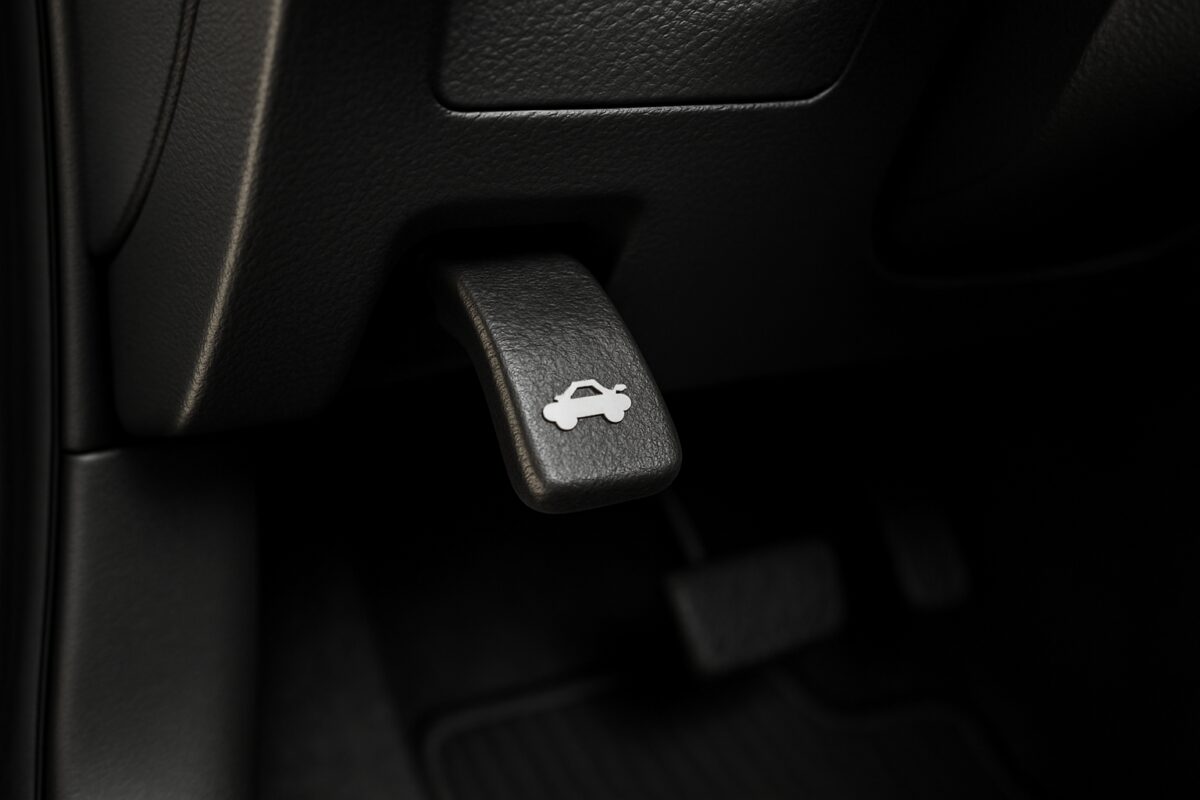
Position yourself in the driver’s seat and look down towards your left foot area. The Toyota Aygo bonnet release lever is located on the left side of the driver’s footwell, mounted on the lower dashboard panel near where your left knee would rest.
The lever features a distinctive bonnet symbol and is typically black plastic with a textured grip surface. In some Aygo models, you might find it slightly recessed or positioned behind a small trim panel.
Step 2: Pull the primary release lever
Firmly grasp the bonnet release lever and pull it towards you with steady pressure. You should hear a distinct ‘click’ sound indicating the primary latch has released. This sound confirms the main bonnet catch has disengaged.
If the lever feels stiff or doesn’t produce the characteristic click, avoid forcing it. Instead, try applying gentle pressure whilst moving the lever slightly up and down to free any stickiness in the mechanism.
Step 3: Exit the vehicle and locate the safety catch
Exit the vehicle and move to the front of your Toyota Aygo. You’ll notice the bonnet has popped up slightly, typically by about 2-3 centimetres. This partial opening indicates the primary latch has released successfully.
Look for the secondary safety catch, which is located centrally under the bonnet lip, roughly in the middle of the grille area. This safety mechanism prevents the bonnet from opening fully until manually operated.
Step 4: Release the safety catch
Slide your fingers under the slightly raised bonnet and locate the safety catch mechanism. In the Toyota Aygo, this is typically a lever or button that you must push upwards or to one side whilst simultaneously lifting the bonnet.
The safety catch mechanism may be spring-loaded, so maintain pressure on it whilst lifting the bonnet with your other hand. Some models feature a pull-tab design that requires pulling downwards or towards you.
Step 5: Open the bonnet fully
With the safety catch released, lift the bonnet steadily upwards. The Toyota Aygo features gas-filled bonnet struts that should support the bonnet’s weight automatically once it reaches approximately 45 degrees.
Allow the struts to guide the bonnet to its fully open position. Never force the bonnet beyond its natural stopping point, as this can damage the hinges or struts. The bonnet should remain securely open without additional support.
Step 6: Secure the bonnet (if required)
Most Toyota Aygo models manufactured after 2005 feature gas struts that hold the bonnet open automatically. However, older models or those with worn struts might require the bonnet stay rod.
If your Aygo has a bonnet stay rod, locate it attached to the left or right side of the engine bay. Lift the rod from its storage clip and position it in the designated slot on the bonnet’s underside.
Common mistakes to avoid
Many Toyota Aygo owners encounter preventable issues when opening their bonnet. Understanding these common errors helps ensure smooth operation and prevents component damage.
Forcing a stiff release lever: Never apply excessive force to a stuck bonnet release. This often indicates a stretched or corroded cable that requires professional attention. Forcing the mechanism can snap the release cable, necessitating more expensive repairs.
Ignoring the safety catch: Attempting to force the bonnet open without properly releasing the secondary safety catch is the most frequent mistake. This safety feature protects against accidental opening and must be operated correctly.
Opening a hot bonnet: Always allow adequate cooling time after driving. Engine components can cause severe burns, and some materials may be under pressure when hot.
Remember that bonnet mechanisms can accumulate dirt and moisture over time. Regular cleaning of the release mechanism and safety catch ensures reliable operation and prevents costly component replacement.
Slamming the bonnet closed: When closing, never drop or slam the bonnet. Lower it to about 20cm above the closed position, then allow it to fall naturally onto the latches. This prevents damage to the latch mechanism and maintains proper alignment.
When should you replace components?
Several symptoms indicate when Toyota Aygo bonnet components require attention or replacement. Recognising these early signs prevents complete failure and ensures continued safe operation.
Bonnet release cable issues: If the interior release lever feels loose, requires excessive force, or fails to produce the characteristic click sound, the cable likely needs replacement. A stretched or frayed cable can snap without warning, leaving you unable to access the engine bay.
Worn bonnet struts: Gas struts typically last 5-8 years depending on usage and environmental conditions. Signs of wear include the bonnet not staying fully open, slow opening motion, or visible fluid leakage from the strut seals.
Safety catch problems: A safety catch that’s difficult to operate, doesn’t engage properly, or shows visible corrosion should be inspected immediately. This critical safety component prevents the bonnet from opening whilst driving.
Environmental factors like salt exposure, extreme temperatures, and high humidity can accelerate component wear. Coastal driving conditions particularly affect metal components, making regular inspection essential.
Related maintenance you can do at the same time
Once you’ve successfully opened your Toyota Aygo bonnet, several maintenance tasks become accessible. Combining these procedures maximises your time and ensures comprehensive vehicle care.
Engine bay inspection: Check all visible hoses for cracks, bulging, or leakage. Inspect belts for proper tension and wear patterns. Look for any obvious fluid leaks or unusual deposits that might indicate developing problems.
Fluid level checks: Verify engine oil, coolant, brake fluid, and windscreen washer levels. The Toyota Aygo features clearly marked dipsticks and reservoirs, making these checks straightforward for most drivers.
Air filter inspection: The air filter housing is easily accessible once the bonnet is open. A clean air filter improves engine performance and fuel economy, making this an excellent additional maintenance task.
Battery maintenance: Check battery terminals for corrosion and ensure connections are tight. Clean any white powdery deposits using a solution of bicarbonate of soda and water, followed by petroleum jelly to prevent future corrosion.
Consider replacing the cabin filter during the same maintenance session, as improved airflow benefits both engine and passenger compartment air quality.
Frequently asked questions
Where exactly is the Toyota Aygo bonnet release located?
The bonnet release lever is positioned in the driver’s footwell on the left side, mounted on the lower dashboard panel. Look for a black plastic lever with a bonnet symbol near your left knee area.
What should I do if the bonnet release lever doesn’t work?
First, ensure you’re pulling the correct lever with adequate force. If it still doesn’t respond, the release cable may be stretched or broken and requires professional repair or replacement.
How do I know if my Toyota Aygo bonnet struts need replacing?
Worn struts show symptoms like slow bonnet opening, inability to stay fully open, or visible fluid leakage. Struts typically need replacement every 5-8 years depending on usage conditions.
Can I open the bonnet if the interior release fails?
Emergency bonnet opening requires accessing the release mechanism from underneath the vehicle or through the grille, which typically needs professional assistance due to access limitations in the Toyota Aygo.
Is it safe to drive with a partially open bonnet?
Never drive with an improperly closed bonnet. This creates serious safety hazards including blocked vision and potential bonnet detachment. Always ensure the bonnet clicks securely into both primary and safety latches.
Understanding your Toyota Aygo bonnet mechanism ensures reliable access for routine maintenance and emergency situations. Regular operation of the release system keeps components functioning smoothly, whilst proper technique prevents damage to these essential car maintenance access points. With practice, opening your Aygo bonnet becomes a simple 30-second procedure that enables you to perform crucial vehicle inspections and maintenance tasks safely and efficiently.

 Loading...