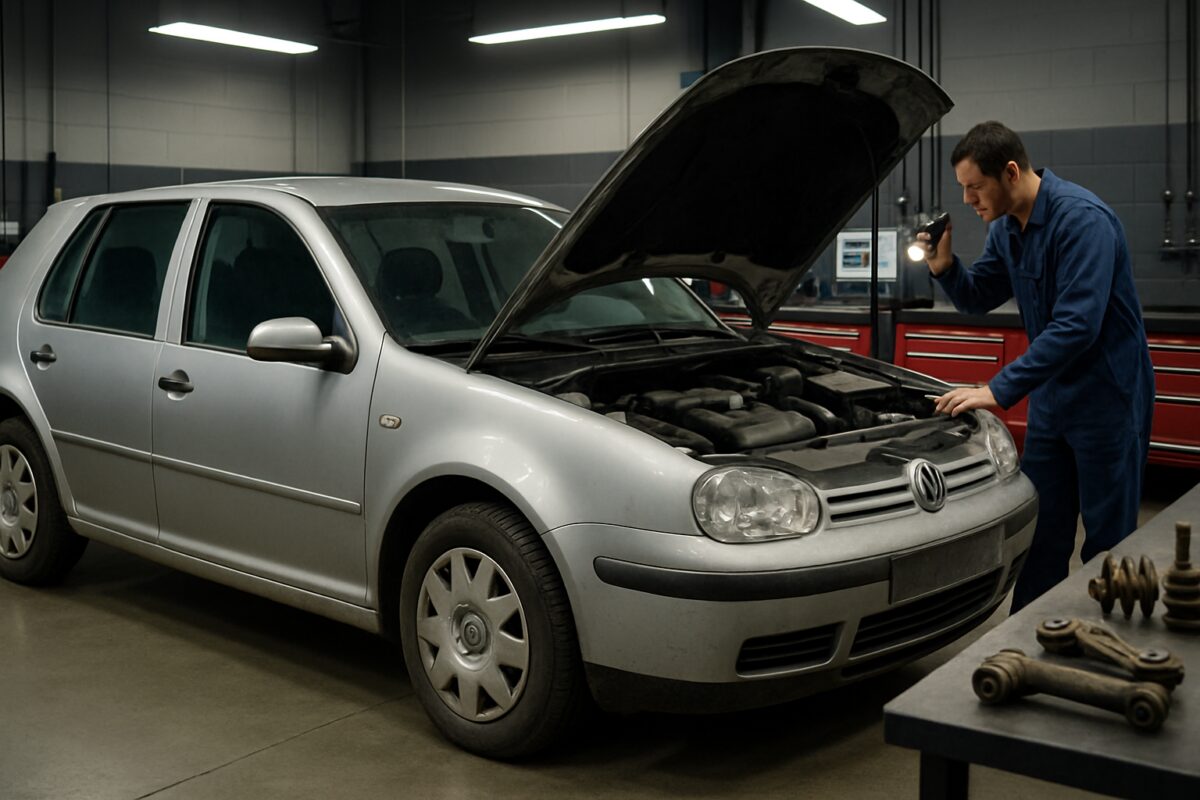
The Volkswagen Golf 4, produced from 1997 to 2003, remains a popular choice amongst UK motorists. However, this generation faces several recurring issues that owners should be aware of. Understanding these common problems with the VW Golf 4 helps you maintain your vehicle properly and avoid costly repairs down the line.
Gearbox transmission failures
The Golf 4’s automatic gearbox represents one of the most significant problems plaguing this model. The 01M transmission, particularly in petrol variants, suffers from premature wear of internal components. This issue typically manifests between 80,000 to 120,000 miles.
Manual gearboxes aren’t immune either. The 02J five-speed unit develops synchromesh problems, especially in second and third gears. You’ll notice crunching sounds during gear changes and difficulty engaging specific gears. Clutch kit replacement often becomes necessary due to increased stress on the clutch system.
According to our mechanics at Autopartspro, transmission problems account for roughly 30% of Golf 4 repair enquiries. The repair costs can range from £800 for manual gearbox synchromesh repair to £2,500 for automatic transmission replacement.
Engine cooling system malfunctions
The Golf 4’s cooling system presents multiple failure points that can lead to expensive engine damage. The plastic expansion tank frequently develops cracks, particularly around the mounting points and seams. These hairline fractures allow coolant to leak slowly, often going unnoticed until the engine overheats.
Water pump failures are equally common, especially on higher-mileage vehicles. The impeller blades can corrode or break, reducing coolant circulation efficiency. Water pump replacement should include the timing belt on interference engines to prevent catastrophic damage.
Thermostat housing made from plastic also proves problematic. The housing can warp or crack under thermal stress, causing coolant leaks and erratic temperature control. Our specialists recommend replacing the entire cooling system components as a preventive measure around 100,000 miles.
Professional tip: Always use VW-approved G12 coolant when topping up your Golf 4’s cooling system. Mixing different coolant types can cause chemical reactions leading to system blockages.
Electrical system gremlins
The Golf 4’s electrical architecture suffers from various intermittent faults that can drive owners to distraction. The central convenience module frequently develops internal failures, affecting central locking, window operation, and alarm systems. These modules cannot be repaired and require complete replacement.
Window regulator mechanisms fail regularly, particularly on the driver’s side due to frequent use. The plastic components within the mechanism become brittle over time, causing the window to drop suddenly or refuse to operate. This problem affects both front and rear windows.
Dashboard instrument clusters display various warning lights intermittently, often indicating false problems. The cluster’s internal circuits can develop dry solder joints, causing erratic readings and warning light illumination without underlying mechanical issues.
Suspension component wear
The Golf 4’s front suspension components deteriorate predictably, with specific patterns emerging across the model range. Front shock absorber top mounts wear prematurely, creating knocking noises over bumps and affecting steering precision.
Anti-roll bar drop links suffer from corrosion and wear, particularly in areas with harsh winter road salt treatment. These components connect the anti-roll bar to the suspension strut and when they fail, handling becomes compromised and noise levels increase significantly.
Rear beam bushes on non-independent rear suspension models deteriorate around 80,000 miles. This wear affects wheel alignment and tyre wear patterns. The entire rear beam often requires removal for bush replacement, making this repair labour-intensive.
Warning signs your car has a problem
Recognising early warning signs prevents minor issues becoming major failures. Pay attention to these key indicators:
- Grinding or whining noises from the gearbox during operation
- Coolant level dropping without visible external leaks
- Temperature gauge reading higher than normal or fluctuating erratically
- Central locking operating intermittently or failing completely
- Windows moving slowly or dropping unexpectedly
- Dashboard warning lights illuminating without apparent cause
- Knocking noises from suspension over bumps or during turning
- Uneven tyre wear patterns indicating suspension problems
- Steering wheel vibration or pulling to one side
- Increased road noise from worn suspension bushes
- Engine overheating during normal driving conditions
- White smoke from exhaust indicating coolant burning
- Gear changes becoming notchy or difficult
- Electrical accessories operating sporadically
- Unusual smells from engine bay or cabin
How to fix the problems
| Problem | Solution | Typical Cost | Labour Time |
|---|---|---|---|
| Automatic Gearbox Failure | Complete transmission replacement | £1,800-£2,500 | 8-12 hours |
| Manual Synchromesh Issues | Gearbox rebuild with new synchros | £800-£1,200 | 6-8 hours |
| Water Pump Failure | Replace pump, belt, and coolant | £300-£500 | 4-6 hours |
| Expansion Tank Cracking | New tank and coolant system flush | £120-£200 | 2-3 hours |
| Window Regulator Failure | Complete mechanism replacement | £150-£250 | 2-3 hours |
| Component | Prevention Method | Inspection Interval | Replacement Schedule |
|---|---|---|---|
| Cooling System | Regular coolant changes | Every 6 months | 4-5 years |
| Transmission Oil | Fluid changes per schedule | Annual inspection | 60,000 miles |
| Suspension Bushes | Avoid potholes and harsh impacts | MOT inspection | 80,000 miles |
| Electrical Connections | Keep connections clean and dry | During servicing | As required |
| Window Mechanisms | Regular lubrication of tracks | Every 12 months | 100,000 miles |
Insider knowledge: Many Golf 4 problems stem from deferred maintenance. Following the manufacturer’s service schedule religiously prevents 70% of common failures we see in our workshop.
When to see a mechanic
Certain symptoms require immediate professional attention to prevent escalating damage. Book your Golf 4 in for diagnosis if you experience any transmission slipping, as continuing to drive can destroy internal components completely. Similarly, engine overheating demands immediate attention – driving an overheating engine risks complete engine failure.
Electrical problems often appear minor but can indicate serious underlying issues. When brake light switch failures occur alongside other electrical gremlins, the central convenience module likely needs replacement. Don’t attempt electrical diagnosis without proper equipment – modern automotive electrical systems require specialist knowledge.
Suspension problems affect safety directly. If you notice steering wheel vibration, unusual tyre wear, or knocking noises, have the suspension inspected immediately. Professional brake inspection ensures your safety systems function correctly.
Regular servicing at reputable garages prevents most Golf 4 problems. Our mechanics recommend annual comprehensive inspections covering all known weak points. This proactive approach costs significantly less than reactive repairs after failures occur.
Frequently Asked Questions (FAQ)
What are the most expensive Golf 4 repairs?
Automatic gearbox replacement tops the list at £2,500, followed by engine rebuilds from overheating damage costing £3,000-£4,000.
How reliable are Golf 4 engines?
The 1.6 and 2.0-litre petrol engines prove reliable with proper maintenance, while 1.9 TDI diesels excel in longevity.
Can I prevent Golf 4 cooling system problems?
Yes, regular coolant changes every four years and expansion tank inspection prevent most cooling failures effectively.
Are Golf 4 electrical problems expensive to fix?
Central convenience module replacement costs £400-£600, while individual component repairs range from £100-£300 typically.
How often should I service my Golf 4?
Follow manufacturer intervals: every 10,000 miles or annually for petrol engines, 20,000 miles for diesel variants.
Final recommendation
The Volkswagen Golf 4 remains a fundamentally sound vehicle when properly maintained. Understanding its specific weaknesses allows owners to address problems before they become catastrophic failures. Focus particularly on cooling system maintenance and transmission servicing to avoid the most expensive repairs.
Regular inspection of suspension components and electrical connections prevents many issues developing. When problems do arise, source quality replacement parts from reputable suppliers. OEM specifications ensure optimal performance and longevity.
Don’t ignore early warning signs – addressing small problems immediately saves thousands in major repair costs. The Golf 4’s problems are well-documented and predictable, making prevention straightforward for informed owners. With proper care, these vehicles easily achieve 200,000 miles of reliable service.

 Loading...