Worn brake discs pose serious safety risks and can be identified through six key warning signs: vibrations through the brake pedal or steering wheel, grinding or squealing noises, increased stopping distances, visible scoring or deep grooves on the disc surface, uneven braking performance, and brake warning lights on your dashboard. Recognising these symptoms early prevents dangerous brake failure and reduces replacement costs significantly.
Your vehicle’s braking system represents one of the most critical safety components. When brake rotors begin deteriorating, the consequences affect not only your safety but also your wallet. Understanding the warning signs helps you take action before minor issues become major problems.
Why brake disc wear happens
Brake discs experience tremendous stress during normal operation. Each time you apply the brakes, friction between the brake pads and disc surface generates heat and gradual material loss. This natural wear process accelerates under certain conditions.
Several factors contribute to accelerated disc wear:
- Aggressive driving habits and hard braking
- Stop-and-go city traffic conditions
- Mountain driving with frequent descents
- Poor quality brake components
- Inadequate brake system maintenance
Understanding these causes helps drivers modify their habits to extend brake disc lifespan. However, even with careful driving, brake discs require eventual replacement due to normal wear patterns.
Sign 1: vibrations through pedal and steering
The most common indicator of worn brake discs manifests as vibrations transmitted through the brake pedal and steering wheel during braking. This pulsating sensation occurs when disc surfaces become uneven or warped due to excessive heat cycling.
These vibrations typically worsen with increased braking force or higher speeds. Initially, you might notice slight pulsations during motorway stops. As wear progresses, vibrations become apparent even during gentle braking in town centres.
According to our Autopartspro mechanics, disc warping often results from overheating caused by aggressive braking or seized brake callipers. The thermal stress creates microscopic surface irregularities that grow into noticeable warpage over time.
Always inspect brake discs immediately when experiencing pedal vibrations, as warped discs significantly reduce braking effectiveness and can lead to complete brake failure in extreme cases.
Measuring disc runout
Professional diagnosis involves measuring lateral runout using a dial indicator. Acceptable runout typically ranges from 0.05mm to 0.15mm, depending on vehicle specifications. Measurements exceeding manufacturer limits require disc replacement or resurfacing.
Sign 2: grinding and squealing noises
Unusual sounds during braking provide clear warnings about brake disc condition. Different noises indicate various stages of wear and specific component failures.
Squealing sounds often originate from brake wear indicators contacting disc surfaces. These metal tabs deliberately create noise when pad material reaches minimum thickness. However, squealing can also indicate glazed brake pads or contaminated disc surfaces.
Grinding noises represent more serious problems. Metal-on-metal contact occurs when brake pads wear completely, allowing backing plates to score disc surfaces. This situation demands immediate attention to prevent dangerous brake failure.
The following table outlines common brake noises and their implications:
| Noise Type | Likely Cause | Urgency Level |
|---|---|---|
| High-pitched squeal | Wear indicator activation | Medium – replace pads soon |
| Metallic grinding | Metal-on-metal contact | High – immediate replacement |
| Rhythmic scraping | Scored disc surface | High – disc replacement needed |
| Intermittent squeaking | Glazed pads or contamination | Low – service recommended |
Sign 3: increased stopping distances
Worn brake discs reduce braking efficiency, resulting in longer stopping distances. This degradation happens gradually, making it difficult to notice during daily driving. However, the safety implications are severe.
Several factors contribute to reduced braking performance with worn discs. Surface scoring reduces friction coefficient between pads and discs. Thermal cracking creates hot spots that provide inconsistent braking force. Additionally, excessive wear reduces disc thickness, limiting heat dissipation capacity.
Testing your vehicle’s stopping distance requires careful attention to road conditions and traffic. Choose a quiet car park or empty road for safety. Compare current performance with previous experiences or manufacturer specifications.
Our specialists recommend monitoring braking performance during routine journeys. Notice whether your usual stopping points require earlier brake application. Document any changes in pedal feel or stopping effectiveness for professional evaluation.
Sign 4: visible scoring and deep grooves
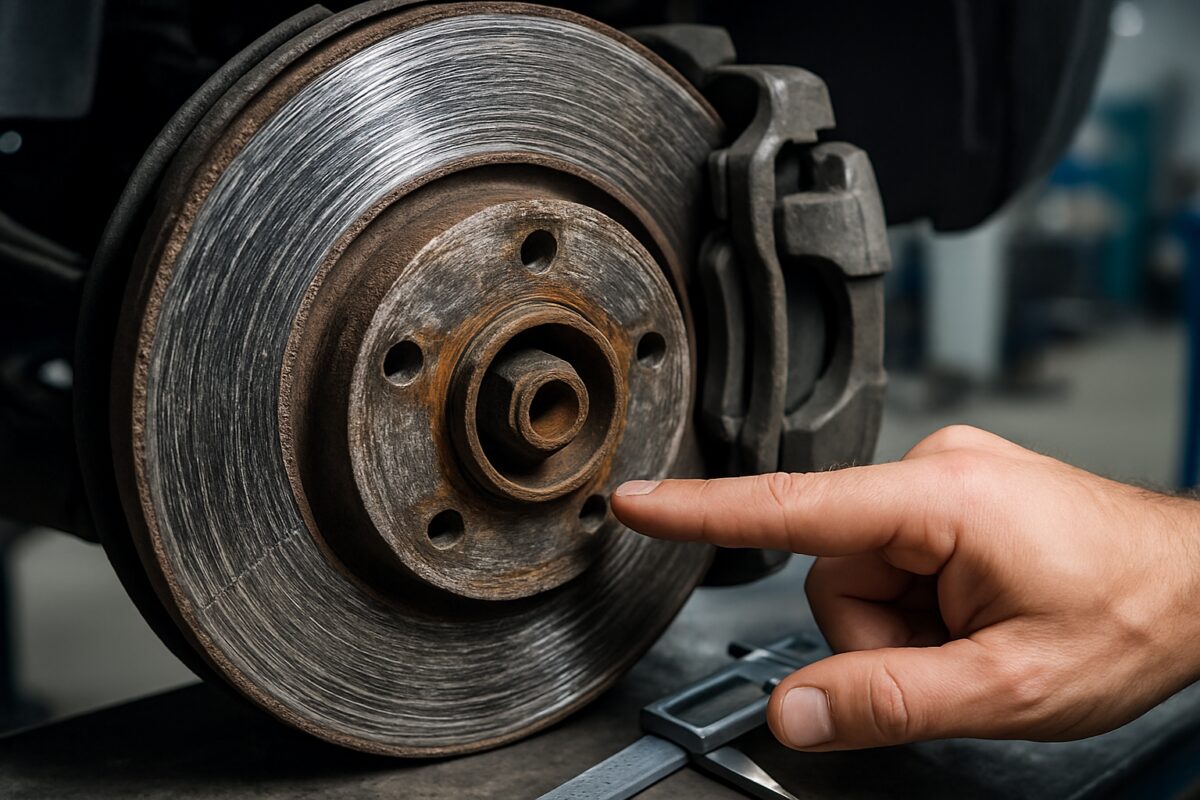
Visual inspection reveals crucial information about brake disc condition. Deep scoring, grooves, and surface irregularities indicate excessive wear requiring immediate attention.
Normal brake disc surfaces should appear smooth with minimal scoring. Light circular scratches are acceptable and result from normal pad contact. However, deep grooves, radial scoring, or step wear patterns suggest serious problems.
Performing visual inspections requires removing wheels for proper access. Look for these warning signs:
- Deep grooves exceeding 0.5mm depth
- Radial cracks extending from centre to edge
- Heat discolouration indicating overheating
- Step wear creating thickness variations
- Rust or corrosion beyond surface level
Professional measurement using micrometers determines exact thickness. Most brake discs have minimum thickness specifications stamped on the casting. Operating below minimum thickness creates dangerous heat buildup and potential disc failure.
Sign 5: uneven braking performance
Inconsistent braking force between wheels creates dangerous handling characteristics. This condition manifests as vehicle pulling during braking or uneven brake pedal feel.
Uneven disc wear often results from sticking brake callipers or contaminated brake surfaces. Oil leaks, brake fluid contamination, or damaged seals contribute to this problem. Additionally, mismatched brake components between axles create inconsistent performance.
Vehicle pulling during braking indicates significant differences in braking force between sides. This condition requires immediate professional diagnosis to identify the root cause. Continuing to drive with uneven braking risks loss of control during emergency stops.
Our Autopartspro technicians emphasise that brake components should always be replaced in axle sets. Installing new discs on one side while leaving worn discs on the other creates dangerous imbalances. This practice saves money initially but compromises safety and leads to premature component failure.
Sign 6: brake warning lights
Modern vehicles feature sophisticated brake monitoring systems that illuminate warning lights when problems are detected. These electronic systems monitor brake pad wear, brake fluid levels, and system pressure.
Brake warning lights vary between manufacturers but typically include pad wear indicators and general brake system warnings. Some vehicles feature dedicated disc wear sensors that detect minimum thickness limits.
Never ignore brake warning lights, regardless of how the vehicle feels during driving. Electronic systems often detect problems before human senses notice symptoms. Early warning allows preventive maintenance rather than emergency repairs.
Common warning light meanings
Understanding different brake warning lights helps prioritise maintenance actions. Red brake lights typically indicate immediate safety concerns, while amber lights suggest scheduled maintenance requirements.
Professional inspection and diagnosis
While visual checks provide valuable information, professional brake inspections offer comprehensive evaluation using specialised equipment. Qualified technicians measure disc thickness, runout, and surface condition accurately.
Professional diagnosis includes examining the entire brake system, not just discs and pads. Brake lines, callipers, master cylinders, and brake fluid condition all affect system performance. This comprehensive approach identifies potential problems before they cause failures.
The following table shows typical brake disc replacement intervals for different vehicle types:
| Vehicle Type | Mileage Range | Time Period |
|---|---|---|
| City driving vehicles | 20,000-40,000 miles | 3-5 years |
| Motorway commuters | 40,000-60,000 miles | 4-6 years |
| Performance vehicles | 15,000-30,000 miles | 2-4 years |
| Commercial vehicles | 30,000-50,000 miles | 2-3 years |
Preventing premature brake disc wear
Proper driving techniques significantly extend brake disc lifespan. Gentle, progressive braking reduces heat buildup and mechanical stress. Avoiding hard stops except for emergencies protects brake components from thermal shock.
Regular maintenance schedules include brake fluid replacement every two years or according to manufacturer specifications. Fresh brake fluid maintains proper system pressure and prevents corrosion damage to brake components.
Engine braking techniques reduce brake system workload during descents. Using lower gears on hills allows engine compression to assist with speed control. This practice is particularly important for commercial vehicles or when towing heavy loads.
Quality brake components justify their higher initial cost through extended service life and better performance. Premium brake discs often feature better metallurgy and heat dissipation characteristics compared to budget alternatives.
Replacement considerations and costs
Brake disc replacement costs vary significantly based on vehicle type, component quality, and labour rates. Budget options start around £50 per disc, while premium performance discs can exceed £200 each.
Labour costs typically range from £100 to £300 per axle, depending on vehicle complexity and workshop rates. Some vehicles require special tools or procedures that increase labour time and costs.
When replacing brake discs, consider these important factors:
- Always replace discs in axle pairs for balanced braking
- Install new brake pads with new discs
- Resurface or replace brake callipers if damaged
- Flush brake fluid during major brake work
- Follow proper bedding procedures for new components
Our mechanics recommend against false economy when selecting brake components. Quality parts last longer, perform better, and provide superior safety margins. The cost difference between budget and premium components often represents excellent value for the improved performance and longevity.
Emergency brake disc failure
Complete brake disc failure, while rare, creates extremely dangerous situations. Cracked or shattered discs result in complete loss of braking on affected wheels. This condition typically occurs when severely worn discs overheat during heavy braking.
Warning signs of impending disc failure include severe vibrations, loud grinding noises, and visible cracks during inspection. Any of these symptoms requires immediate professional attention and cessation of driving until repairs are completed.
Emergency procedures for brake failure include using the handbrake gradually, engine braking, and seeking safe stopping locations. However, prevention through regular maintenance and prompt attention to warning signs prevents these dangerous scenarios.
Frequently Asked Questions (FAQ)
How often should brake discs be replaced?
Brake discs typically last 40,000-70,000 miles depending on driving conditions, vehicle type, and maintenance quality. City driving reduces lifespan significantly.
Can worn brake discs be resurfaced instead of replaced?
Resurfacing is possible if sufficient material remains above minimum thickness specifications. However, deeply scored or cracked discs require complete replacement.
Is it safe to drive with squealing brakes?
Squealing indicates worn brake pads approaching replacement time. While not immediately dangerous, continue driving cautiously and arrange professional inspection promptly.
Why do rear brake discs last longer than front ones?
Front brakes handle 60-70% of braking force due to weight transfer during deceleration. This increased workload causes faster wear rates.
What causes brake discs to warp?
Warping results from uneven heating and cooling cycles, often caused by aggressive braking, stuck callipers, or contaminated brake surfaces.

 Loading...