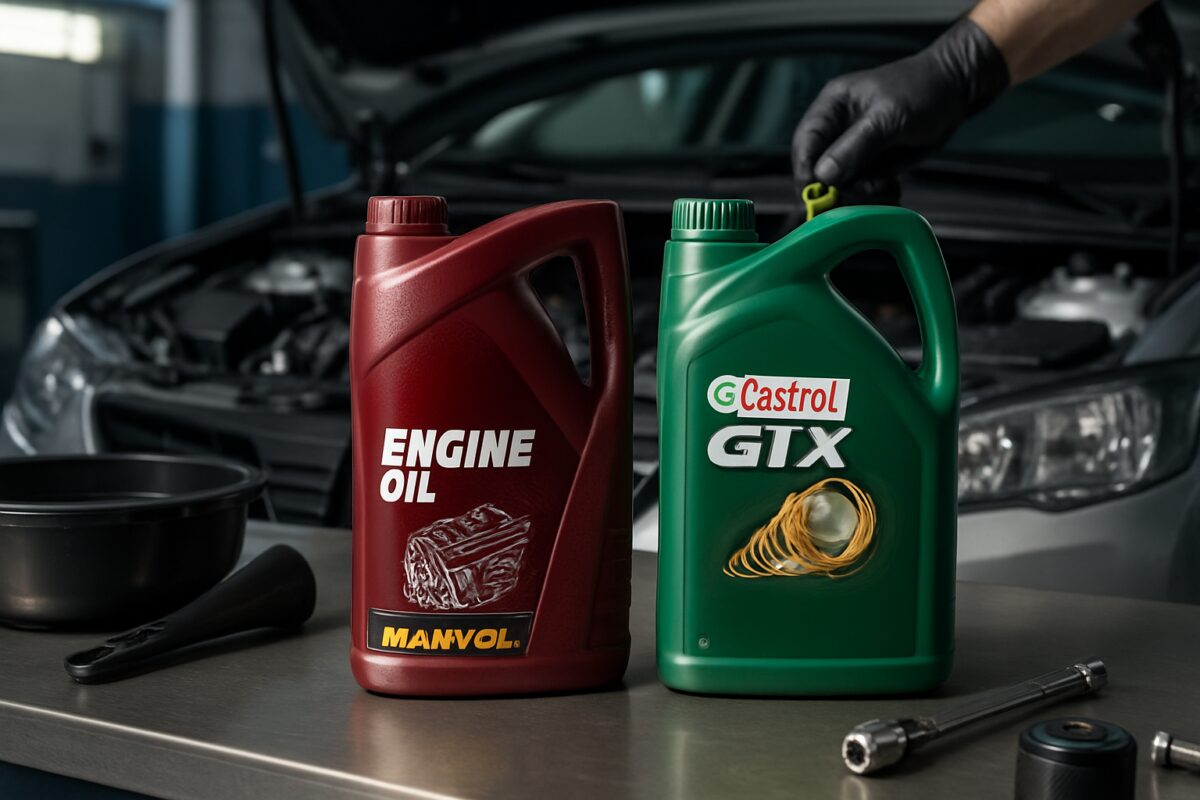
When choosing between Mannol and Castrol engine oils, Castrol emerges as the premium option with superior engine protection and thermal stability, whilst Mannol offers excellent value for money with competitive performance at a lower price point. Both brands meet modern engine requirements, but they cater to different priorities: Castrol for maximum protection and Mannol for budget-conscious drivers seeking reliable lubrication.
Quick comparison table
| Factor | Mannol | Castrol |
|---|---|---|
| Price Range | £25-45 per 5L | £35-65 per 5L |
| Durability | Good | Excellent |
| Performance | Reliable | Premium |
| Engine Protection | Standard | Superior |
| Maintenance | Regular intervals | Extended intervals |
| Best Use Case | Daily driving | High performance |
Castrol overview
Castrol stands as one of the world’s leading engine oil manufacturers, with over a century of experience in lubricant technology. The brand’s flagship products include Castrol GTX, Castrol Magnatec, and Castrol Edge, each designed for specific engine requirements and driving conditions.
Castrol oils employ advanced additive packages that provide exceptional engine protection. The GTX range offers reliable conventional oil performance, whilst Magnatec features intelligent molecules that cling to engine parts during startup. Edge represents their premium synthetic line, delivering maximum performance under extreme conditions.
Typical pricing for Castrol oils ranges from £35-65 per 5-litre container, positioning it in the premium segment. The higher cost reflects superior base oil quality and advanced additive technology that extends engine life and maintains optimal performance.
Pros:
- Proven track record with major automotive manufacturers
- Advanced additive technology for superior protection
- Wide range of viscosities and specifications
- Excellent thermal stability and oxidation resistance
Cons:
- Higher purchase price than budget alternatives
- May be overkill for basic commuter vehicles
- Limited availability of some specialist grades
Castrol suits drivers who prioritise engine longevity and performance, particularly those with high-performance vehicles or demanding driving conditions. The brand’s extensive OEM approvals make it suitable for warranty maintenance on newer vehicles.
Mannol overview
Mannol represents the value-oriented segment of the lubricant market, offering competent engine protection at accessible prices. This German brand focuses on meeting essential engine requirements without the premium pricing of established names, making it popular among cost-conscious motorists.
The brand’s product range includes conventional, semi-synthetic, and fully synthetic oils across popular viscosity grades. Mannol oils meet current API and ACEA specifications, ensuring compatibility with modern engines whilst maintaining competitive pricing through efficient manufacturing and distribution.
Mannol oils typically cost £25-45 per 5-litre container, offering significant savings compared to premium brands. This pricing strategy targets drivers seeking reliable lubrication without premium features or extensive marketing costs.
Pros:
- Excellent value for money proposition
- Meets current industry specifications
- Wide availability through online retailers
- Suitable for standard driving conditions
Cons:
- Limited OEM approvals compared to premium brands
- Basic additive packages may not suit extreme conditions
- Shorter drain intervals compared to premium oils
- Less extensive quality testing and development
Mannol appeals to drivers with older vehicles or those prioritising cost over maximum performance. It provides adequate protection for daily driving whilst keeping maintenance costs manageable, particularly suitable for high-mileage vehicles.
Our mechanics at AutopartsPro recommend checking your vehicle’s handbook for specific oil requirements before choosing between brands, as some modern engines require particular specifications that only premium oils can meet.
Compatibility
Both Mannol and Castrol offer oils compatible with petrol and diesel engines across various vehicle makes. However, compatibility considerations extend beyond basic engine type to include specific manufacturer approvals and performance standards.
Castrol maintains extensive OEM approvals from manufacturers including BMW, Mercedes-Benz, Volkswagen, and Ford. These approvals ensure the oil filter and lubricant combination meets specific engine requirements. For vehicles under warranty, using approved oils prevents potential warranty disputes.
Model year considerations prove crucial when selecting oils. Newer vehicles often require low-viscosity oils (0W-20, 5W-20) for fuel economy compliance, whilst older engines may benefit from higher viscosity grades for better sealing and reduced consumption.
OEM specifications such as BMW LL-04, Mercedes-Benz 229.5, or VW 504.00/507.00 require specific additive packages that may not be present in budget oils. Always verify specification compliance before purchase.
Installation considerations include drain interval requirements and compatibility with existing oil residue. Premium oils often allow extended drain intervals (up to 20,000 miles), whilst budget oils typically require more frequent changes (5,000-7,500 miles).
Always consult your vehicle’s service manual for specific oil viscosity and specification requirements, as using incorrect grades can affect warranty coverage and engine protection.
Final verdict
Choose Castrol for vehicles requiring specific OEM approvals, high-performance applications, or when maximum engine protection justifies the premium cost. The brand’s advanced additive technology and proven track record make it ideal for newer vehicles, turbocharged engines, or demanding driving conditions.
Select Mannol for older vehicles, basic transportation needs, or when budget constraints are primary considerations. The brand provides adequate protection for standard driving whilst keeping maintenance costs reasonable, particularly suitable for high-mileage vehicles or fleet applications.
Consider your vehicle’s specific requirements, including manufacturer recommendations, warranty status, and typical driving conditions. Premium oils like Castrol offer better protection and longer intervals but may be unnecessary for basic applications where Mannol’s value proposition proves more attractive.
For optimal results, combine your chosen oil with quality air filters and maintain regular service intervals. Proper oil change timing matters more than brand choice for engine longevity.
Which brand offers better value for money?
Mannol provides superior cost value for basic applications, whilst Castrol offers better long-term value through extended protection and drain intervals despite higher upfront costs.
Can I switch between Mannol and Castrol oils?
Yes, both brands use compatible base oils and additives. However, perform a complete drain and use fresh oil filters when switching brands to prevent additive conflicts.
Which brand is better for high-mileage vehicles?
Castrol GTX High Mileage offers specific seal conditioners for older engines, whilst Mannol provides basic protection at lower cost for vehicles with established wear patterns.
Do both brands meet current emission standards?
Both meet current API and ACEA specifications for emissions compliance, though Castrol maintains more extensive OEM approvals for specific low-emission engine designs and requirements.
How often should I change oil with each brand?
Castrol premium oils allow 10,000-20,000 mile intervals depending on grade, whilst Mannol typically requires changes every 5,000-7,500 miles following conventional maintenance schedules.

 Loading...