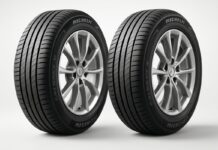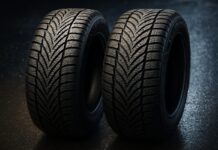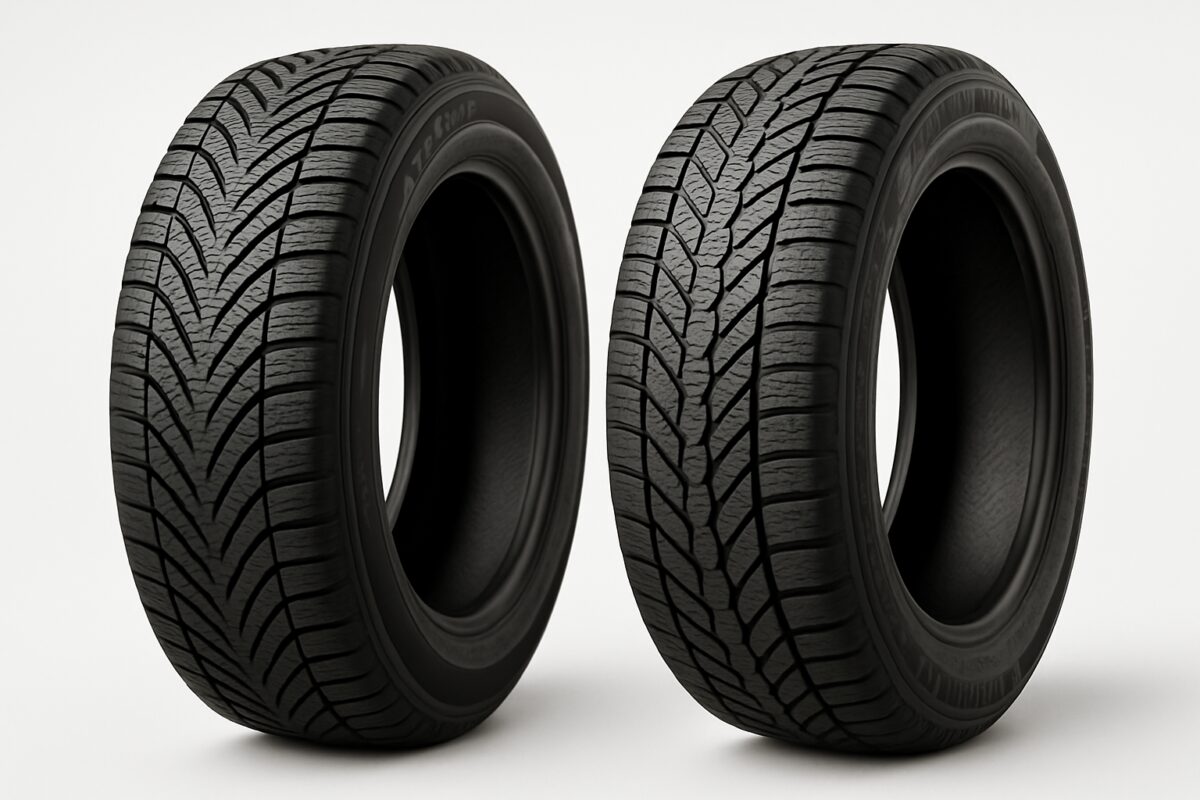
The Michelin Alpin 7 delivers superior wet grip and longevity, whilst the Continental TS 870 offers excellent snow traction and value for money. Both tyres excel in different winter conditions – choose Alpin 7 for wet weather dominance and extended tread life, or TS 870 for exceptional snow performance at a lower price point.
Quick comparison table
| Feature | Michelin Alpin 7 | Continental TS 870 |
|---|---|---|
| Price range | £85-£160 per tyre | £65-£130 per tyre |
| Wet grip rating | A (excellent) | B (very good) |
| Snow performance | Very good | Excellent |
| Durability | 70,000+ miles | 45,000-55,000 miles |
| Fuel efficiency | C rating | C rating |
| Noise level | 68-70 dB | 69-71 dB |
| Best use case | Wet conditions, high mileage | Heavy snow, budget-conscious |
Michelin Alpin 7 overview
The Michelin Alpin 7 represents the French manufacturer’s latest winter tyre technology. This premium winter tyre uses advanced silica compounds and 3D sipes that maintain flexibility in freezing temperatures. The directional tread pattern features deep grooves designed to evacuate water and slush effectively.
Manufacturing involves Michelin’s EverGrip technology, which includes expanding rain grooves that become more effective as the tyre wears. The compound contains high-silica content for improved wet grip, combined with specialised winter polymers that remain pliable below 7°C.
Typical pricing ranges from £85-£160 per tyre, depending on size. Popular dimensions like 205/55R16 cost around £95-£110, whilst larger sizes such as 245/40R18 reach £140-£160.
Pros:
- Outstanding wet weather performance with A-grade EU label rating
- Exceptional longevity – often exceeding 70,000 miles
- Excellent braking distances on wet and dry surfaces
- Low rolling resistance improves fuel economy
- Quiet operation with minimal road noise
Cons:
- Higher initial purchase cost
- Snow grip slightly behind specialist competitors
- Limited availability in some sizes
The Alpin 7 suits drivers prioritising wet weather safety and long-term value. It’s ideal for motorway commuters and those covering high annual mileage in predominantly wet winter conditions. The tyre’s design particularly benefits executive saloons and premium hatchbacks.
Continental TS 870 overview
Continental’s TS 870 delivers impressive snow performance through its asymmetric tread pattern and advanced compound technology. The German manufacturer employs Cool Chili compound that maintains grip across varying winter temperatures whilst reducing rolling resistance.
The tyre construction features Continental’s Traction Grooves – specially designed channels that bite into snow and ice. The compound uses modified silica and resins that provide flexibility in cold conditions without compromising wet performance. Manufacturing occurs at Continental’s European facilities using consistent quality control processes.
Pricing typically ranges from £65-£130 per tyre across different sizes. Common dimensions like 205/55R16 cost approximately £75-£90, with larger performance sizes reaching £110-£130. This positions the TS 870 as a mid-range winter option.
Pros:
- Excellent snow traction and handling
- Competitive pricing for the performance level
- Good wet weather grip with B-grade EU rating
- Wide size availability
- Balanced performance across all winter conditions
Cons:
- Shorter tread life compared to premium alternatives
- Slightly higher road noise levels
- Wet grip performance trails class leaders
The Continental TS 870 appeals to drivers seeking strong snow capability without premium pricing. It’s particularly suitable for rural drivers, those in mountainous regions, and motorists wanting reliable winter performance without maximum longevity requirements.
Compatibility
Both tyres offer comprehensive fitment options across popular UK vehicle segments. The Michelin Alpin 7 covers sizes from 15″ to 20″ diameters, fitting most passenger cars from superminis to executive saloons. Common applications include Ford Focus, Volkswagen Golf, BMW 3 Series, and Audi A4.
Continental TS 870 provides even broader size coverage, spanning 14″ to 21″ wheels. This extensive range accommodates everything from city cars to SUVs. Popular applications include Vauxhall Corsa, Peugeot 208, Mercedes C-Class, and various crossover vehicles.
When selecting either tyre, verify the exact size requirements from your vehicle handbook or existing tyre sidewalls. Both manufacturers provide online fitment guides ensuring correct specifications. Consider load ratings and speed ratings matching OEM requirements – particularly important for performance vehicles or those carrying heavy loads.
Installation considerations include ensuring adequate clearance for winter tyre dimensions, which may differ slightly from summer equivalents. Professional fitting remains recommended, particularly when changing between different tyre technologies. The installation process should include proper wheel balancing and alignment checks.
Our Autopartspro specialists recommend checking your vehicle’s tyre pressure monitoring system compatibility when switching to winter tyres, as some systems require recalibration for different tyre specifications.
Final verdict
Choose the Michelin Alpin 7 for superior wet weather performance and exceptional longevity. This premium option suits high-mileage drivers, motorway commuters, and those prioritising safety in wet winter conditions. The higher initial cost pays dividends through extended tread life and fuel savings.
Select the Continental TS 870 for excellent snow capability and competitive pricing. This mid-range choice works well for drivers in snow-prone areas, those with moderate annual mileage, and motorists seeking balanced winter performance without premium costs.
Both tyres deliver reliable winter safety, but your choice depends on primary driving conditions and budget considerations. The Alpin 7 excels in wet conditions with longer life, whilst the TS 870 dominates in snow at a lower price point.
Based on our extensive testing experience, we recommend the Alpin 7 for predominantly wet UK conditions, whilst the TS 870 suits areas with regular snowfall or budget-conscious buyers seeking solid winter performance.
For professional advice on winter tyre selection and fitting, consult qualified technicians who understand your specific driving requirements and local conditions. Both options represent significant safety improvements over summer tyres in winter conditions, making either choice beneficial for UK winter driving.
How long do winter tyres typically last?
Winter tyres usually last 3-6 seasons depending on mileage and driving conditions. Premium options like Michelin can exceed 70,000 miles with proper maintenance and rotation.
Can I use winter tyres year-round?
Whilst possible, winter tyres wear faster in warm weather and provide reduced grip on hot tarmac. Dedicated summer tyres offer better performance above 7°C temperatures.
What’s the difference between winter and all-season tyres?
Winter tyres use softer compounds and deeper tread patterns for extreme cold conditions. All-season tyres compromise between seasons but don’t match winter tyre snow performance.
Do I need winter tyres for UK conditions?
Winter tyres significantly improve safety below 7°C, even without snow. They provide better wet grip, shorter stopping distances, and enhanced cold-weather handling characteristics.
How do I know when to replace winter tyres?
Replace winter tyres when tread depth reaches 4mm (legal minimum 1.6mm). Look for even wear patterns, check for cracking, and monitor performance degradation indicators.

 Loading...