To remove mould from car seats, you’ll need specific cleaning solutions, protective equipment, and proper ventilation. The process involves identifying the mould type, applying appropriate treatments, and ensuring complete drying to prevent regrowth. Success depends on acting quickly and using the right products for your seat material.
Tools & parts required
Getting the right equipment makes all the difference when tackling mould on car seats. The wrong approach can damage your seats permanently or spread spores throughout your vehicle.
Cleaning products needed:
- White vinegar (natural antifungal properties)
- Baking soda (absorbs odours and moisture)
- Hydrogen peroxide (3% concentration)
- Commercial mould remover (for stubborn cases)
- Fabric protector spray
- Distilled water
Tools required:
- Soft-bristled brush
- Microfibre cloths
- Spray bottles
- Wet/dry vacuum cleaner
- Hair dryer or fan
- Rubber gloves
- Dust mask
Always ensure your cleaning products match your seat material type. Leather requires different treatment than fabric or synthetic materials.
Safety precautions
Mould spores pose serious health risks, especially in enclosed spaces like cars. Proper protection prevents respiratory issues and skin irritation.
Work in a well-ventilated area with doors and windows open. Disconnect your battery to prevent electrical issues when using water-based solutions near electronic components.
Wear protective gloves and a dust mask throughout the process. Keep children and pets away from the work area until cleaning is complete and the vehicle is fully dried.
Step-by-step instructions
Step 1: Assess the extent of mould damage
Check all seat surfaces, including crevices, seams, and underneath areas. Look for visible mould spots, musty odours, or damp patches. Take photos to track your progress.
Different mould types require different approaches. Black or green mould needs aggressive treatment, while white fuzzy growth responds well to gentler methods.
Step 2: Remove loose mould and debris
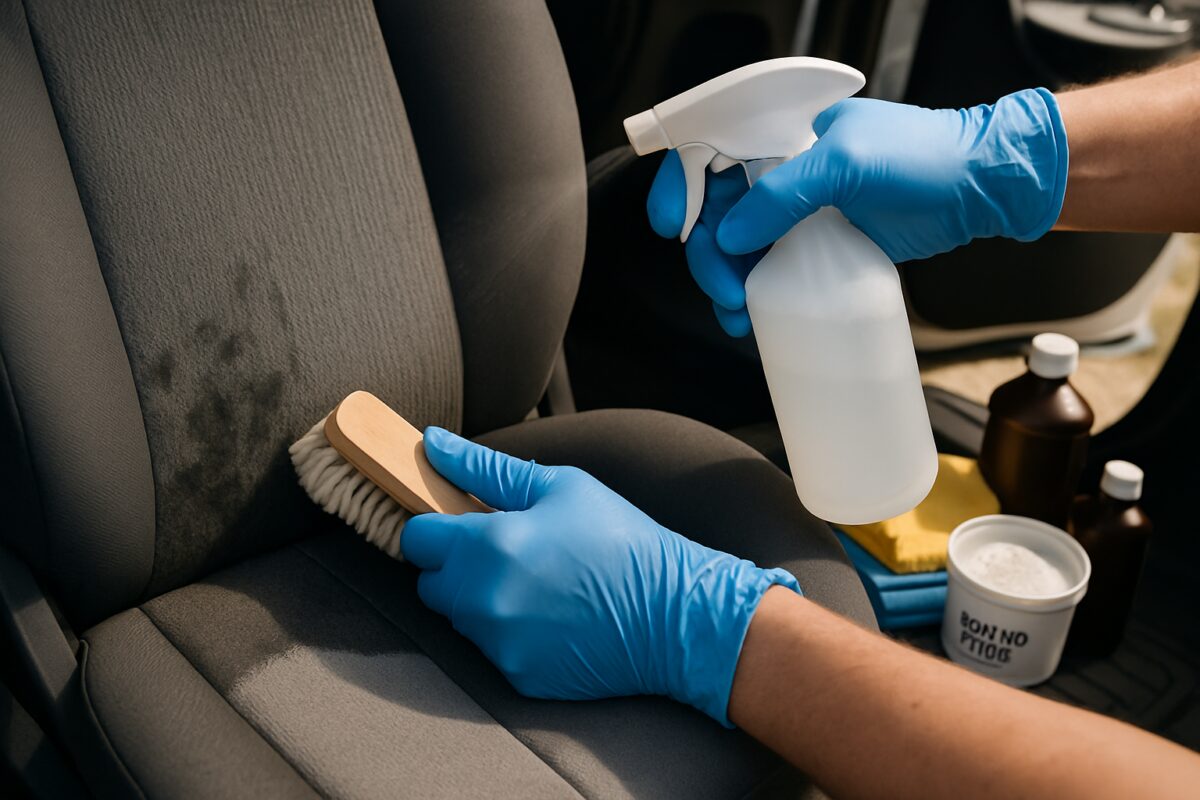
Use a soft-bristled brush to gently remove surface mould. Work from outside the affected area towards the centre to prevent spreading spores.
Vacuum thoroughly using a wet/dry cleaner with a HEPA filter. Pay special attention to seat joints and cabin filter areas where moisture accumulates.
Step 3: Apply cleaning solution
Mix equal parts white vinegar and distilled water in a spray bottle. For stubborn mould, add one tablespoon of baking soda per cup of solution.
Spray the affected areas generously but avoid oversaturating. Let the solution sit for 10-15 minutes to penetrate deep into the material.
Professional tip: Test any cleaning solution on a hidden area first. Some materials may discolour or react unexpectedly to acidic solutions.
Step 4: Scrub and treat
Gently scrub with a soft brush in circular motions. For leather seats, use a specialised leather cleaner instead of vinegar to prevent cracking.
Apply hydrogen peroxide to persistent stains using a clean cloth. This bleaching agent works well on fabric but may lighten coloured materials.
Step 5: Rinse and extract moisture
Use a damp microfibre cloth to remove cleaning residue. Follow immediately with a dry cloth to absorb excess moisture.
Extract remaining dampness using a wet/dry vacuum or steam cleaner. Proper moisture removal prevents mould regrowth.
Step 6: Dry thoroughly
Position fans or use a hair dryer on cool setting to accelerate drying. Ensure complete dryness before closing the vehicle.
Leave windows slightly open for 24-48 hours to maintain airflow. Consider using moisture-absorbing products in the vehicle during this period.
Common mistakes to avoid
Using bleach on coloured fabrics causes permanent discolouration and weakens fibres. Stick to hydrogen peroxide for safer bleaching action.
Rushing the drying process creates perfect conditions for mould return. Inadequate drying is the leading cause of recurring mould problems.
Ignoring the vehicle’s air conditioning pipe system allows mould spores to circulate throughout the cabin. Clean or replace filters as part of comprehensive mould removal.
Skipping protective equipment exposes you to harmful spores and cleaning chemicals. Always prioritise your health during the cleaning process.
Expert advice: Never use a regular household vacuum for mould cleanup. Standard filters can’t trap spores, which then spread throughout your home when you use the vacuum again.
When should you replace affected components?
Severe mould penetration into foam padding requires professional assessment. If mould has reached the seat’s internal structure, replacement may be more cost-effective than cleaning.
Persistent odours after thorough cleaning indicate deep contamination. Consider replacing seat covers or consulting automotive upholstery specialists.
Structural damage from prolonged moisture exposure compromises seat safety. Check for weakened frames or corroded mechanisms that might affect crash protection.
If mould appears within weeks of cleaning, underlying moisture issues need addressing. Investigate leaks in door seals, windows, or the vehicle’s drainage systems.
Related maintenance you can do at the same time
Replace your air filter to prevent contaminated air from re-entering the cabin. A clean filter also improves overall air quality.
Check and clean your vehicle’s drainage points. Blocked sunroof or door drains often cause the moisture problems that lead to mould growth.
Inspect hoses and seals for leaks that might be introducing moisture. Early detection prevents future mould problems.
Consider applying fabric protection products to clean seats. These create barriers against moisture and staining that help prevent mould establishment.
Service your compressor and air conditioning system if moisture buildup is climate-related. Proper AC function controls humidity levels effectively.
Frequently asked questions
Can I use household bleach on car seats?
Avoid bleach on coloured fabrics as it causes permanent discolouration and material damage. Use hydrogen peroxide for safer whitening action.
How long does mould removal take?
Complete mould removal typically requires 2-4 hours of active cleaning plus 24-48 hours drying time for best results.
Will mould come back after cleaning?
Proper cleaning and moisture control prevent regrowth, but underlying dampness issues must be resolved for permanent elimination.
Is it safe to drive with mouldy seats?
Mould spores pose health risks and can worsen respiratory conditions. Address contamination promptly for safety and comfort.
Should I replace seats with severe mould damage?
Extensive contamination in foam or structural areas often requires replacement, especially if cleaning attempts prove unsuccessful or odours persist.
Successfully removing mould from car seats requires patience, proper products, and thorough execution. The key lies in addressing moisture sources while treating visible contamination. Regular maintenance of your vehicle’s sensors and climate systems helps prevent future mould problems, keeping your car’s interior healthy and comfortable for years to come.

 Loading...