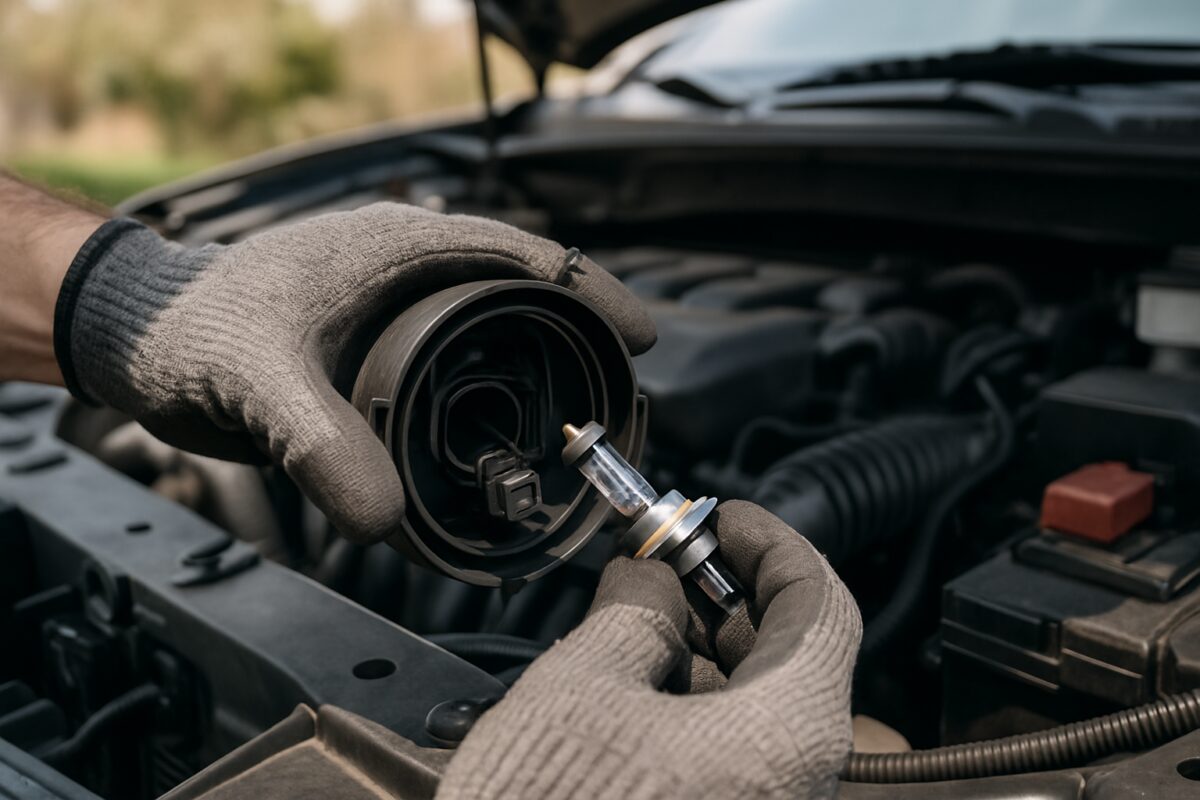
Replacing a headlight bulb requires accessing the bulb housing, removing the failed bulb, and installing a compatible replacement. The process typically involves opening the bonnet, locating the bulb housing, disconnecting the electrical connector, removing the retaining clip or cover, and carefully installing the new bulb without touching the glass surface.
Tools & parts required
Before starting this task, gather the necessary equipment to ensure a smooth replacement process.
Parts needed:
- Replacement light bulbs (vehicle-specific type)
- Clean cloth or tissue
- Disposable gloves (optional)
Tools required:
- Basic hand tools (if access panels need removal)
- Torch or mobile phone light
- Vehicle handbook for bulb specifications
Always ensure the replacement bulb matches your vehicle’s specifications exactly. Check the bulb type, wattage, and fitting before purchasing to avoid compatibility issues.
Safety precautions
Safety remains paramount when working with vehicle electrical systems and glass components.
- Switch off the engine and allow headlamps to cool completely
- Disconnect the battery negative terminal if accessing multiple bulbs
- Wear protective gloves to prevent cuts from broken glass
- Work in adequate lighting conditions
- Keep replacement bulbs in their packaging until installation
Step-by-step instructions
Follow these detailed steps for a successful bulb replacement on most vehicles.
Step 1: Access the bulb housing
Open the bonnet and locate the rear of the headlight assembly. Most modern vehicles provide access from the engine bay, though some require removing wheel arch liners or accessing from underneath. Check your vehicle handbook for specific access methods.
Step 2: Remove the bulb cover
Locate the rubber or plastic cover protecting the bulb assembly. Twist or pull this cover to remove it, exposing the bulb holder. Some vehicles use clips or screws to secure these covers.
Step 3: Disconnect the electrical connector
Carefully disconnect the wiring harness from the bulb. Press any release tabs and pull the connector straight off. Avoid yanking the wires, which could damage the electrical system.
Step 4: Remove the failed bulb
Release the metal retaining clip or twist the bulb holder anticlockwise, depending on your vehicle’s design. Gently pull the old bulb from its socket, noting its orientation for correct installation of the replacement.
Step 5: Install the new bulb
Handle the new bulb by its base only, never touching the glass surface. Oil from fingerprints can cause premature bulb failure due to uneven heating. Insert the bulb into the socket, ensuring proper alignment with the locating tabs.
Step 6: Secure and test
Replace the retaining clip or twist-lock mechanism, reconnect the electrical connector, and replace the protective cover. Test the new bulb before closing the bonnet to confirm proper operation.
Common mistakes to avoid
Understanding these frequent errors helps ensure successful bulb replacement without damage.
- Touching the bulb glass: Oils cause hot spots and premature failure
- Forcing incorrect bulb types: Always verify compatibility before installation
- Ignoring bulb orientation: Incorrect positioning affects light beam pattern
- Over-tightening connections: Plastic components crack easily under excessive force
- Working on hot bulbs: Recent use makes glass extremely hot and fragile
Professional tip: Replace both headlight bulbs simultaneously, even if only one has failed. Bulbs from the same batch typically have similar lifespans, preventing future roadside emergencies.
When should you replace headlight bulbs?
Recognising the signs of bulb failure ensures safe night driving and legal compliance.
Replace bulbs immediately when you notice dimming, flickering, or complete failure. Reduced light output significantly compromises road safety and may result in MOT failure. Many vehicles feature bulb monitoring systems that display dashboard warnings when replacement becomes necessary.
Consider upgrading to higher-performance bulbs during replacement. Enhanced visibility options provide better illumination whilst maintaining legal compliance and electrical system compatibility.
Related maintenance you can do at the same time
Maximise efficiency by combining headlight bulb replacement with other maintenance tasks.
- Clean headlight lenses with appropriate cleaning products
- Check and replace side indicators and tail lights
- Inspect windscreen wipers for wear
- Test fog lamps and additional lighting
- Check windscreen washer jets for proper operation
AutoPartsPro mechanic insight: Regular headlight maintenance extends bulb life significantly. Clean lenses reduce heat buildup, whilst secure connections prevent voltage fluctuations that stress filaments.
Frequently asked questions
Can I replace headlight bulbs in the rain?
Avoid replacing bulbs in wet conditions. Moisture can damage electrical connections and create safety hazards when working with vehicle electrical systems.
How long do headlight bulbs typically last?
Standard halogen bulbs last 500-1000 hours, whilst HID and LED alternatives offer significantly longer service life with improved efficiency.
Why do headlight bulbs fail frequently on my vehicle?
Voltage irregularities, vibration, or moisture ingress commonly cause premature failure. Check charging system operation and headlight housing seals.
Can I use higher wattage bulbs for better visibility?
Never exceed manufacturer specifications. Higher wattage bulbs can damage wiring, create excessive heat, and potentially cause fires or electrical failures.
Should I replace bulbs with the engine running?
Always work with the engine off and ignition switched off. This prevents electrical surges and ensures personal safety around moving components.
Headlight bulb replacement represents straightforward maintenance that most drivers can accomplish with basic preparation and the correct replacement components. Proper technique and quality parts ensure reliable illumination whilst maintaining your vehicle’s safety standards and legal compliance throughout its service life.

 Loading...