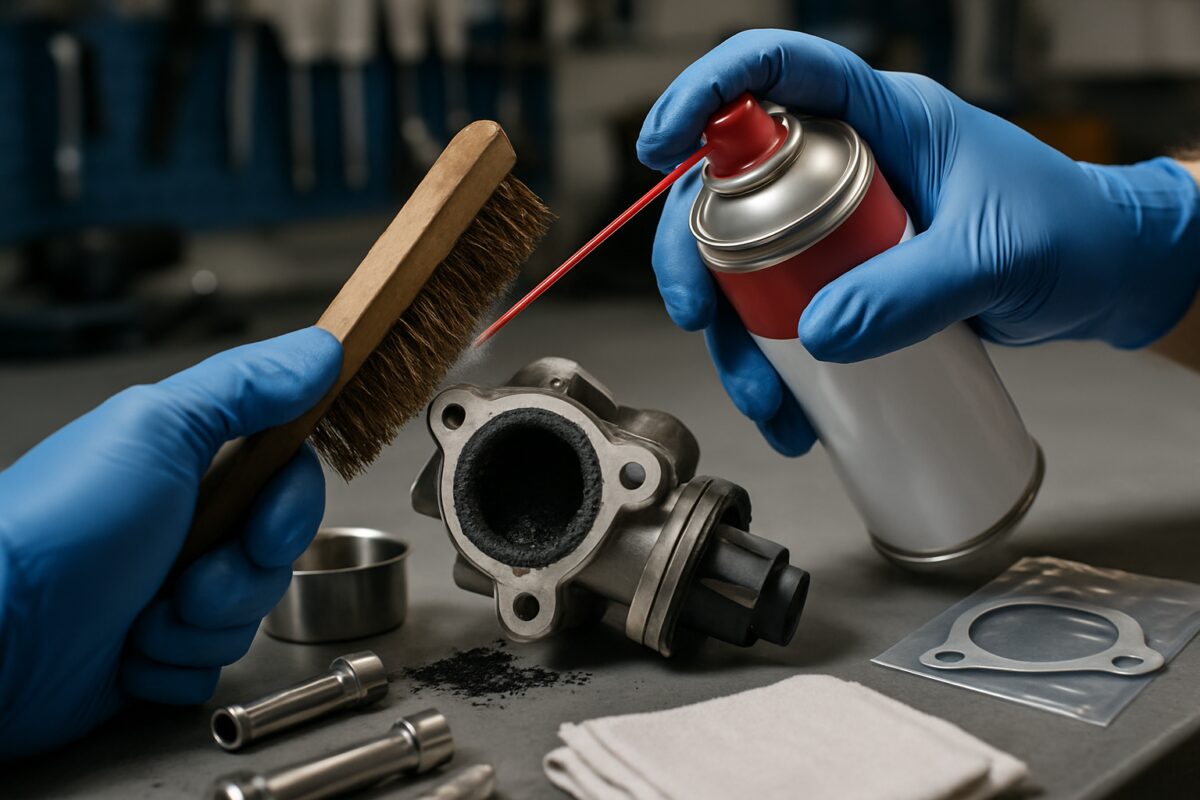
To clean an EGR valve, you’ll need carburetor cleaner, basic hand tools, and safety equipment. The process involves removing the valve from your engine, soaking it in cleaning solution, scrubbing away carbon deposits, and reinstalling it with new gaskets. This maintenance task takes 30-60 minutes and can restore proper engine performance whilst reducing emissions.
Tools & parts required
Before starting this job, gather all necessary tools and replacement parts. Having everything ready saves time and prevents delays during the cleaning process.
Parts needed
- New EGR valve gasket
- Replacement O-rings (if applicable)
- Carburetor cleaner or specialist EGR cleaner
- Wire brush or brass brush
Tools required
- Socket set (typically 10mm-15mm)
- Spanner set
- Flat-head screwdriver
- Clean rags or paper towels
- Safety glasses
- Nitrile gloves
- Small container for soaking
Professional tip: Always check your vehicle’s service manual for specific EGR valve location and removal procedures, as these vary significantly between makes and models.
Safety precautions
Working with cleaning chemicals and engine components requires proper safety measures. These precautions protect you from harmful substances and potential injuries.
- Work in a well-ventilated area to avoid inhaling fumes
- Disconnect the battery negative terminal before starting
- Ensure the engine is completely cool before beginning work
- Wear safety glasses and chemical-resistant gloves throughout
- Keep a fire extinguisher nearby when using aerosol cleaners
- Dispose of cleaning materials according to local environmental regulations
Step-by-step instructions
Follow these detailed steps to properly clean your EGR valve and restore its function.
Step 1: Locate and access the EGR valve
The EGR valve is typically mounted on the inlet manifold or cylinder head. It’s a round or rectangular component with vacuum pipes and electrical connections attached. Remove any engine covers or air intake components blocking access. Take photographs before disconnecting anything to aid reassembly.
Step 2: Disconnect electrical and vacuum connections
Carefully disconnect the electrical connector from the EGR valve. Press the release tab and pull straight out to avoid damaging the connector. Remove any vacuum hoses, noting their positions. Label connections with masking tape if multiple hoses are present.
Step 3: Remove the EGR valve
Use your socket set to remove the mounting bolts holding the EGR valve to the manifold. Typically, two to four bolts secure the valve. Keep the old gasket as a reference for the new one. Some valves may have additional brackets or mounting points.
Step 4: Initial cleaning assessment
Examine the valve for carbon buildup, which appears as black, crusty deposits. Heavy carbon accumulation indicates the valve has been operating in contaminated conditions. Check the valve plate movement by gently pressing the diaphragm or actuator.
Step 5: Soak and scrub the valve
Submerge the valve body in carburetor cleaner for 10-15 minutes. This softens carbon deposits for easier removal. Use a wire brush to scrub away stubborn deposits, paying special attention to the valve seat and plate surfaces. Avoid using steel wool, which can scratch critical sealing surfaces.
Expert insight: Our AutoPartsPro technicians recommend testing valve plate movement throughout cleaning. If the plate remains stuck after chemical cleaning, the valve likely requires replacement rather than further cleaning attempts.
Step 6: Clean valve passages
Use compressed air or aerosol cleaner to flush out internal passages. Some carbon may have accumulated in narrow channels within the valve body. Ensure all passages are clear for proper gas flow when the valve opens.
Step 7: Final inspection and preparation
Inspect the valve plate for smooth operation and check all sealing surfaces for damage. Clean the mounting surface on the manifold with a scraper and cleaning solution. Apply a thin layer of anti-seize compound to bolt threads before reassembly.
Step 8: Reinstall with new gasket
Install the new gasket and position the cleaned EGR valve on the manifold. Tighten mounting bolts to the manufacturer’s specified torque, typically 15-25 Nm. Reconnect electrical and vacuum connections in reverse order of removal.
Step 9: Test operation
Reconnect the battery and start the engine. Allow it to reach normal operating temperature and check for any unusual sounds or rough idling. Monitor for fault codes using an OBD scanner if available.
Common mistakes to avoid
Several errors can compromise your EGR valve cleaning results or damage components.
- Using harsh abrasives that damage sealing surfaces
- Forcing stuck valve plates, which can break internal components
- Reusing old gaskets, leading to vacuum leaks
- Over-tightening mounting bolts, causing thread damage
- Mixing up vacuum hose connections during reassembly
- Skipping the torque specification and guessing bolt tightness
When should you replace it?
Regular EGR valve maintenance extends component life, but replacement becomes necessary when cleaning fails to restore function.
Clean your EGR valve every 30,000-50,000 miles, depending on driving conditions. City driving and short journeys increase carbon buildup frequency. Replace the valve if cleaning doesn’t resolve symptoms like rough idling, poor acceleration, or excessive exhaust emissions.
Signs indicating replacement necessity include:
- Valve plate remains stuck after thorough cleaning
- Cracked or damaged valve body
- Persistent fault codes after cleaning
- Visible damage to electrical connections
Consider upgrading to an improved exhaust gas recirculation valve if your vehicle experiences repeated EGR issues.
Related maintenance you can do at the same time
Whilst accessing the EGR valve, several related maintenance tasks become convenient to perform.
Replace the air filter to ensure clean airflow through the intake system. A dirty air filter contributes to EGR valve contamination by allowing particles into the engine.
Check and clean the mass air flow sensor, which works closely with the EGR system to control air-fuel mixtures. Clean injectors help maintain proper combustion and reduce carbon formation.
Inspect vacuum hoses for cracks or deterioration, replacing any damaged components. Consider cleaning the throttle body and idle air control valve whilst you have cleaning supplies ready.
Frequently asked questions
How often should I clean my EGR valve?
Clean your EGR valve every 30,000-50,000 miles or when you notice symptoms like rough idling or poor acceleration.
Can I clean an EGR valve without removing it?
Limited cleaning is possible with aerosol cleaners, but proper cleaning requires valve removal for thorough carbon deposit removal.
What happens if I don’t clean my EGR valve?
A dirty EGR valve causes rough idling, increased emissions, poor fuel economy, and potential engine knocking or pinging.
Is it worth cleaning a very old EGR valve?
If the valve is severely corroded or mechanically damaged, replacement is more cost-effective than repeated cleaning attempts.
Can a faulty EGR valve damage my engine?
Yes, a stuck-open EGR valve reduces engine power and increases carbon buildup, potentially damaging pistons and valves.
Cleaning your EGR valve regularly maintains optimal engine performance and reduces harmful emissions. This straightforward maintenance task prevents expensive repairs and keeps your vehicle running smoothly. Using proper cleaning techniques and quality replacement gaskets ensures lasting results and reliable engine operation.

 Loading...