Opening a Ford Transit bonnet requires locating the interior release lever, typically found near the driver’s left knee, then using the external safety latch beneath the bonnet. The process involves pulling the interior release first, then sliding the external catch to fully open the bonnet for engine access.
Tools & parts required
For this straightforward procedure, you’ll need minimal equipment. Having the right tools ready ensures smooth operation and prevents any potential damage to the bonnet mechanism.
Parts needed:
- None required for standard operation
- Bonnet struts (if replacement needed)
- Replacement release cable (if mechanism fails)
Tools required:
- Small torch or phone light
- Thin gloves (optional for cleanliness)
- Multimeter (for electrical troubleshooting)
Always check your vehicle’s handbook for model-specific variations, as Ford Transit generations may have slightly different release mechanisms.
Safety precautions
Before attempting to open the bonnet, ensure your Ford Transit is parked on level ground with the engine switched off. Allow sufficient cooling time if the engine has been running recently.
Keep your workspace clear of obstructions. If working near traffic, ensure adequate visibility and safety measures are in place.
When handling the bonnet, be mindful of its weight and ensure proper support to prevent injury or damage to paintwork.
Step-by-step instructions
Step 1: Locate the interior bonnet release
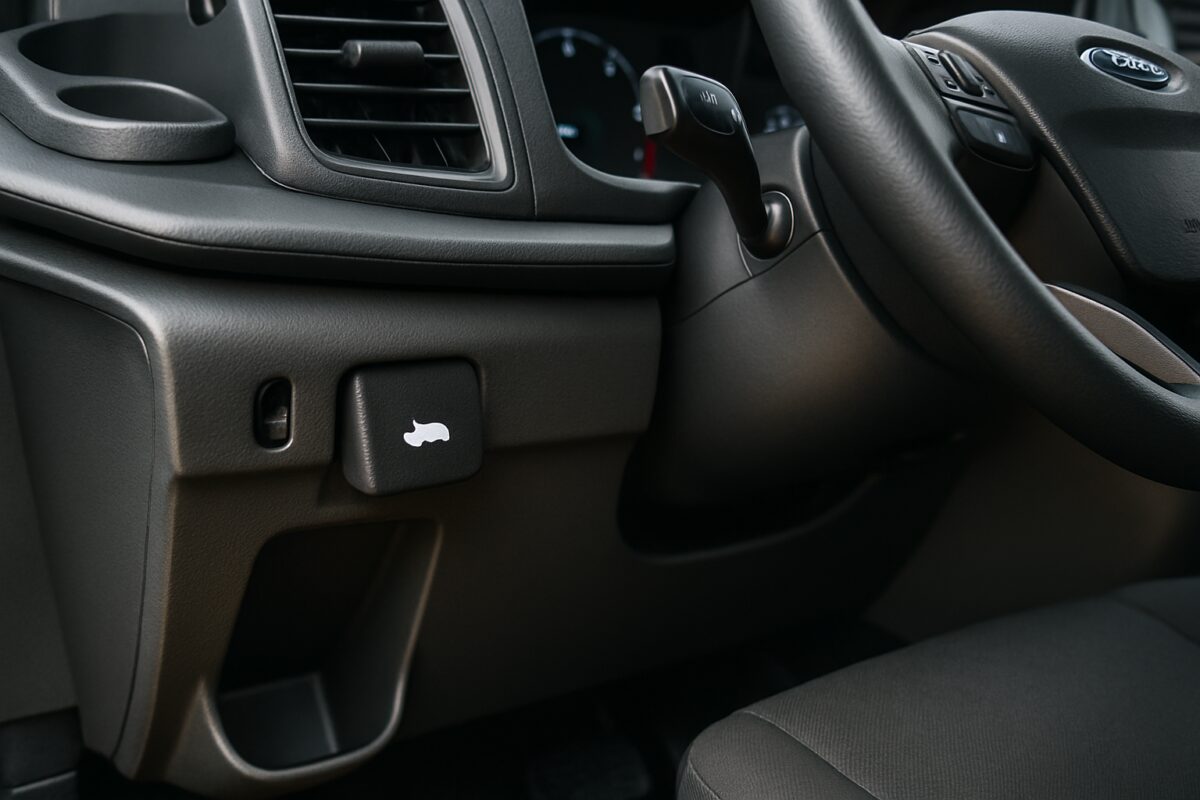
Position yourself in the driver’s seat and look down towards your left knee area. The bonnet release lever is typically mounted on the lower dashboard panel, often marked with a bonnet symbol.
In most Ford Transit models from 2014 onwards, this lever features a distinctive hood icon. Earlier generations may have a simple pull handle or lever mechanism.
Ensure good lighting to identify the correct lever, as some vehicles have multiple controls in this area including bonnet release mechanisms and fuel filler releases.
Step 2: Pull the interior release lever
Grip the bonnet release lever firmly and pull it towards you with steady pressure. You should hear a distinct ‘pop’ sound indicating the primary latch has disengaged.
If the lever feels stiff or unresponsive, avoid excessive force. This may indicate a seized cable or damaged mechanism requiring professional attention.
The bonnet should now be slightly raised at the front, creating a small gap visible from outside the vehicle.
Step 3: Locate the external safety catch
Exit the vehicle and approach the front of your Ford Transit. Look for a small gap between the bonnet and the front grille where you can insert your fingers.
The external safety latch is positioned centrally beneath the bonnet, typically offset slightly to the driver’s side. This secondary release mechanism prevents accidental opening whilst driving.
Use a torch if necessary to clearly identify the release mechanism before proceeding.
Step 4: Release the external safety catch
Insert your fingers into the gap and locate the safety catch lever. This usually requires sliding the mechanism sideways (typically towards the passenger side) whilst simultaneously lifting the bonnet.
Apply gentle upward pressure on the bonnet whilst operating the safety catch. The coordination of these movements allows the bonnet to open fully.
Some Ford Transit models feature a push-button style external release instead of a sliding mechanism.
Step 5: Secure the bonnet in the open position
Once the bonnet is partially open, locate the bonnet stay rod attached to the underside. This telescopic support prevents the bonnet from falling unexpectedly.
Pull the stay rod from its retaining clip and insert the hooked end into the designated slot on the bonnet’s underside. Ensure the stay is properly seated before releasing your grip on the bonnet.
Check that the bonnet support mechanism is secure before beginning any maintenance work.
Professional mechanics at AutoPartsPro recommend regular inspection of bonnet release cables and hinges to prevent seized mechanisms that could leave you stranded.
Common mistakes to avoid
Many Ford Transit owners attempt to force the bonnet open without properly disengaging both release mechanisms. This approach can damage the latch system or bend the bonnet itself.
Never attempt to open the bonnet whilst the engine is running or immediately after stopping. Hot engine components pose burn risks and may affect visibility of the release mechanisms.
Avoid using tools to pry the bonnet open unless absolutely necessary. Sharp implements can damage paintwork, rubber seals, or the engine mounting area.
Don’t neglect the bonnet stay rod when opening. An unsupported bonnet can cause serious injury if it falls unexpectedly.
When should you check your bonnet mechanism?
Regular bonnet mechanism inspection forms part of comprehensive vehicle maintenance. Check the release system every six months or during routine service intervals.
If you notice increased resistance when pulling the interior lever, this may indicate cable stretching or corrosion requiring attention.
External safety catches can accumulate dirt and debris, particularly in commercial applications where Ford Transits encounter harsh working conditions.
Any unusual noises when operating the bonnet release suggest immediate inspection by a qualified technician.
Related maintenance you can do at the same time
With the bonnet open, several maintenance tasks become accessible. Consider checking your engine oil levels and condition whilst you have easy access.
Inspect the air filter housing for contamination or damage. Commercial vehicles often require more frequent air filter replacement due to dusty operating environments.
Check radiator hoses for signs of perishing or leakage. The elevated position of many Ford Transit engines makes visual inspection straightforward.
Examine the battery terminals for corrosion and ensure secure connections, particularly important for commercial vehicles with high electrical demands.
Frequently asked questions
What if the interior bonnet release doesn’t work?
Check for a broken release cable or seized mechanism. Professional diagnosis is recommended to avoid damage to the latch system during forced entry attempts.
Can I open the bonnet from outside if the interior release fails?
Some Ford Transit models have emergency release access through the front grille, but this varies by generation and requires specific knowledge of your vehicle.
Why does my bonnet release feel loose or disconnected?
This typically indicates cable stretching or disconnection at either end. Immediate inspection prevents complete failure and potential safety hazards during operation.
How often should I lubricate the bonnet hinges?
Apply light machine oil to hinge points every 12 months or during major service intervals to maintain smooth operation and prevent corrosion.
What causes the external safety catch to stick?
Accumulated dirt, road salt, or corrosion commonly affect the external mechanism. Regular cleaning and light lubrication prevent operational problems and extend component life.
Mastering the Ford Transit bonnet opening procedure ensures quick access for routine maintenance and emergency situations. Regular operation of the release mechanism prevents seizure and maintains the safety systems designed to protect both vehicle and operator. Understanding your specific model’s requirements, combined with quality replacement parts when needed, keeps your Ford Transit running reliably for years to come.

 Loading...